

This article is also available in: 🇵🇱 PL | 🇵🇹 PT
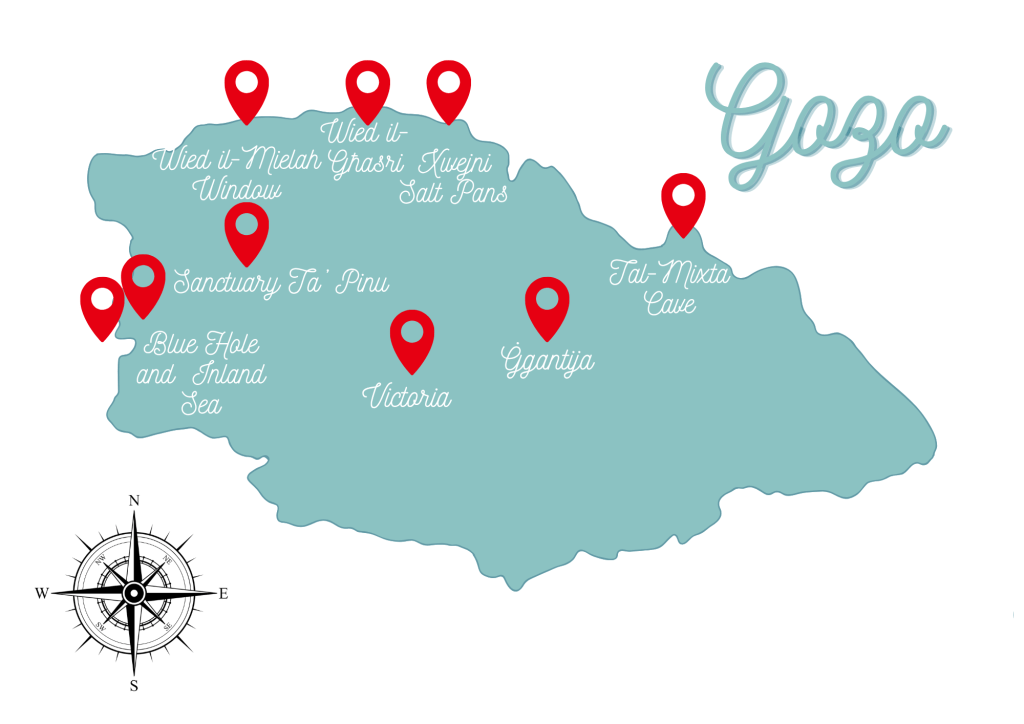
Gozo is the second-largest island in the Maltese archipelago, and although it covers barely 67 km², it’s packed with incredible sights. From dramatic coastal cliffs and ancient salt pans to some of the world’s oldest temples, charming little towns and peaceful beaches — you’ll find all of this and more on Gozo.
Gozo feels far more peaceful than its busy sister island, Malta. Life moves at a slower pace here, the towns feel more intimate, and the narrow streets with stone houses give the impression that time has stood still. Rolling green hills and sandy beaches, like the iconic red sands of Ramla Bay, add to the island’s laid-back charm. And when the day draws to a close, Gozo’s cliffs offer some of the most beautiful sunset views in the Mediterranean.
While Gozo definitely deserves a few days of exploration, even a one-day visit is enough to soak up its unique atmosphere and see some of its most important highlights. In this guide, you’ll find a ready-to-follow one-day itinerary for Gozo, featuring both the island’s best-known attractions and some hidden gems, along with practical tips to help you plan the perfect day trip to this extraordinary island.
Where is Gozo Located?
Gozo is Malta’s smaller sister island, lying just a few kilometres to the north, separated by a narrow channel served by regular ferries. Along with Malta and the tiny island of Comino, it forms the heart of the Maltese archipelago in the Mediterranean Sea. Sicily is only about 90 km away, while the coast of North Africa lies just over 300 km to the south — a location that has shaped Gozo’s unique blend of influences and made its strategic position significant throughout history.
How to Get to Gozo?
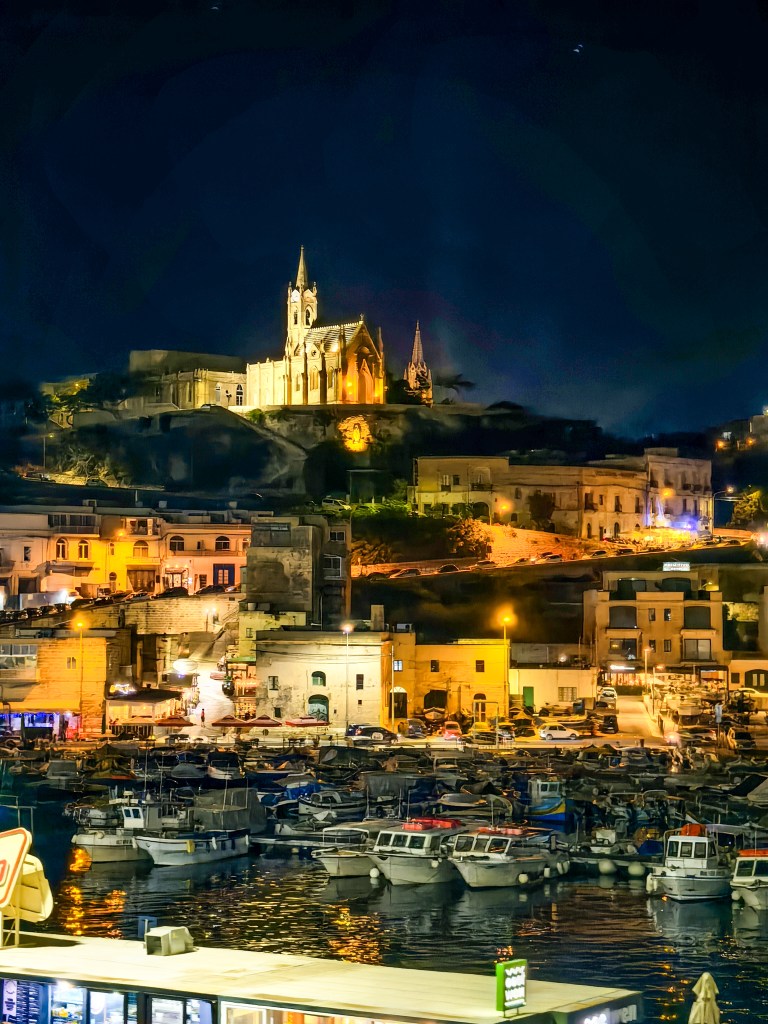
There are two main ways to reach Gozo from Malta: by the Gozo Channel ferry from Ċirkewwa (which carries both foot passengers and cars) or by the fast ferry service from Valletta.

Gozo Channel Ferry: Ċirkewwa (Malta) → Mġarr (Gozo)
⌛ Travel time: The crossing from Ċirkewwa to Mġarr Harbour takes around 25 minutes
🛟 Operator: Gozo Channel
🎟 Tickets: You only need to buy your ticket on the way back from Gozo. Foot passengers can head straight to the terminal, while drivers should queue at the vehicle entrance.
On your return from Gozo to Malta, tickets for foot passengers can be purchased at the passenger terminal, while drivers pay at the booth before boarding.
Alternatively, you can also book tickets online via the Gozo Channel website.
💰 You can find the prices in the table below:
| Passenger | €4.65 (adult) €1.15 (children 3–12 years) |
| Car with driver | €15.70 |
| Motorcycle with driver | €8.15 |
| Bicycle fee | €1.15 |
🛥️ Frequency: ferries run every 15–45 minutes (depending on the time of day), operating 24 hours a day.
📢 Important: If you plan to travel to Gozo with a rented car, make sure your car hire company allows vehicles to be taken off the main island and check whether any additional fee applies.

Gozo Highspeed Ferry: Valletta (Malta) → Mġarr (Gozo)
This is a good option if Valletta is your base and you’re travelling without a car.
🛥️ Frequency: Ferries operate daily, approximately every hour. The first departure from Valletta is at 06:45, and the last at 20:45. From Mġarr (Gozo), ferries run from 05:45 to 20:45. Depending on the day of the week and the season, there may be later return cruises – it’s best to check the latest schedule on the operator’s website.
🎟 Ticket prices: €7.50 one way / €12.00 return when booked online.
🛟 Operator: Gozo Highspeed
⌛ Travel time: 45 minutes
How to Get Around Gozo?
Gozo is a compact island, which makes it surprisingly easy to explore — no matter how you choose to get around:
🚗 By car: This is by far the most convenient option. Renting a car (either on Malta or directly on Gozo) gives you the freedom to explore at your own pace and reach even the most remote spots. Just keep in mind that driving is on the left-hand side, village streets are often narrow, and parking in popular areas can be limited.
📢 Important: Driving in Malta is on the left! 🚘
🛵 By scooter or bicycle: A great choice for couples or solo travellers. A scooter is ideal for short distances – which is exactly what you’ll be covering on Gozo – while a bicycle, especially an e-bike, lets you discover the island at a slower pace. Be prepared, though: some uphill sections can be a bit of a challenge!
🚌 By public transport: Gozo’s bus network connects the main towns (like Victoria, Marsalforn, Xlendi, and Mġarr) with most tourist attractions. It’s a budget-friendly option, but less flexible – timetables can make it tricky if you want to see a lot in one day! However, if you don’t mind waiting a bit between connections, it’s a great way to get a feel for local life.
If you prefer a hassle-free way to see the highlights — and don’t mind paying a bit more — the red City Sightseeing Hop-On Hop-Off buses are a fun option
🚕 By taxi/Bolt: In addition to regular taxis, Bolt is widely used across the Maltese islands. It’s a great choice if you don’t want to drive but still want to move quickly and comfortably between sights. You can also hire a driver for a few hours or even the whole day — perfect if you want to make the most of your time without the stress of parking or navigation.
1-Day Gozo Itinerary
Tal-Mixta Cave – the Best View of Ramla Bay
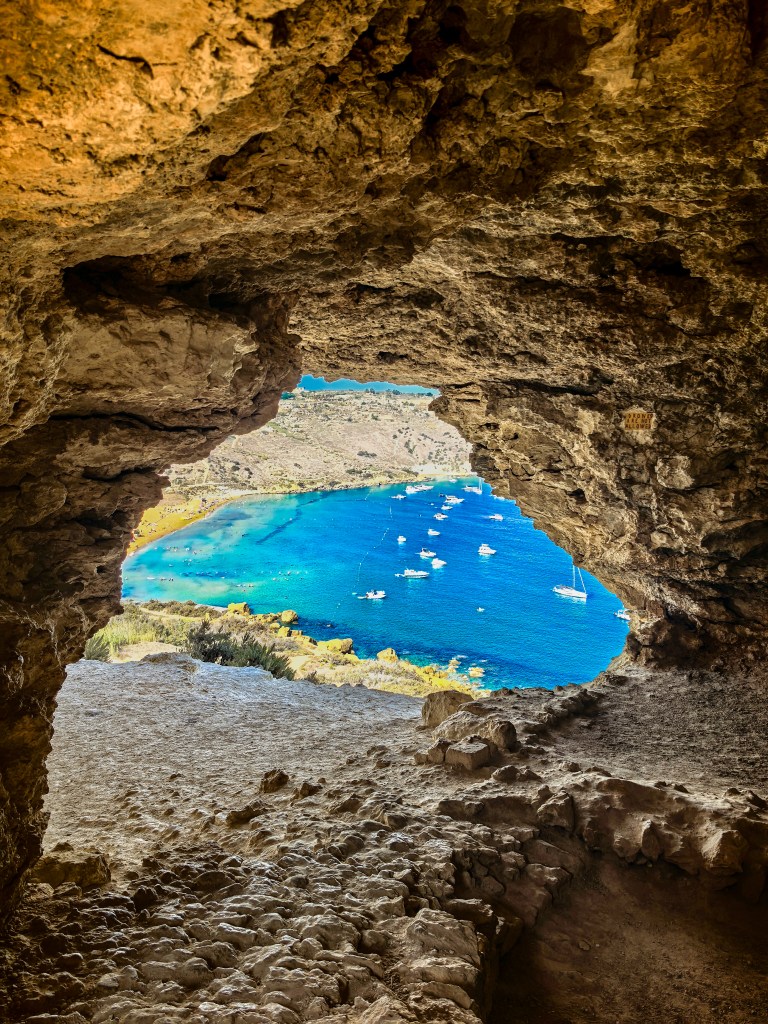
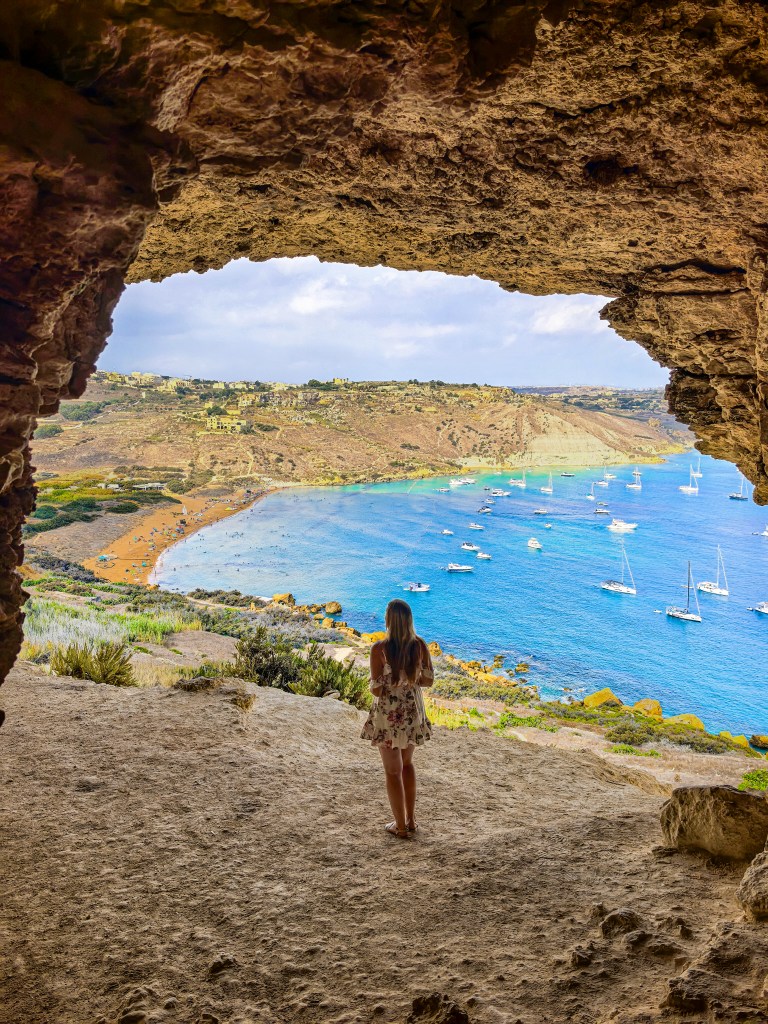
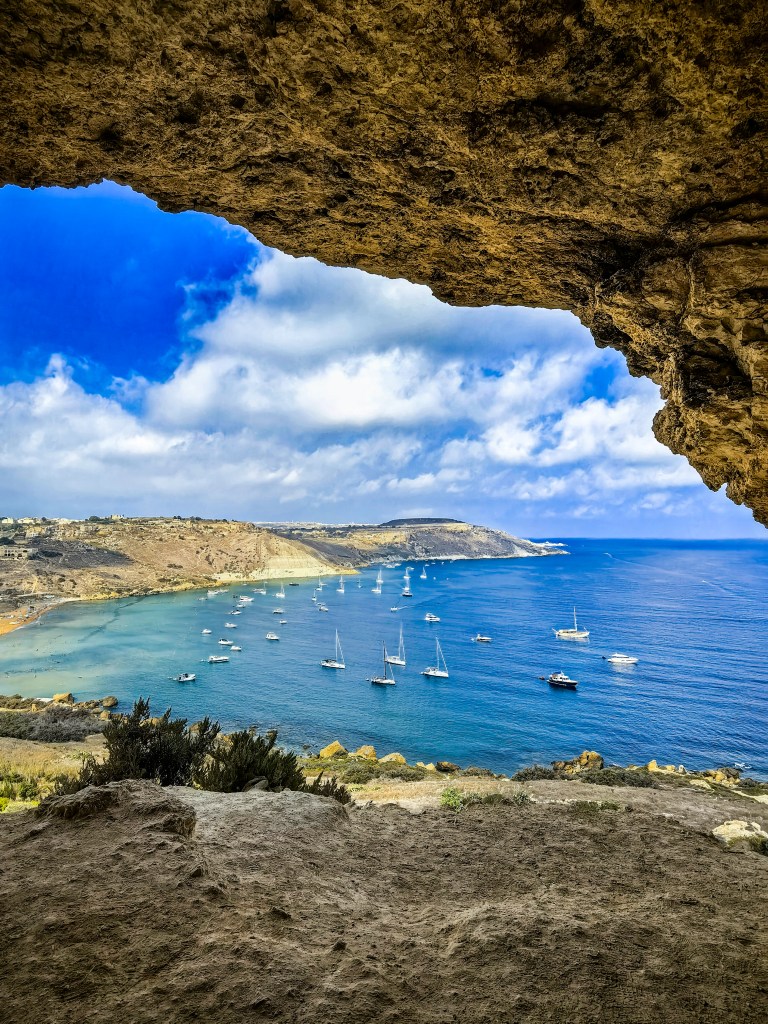
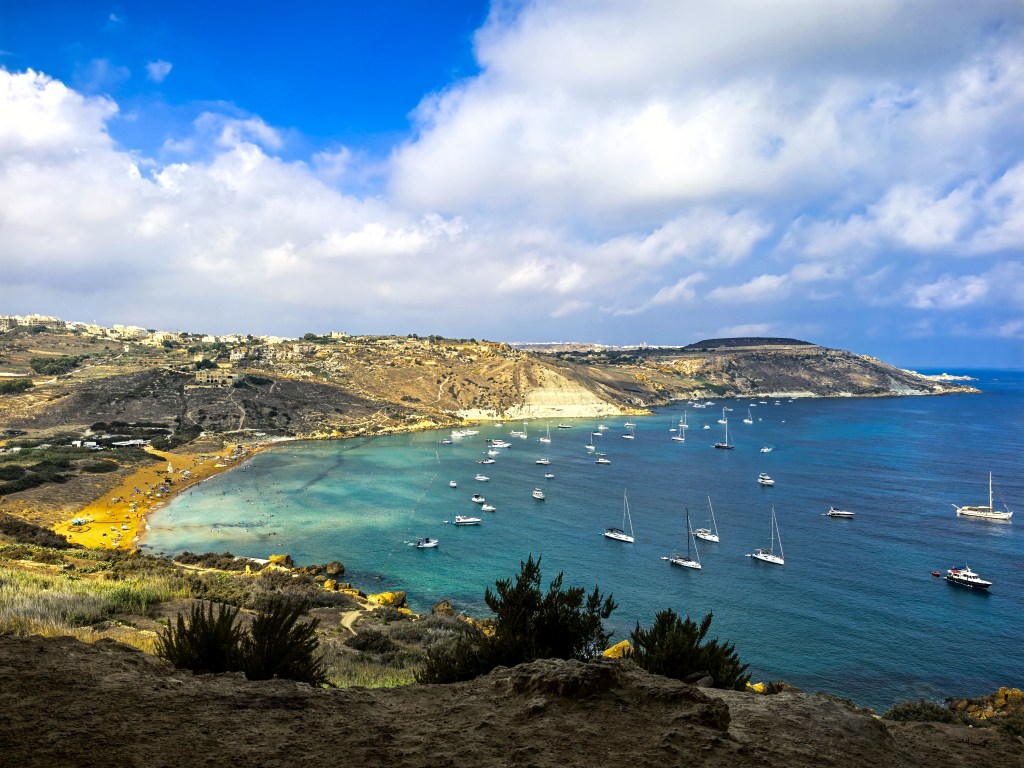
Tal-Mixta Cave (L-għar ta’ Mixta), a small grotto perched on the north-eastern coast of Gozo, is one of the island’s most breathtaking spots. The grotto offers an incredible panoramic view of the Mediterranean Sea and Ramla Bay, famous for its unusual reddish-golden sand.
Interestingly, Tal-Mixta Cave long remained under the radar of tourists, who headed instead to the better-known Calypso’s Cave on the opposite side of the bay — believed by many to be the very cave mentioned by Homer in The Odyssey! That changed after a landslide partly destroyed Calypso’s Cave, turning Tal-Mixta into Gozo’s new must-see viewpoint.

How to get to Tal-Mixta Cave?
The cave sits high on the eastern slope overlooking Ramla Bay, and you can reach it in two ways:
- On foot from Ramla Bay: follow a short but steep path uphill — it’s not a long walk, but make sure to wear sturdy shoes!
- By car: you can drive almost all the way to the cave.
Driving to Tal-Mixta Cave
If you don’t feel like hiking, here’s some good news – you can get very close to the entrance by car! Once you reach the top of the hill, there’s only a short footpath from the wild parking area to the cave. It shouldn’t take more than 5 minutes to walk. The path crosses private land, but pedestrian access is allowed, and at the end, a few rocky steps lead straight into the cave chamber.
🚗 Parking: There’s a small parking area nearby (Google Maps location here). Space is limited though, so it’s worth arriving early before it gets busy. 🙂
Keep in mind that the last stretch of the road is a narrow, gravel track with an uneven surface — so drive carefully! We managed it easily with our rented Kia Picanto, but if you’re not feelin confident, you can always leave your car further down on the asphalt section and continue on foot.
How Much Is the Entarnce Fee to Tal-Mixta Cave?
Visiting Tal-Mixta Cave is completely free of charge. On the upper route, which crosses private land, there’s a small box where visitors can leave a voluntary donation — a nice way to support the maintenance of the area.
💡 Tip: The ground inside the grotto is uneven and rocky, so wear proper shoes (don’t make my mistake and don’t go there in sandals! 😅). There are no barriers inside, so be careful near the edge.
Best time to visit Tal-Mixta Cave
This small cave is quite a popular attraction, so the best time to go is early in the morning, when it’s at its quietest. In addition, morning light (and sunset) beautifully highlights the colours of the sand and the sea. 🌅
🧐 Fun fact: It is believed that in prehistoric times, Tal-Mixta Cave was inhabited by troglodytes.
A Short History of Tal-Mixta Cave
This beautifully located cave is not only an incredible viewpoint, but it also hides a fascinating history. According to The Gozo Observer, a local magazine published by the University of Malta, Tal-Mixta is considered one of the last remaining troglodyte dwellings on Gozo! What’s more, it is said to have been inhabited from prehistoric times right up until the early 20th century.
Over the centuries, the rocky chamber also served as a shelter for cattle and the farmers who tended them. That’s actually where the name comes from — Mixta derives from the Maltese word Mxett, meaning a place where both people and animals would spend the winter together.
Later, during the era of the Knights of Malta, the cave took on a defensive role. In the 18th century, its wide opening was blocked with stones, leaving just enough space for two cannons that were used to fire at enemy ships.
💡 Tip: If you have some extra time after visiting the cave, make your way down to Ramla Bay for a break on its unique red sand — it’s one of the most iconic beaches on Gozo!
Ġgantija Temples – Temples Older Than the Pyramids
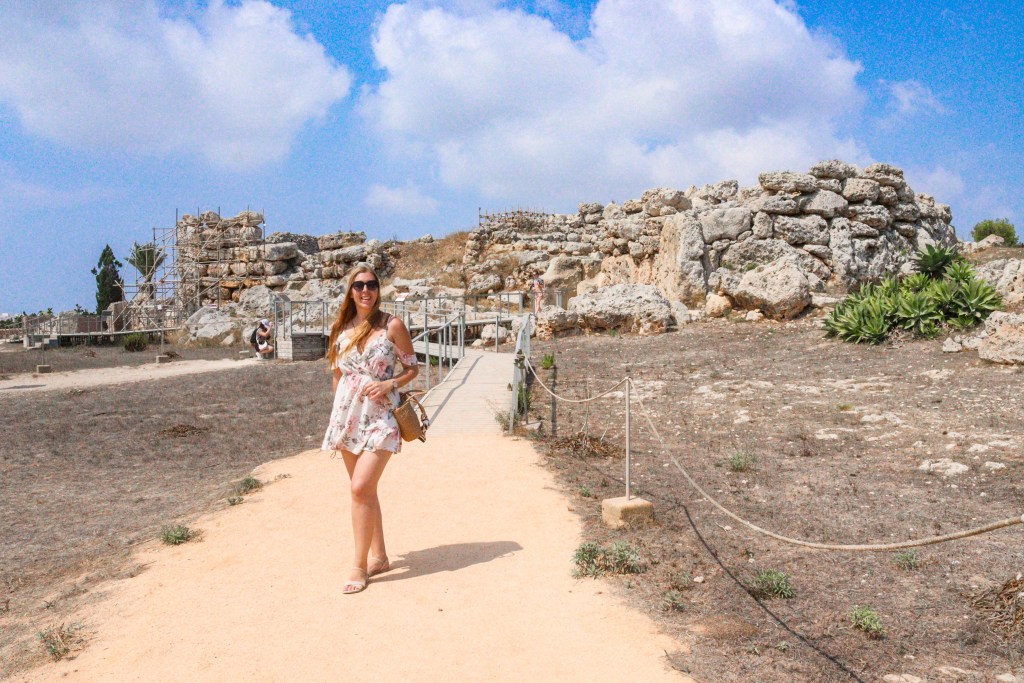
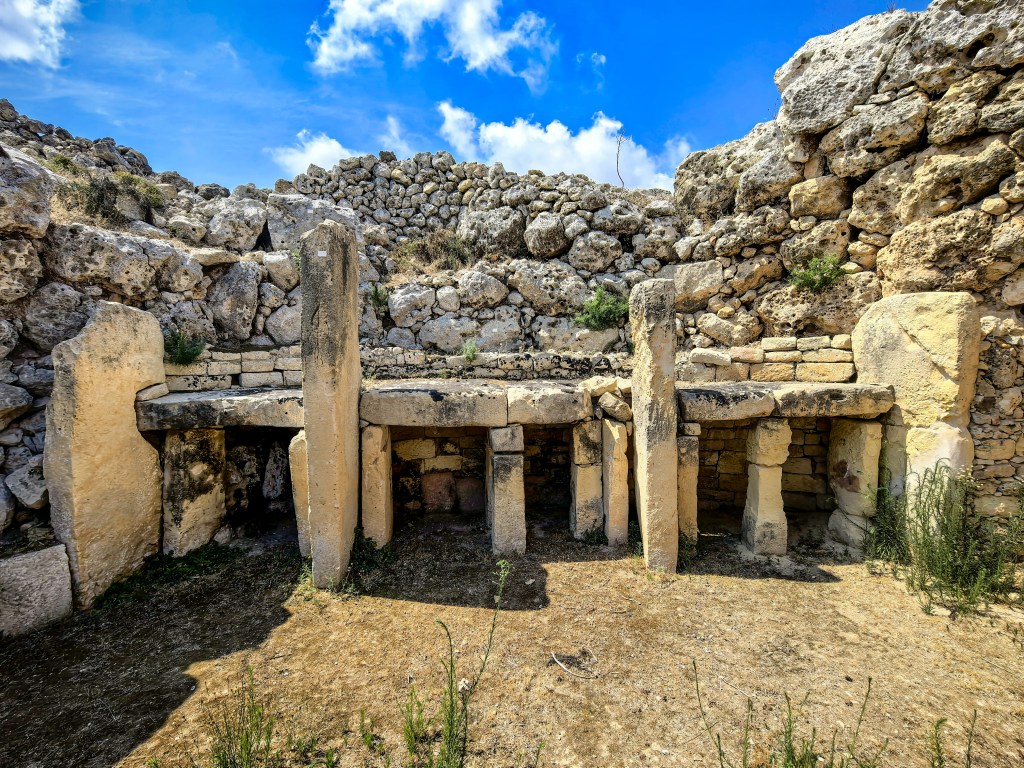
Ġgantija is one of the most mysterious and fascinating places on Gozo, and an absolute must-see for history and archaeology lovers. These Neolithic temples, built from enormous stone blocks, date back over 5,000 years (around 3600–3200 BC)! That makes them older not only than the famous Stonehenge, but even than the Egyptian pyramids. 🤯 What’s more, they are among the world’s oldest free-standing man-made structures. No wonder they’re listed as a UNESCO World Heritage Site and continue to amaze both scientists and travelers alike.

🧐 Fun fact: The Ġgantija temples are considered the second-oldest known man-made religious structures in the world, right after Göbekli Tepe in modern-day Turkey.
What you can see today are the remains of two temples forming the Ġgantija complex, surrounded by massive walls that in some places rise up to 6 meters high. The size of the stone blocks used here is mind-blowing — many weigh several tons, with some reaching dozens of tons. Even more impressive is the fact that the builders didn’t have access to metal tools, let alone the wheel. Archaeologists believe they may have rolled the stones over round rocks used as “rollers,” but the exact methods are still debated.
It’s no coincidence that the complex was named Ġgantija – for centuries, people found it hard to believe such monumental structures could have been built by human hands. The very name instantly evokes… giants! And that’s not by chance – the Maltese word ġgant literally means “giant”. This is why the temples became known as the “tower of giants” or the “place of giants”. That myth still lingers today, giving the site its mysterious and almost magical atmosphere. ✨
But Ġgantija wasn’t just about scale. The temples served as religious and ceremonial sites, most likely connected with fertility rites. Figurines and symbols found here suggest that the Neolithic people of Gozo worshipped goddesses and deities tied to life and nature. Walking among the colossal stone walls, it’s hard to believe they were built in a time when most people still lived in caves.
Legendary Giants
Back in the 17th century, the creation of these megalithic structures was believed to be the work of exceptionally tall and strong people – giants. According to local legend, Gozo was once home to a giantess who lived only on broad beans and honey, and it was her who built this enormous stone temple with her own hands.
Ta’ Kola Windmill
Right next to the Ġgantija Temples stands the Ta’ Kola Windmill – one of the best-preserved traditional windmills on Gozo. Built in the 18th century, it offers a glimpse into the everyday life of the island centuries ago and shows how the people of Gozo harnessed natural energy to grind grain. Wandering around the windmill also rewards you with lovely views over the surrounding hills and fields – and for history lovers, it’s the perfect add-on to a visit to Ġgantija.
💡 Entrance to the Ta’ Kola Windmill is included in the Ġgantija ticket.

How to Get to Ġgantija
The Ġgantija complex is located in the eastern part of Gozo, on the outskirts of the village of Xagħra. The entrance is easy to find, with clear signs pointing the way.
🚗 By car: The easiest way to explore Gozo is definitely by a rental car. From the port in Mgarr – where ferries from Malta arrive – it takes around 15 minutes to reach Ġgantija. There are some parking spots along the road next to the archaeological park.
🚌 By public transport: Once you arrive in Gozo, you can take bus no. 322 from Mgarr Harbour directly to the Ġgantija temples – the ride takes just over 20 minutes. From Victoria (Rabat), the island’s capital, bus no. 307 gets you there in about 13 minutes. The bus stop is just a short walk from the entrance to the temple complex.
Another option is the blue route of the Hop-On Hop-Off sightseeing bus, which also stops near the temples.

Ġgantija Entrance Fees
🎟 Below you can find admission prices (2026):
| Adults | €10 |
| Youth (12–17) & Seniors (60+) | €8 |
| Students | €8 |
| Children (6-11 lat) | €6 |
| Children (1-5 lat) | bezpłatnie |
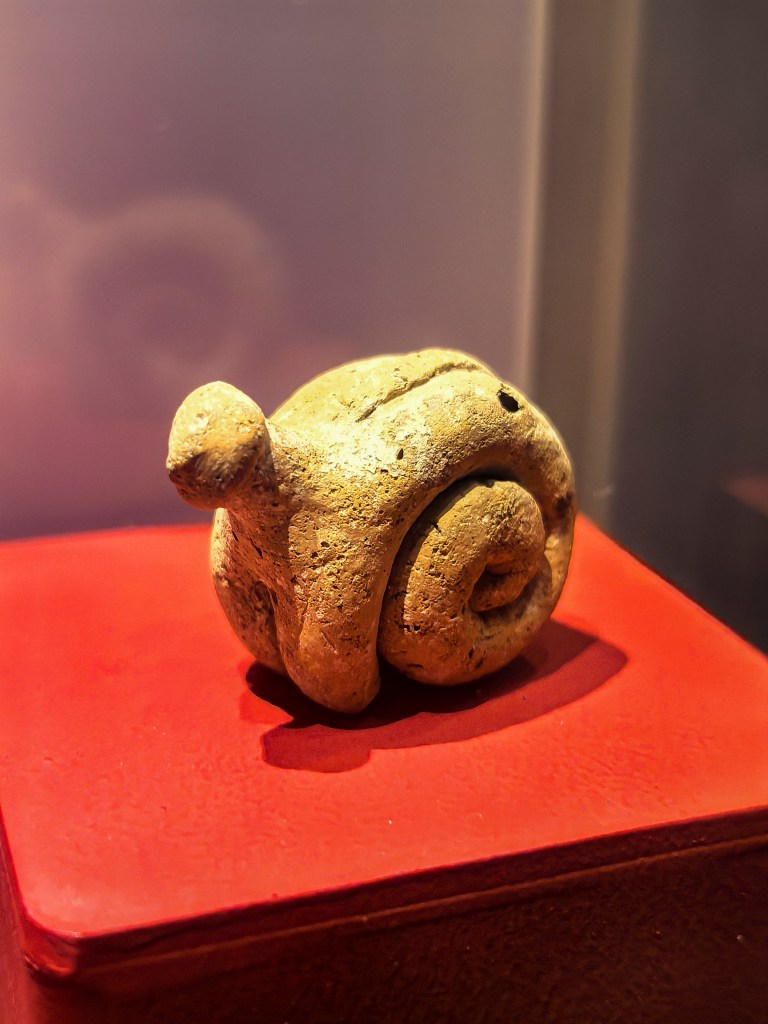
The ticket includes entry not only to the temples themselves, but also to the small archeological museum near the entrance (with some fascinating Neolithic finds), as well as the nearby Ta’ Kola Windmill.
Ġgantija Opening Hours
⏰ Opening Hours: daily 10:00 am to 6 pm (1st March – 31st October 2026)
Last entry: 30 minutes before closing
Recommended visiting duration: 60–90 minutes
Updated schedules and ticket prices can be foun on Ġgantija official website.
Best Time to Visit Ġgantija
It’s best to come early in the morning or later in the afternoon, when it’s quieter and the light makes the stone walls look even more beautiful.
In the hot summer months, try to avoid midday and early afternoon – while the museum is air-conditioned, the temples themselves are out in the open space with absolutely no shade! 🌞
Although Ġgantija is the oldest and most impressive megalithic complex on Gozo, the Maltese Islands are full of traces of this fascinating prehistoric culture. Other temples worth visiting include Ħaġar Qim and Mnajdra in the south of Malta, Ta’ Ħaġrat in Mgarr, and Skorba in Żebbiegħ.
One of the most unique sites is the underground Ħal Saflieni Hypogeum, a UNESCO World Heritage Site. Its mysterious subterranean chambers and unique architecture make it a truly unforgettable place. Visiting these sites gives you an even deeper understanding of just how advanced the ancient civilisation of Malta really was, thousands of years ago.
Blue Hole and Dwejra Bay – the Former Azure Window and a Diver’s Paradise 🌊
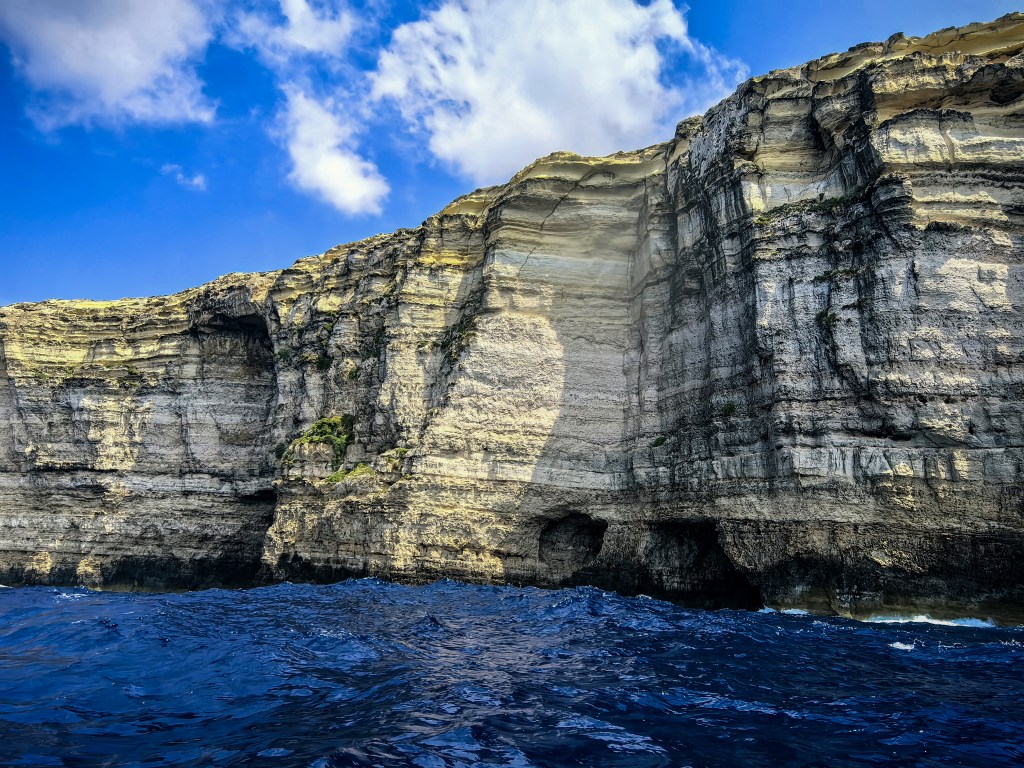
Until a few years ago, the star attraction of Gozo’s west coast was the famous Azure Window – a breathtaking natural rock arch that sadly collapsed during a heavy storm in March 2017. But don’t worry – this area is still absolutely worth a visit!
Right next to where the Azure Window once stood, you’ll find the Blue Hole – one of the most incredible natural wonders in the Maltese Islands. This 15-metre-deep natural pool, hidden among dramatic cliffs, looks like a mysterious well filled with dazzling turquoise water.
Beneath the surface lies a true diver’s paradise: underwater arches, tunnels, and a rich marine life make the Blue Hole one of the most sought-after dive spots not only in Malta but in the whole of Europe. 🐠
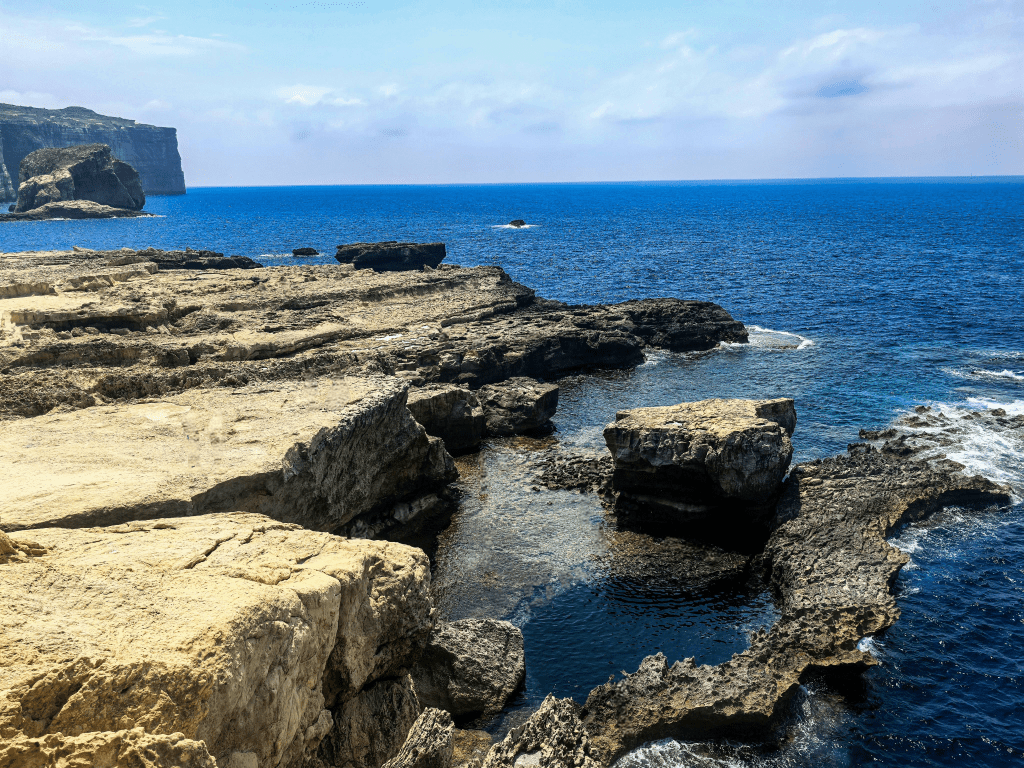
Even if you’re not planning to dive, the Blue Hole is still an amazing spot to visit. The contrast of the sea against the towering cliffs is simply stunning – and the view from above the cliffs is just as impressive!
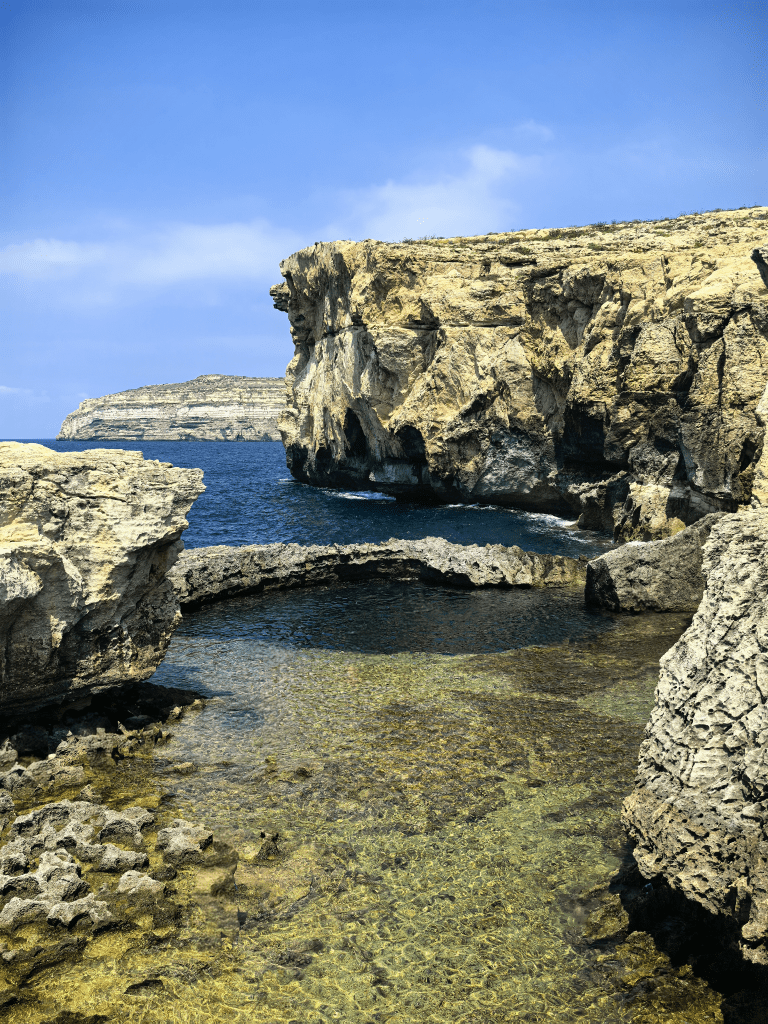
While you’re in the area, don’t miss the Inland Sea (coming up in a moment!) and the stunning Dwejra Bay, home to spectacular rock formations. The most famous is Fungus Rock, which, according to legend, was home to a rare plant believed to have extraordinary healing properties, especially for treating wounds. Back in the day, this “precious” rock was strictly guarded by the Knights of St John – better known as the Knights of Malta.
🧐 Fun fact: Dwejra Bay is not just a paradise for tourists and divers – it’s also a favourite among filmmakers. This is where the wedding of Daenerys Targaryen and Khal Drogo was filmed in Game of Thrones (though sadly the Azure Window is no longer there). The dramatic cliffs of Gozo also made an appearance in The Count of Monte Cristo (2002) and Clash of the Titans (1981). 🎥
How to Get to the Blue Hole and Dwejra Bay
🚗 By car: The easiest way to reach Dwejra Bay is by car. From Victoria (Rabat), Gozo’s capital, it takes around 15 minutes to drive. There’s a large free car park right by the bay, from where you can easily walk to the Blue Hole, the viewpoints overlooking Fungus Rock, and the Inland Sea.
📍 Google Maps location of the car park
🚌 By public transport: Bus no. 311 runs here from Victoria (Rabat), with its final stop right at the bay – the journey takes just under 20 minutes. The Hop-On Hop-Off sightseeing bus (purple line) also stops here.
Best Time to Visit
The Blue Hole and Dwejra Bay are at their most beautiful in the afternoon, and towards sunset. That’s when the sun lights up the rocks from the front, and the whole bay glows in golden colours.
Around midday, the light is much harsher and more vertical – the views are still impressive, but photos tend to be a bit less flattering
If you’re into photography, or simply want to soak up the area’s magical atmosphere, it’s definitely worth staying here until evening.
Divers and snorkellers, on the other hand, should aim to visit earlier in the day, when the water is best illuminated and visibility is at its peak.

Practical Tips:
- 👟 Wear sturdy shoes – the terrain around the Blue Hole and Dwejra Bay is rocky and can get slippery, so flip-flops aren’t the best idea.
- 🌊 Water safety – swimming and diving here are recommended only for strong swimmers or with a guide, as the waves can be very powerful.
- 🤿 Snorkelling – even if you don’t dive, bring a mask and snorkel. You can spot colourful fish and fascinating rock formations just below the surface.
- 🌅 Stay for sunset – if you can, don’t leave too early. This is one of the best spots on Gozo to watch the sky explode with colours as the sun goes down.
- 🚶 Avoid the crowds – during peak season, the area gets busy with tour groups. Arrive early in the morning or later in the afternoon to enjoy it in peace.
Inland Sea – a Hidden Lagoon Among the Cliffs
The Inland Sea is one of the most unique spots on Gozo. This small saltwater lagoon, tucked away among limestone cliffs, is connected to the open sea by a narrow rock tunnel about 80 metres long — that’s where its name comes from!
Most likely, this amazing place was formed through erosion and a crack in the limestone that eventually created a sea cave. When the cave’s roof finally collapsed, it left behind a small, tranquil lake nestled between the cliffs, linked to the Mediterranean by that long tunnel.
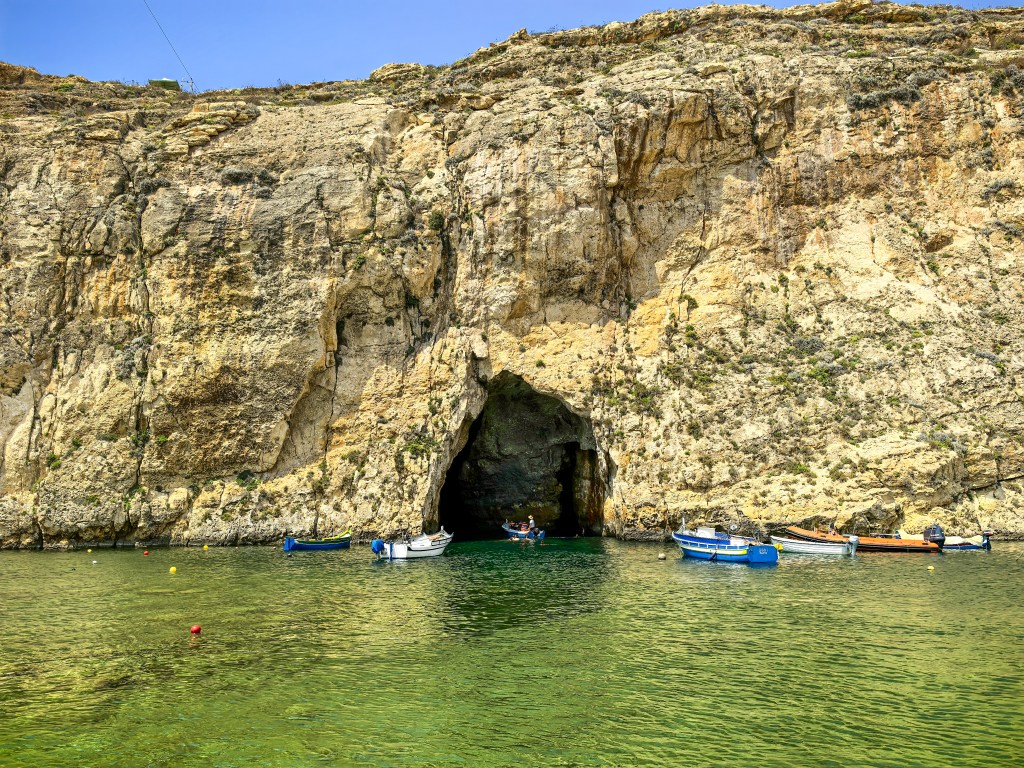
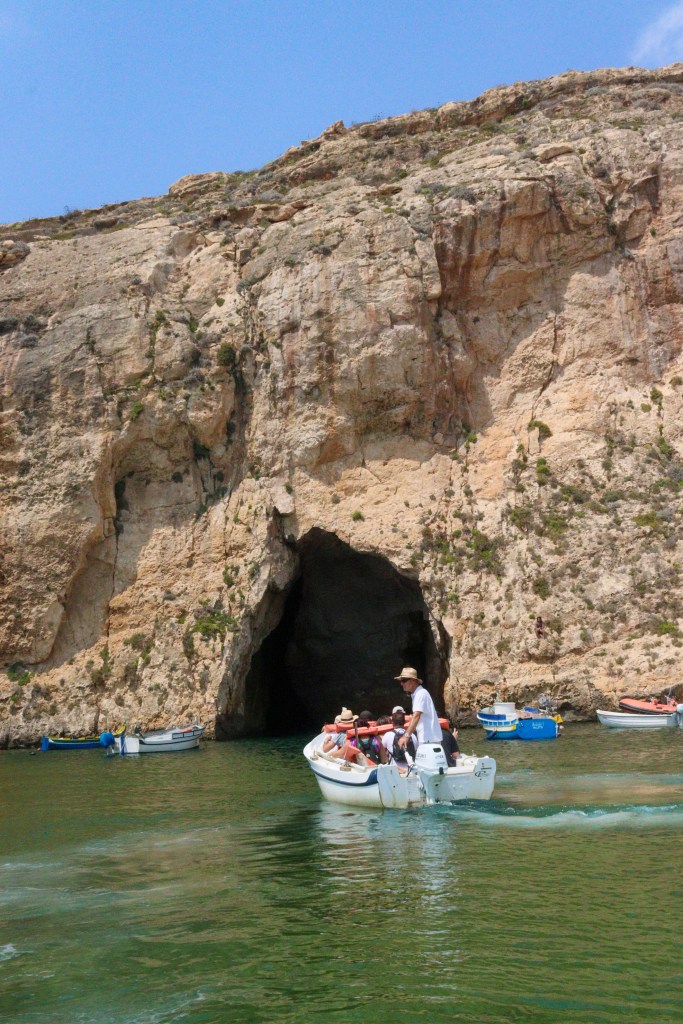
On the shore of the lagoon you’ll find a tiny fishing harbour, where traditional wooden boats set off on short trips through the tunnel. It’s a magical experience – gliding first across the calm green lagoon, and then suddenly emerging into the open Mediterranean to admire Dwejra’s dramatic cliffs from a whole new perspective.
The lagoon’s greenish, calm waters are also perfect for a refreshing dip, especially on hot summer days. If you’ve got some extra time, it’s worth slowing down here for a while. Just keep in mind that the beach and seabed are rocky, so bring water shoes.
💡 Tip: The Inland Sea looks incredible from above, so if you’ve got a drone, this is the perfect place to fly it. Sadly, we had some issues with connection to the remote control – but hey, that’s just another reason to plan a return trip to the Maltese Islands!
🧐 Fun fact: According to local stories, fishermen have used this lagoon for centuries as a safe shelter during storms – when the open sea was too dangerous, the Inland Sea offered shelter.
🛶 Boat Trip Through the Tunnel
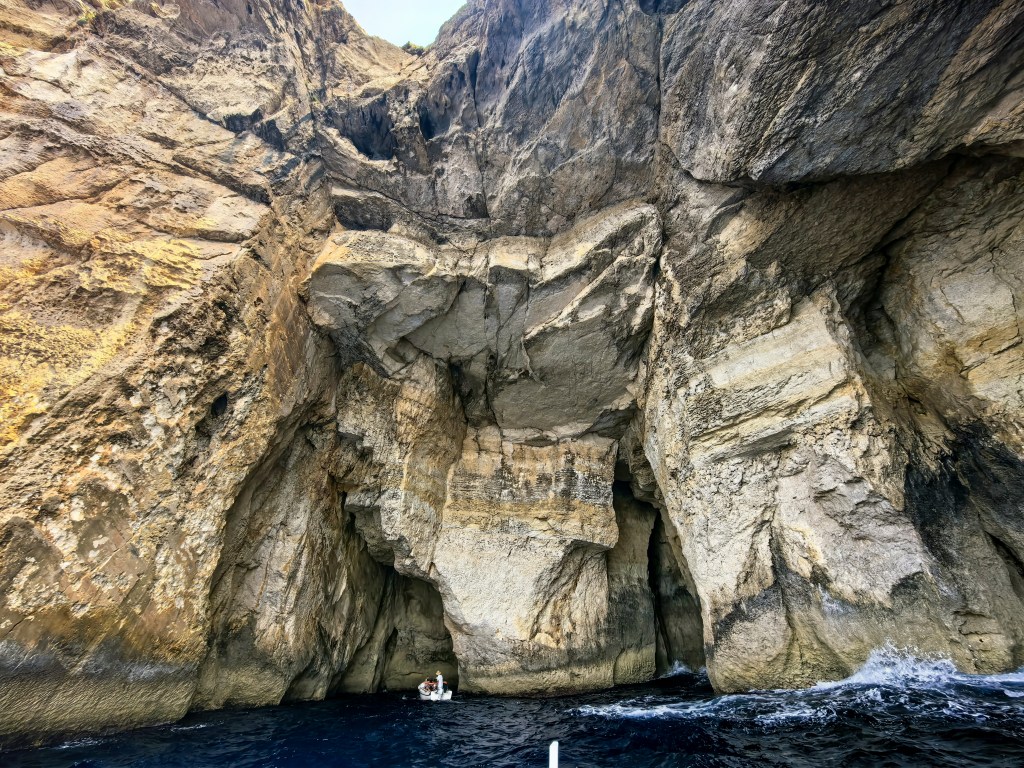
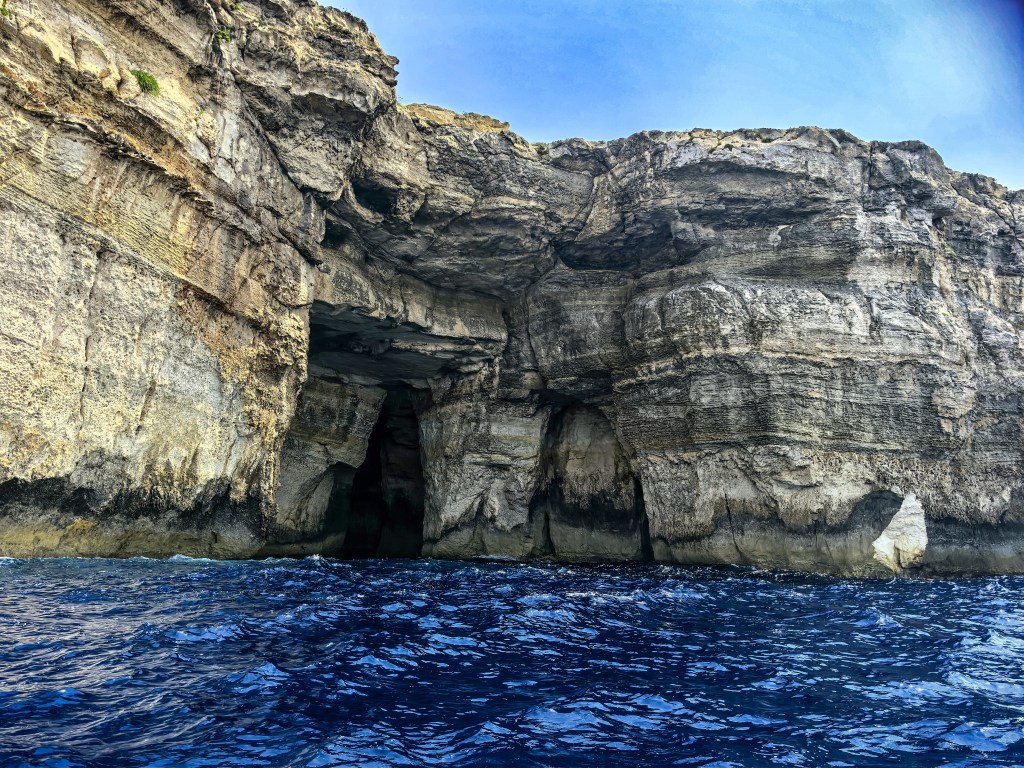
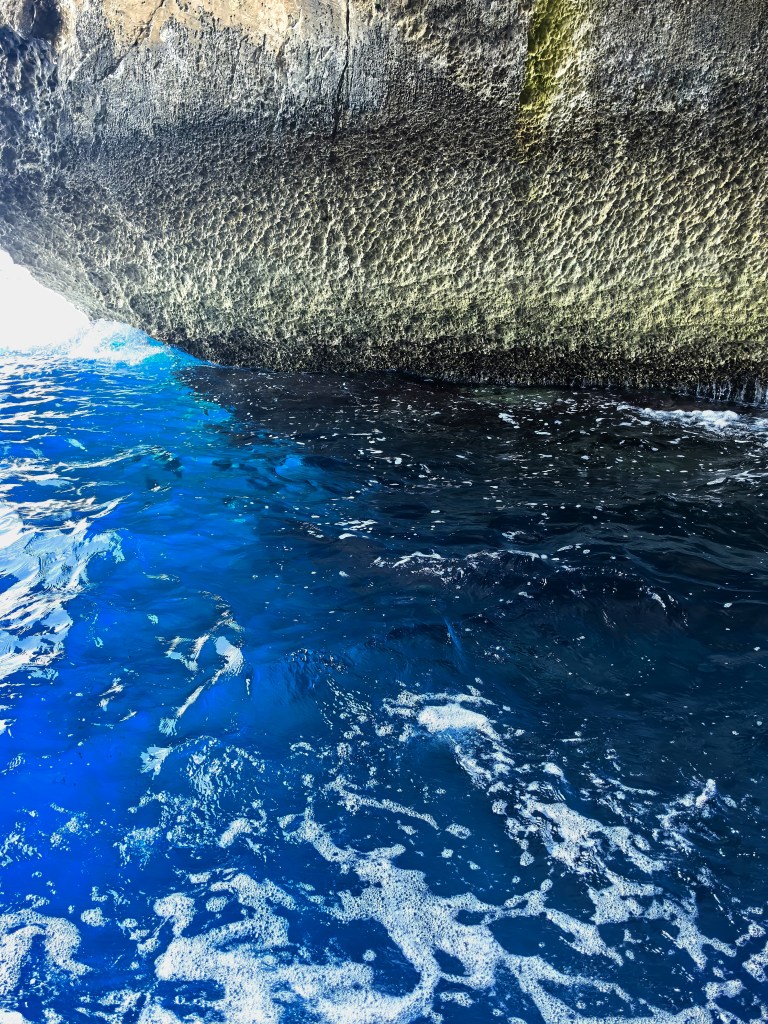
One of the biggest highlights of the inland Sea is a short but stunning boat ride through the rocky tunnel connecting the lagoon with the open sea. The small harbour is right on the lagoon’s shore, and that’s where the traditional wooden boats depart. The passage itself is a real thrill – about 80 metres through a natural corridor carved in the rock, with water echoing off the walls. On the other side, you’re greeted by the sight of the vast Mediterranean, Dwejra’s towering cliffs and waves crashing dramatically against the rocks.
🎟 Price: €5
⌛ Duration: about 15 minutes
Keep in mind that the trips are weather-dependent – if the wind is strong or the sea too rough, local fishermen won’t head out.
🤿 Inland Sea for Divers
This spot is also a favourite among divers – the Inland Sea is considered one of the most fascinating dive sites on Gozo! The underwater tunnel leads to caves and reveals rich marine life, making it especially popular among more experienced fans of underwater adventures.
How to Get to the Inland Sea
The Inland Sea lies just a short walk from the Blue Hole and Dwejra Bay, so you can easily explore all three spots on foot!
🚗 By car: The easiest way to reach the Inland Sea is by car – from Victoria (Rabat), the capital of Gozo, it’s about a 15-minute drive. There’s a large free car park on site, from where you can easily walk to the Inland Sea, the Blue Hole, and the viewpoints overlooking Fungus Rock.
📍Parking location on Google Maps
🚌 By public transport: From Victoria (Rabat), bus no. 311 takes you directly here – the last stop is right by the bay, and the ride takes less than 20 minutes. The tourist Hop-On Hop-Off Bus (purple line) also stops here.
Best Time to Visit
The best time to visit the Inland Sea is in the morning, when the sun shines directly into the tunnel entrance and beautifully illuminates the lagoon’s waters. That’s when it turns the most intense turquoise colour, and underwater visibility is at its best – perfect if you’re planning to snorkel or dive.
In the afternoon, it can get more crowded, especially during the summer season when tour groups arrive.
If you’re after a calmer, more peaceful atmosphere, try to come early in the morning or just before sunset – the lagoon takes on a wonderfully serene vibe, and the soft light creates stunning photo opportunities.
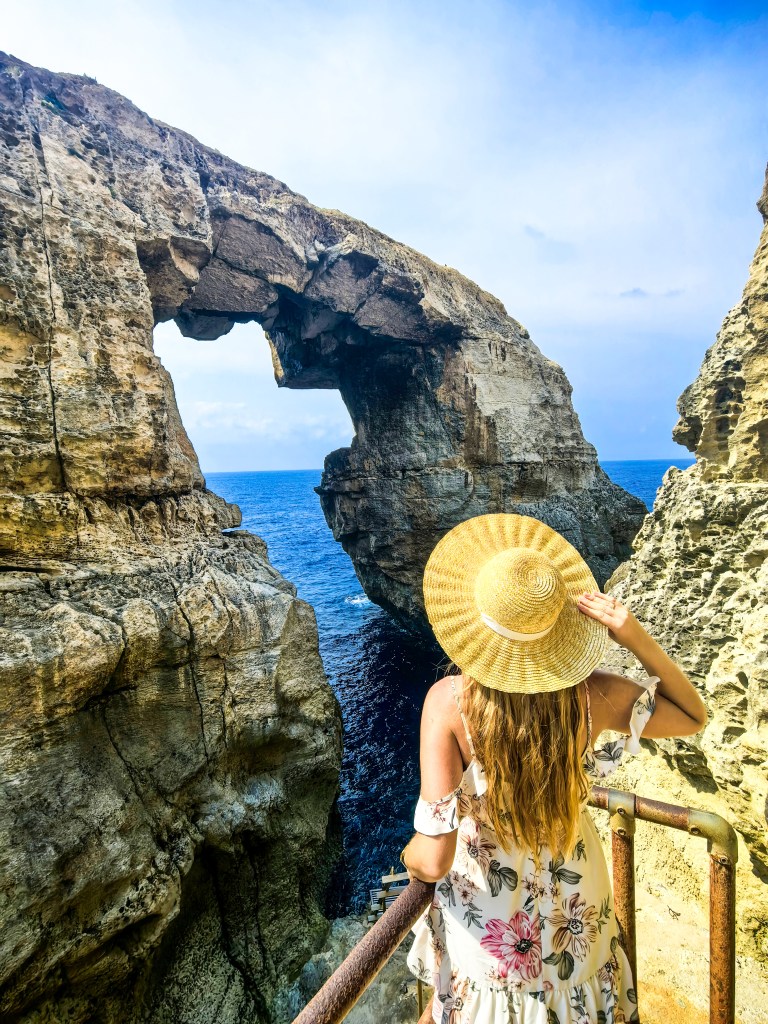
Wied il-Mielah Window – Gozo’s Hidden Rock Arch
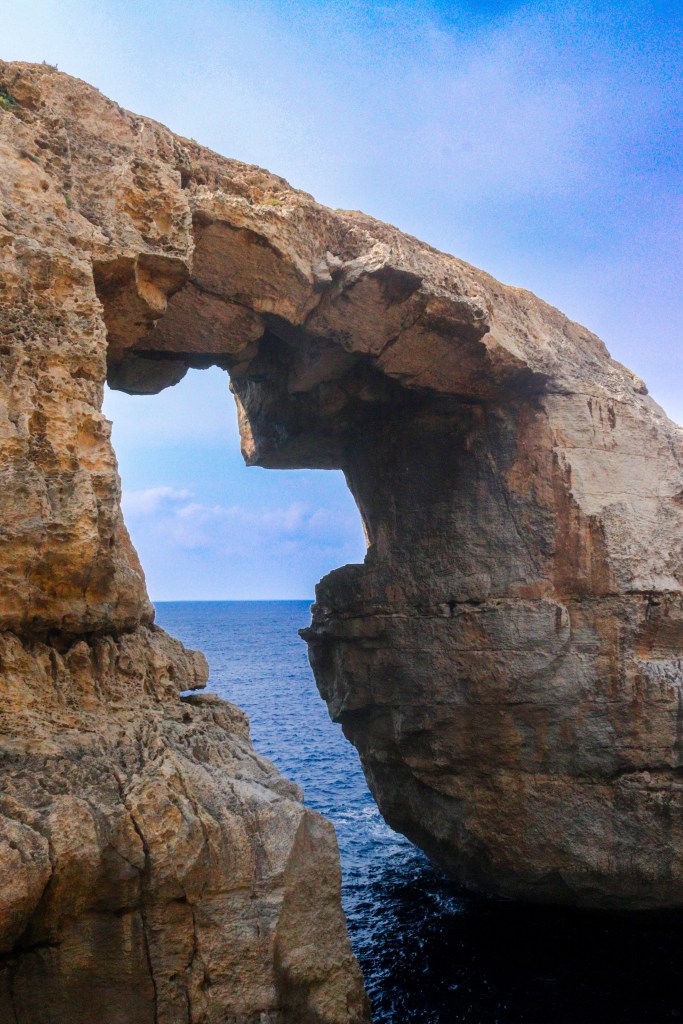
Tucked away on Gozo’s northern coast, the Wied il-Mielah Window is one of those places that still feels like a secret. Once known as the “lesser-known cousin” of the famous Azure Window, it has quietly stepped into the spotlight since the latter collapsed into the sea in 2017 – becoming its natural successor.
Carved out by the relentless force of the sea and countless storms, the arch seems to hang dramatically above the deep-blue water. It’s dramatic, wild, and still blissfully uncrowded – a perfect spot for those who love to wander off the beaten path.
How to Get to the Wied il-Mielah Window
The Wied il-Mielah Window lies on the north-western coast of Gozo, near the village of Għarb.
🚗 By car: The easiest way to reach it is by car – it’s about a 15-minute drive from the centre of Victoria (Rabat). The route winds through very narrow country roads towards the cliffs. There’s no proper car park on site, and the road is quite tight, so finding a good place to stop can be tricky.
From there, stone steps lead you down to the arch itself.
🚍 By public transport: Public transport won’t take you all the way to the arch. You can take bus no. 311 from Victoria to Għarb, but the final stretch has to be done on foot – about a 30-minute walk from the village centre. We did spot some visitors using Bolt though, so that’s a handy alternative if you’re not driving.
This spot is still far quieter than most of Gozo’s attractions, so don’t expect tourist facilities – there are no cafés or shops here, just raw nature and breathtaking cliff views.

Best Time to Visit the Wied il-Mielah Window
The rock arch looks its most magical in the early morning or late afternoon, when the rising or setting sun bathes the cliffs in a warm golden glow.
Ta’ Pinu Basilica – the Miraculous Sanctuary of Our Lady
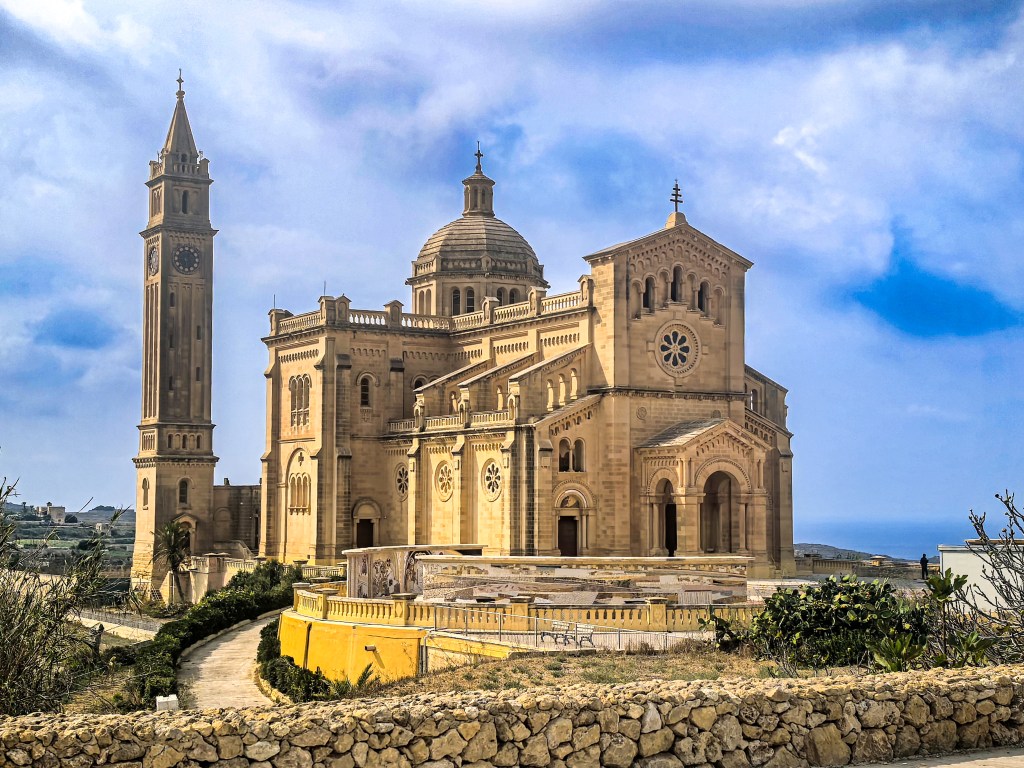
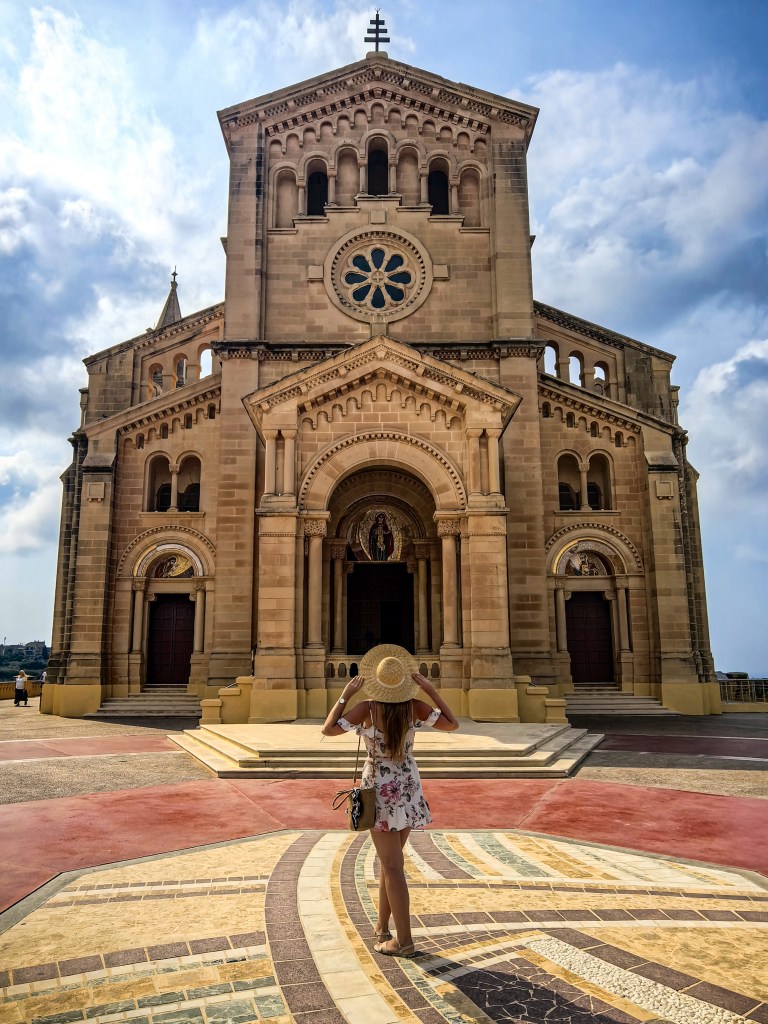
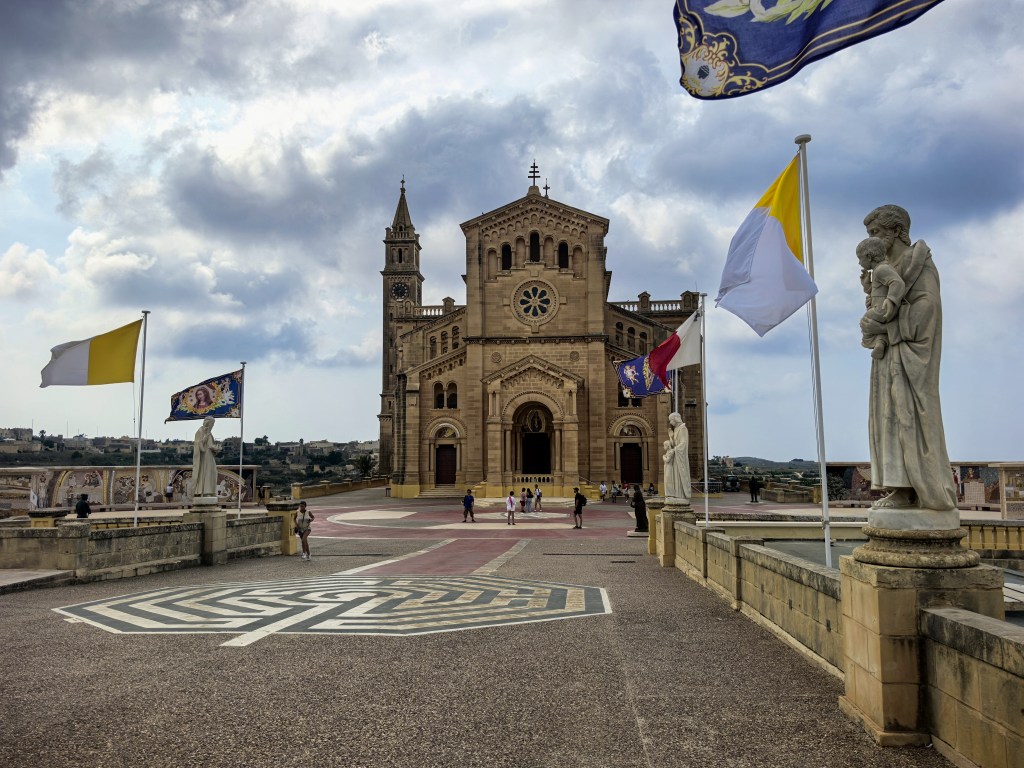
Ta’ Pinu is one of the most important and revered Marian sanctuaries on Gozo – and in the entire Maltese archipelago. Set in a peaceful, picture-perfect area near the charming village of Għarb, it captivates visitors with both its deep spiritual atmosphere and the beauty of the surrounding countryside. The sanctuary draws not only pilgrims wishing to honour Our Lady, but also travellers who want to soak up its unique aura, admire its remarkable architecture, and enjoy walks through the nearby hills and green fields.
The story of Ta’ Pinu dates back to 1883, when a local farmer, Karmela Grima, is said to have heard the voice of the Virgin Mary calling her from a painting inside a humble chapel. Today, that very chapel can still be found behind the altar of the Neo-Romanesque basilica built between 1920 and 1931.
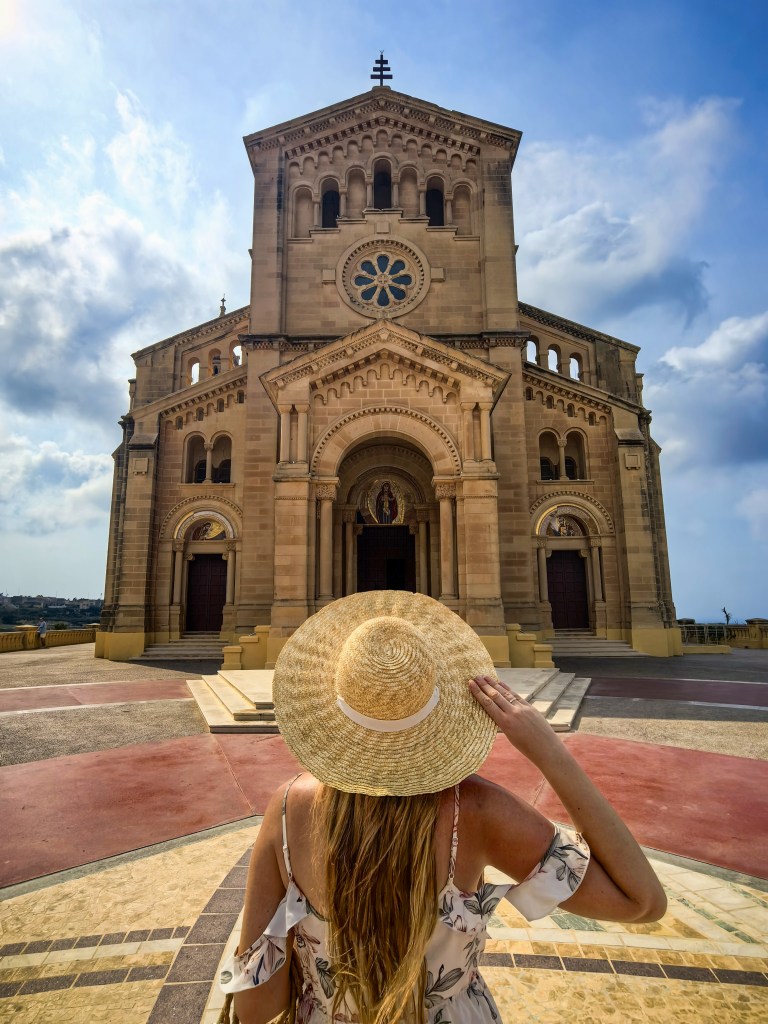
The basilica enchants visitors with its monumental façade, richly decorated portals, and beautiful stained-glass windows illustrating biblical stories. ItOver the years, it has gained national significance through countless testimonies of miracles and blessings shared by the faithful.
🎟 Admission: Free entry
⌛ Opening hours: 07:00–19:00
How to get to Ta’ Pinu Sanctuary
🚗 By car: The sanctuary is located in western Gozo, near the village of Għarb. From Victoria (Rabat) it’s an easy 6-minute drive through open countryside. There’s a convenient car park for visitors right next to the church (check Google Maps for the location).
🚌 By public transport: Local buses run from Victoria (line 308) and other major towns on Gozo. Check the timetable in advance, especially in low season or on weekends, as connections can be less frequent. The tourist Hop-On Hop-Off Bus (purple line) also makes a stop here.
Best Time to Visit Ta’ Pinu Sanctuary
The best time to visit is in the morning, when the atmosphere is calm and the sunlight beautifully highlights the façade and interior details. Late afternoon is also lovely for a peaceful stroll around the sanctuary and for soaking in the views of Gozo’s softly rolling hills.
Wied il-Għasri – a Picturesque Sea Gorge
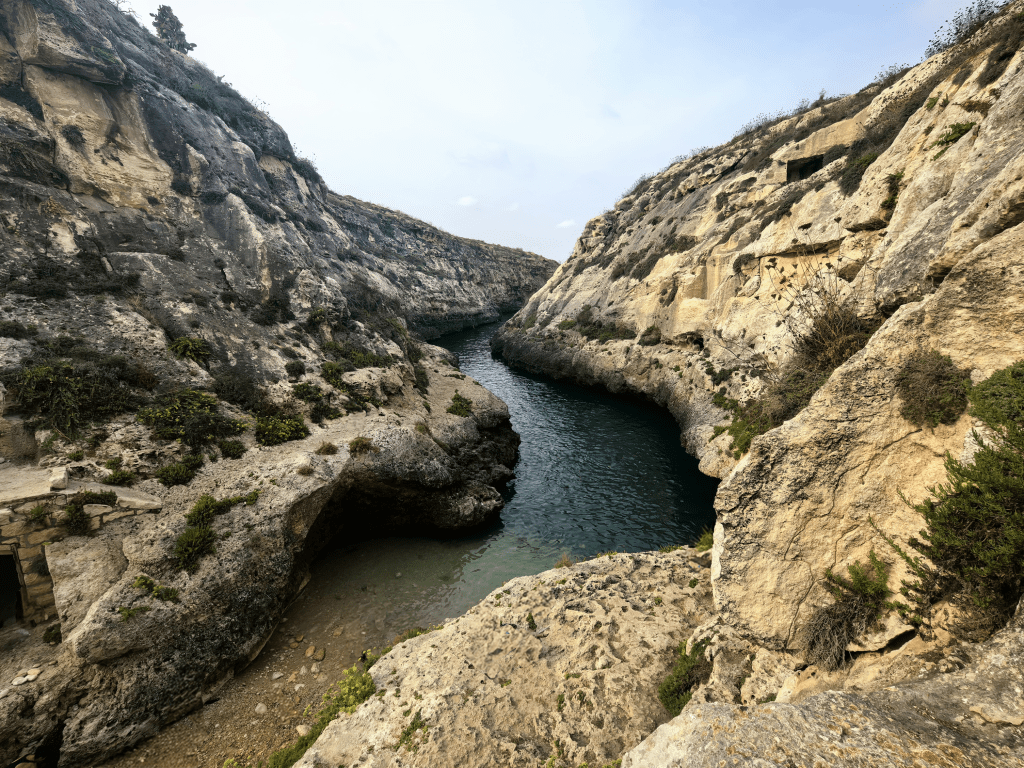
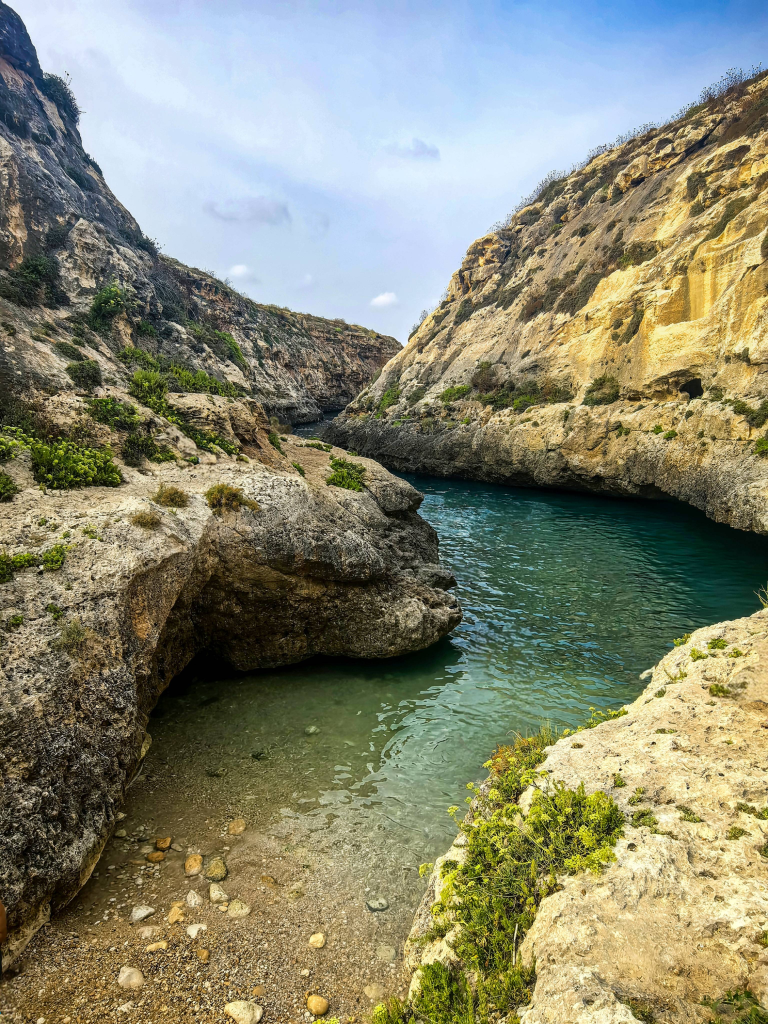
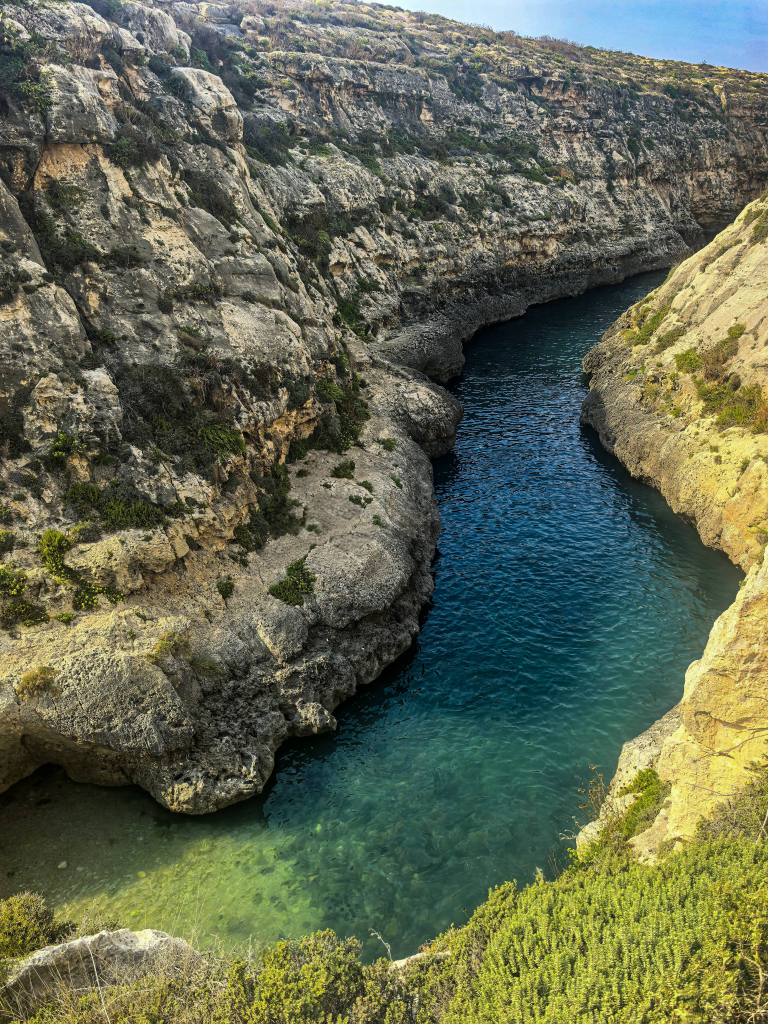
Wied il-Għasri is one of Gozo’s most stunning hidden gems. This secluded cove tucked between towering cliffs, mesmerises visitors with its striking rock formations and crystal-clear, calm water.
This narrow, winding gorge stretches for around 250–300 metres from the open sea deep into the valley. Between 15 and 30 metres wide and no more than 40 metres deep, it’s framed by majestic cliffs of coral and globigerina limestone sculpted by wind and waves into breathtaking natural shapes.
🌊 Swimming and Diving Conditions
Wied il-Għasri is the perfect spot not only for relaxing on the tiny pebble beach or sunbathing on the surrounding rocks, but also for a refreshing dip in the clear sea.
The seabed, gently sloping and covered mostly with small pebbles, makes it easy to enter the water — though water shoes are a good idea!
Thanks to the cove’s narrow shape, the water here is usually calmer than along the open coast, which makes it ideal for a relaxed swim and for families with children.
Wied il-Għasri has also become a favourite among divers and snorkellers, thanks to its fascinating network of underwater caves, vibrant marine life, and excellent visibility. In the deeper section of the gorge lies the famous Cathedral Cave, known for its magical, enormous blue dome that attracts many divers.
Beneath the surface, you’ll find schools of colourful fish, curious little octopuses, and — if you’re lucky — even a few rare crustaceans.
One of the things that makes Wied il-Għasri truly special is its tranquillity — even in high season, you can often find your own peaceful spot.
How to Get to Wied il-Għasri
🚗 By car: The easiest and most convenient way to reach Wied il-Għasri is by car — it’s only about a 10-minute drive from Victoria (Rabat). Once you pass through the town of Żebbuġ, narrow rural roads lead you towards the coast, so drive carefully! The final stretch is a bumpy gravel road, so it’s best to park a little earlier and walk the rest of the way.
📍 Google Maps location of the parking area
🚌 By public transport: There’s no public transport that reaches Wied il-Għasri directly, so if you’re without a car, you’ll have to walk part of the way. From Victoria (Rabat), take bus no. 309 to the nearby village of Żebbuġ and then continue on foot – it’s about a 25–30 minute walk.

Access to Wied il-Għasri
Whether you arrive by car or by bus, the final approach to the gorge takes you down a set of stone steps that lead down to the inlet itself, revealing beautiful views of the cliffs and turquoise water below.
Best Time to Visit Wied il-Għasri
Any time of day works for visiting Wied il-Għasri, but early morning or late afternoon is ideal, when the tourist traffic is at its lowest and the sunlight gently illuminates the cliffs and turquoise water.
In summer, the gorge can get a little crowded, but outside the peak season you’ll often have this tiny slice of paradise almost entirely to yourself.
Xwejni Salt Pans – A Glimpse into Gozo’s Salt-Making Heritage

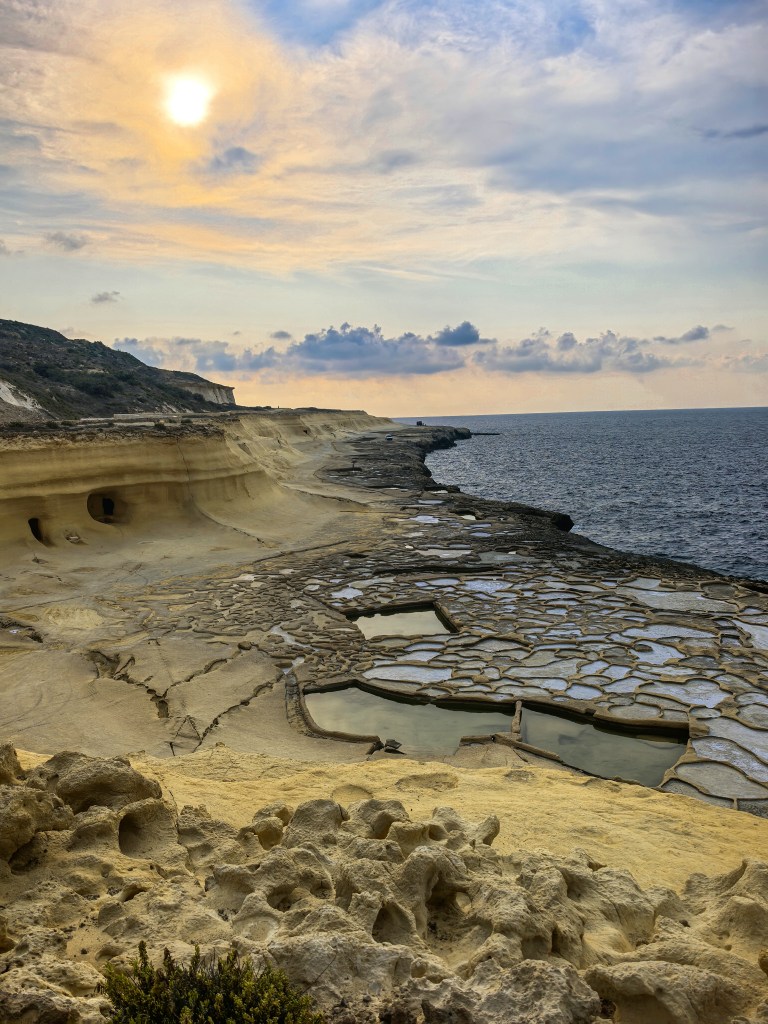
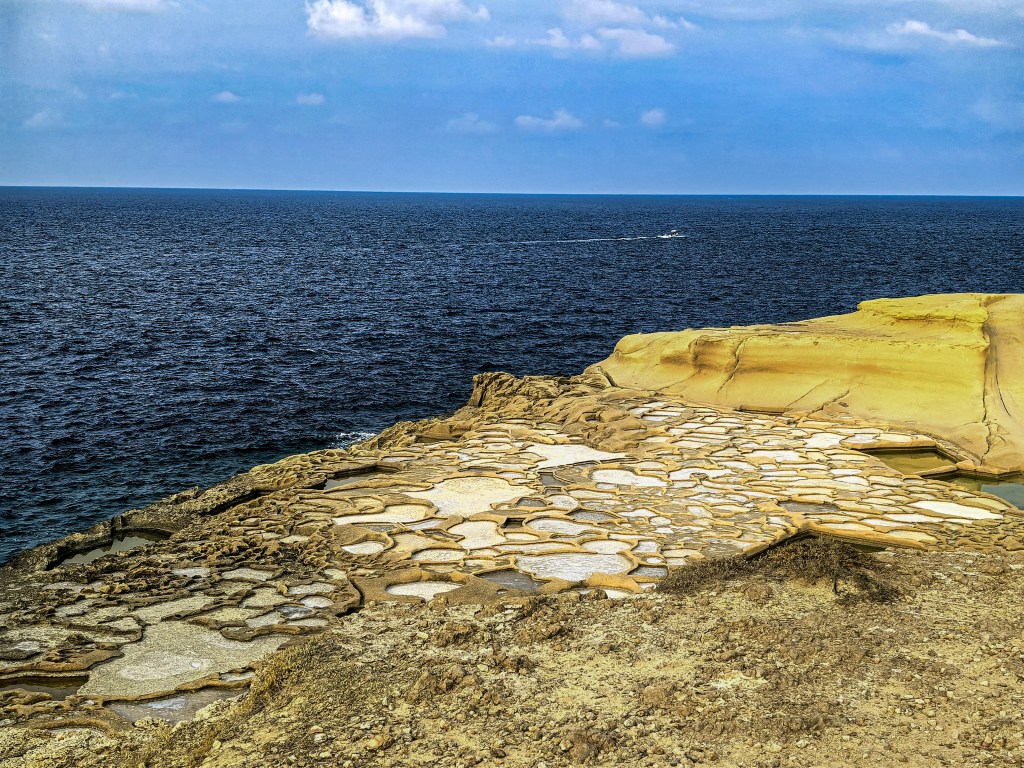
Located on Gozo’s northern coast, near Xwejni Bay, the salt pans are not only picturesque but also a distinctive feature of the island’s landscape. The coastline is covered with a grid of shallow rock pools filled with seawater.
In the sun, the salt pans shimmer in shades of blue, green, and white, making the area not just a fascinating glimpse into local history and culture, but also a photographer’s dream.
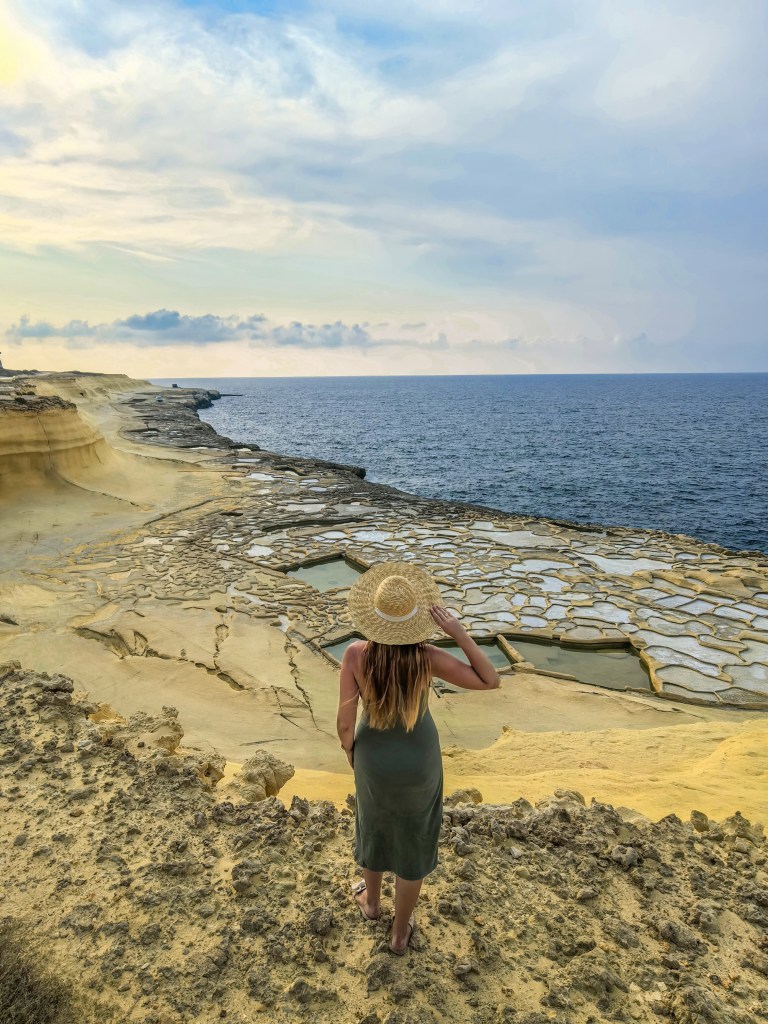
💡 Tip: The best shots are often captured with a drone!
History and Tradition of Sea Salt Production
Salt harvesting on Gozo goes back to ancient times – it’s believed the first pans were created during the Roman era! The natural formation of the coastline made it ideal for carving shallow pools in the rock, where the sun and wind would gradually evaporate the seawater. This method, used for thousands of years, has barely changed.
The Xwejni pans are about 350 years old and have been passed down through generations. Many local families still practice traditional salt-making today, both as a livelihood and as a cultural heritage of Gozo. A great example is the Cini family, producing salt continuously since the 1860s.
Interestingly, the process hasn’t changed much over the centuries – once the pools are filled with seawater, it’s left to naturally dry, and then the salt crystals are manually collected and stored in small rock caves. The Maltese climate, with its long sunny periods, helps a lot. Sunshine does most of the hard work here!
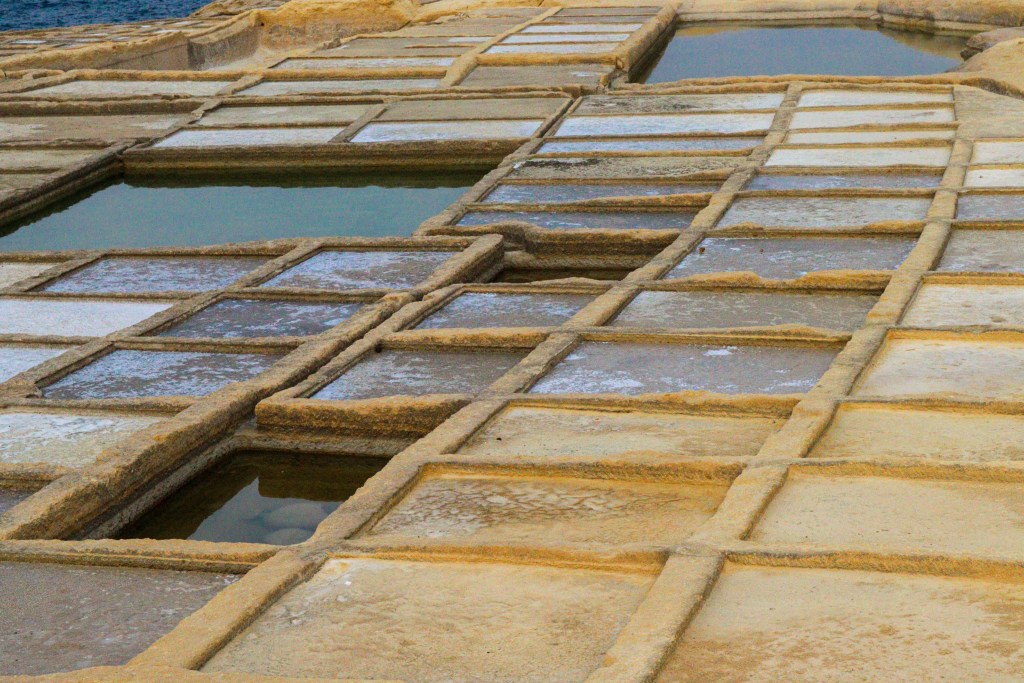
💡 Tip: When visiting Xwejni, you can pick up a practical souvenir – a little pack of “white gold” – from the small shop in a cave in front of the pans.
During the summer season (mid-May to September), when evaporation is at its peak, walking along the coast lets you see the process in action and feel the continuity of a tradition that links modern islanders with their ancient ancestors. This is also the time to catch a glimpse of the salt harvest!
💡Tip: Tip: While exploring Gozo’s coast, keep an eye out for other salt pans – there are plenty of them scattered around the island!
How to Get to Xwejni Salt Pans
🚗 By car: Xwejni Salt Pans are ocated on Gozo’s northern coast, near Marsalforn. Getting there is easy – from central Marsalforn, head towards the coast along Triq il-Qbajjar and then turn towards Xwejni Bay. You can drive almost right up to the pans, with a few parking spots along the coastal road. This is also a great starting point for a walk – leave the car and stroll along the rock pools, admiring their geometric shapes and stunning sea views.
🚌 By public transport: From Victoria (Rabat), take bus number 310 to the stop at Xwejni.
📢 Important: Walking on the salt pans is forbidden – let’s keep this unique place safe and intact so we can all enjoy its beauty for years to come!

The Best Time to Visit Xwejni Salt Pans
🌞 Summer is when the salt pans truly come to life – you can actually witness the traditional salt-harvesting process. On hot, sunny days, the seawater slowly evaporates in the shallow pools, leaving behind shimmering salt crystals that local families collect by hand. It’s a wonderful chance to catch a glimpse of a living tradition that has sustained Gozo’s residents for centuries.
📸 If you’re dreaming of beautiful shots, visit in the morning or at sunset. That’s when the light enhances the geometric patterns of the salt pans, creating a stunning contrast between the golden limestone, and the turquoise and deep blue shades of the sea. Especially at sunset, the whole landscape turns almost magical, with the reflections in the water adding an extra touch of charm.
🌊 Winter and spring have their own charm too – although the pans aren’t in use then, the waves crashing against the rocky shore create a raw, dramatic scene. It’s perfect for those who prefer Gozo’s wild side and enjoy a peaceful walk away from the summer crowds.
Victoria (Rabat) – the Beating Heart of Gozo
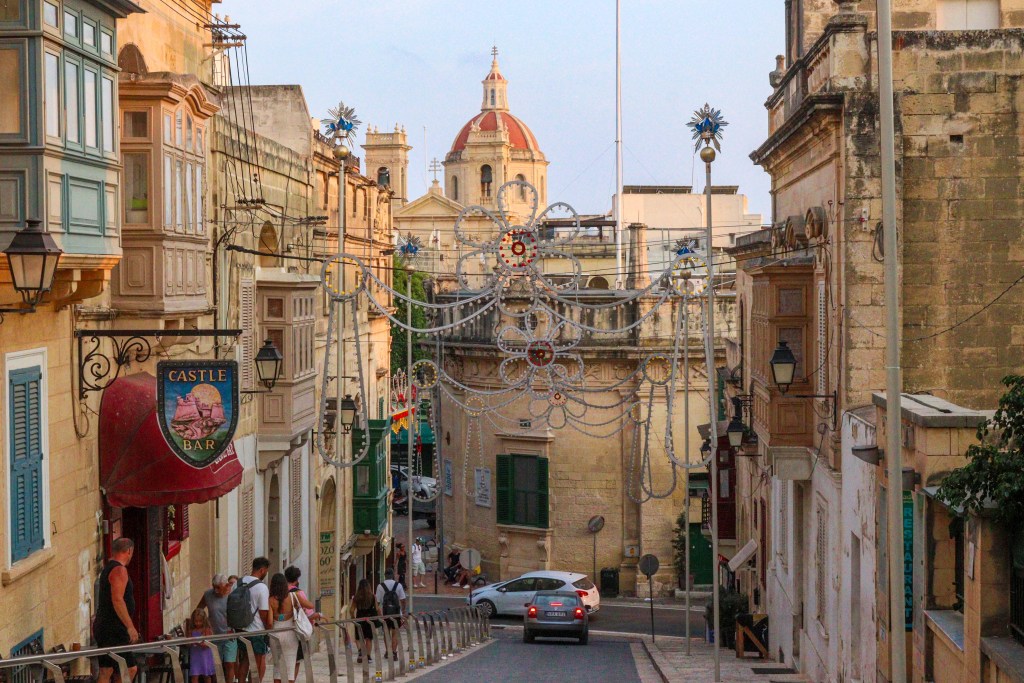
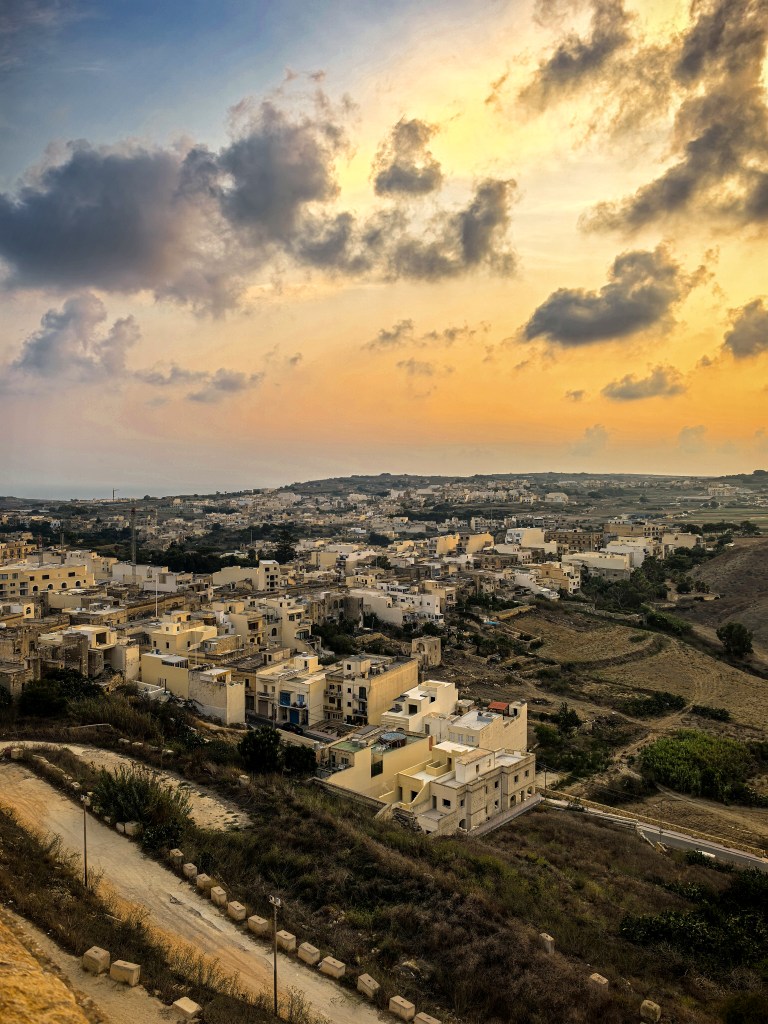
Victoria, also known as Rabat, is truly the heart of Gozo — both administratively and culturally. This is where the island’s daily rhythm comes alive, and where many of its most important attractions are found. Interestingly, the city has two names: the traditional Maltese name Rabat, and the official one, Victoria, given in 1887 in honor of Queen Victoria. As you wander through its charming streets, you’ll notice a fascinating contrast — on one hand, lively squares, local markets, and cozy cafés; on the other, the monumental Cittadella, standing proudly as a reminder of the island’s rich and turbulent history.
🧐 Victoria or Rabat?
Gozo’s capital bears two names, each telling its own story. The traditional name Rabat comes from Arabic, meaning “suburb” — it was used in medieval times when the settlement at the foot of the fortified Cittadella served as its extension. To this day, locals often refer to the capital simply as Rabat.
The other name, Victoria, was introduced much later — in 1887, to mark the Golden Jubilee of Queen Victoria. It was proposed by Gozo’s bishop at the time, Monsignor Pietro Pace, as a tribute to the 50th anniversary of her reign. Since then, the city has officially carried both names: Victoria (used in maps and official documents) and Rabat (still used in everyday speech by locals).
👉 Today, both names coexist — and that’s part of the city’s unique charm, reflecting Gozo’s layered history and blend of cultures.
📜 A Brief Historical Context
- 1800 – The British took control of Malta after the short French occupation (1798–1800).
- 1814 – The Treaty of Paris made Malta an official British colony.
- By the time Bishop Pietro Pace named the capital Victoria, Malta had already been under British administration for over 70 years, serving as a key strategic outpost for the Empire.
🏰 The Citadel – Fortress and the Gem of Gozo
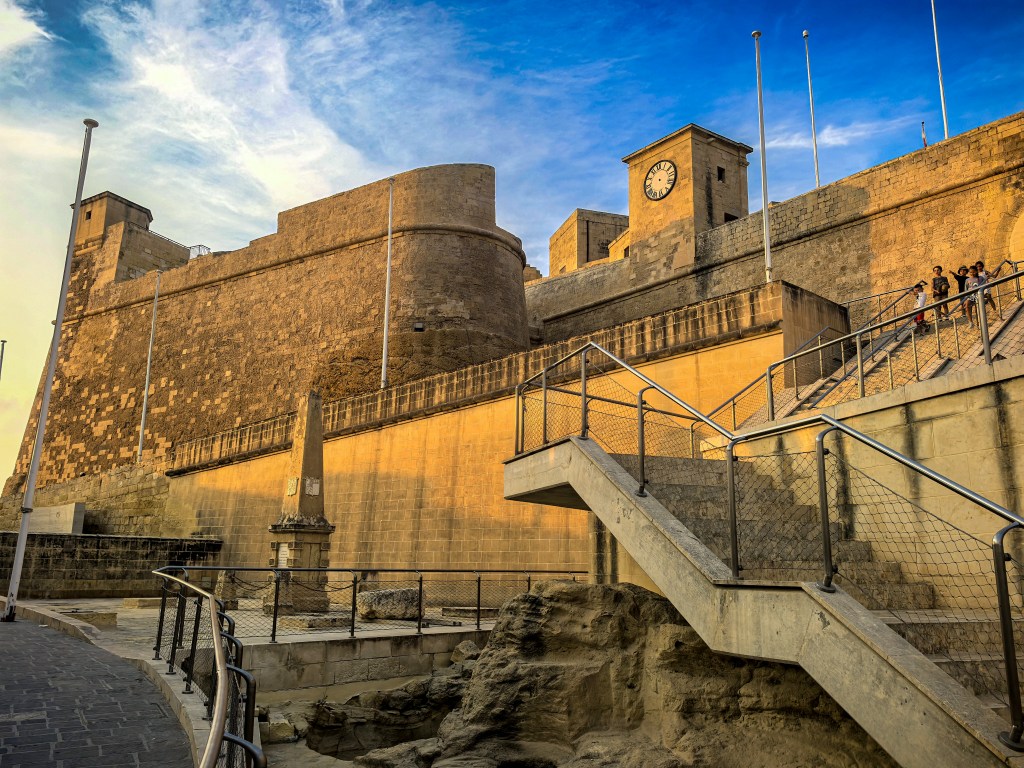
From afar, its stone walls dominate the skyline, inviting visitors to step back in time.
Rising on a hill in the very center of Victoria, the Citadel (Iċ-Ċittadella) is an absolute must-see on any Gozo one day itinerary — a place you simply can’t miss when visiting the island. It’s not only the island’s most important historical site but also its spiritual and cultural heart.
A walk along its walls and narrow lanes is like a journey through time — from prehistoric settlements, through the Middle Ages and the era of the Knights of St. John, to the British period.
The Cittadella bears witness to Gozo’s long and complex history, dating back to the Bronze Age. The Phoenicians expanded the early settlement, and later the Romans established here a city called Glauconis Civitas / Gaulos.
During the Middle Ages, the Roman acropolis was transformed into a castle known as Gran Castello, which served as a refuge for Gozo’s inhabitants. By the 15th century, as the population grew, a suburb began to develop at the foot of the hill — and was called Rabat, from the Arabic word for “suburb.”
After the arrival of the Knights of St. John around 1530, the Cittadella was thoroughly rebuilt and strengthened. Massive bastions and defensive walls were added to withstand new siege technologies. The fortress became a vital part of the island’s defense system — the last refuge for Gozo’s residents against pirate raids and Ottoman attacks. Many of the fortifications visible today date back to this era, and their scale and craftsmanship still impress visitors.
In the centuries that followed, the Citadel briefly came under French control during Napoleon’s campaigns and later served as a British military base until April 1, 1868.
🧐 Fun fact: Until 1637, it was compulsory for all Gozo residents to spend the night within the fortress walls for safety reasons — a fascinating glimpse into the island’s turbulent past!
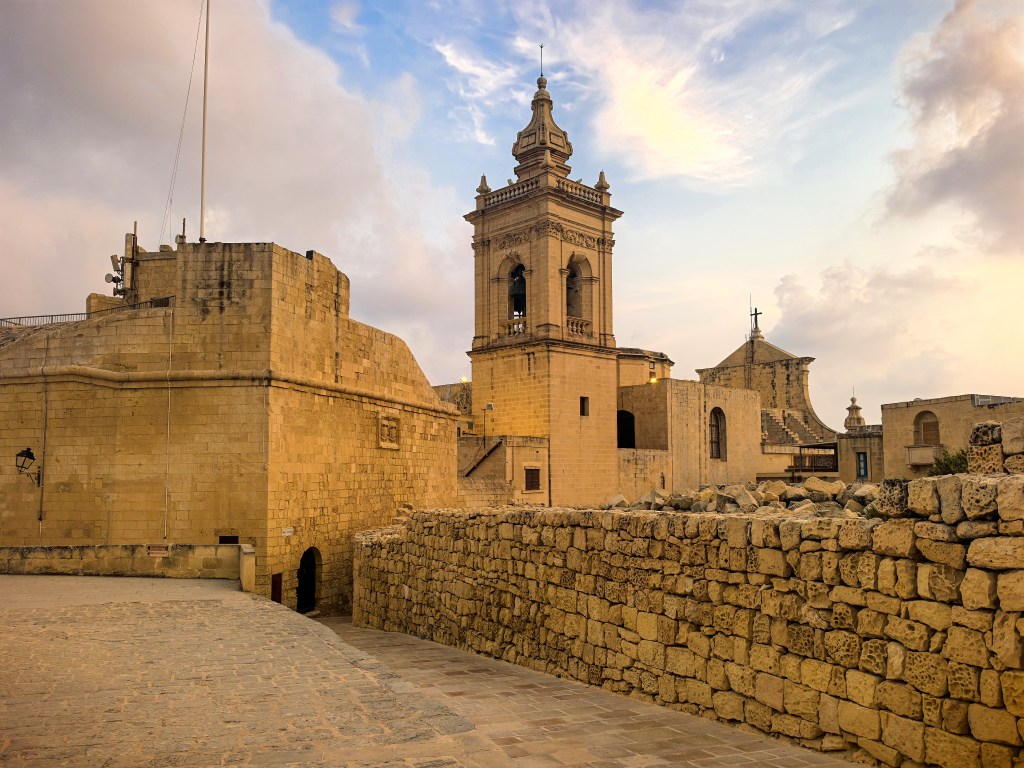
What to See in the Cittadella
The Cittadella in Victoria is literally an open-air museum, and the best part — it’s free to explore.
🧱 Defensive Walls and Bastions – Walking along the fortress walls is an absolute must. From up there, you get a breathtaking panorama of the entire island of Gozo — rolling green hills, charming villages, and the shimmering blue of the Mediterranean Sea. It’s one of the best photo spots on the island, especially at sunset, when the warm light brings out the golden tones of the stone.
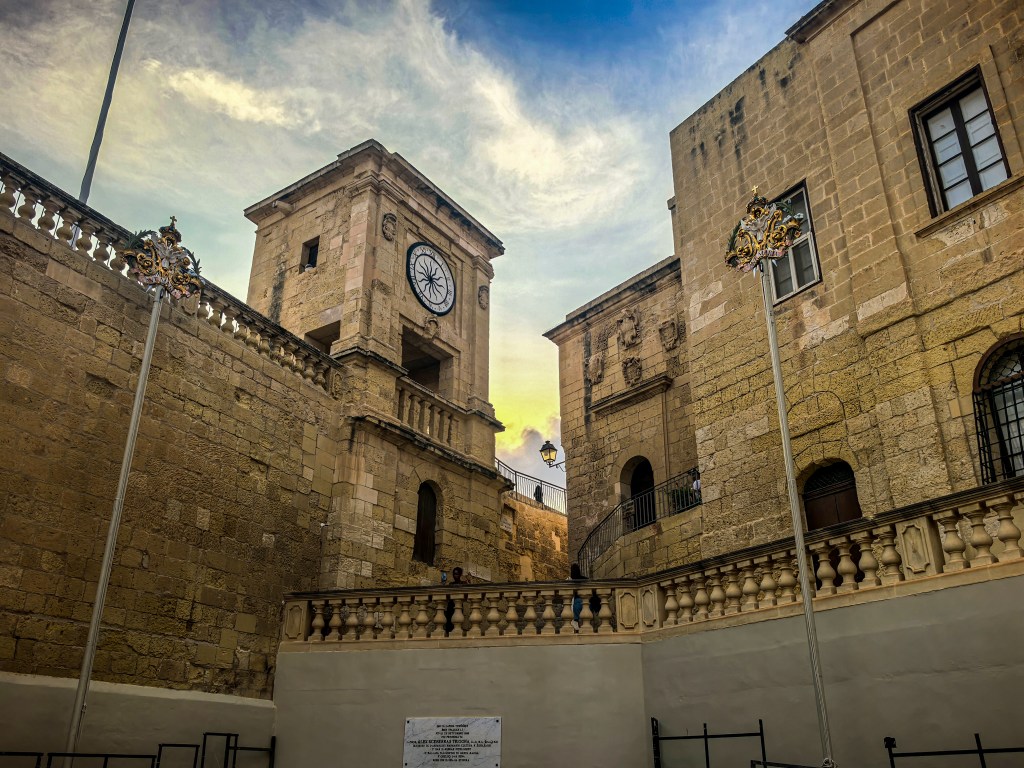
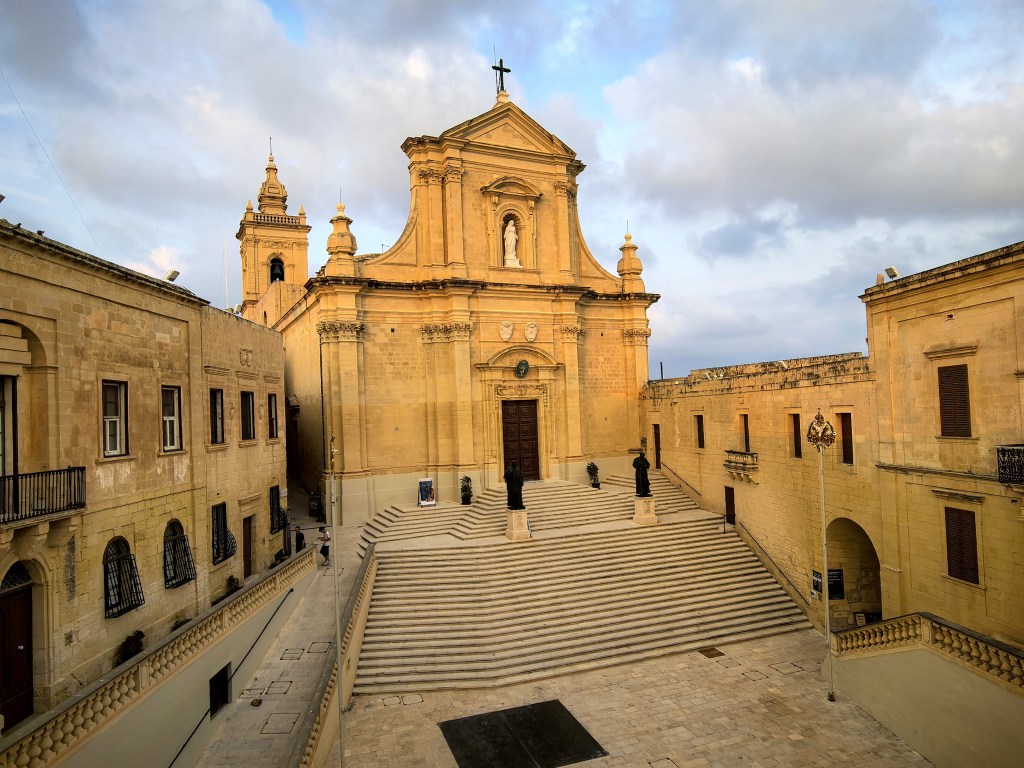
⛪ Cathedral of the Assumption & Cathedral Square – In the very heart of the Cittadella stands this impressive baroque cathedral, built in the 18th century on the site of a medieval church destroyed by the 1693 earthquake. Interestingly, before that, a Roman temple dedicated to Juno stood here. Inside, you’ll find rich decorations, frescoes, and a famous painted illusion of a dome — because the real one doesn’t actually exist!
🎟 Admission: €5.00 (includes cathedral, sacristy, and museum)
⌛ Opening hours: Monday–Saturday, 9:00–17:00

🏺 Archaeology Museum – A great place to dive into Gozo’s past. The exhibition covers finds from the Neolithic period through the Phoenician and Roman eras, all the way to the Middle Ages. It’s a perfect complement to a visit to Ġgantija, offering a broader perspective on how local culture evolved.
🎟 Admission: €5.00 ⌛ Opening hours: 9:00–17:00 (Tuesday-Sunday)
💡 Tip: A combo ticket for the Cittadella (€5.00) gives you access to the Archaeology Museum, the Old Prison, Gran Castello House, the Natural Science Museum, and the Citadel Visitor Centre. It’s valid for 30 days from first use.
🏘 Old Streets of the Cittadella – The narrow, winding lanes create an unforgettable atmosphere. It’s worth getting lost here for a while among the medieval alleys, where time seems to stand still. In the quiet corners, you’ll discover tiny galleries, craft shops, and hidden courtyards that never make it into guidebooks.
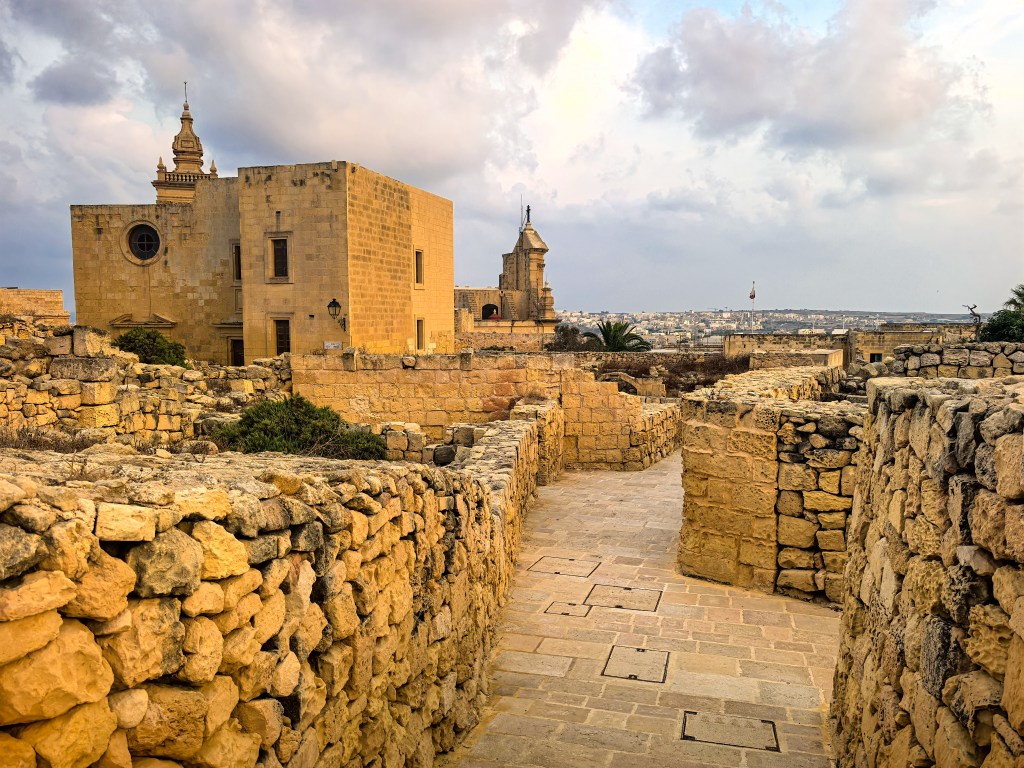
🏛 Gran Castello Historic House – A reconstructed traditional Maltese townhouse that now forms part of the ethnographic museum. It gives a lovely glimpse into what everyday life on Gozo looked like centuries ago.
🎟 Admission: €5.00 ⌛ Opening hours: 9:00–17:00 (Tuesday-Sunday)
🔒 Old Prison – A small but fascinating place that operated from the 16th to the early 20th century — the oldest prison on Gozo. You can still see carvings and inscriptions left by prisoners on the cell walls, which make a powerful impression.
🎟 Admission: €5.00 ⌛ Opening hours: 9:00–17:00 (Tuesday-Sunday)
⛪ Church of St Joseph – A small and peaceful 18th-century church, tucked away in one of the quieter corners of the fortress. Its simple but elegant architecture stands in contrast to the grandeur of the main cathedral, offering a moment of calm reflection.
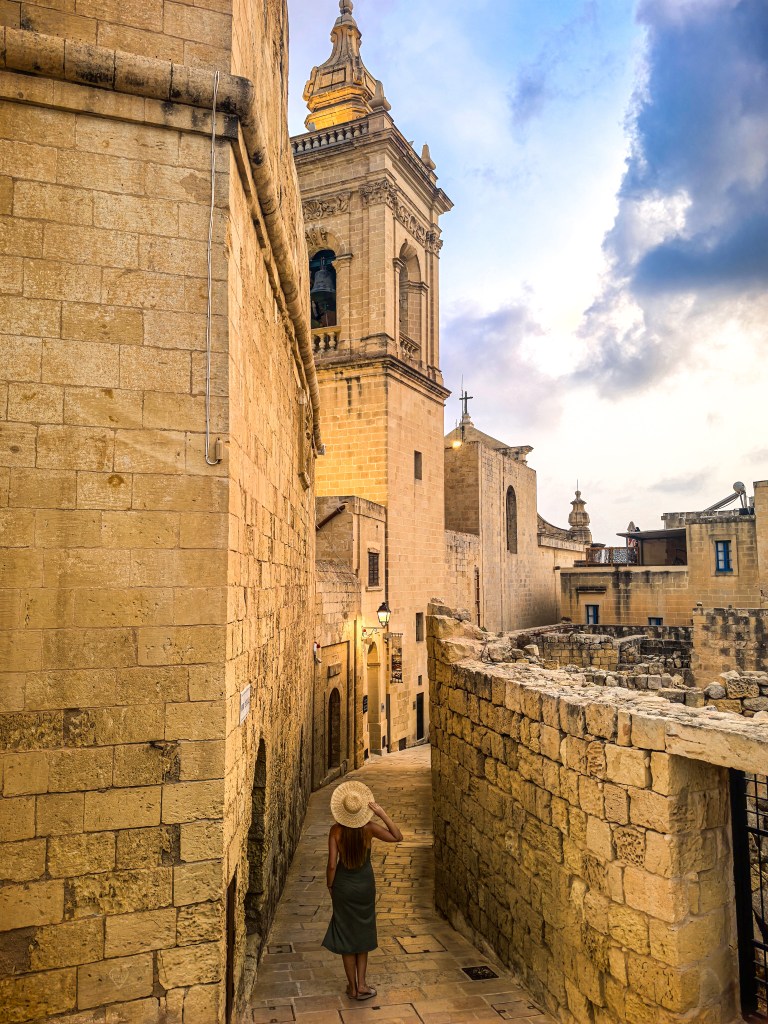

A Walk Around Victoria
Start your stroll in the heart of Victoria at Independence Square (It-Tokk / Pjazza Indipendenza) — a lively, bustling spot that once housed the local government and now serves as the town hall. Every morning, the square comes to life with a traditional market, where you can buy fresh fruit and vegetables, olives, local cheese, and Gozo’s famous preserves. It’s also a perfect place to sit at a café and watch local life unfold.
Just a few steps away lies St George’s Square, home to the Baroque Church of St George, often called “the golden church” thanks to its ornate marble and gilded interior.
Take your time to wander through the maze of narrow streets branching off from the main squares. This is where you’ll truly feel the rhythm of Gozo — a mix of local chatter, slow-paced island life, and the occasional hum of tourists.
🧐Did you know? “It-Tokk” in Maltese literally means “meeting” or “meeting place.” It’s the locals’ affectionate name for Independence Square, which for centuries has been the social and commercial heart of Gozo — where markets, festivals, and gatherings have always taken place.

How to Get to Victoria
🚗 By car: Located in the very heart of Gozo, Victoria is easy to reach from anywhere on the island — usually within 15 minutes. Roads from all directions lead to the capital, and there’s parking both around the Cittadella and along the main streets (though it can get busy in summer).
🚌 By public transport: Victoria is the main transport hub on Gozo. All bus routes pass through here, and from the port in Mġarr it’s just a 15–20 minute ride (routes 301, 303, and 323). From the central station, you can easily connect to buses heading towards the island’s top attractions, including Dwejra Bay, Ramla Bay, and Marsalforn.
Best Time to Visit Victoria
During the day, it’s worth taking your time to explore the Cittadella in detail – walk along the defensive walls, visit its museums and churches, and take in the sweeping views of the island.
In the evening, Victoria takes on a completely different character. The main squares and streets come alive with local cafés and bars, and during summer, you might catch one of the traditional Maltese festas, complete with fireworks and processions. It’s the perfect time to experience Gozo’s community spirit and festive energy.
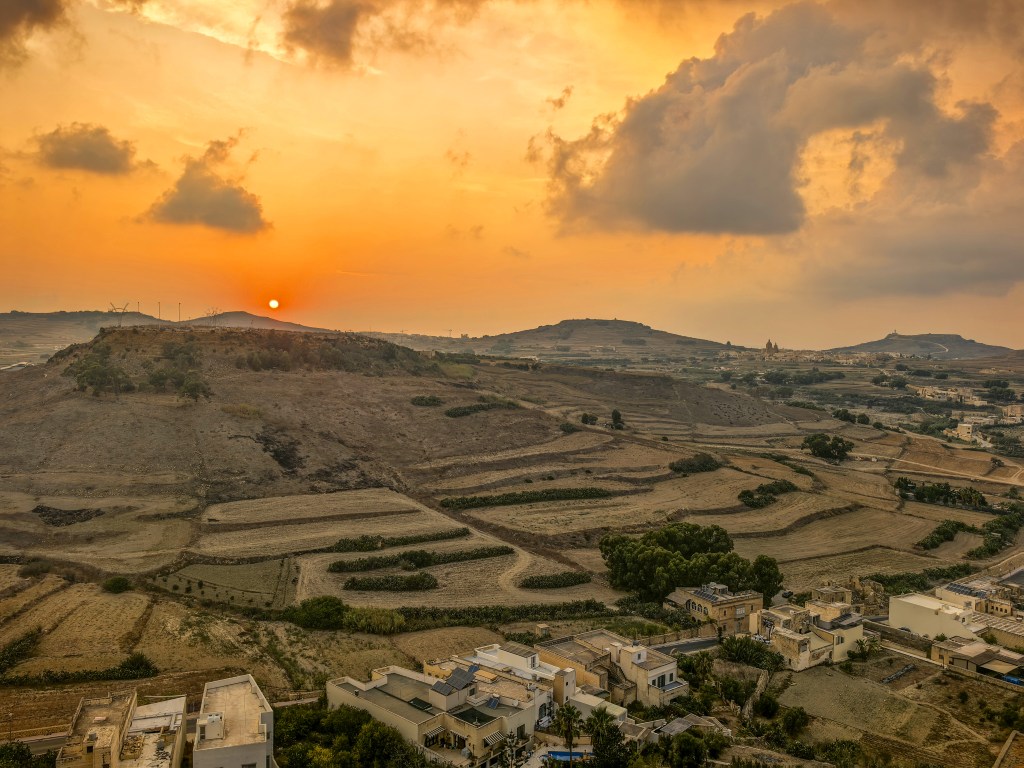
What Else to See on Gozo (If You Have More Time)
- Ramla Bay – Gozo’s most famous beach, known for its distinctive red-golden sand.
- Xlendi Bay – A picturesque bay surrounded by high cliffs, ideal for swimming, snorkeling, and romantic sunsets.
- Marsalforn – The island’s most popular holiday resort, filled with restaurants, bars, and hotels. It’s a great base for exploring the north coast and walking along the traditional salt pans nearby.
- Sanap Cliffs – Spectacular cliffs in the south of Gozo, less known (and less crowded) than Dwejra, making them perfect for peaceful hikes and panoramic views.
- Xewkija – A small town whose heart is the Rotunda of St John the Baptist. Its massive dome, one of the largest in Europe, dominates the surrounding landscape.
- Xerri’s Grotto – A small limestone cave in Xagħra filled with stalactites and stalagmites. Interestingly, the entrance is through… a private house!
🧭 Practical Info – Gozo at a Glance
🕒 How Much Time Do You Need: Is it Possible to See Everything in One Day?
Gozo is small but packed with attractions. In one day, you can see the island’s highlights — Ġgantija Temples, Dwejra Bay, Victoria, and the Inland Sea — and get a real feel for the island’s charm. Even with limited time, Gozo has a way of making every moment feel special. Having your own transport and a well-planned route makes it much easier.
If you have more time, don’t rush. Stay 2–3 days to relax, go hiking, enjoy the beaches, or simply soak up the island’s peaceful vibe.
🚗 Parking on Gozo
Most attractions have free but fairly small parking areas. On Malta and Gozo, public parking is generally free — just make sure you’re parked in a white-lined space without time limits or resident-only restrictions. In summer, it’s best to start exploring early in the morning to avoid parking troubles.
🌤 Best Time to Visit Gozo
The best time to visit is spring (April–June) and autumn (September–October) — pleasant weather, fewer crowds, and great conditions for sightseeing.
July and August bring heat and crowds, but they’re ideal for beach lovers and divers.
In winter (December–February), Gozo is peaceful and quiet — perfect for hiking and slow exploration.

So… Is Gozo Worth a Day Trip?
Gozo may be small, but it’s incredibly diverse and full of character. It has a way of stealing your heart — even if you only have a few hours to explore. Even with just one day, you can see its main attractions — from the prehistoric Ġgantija Temples and the dramatic coastline of Dwejra Bay and the Inland Sea, to the breathtaking views from the Cittadella in Victoria. With a good plan, a day trip is enough to feel the magic of the island.
But if you decide to stay longer, you definitely won’t be disappointed. Peaceful coves, rugged cliffs, and the island’s relaxed rhythm make time seem to slow down. Spend a couple of days here and discover quiet coves, scenic walks, and hidden corners off the beaten track.
In short — a day trip to Gozo is a great idea, but if you really want to feel the island’s spirit, stay a little longer. 😊 Whichever way you explore it, Gozo will stay with you — long after you’ve left its shores!
We hope this Gozo one day itinerary helps you make the most of your trip!
Happy exploring! 🤗
Leave a Reply