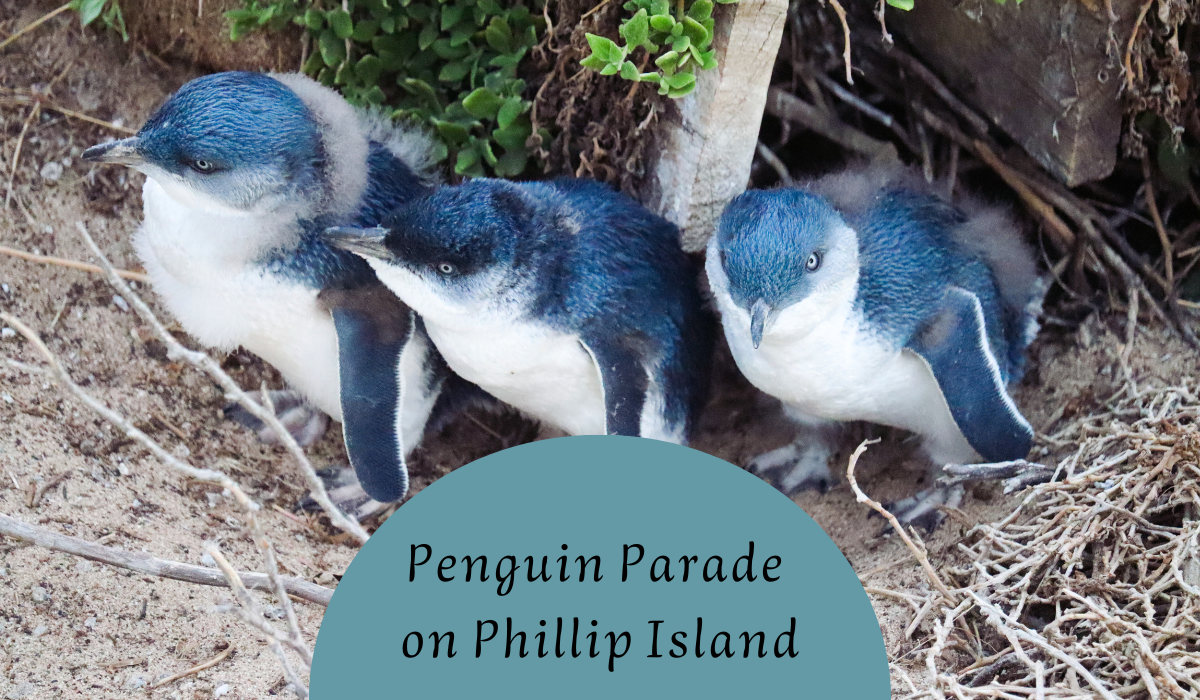
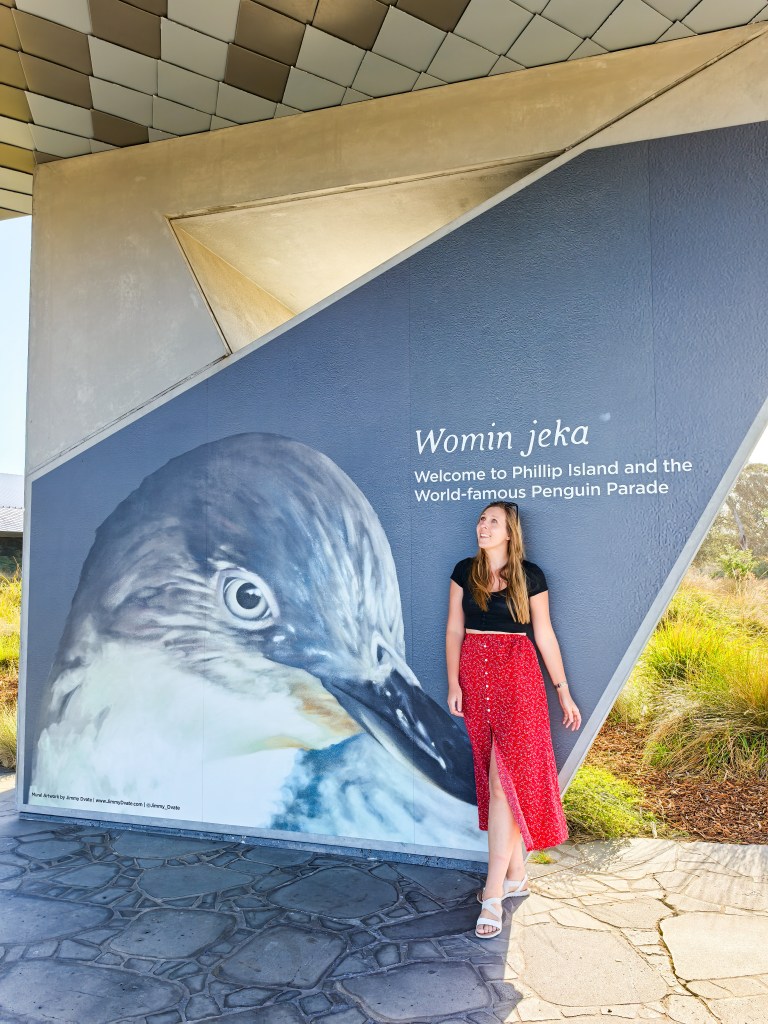
Every evening on Phillip Island, just off Australia’s southern coast, something magical happens. Hundreds of tiny penguins emerge from the chilly ocean waters to make their way back to their nests. This remarkable daily ritual is known as the Penguin Parade.
Phillip Island is home to the world’s largest colony of the smallest penguin species, with a surprisingly straightforward name… the little penguin (Eudyptula minor). Their numbers are estimated at around 40 000 adorable black-and-white birds!
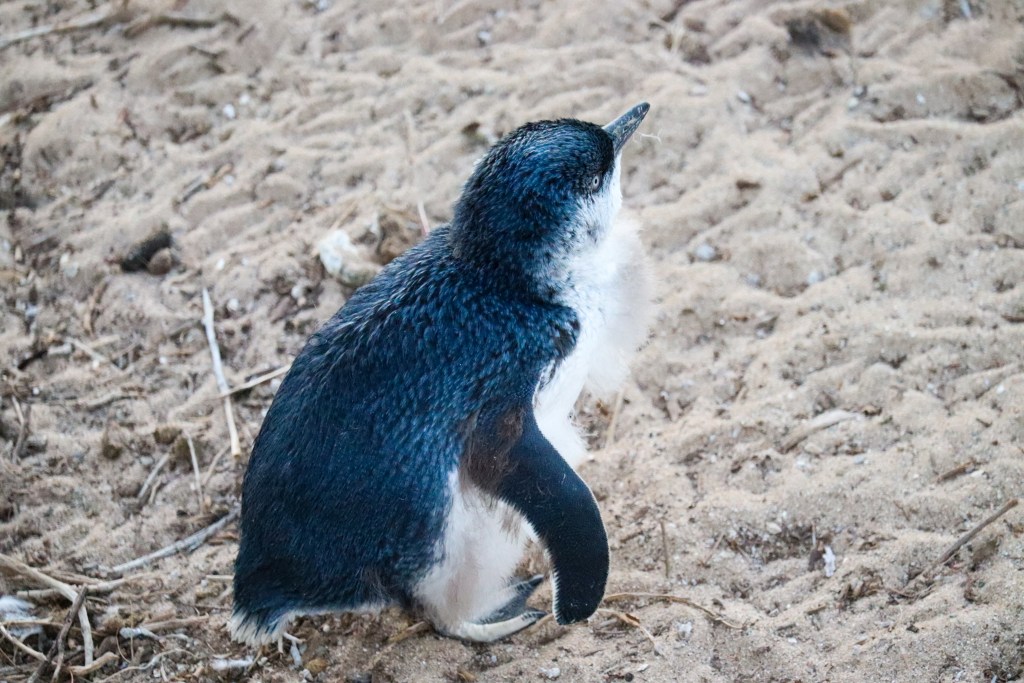
These charming little penguins grow to just 30–33 cm tall and weigh about one kilogram. Despite their tiny size, they are incredibly tough. They spend the entire day, from dawn till dusk, swimming kilometres through the ocean, only to return to their burrows at night. And it’s during this incredible event that you can watch them in action on Phillip Island!
In today’s post, we’ll take you to one of Phillip Island’s beaches. We’ll share what it’s like to watch the world’s tiniest penguins march ashore at night and guide you through planning your visit to the famous Penguin Parade.
Penguin Parade on Phillip Island at a Glance
📍 Location: Phillip Island, Victoria
🗺️ Getting there: easiest by car or as part of a guided tour
💰 Entrance fee: from 33 AUD (depending on ticket type)
🚗 Parking: free parking at the Penguin Parade Visitor Centre
⏰ Best time to visit: spring and summer (October – March)
📢 Important: The Penguin Parade is a truly magical experience — but one you’ll have to enjoy without a camera. To protect the penguins’ wellbeing, photography and filming are not allowed. Artificial light, especially camera flash, can disorient the penguins, affect their behaviour and cause stress. Even so, it’s a moment you’ll remember long after you leave Phillip Island. 📸
The World’s Smallest Penguin – a Tiny Star of Australia’s Coastline
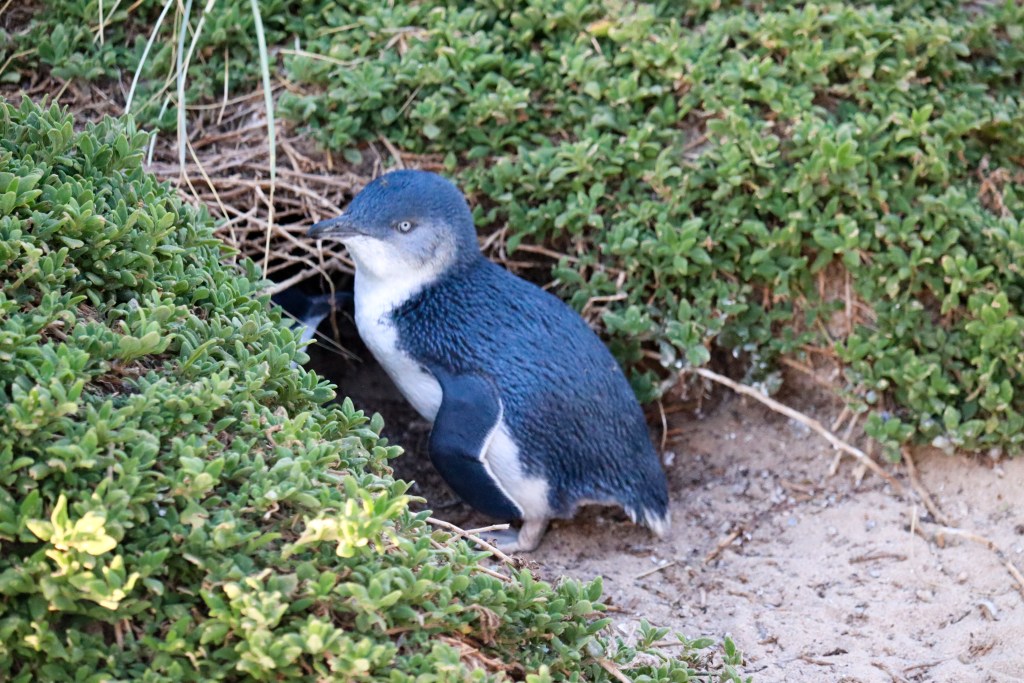
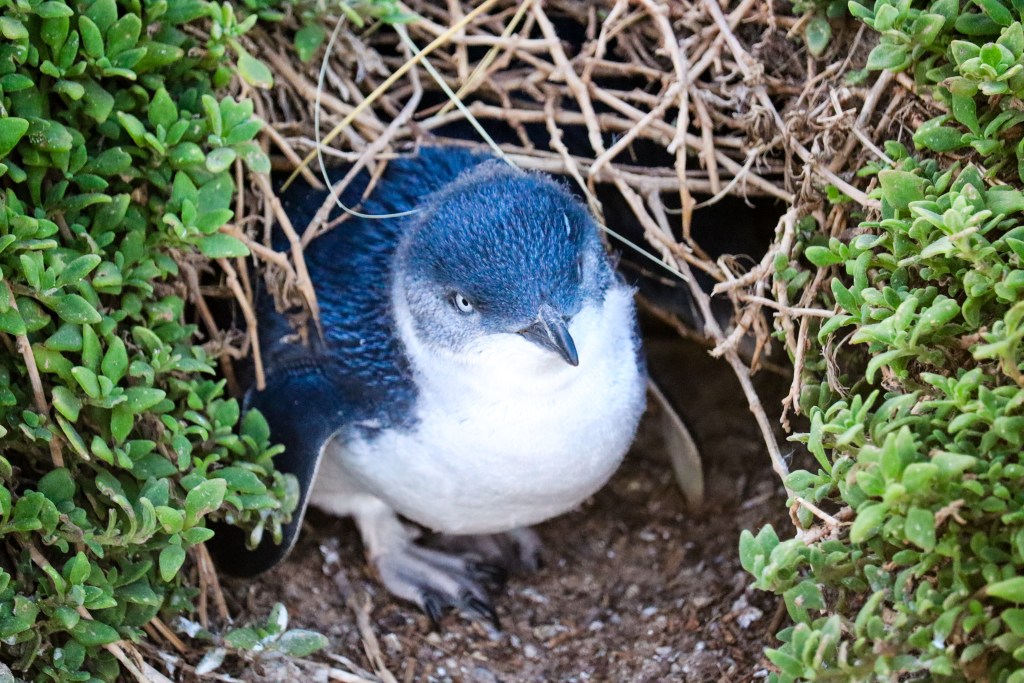
The little penguin (Eudyptula minor), also known as fairy penguin or little blue penguin, is the smallest of the 18 penguin species found around the world.
Adults grow to just 30–33 cm tall — only slightly bigger than a bowling pin — and weigh no more than 1–1.2 kg. It’s easy to see where the name comes from. 🤭
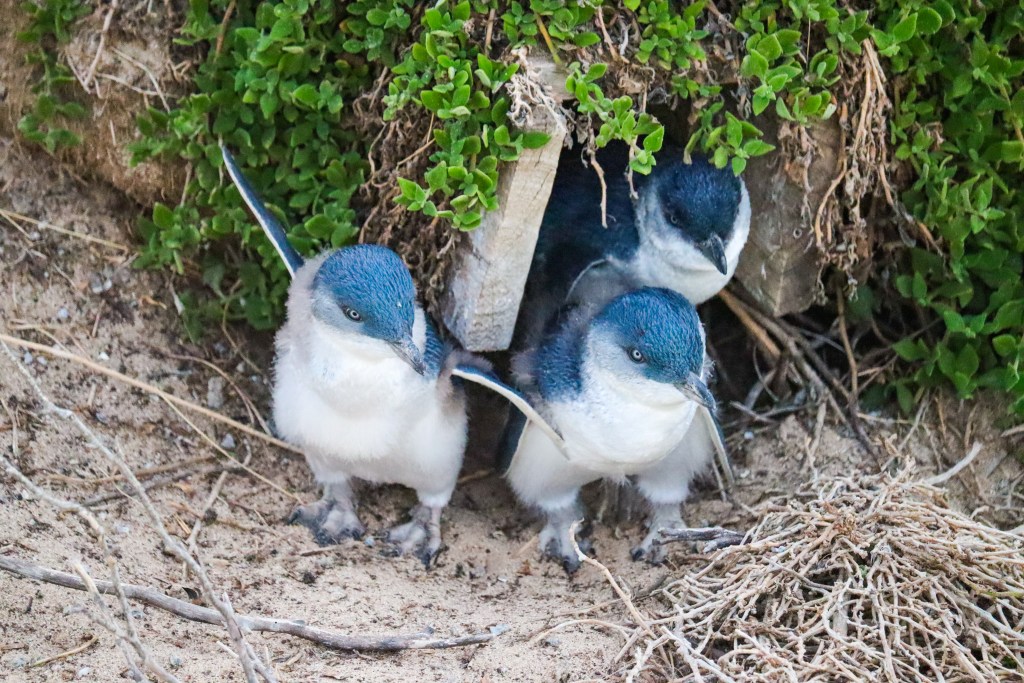
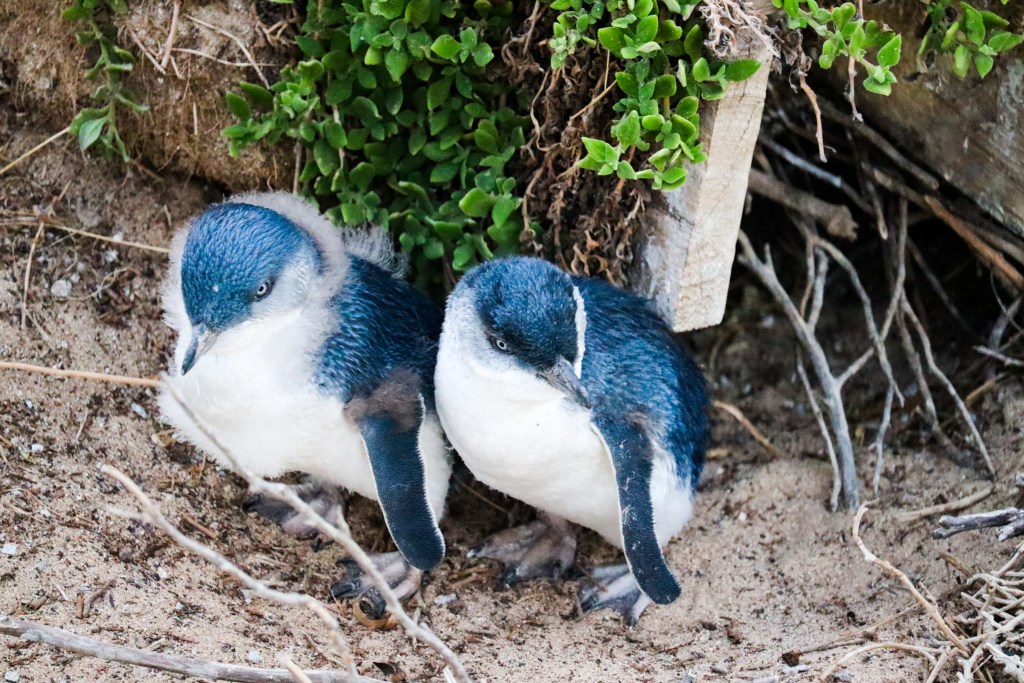
What makes little penguins stand out isn’t just their size, but also their colouring! They’re the only penguin species with blue and white plumage, rather than the classic black and white. 🐧
Little penguins are found exclusively along the southern coast of Australia and in New Zealand. Their largest colony is located on the charmingly named Summerland Peninsula on Phillip Island, home to an impressive 40 000 breeding penguins!
Sadly, this is the only surviving colony out of ten that once existed on the island before Europeans arrived in Australia. Another large colony can be found on Kangaroo Island, which is famous for its rich and diverse wildlife.
Until 1985, it looked as though the last remaining little penguin colony on Phillip Island was heading for the same fate — its numbers were steadily declining.
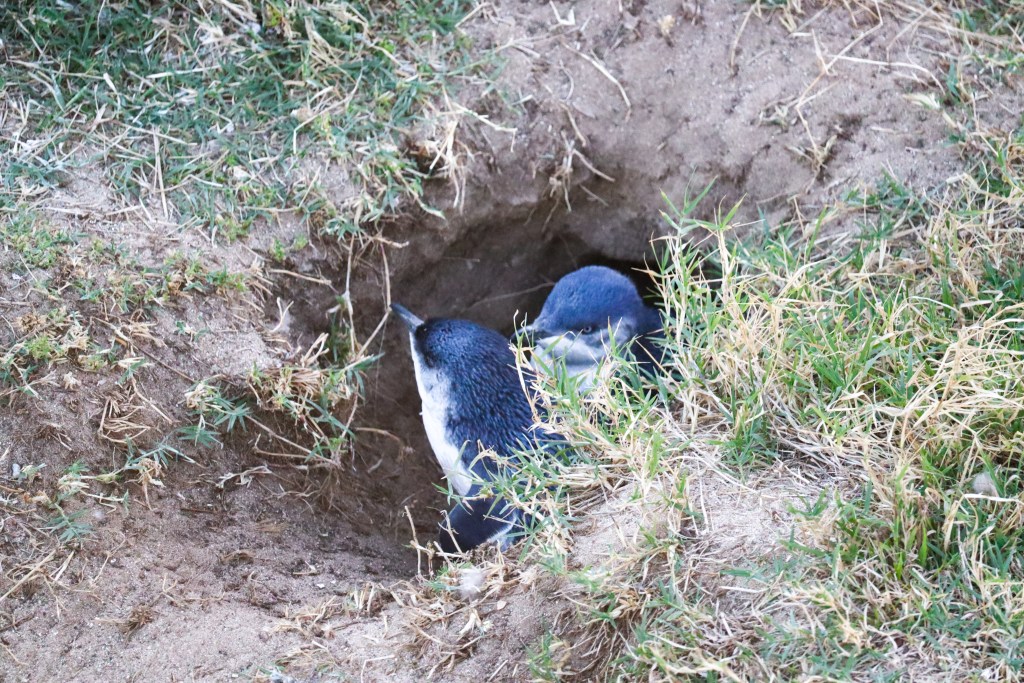
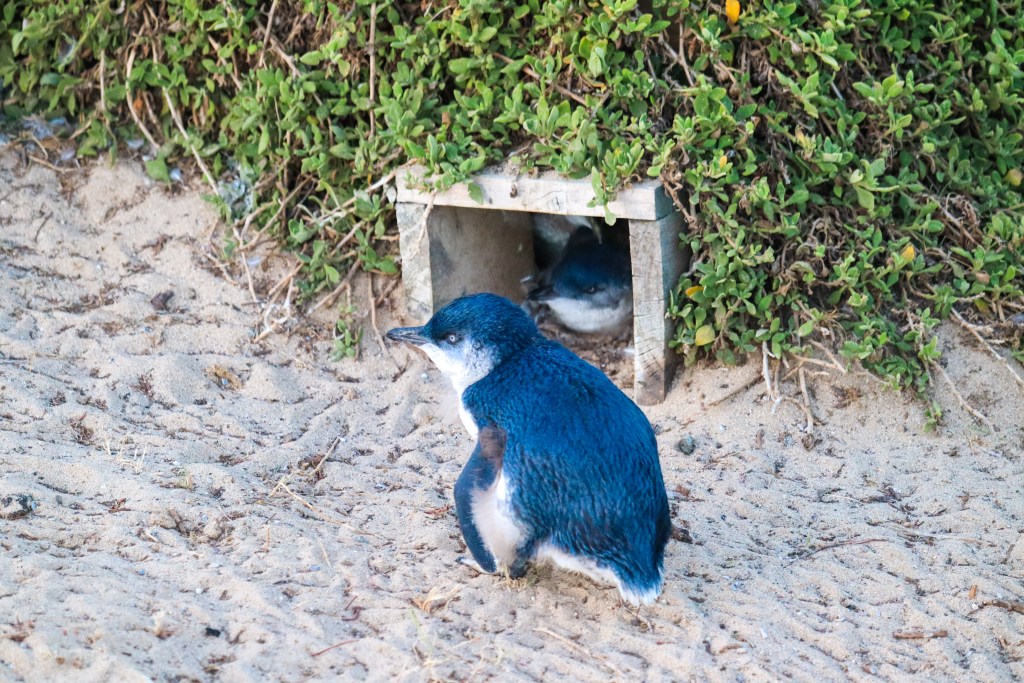
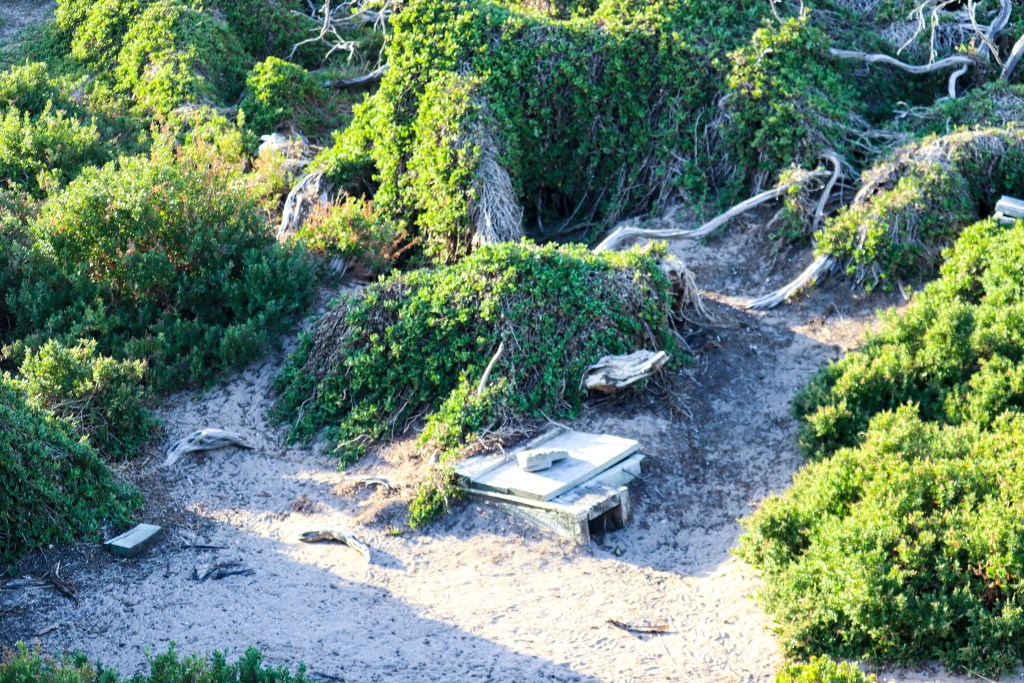
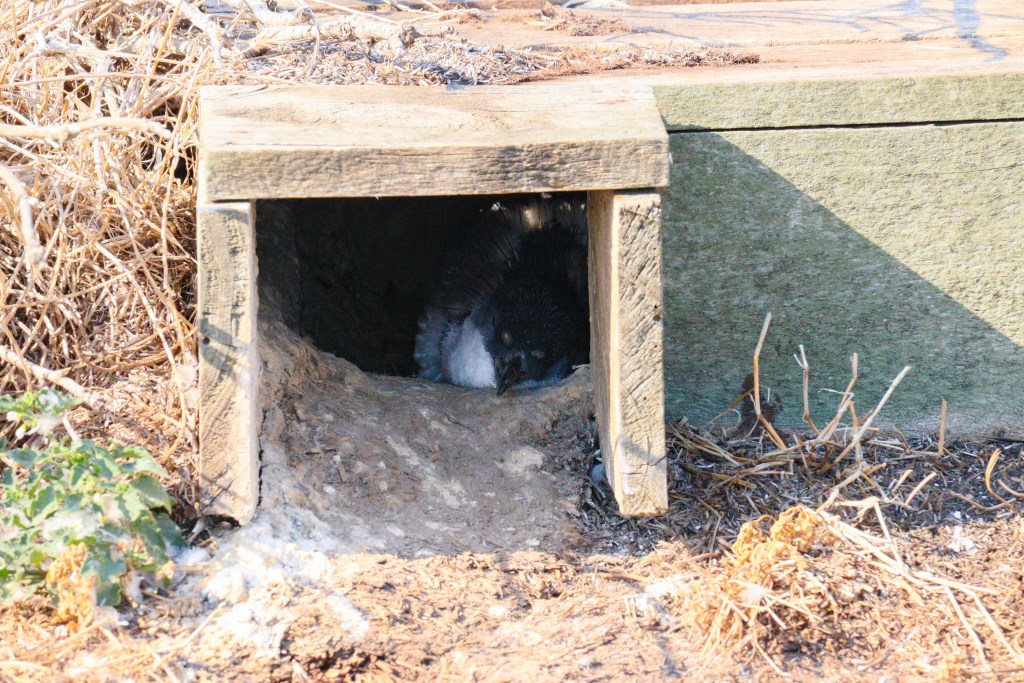
In response, the state of Victoria stepped in and introduced the Penguin Protection Plan. As part of this initiative, small wooden nesting boxes were placed throughout the colony, and they’re still happily used by the penguins today. Invasive species were removed, native vegetation was restored, and foxes were eliminated from the area.
What Can We Do to Help Protect Little Penguins?
- If you spot a little penguin, keep your distance and stay quiet so you don’t scare it.
- Never touch penguins, their nests or their eggs — even a human scent left behind can cause parents to abandon them!
- If you’re travelling with a dog, don’t let it roam freely near penguin burrows.
- Take your rubbish with you when leaving the beach — it helps not only penguins, but all marine wildlife. 💙
Little penguins spend around 80% of their lives in the water. When they do come ashore, they gather in small groups and wait until dusk, when they’re less visible to predators. Along the way, they use familiar landmarks to help them find their burrows.
This behaviour is especially easy to observe during the Penguin Parade. After leaving the beach, these adorable birds often stop along the way, calling out to one another and search together for the path back home — and some of their burrows are located surprisingly high up!
🐧 Fun Facts About Little Penguins
- Blue tuxedos: Unlike most penguins, which have black back, little penguins have a striking blue plumage – a natural camouflage that helps protect them from predators both above (birds) and below (marine hunters).
- Night-time wanderers: Little penguins only come ashore after dark. This helps them avoid predators and keeps them cool under the harsh sun.
- Monogamous couples: Many little penguins form monogamous pairs that last a lifetime, building nests and raising chicks together. That said, scientists estimate that 18–50% of penguin pairs do eventually split.
- Swimming champions: These little birds can travel dozens of kilometres every day in search of food – mostly small fish and squid. Adult penguins from Phillip Island can spend over four weeks at sea, feeding in Bass Strait and Port Phillip Bay.
- Nap on the water: Little penguins can even take short naps while floating on the ocean surface.
- Tiny gluttons: Their diet includes anchovies, sardines, small fish, squid, and even jellyfish! They can eat roughly 25% of their body weight each day– that’s around 250 grams of seafood a day!
- Sounds from a horror movie: Despite their cute looks, their calls are a mix of squawks and shrieks. At night, the colony can sometimes sound like a scene straight out of a horror film!
Where to See the Penguin Parade on Phillip Island
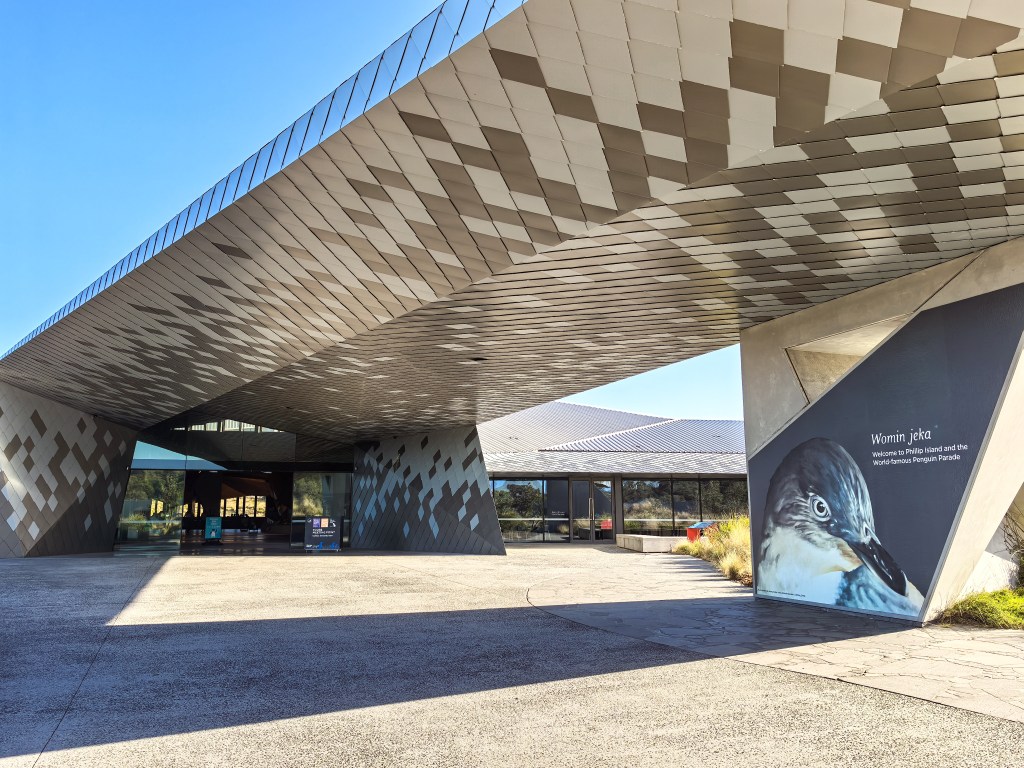
The famous Penguin Parade takes place on the south-western tip of Phillip Island, roughly 150 km from Melbourne, at the specially designed Penguin Parade Visitor Centre. Right on Summerland Beach, hundreds of little penguins return each evening from the ocean to their burrows hidden among the grass and dunes.

On the grounds of the Visitor Centre, you’ll find wooden boardwalks with little penguin burrows tucked away underneath, as well as viewing platforms on the beach where you can watch the main attraction – the famous Penguin Parade. Thanks to the raised walkways, visitors can get surprisingly close to these amazing creatures without disturbing them.
How to Get to the Penguin Parade Visitor Centre?
🚗 By car
The easiest and quickest way to reach the Penguin Parade Visitor Centre is by car. The parade itself is a natural spectacle that only begins after sunset, which means you’ll be heading back fairly late – and at that time, other transport options can be limited.
Even though the Penguin Parade takes place on an island, getting there is very straightforward. Phillip Island is connected to the mainland by a bridge at San Remo, so there’s no need for a ferry if you’re driving.
📢 Important: In Australia, they drive on the left side of the road (right-hand drive)!
If you’re travelling from Melbourne, you’ll cover around 150 km, which should take about two hours. If you’re heading straight to the Penguin Parade Visitor Centre, it’s worth allowing a bit of extra time – the roads on Phillip Island are often busy with wildlife, so you’ll need to drive carefully.
❗ Good to know: Driving after dark in Australia can be risky because of wildlife activity, especially kangaroos and wallabies. Phillip Island is no exception! 🦘
🅿️ Parking
There’s a large car park right next to the Penguin Parade Visitor Centre where you can leave your car free of charge while you explore the area.
🚌 By Public Transport
Getting to the Penguin Parade by public transport isn’t the easiest option. It requires a bit of planning and patience, but it is possible – at least as far as reaching the island.
If you’re already on Phillip Island, you can get to the Penguin Parade Visitor Centre by taxi or bicycle. Public transport on the island itself is very limited and doesn’t include services to the Visitor Centre.
To reach Phillip Island from Melbourne, you can take a V/Line coach from the Southern Cross Coach Terminal to Koo Wee Rup Bus Interchange (or Koo Wee Rup), and then change to a bus heading towards Cowes or Inverloch. This service will take you to Cowes, the island’s main town. The journey one way takes around 2–3 hours.
📢 Important: After the parade finishes, there are no return buses to Melbourne. If you’re travelling by public transport, you’ll need to stay at least one night on the island.
Another way to reach Phillip Island is by ferry from French Island or Stony Point (on the Mornington Peninsula) to Cowes. The ferry is for foot passengers only (no cars) and runs several times a day. You can find more details on the operator’s website, Western Port Ferries.
🧭 Organised Tour
If you’re not keen on driving and public transport doesn’t sound appealing to you, joining an organised tour – for example from Melbourne – could be a great option. Many tours include additional attractions on the island or along the way, such as the Koala Conservation Reserve, Moonlit Sanctuary, or even a ride on the historic Puffing Billy steam train.
You can browse example tours on websites such as GetYourGuide or Klook.
🎟️ How Much Does a Ticket to the Penguin Parade Cost? (2026)
Ticket prices for the Penguin Parade vary depending on the type of experience you choose and the visitor’s age. There are several options available, so let’s break them down:
- General Viewing – This is the most basic way to experience the Penguin Parade. It includes tiered seating (which is limited!) and access to the boardwalks alongside picturesque Summerland Beach. Psst! You can also just sit on the sand right by the barriers, where the penguins might waddle past you from just a few steps away!
- Penguins Premium – This gives you the chance to watch the penguins from a secluded, smaller boardwalk right in the heart of the colony.
- Penguins Plus – This option offers a closer and much more intimate encounter with the penguin colony.
- Underground Viewing – Here, you watch the penguins through a window from an underground platform. The big advantage? You can observe these adorable creatures up close while staying sheltered from the wind and cold.
- Guided Penguin Tour – A fantastic opportunity to explore the little penguin colony with an experienced guide.
- Ultimate Adventure Tour – This one is for true nature and adventure lovers. After a 1.5 km hike, a cliff descent, and a walk across soft sand, you’ll be rewarded with a magical encounter with the little penguins on a secluded beach, far away from the tourist crowds.
- Family Wildlife Tour – An educational tour perfect for families. You’ll learn all about Phillip Island’s wildlife and finish the evening by watching the Penguin Parade from the General Viewing area. This tour is available only on Fridays and Saturdays, plus every night during Australian school holidays.
💡Tip: Especially during peak season (December–January, Easter and long weekends), it’s best to book your Penguin Parade tickets online in advance.
Ticket prices (2026)
| Ticket type | Adults (16+) | Children (4–15) | Family (2 adults + 2 kids) |
| General Viewing | 33 AUD | 16,50 AUD | 82 AUD |
| Penguins Plus | 90 AUD | 45 AUD | 225 AUD |
| Penguins Premium | 85 AUD | 85 AUD* | — |
| Underground Viewing | 100 AUD | 50 AUD | 250 AUD |
| Guided Penguin Tour | 105 AUD | 105 AUD* | — |
| Ultimate Adventure Tour | 125 AUD | — | — |
| Family Wildlife Tour | 85 AUD | 42,50 AUD | 212,50 AUD |
📢 Important: The Penguin Parade Visitor Centre is completely cashless! All payments — whether at the ticket office, gift shop, or restaurant — must be made by card or contactless payment. Cash is not accepted.
📝 Things to Note:
- Children under 4 enter free of charge.
- Visitors under 16 must be accompanied by an adult.
- * Penguins Premium and Guided Penguin Tour: The minimum age is 12.
- Ultimate Adventure Tour: The minimum age is 16.
- Senior tickets are available only to Australian residents.
Tickets can be purchased online via the Phillip Island Nature Parks website. That’s also where you’ll find all the latest ticket information and up-to-date prices.
💡Tip: If you’re spending a bit more time in the area, it’s worth considering the 3 Parks Pass. Along with the Penguin Parade (for which you’ll need to choose a specific date), it includes entry to the Koala Conservation Reserve and Churchill Island Heritage Farm within a six-month window. The price depends on which penguin viewing option you choose, with the cheapest combo tickets starting from 58 AUD.
📢 Important: All revenue from ticket sales goes towards environmental protection, scientific research, wildlife rescue and education. So by visiting the Penguin Parade Visitor Centre, you’re directly contributing to the protection of little penguins. 💚
What Time Does the Penguin Parade Take Place?
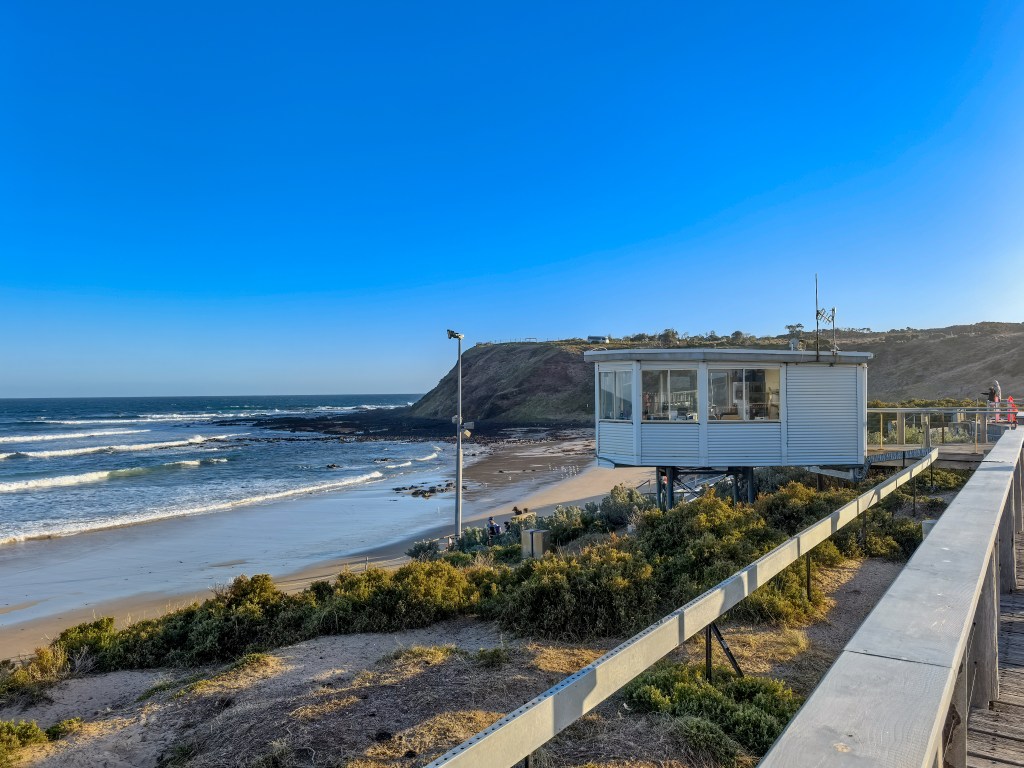
The Penguin Parade on Phillip Island is a magical natural spectacle that takes place every evening, just as the sun dips below the horizon.
That’s when the world’s smallest penguins return from the ocean to their burrows, marching across Summerland Beach like an adorable miniature army in navy-blue tuxedos.
There is no fixed start time for the parade. It all depends on exactly when the little penguins decide to pop out of the ocean waves! This usually happens shortly after dusk, which means the exact timing shifts slightly from day to day as the sunset changes.
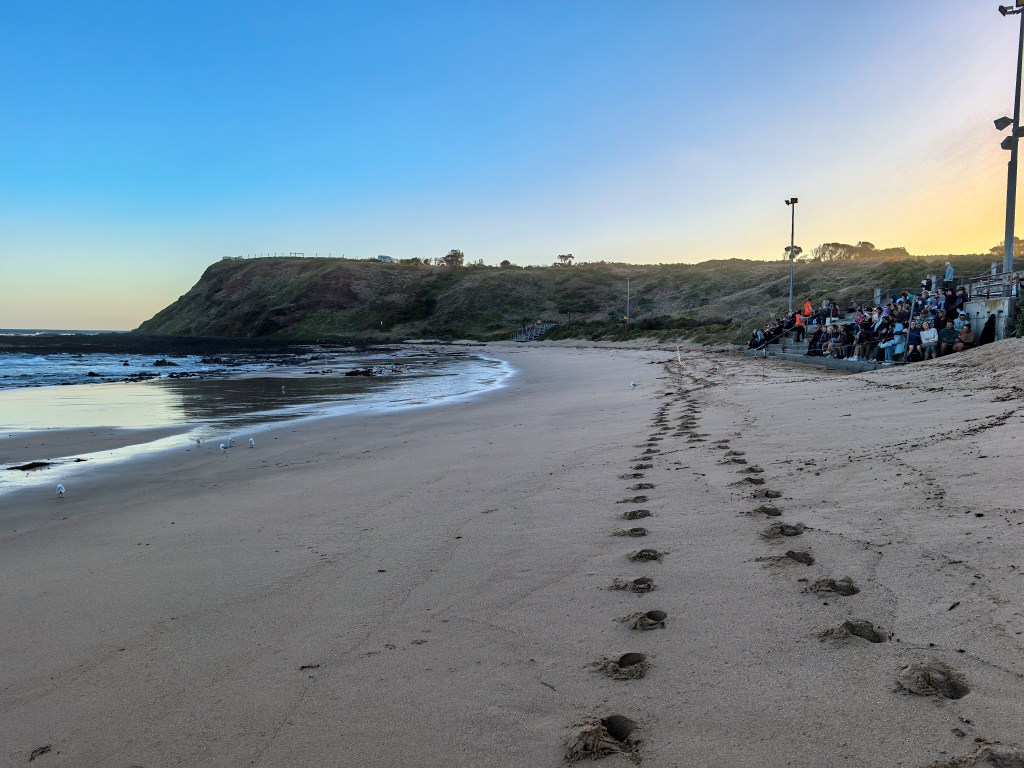
🧐 Fun fact: The exact time the penguins arrive on the beach – and even how many of them show up – doesn’t depend only on the season or the weather. It also depends on what stage of their life cycle they’re currently in.
Depending on the time of year, the penguins come ashore at Summerland Beach anywhere between 5:30 pm and 8:45 pm. The “waves” of penguins emerging from the sea can continue for as long as 40–60 minutes. Access to the boardwalks above the burrows and the viewing platforms usually opens around an hour earlier.
It’s a good idea to arrive with plenty of time to spare. That way, you can explore the interactive educational centre dedicated to these adorable birds and grab one of the best viewing spots. There’s also a restaurant on site in case you get peckish.
You can check the exact Penguin Parade times for each month on the Phillip Island Nature Parks website.

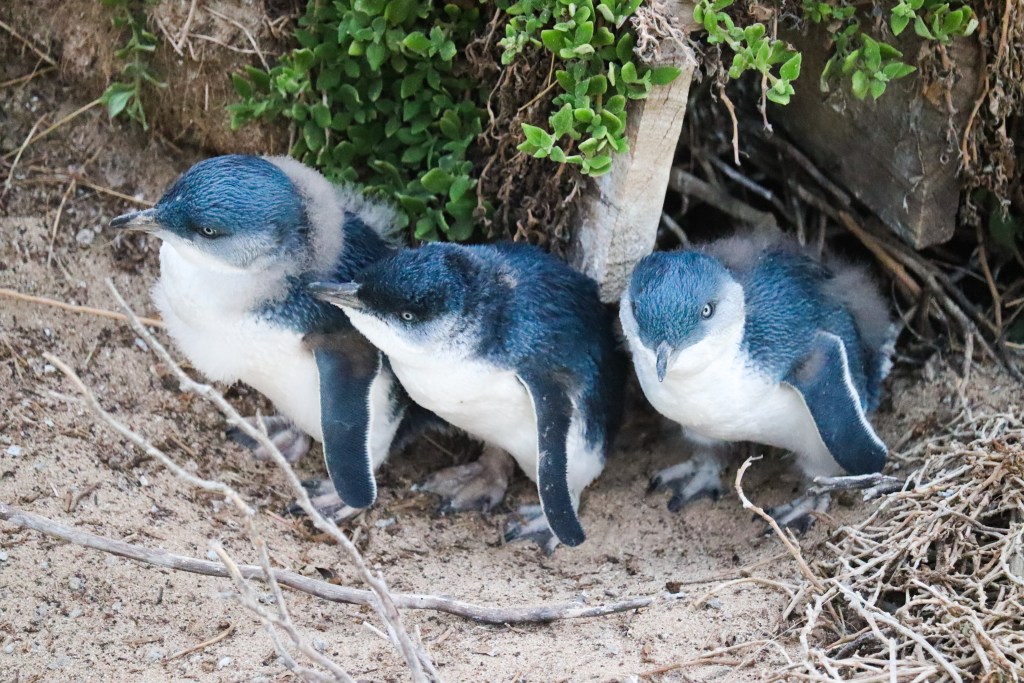
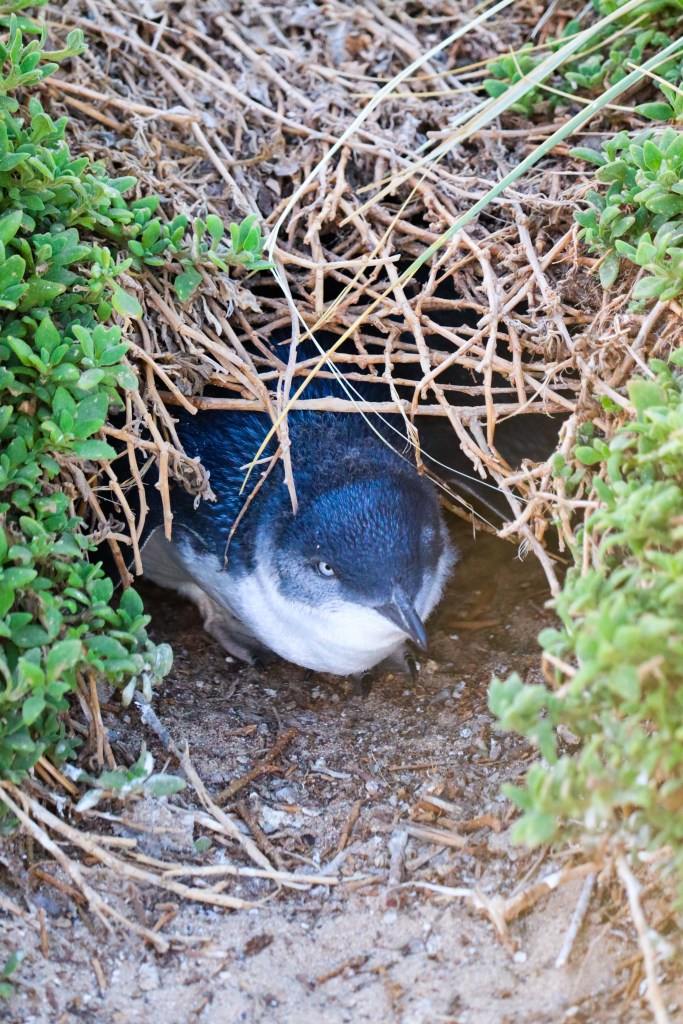
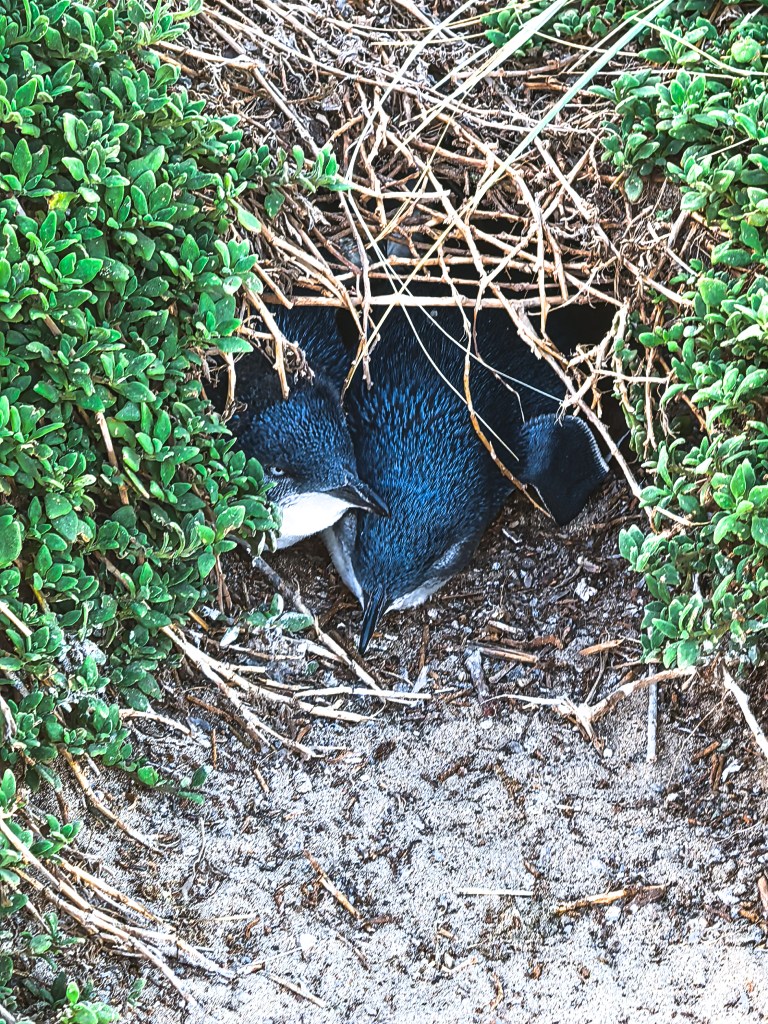
💡Tip: If you’re visiting between November and April, there’s a good chance you might spot tiny penguin chicks waiting in their burrows or wooden nesting boxes for their parents to return from fishing! Before sunset, you’re welcome to take photos – but once it gets dark, including during the parade, photography is strictly forbidden. 🐧
The Best Time to Visit the Penguin Parade
Although the Penguin Parade takes place every single day of the year, choosing the right time to visit can make a big difference. Watching the penguins wobble their way back to their burrows is always heart-melting – but it’s definitely more enjoyable under a clear sky when you’re not shivering in the cold. The time of year can also affect how many penguins you’ll see. 🤫
Here’s what to keep in mind:
☀️ Best season: spring and summer (October – March)
- Larger groups of penguins – spring and summer are breeding season, so the penguins are constantly travelling between the ocean and their nests.
- Longer days and warmer evenings – easier to plan your day, and waiting on the beach in the evening isn’t quite as chilly, though bringing something warm is still a very good idea!
- More wildlife activity – not just penguins, but also wallabies and possums, which you might spot along the way. As for the penguins themselves, they’re at their most active during the summer months (December–February).
⚠️ Keep in mind: this is also peak tourist season, so booking your tickets in advance is highly recommended! 🎟️
🍂 Autumn and winter (April – September)
- Fewer crowds – Perfect if you prefer a quieter experience and less packed stands. You usually don’t need to book tickets in advance.
- Penguins still arrive every day – although there may be slightly fewer of them than in summer (remember, they can spend up to four weeks out at sea!).
- Colder evenings – You’ll definitely need to wrap up warm!
- Higher chance of rain and stronger winds. ☔
What to Expect at the Penguin Parade Visitor Centre
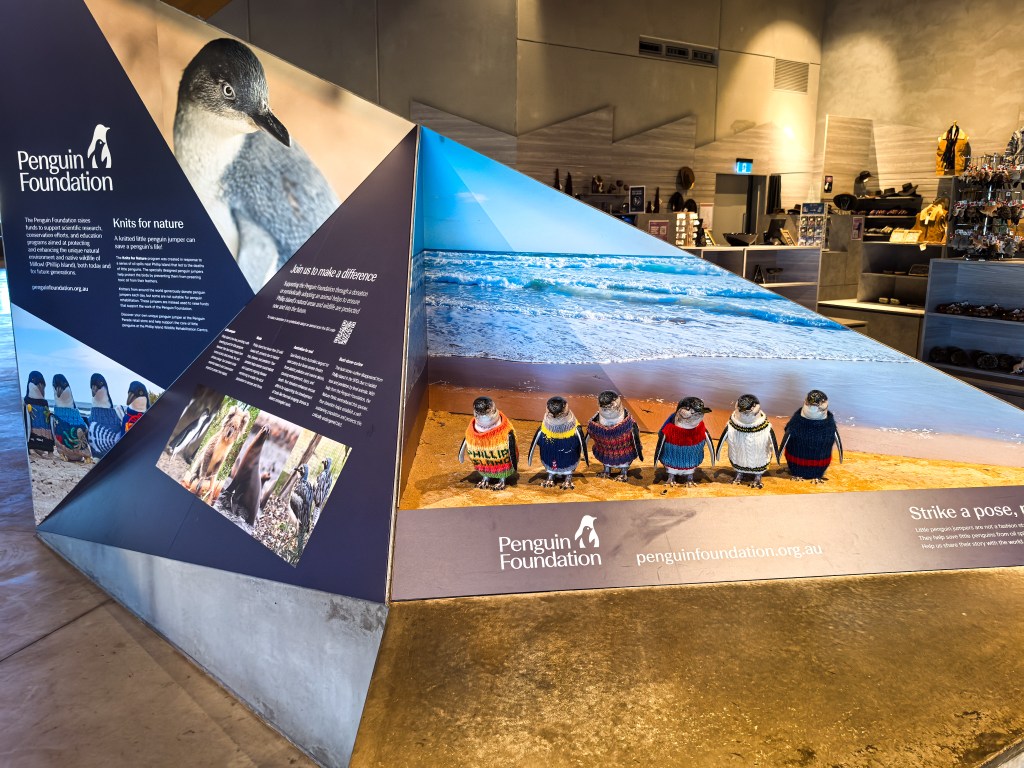
The biggest highlight of the Penguin Parade Visitor Centre is, of course, the famous Penguin Parade itself. But it’s also well worth spending some time exploring the interactive exhibition, which gives you a deeper insight into the lives of these fascinating little birds.
Before heading down to the beach, take a moment to look around the Visitor Centre. Inside, you’ll find a modern exhibition dedicated to the little penguins, featuring:
- interactive touch screens,
- plenty of fun and surprising penguin facts,
- visualisations of their underwater migrations,
- insights into their daily lives and the threats they face,
- and a dedicated children’s area with quizzes and games.
It’s a brilliant way to understand exactly what you’ll be witnessing later on at Summerland Beach – and why this evening event is so special.
Fun fact: the jumpers that saved the penguins 🐧
The little penguins of Phillip Island have a rather sad – yet extraordinary – chapter in their history… involving handmade jumpers.
After an oil spill near the island in 2001, scientists at the wildlife rescue centre noticed that the oil-covered birds needed extra protection. Oil destroys the natural waterproofing and insulation of their feathers, which leaves penguins freezing cold. Even worse, when they try to clean themselves with their beaks, they end up swallowing toxic oil.
To help them recover safely, rescuers came up with an unusual idea: they dressed the penguins in tiny, custom-made jumpers. The jumpers kept them warm and stopped them from pecking at their contaminated feathers until they had been fully cleaned.
When news of the idea spread around the world, the response was immediate. Tens of thousands of people from different countries picked up their knitting needles and started making penguin jumpers!
The response was so overwhelming that the centre had enough jumpers to last for years. Some of the unused ones were later sold as souvenirs, with the income going towards penguin conservation.
Today, the “penguin jumpers” are a bit of a legend. On Phillip Island, you can even see a small exhibition dedicated to this incredible project, including examples of what those tiny knitted outfits actually looked like.
If you’d like to read more about the penguin jumpers, check out the Penguin Foundation website.
What Other Animals Can You Spot on the Boardwalk to the Penguin Parade?
While the penguins are the undeniable stars of the show, they’re not the only wildlife you might encounter around the Penguin Parade Visitor Centre. As you stroll along the boardwalks towards the beach, keep your eyes open for:
🦘 Wallabies
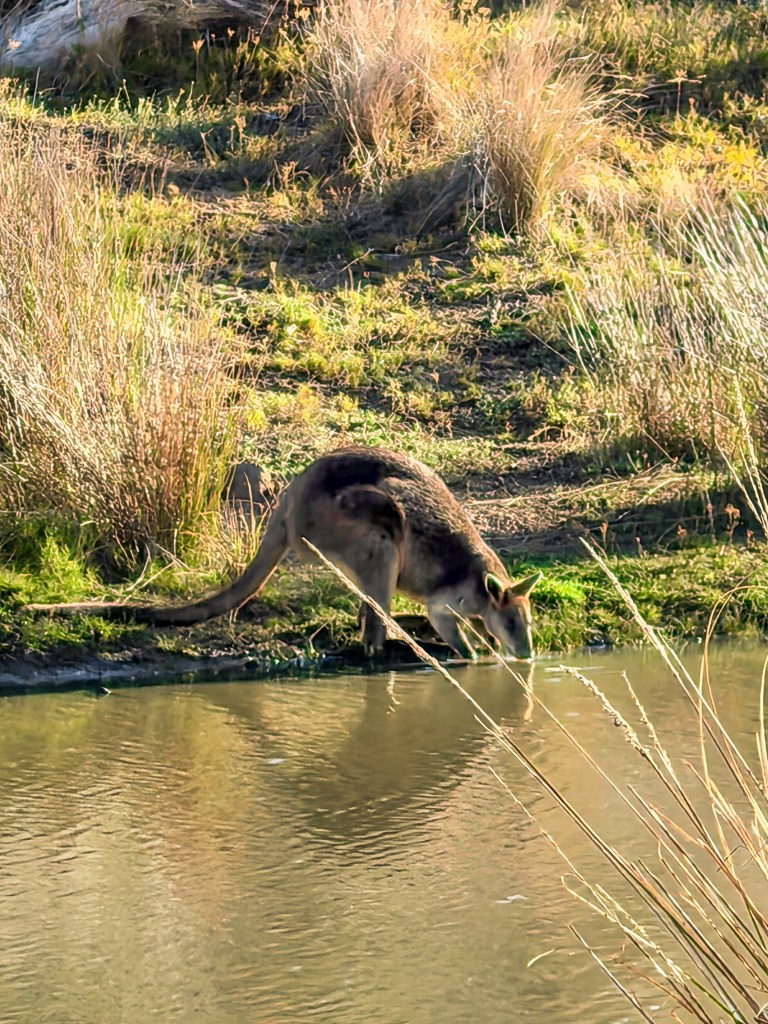
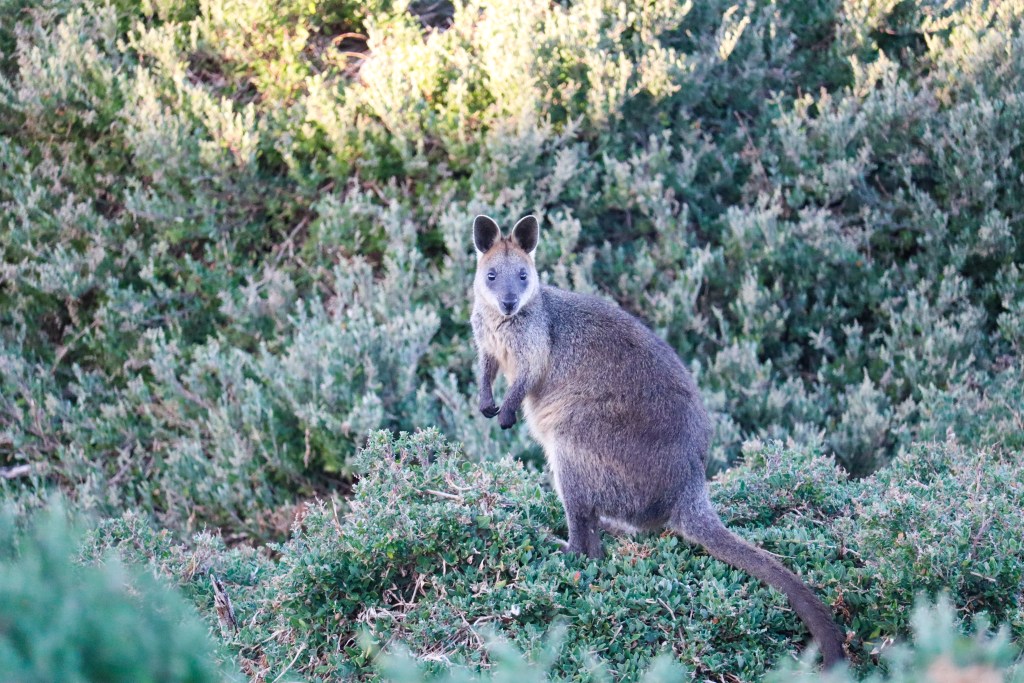
In the coastal scrub and open grasslands, you’ll often spot swamp wallabies – smaller, shyer relatives of kangaroos. They have shorter legs and a more compact build, which helps them move easily through dense vegetation.
They’re most active around dusk, so your chances of seeing one on the way to the parade are pretty high. We saw loads of them! 🤭
🐾 Possums and bandicoots
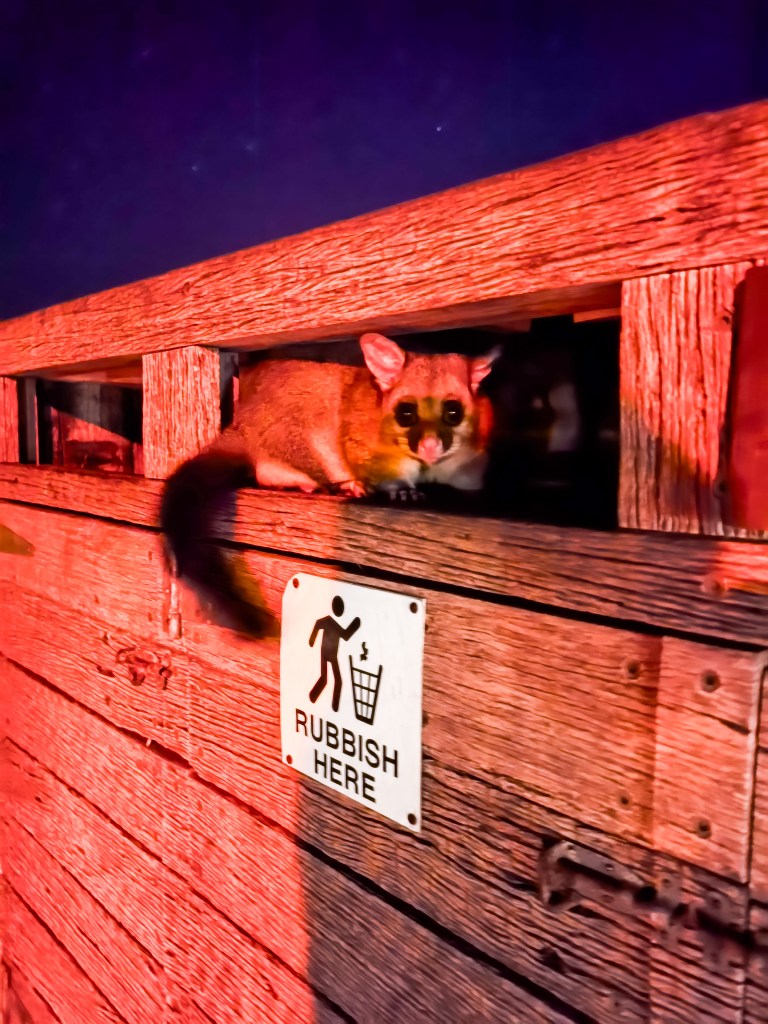
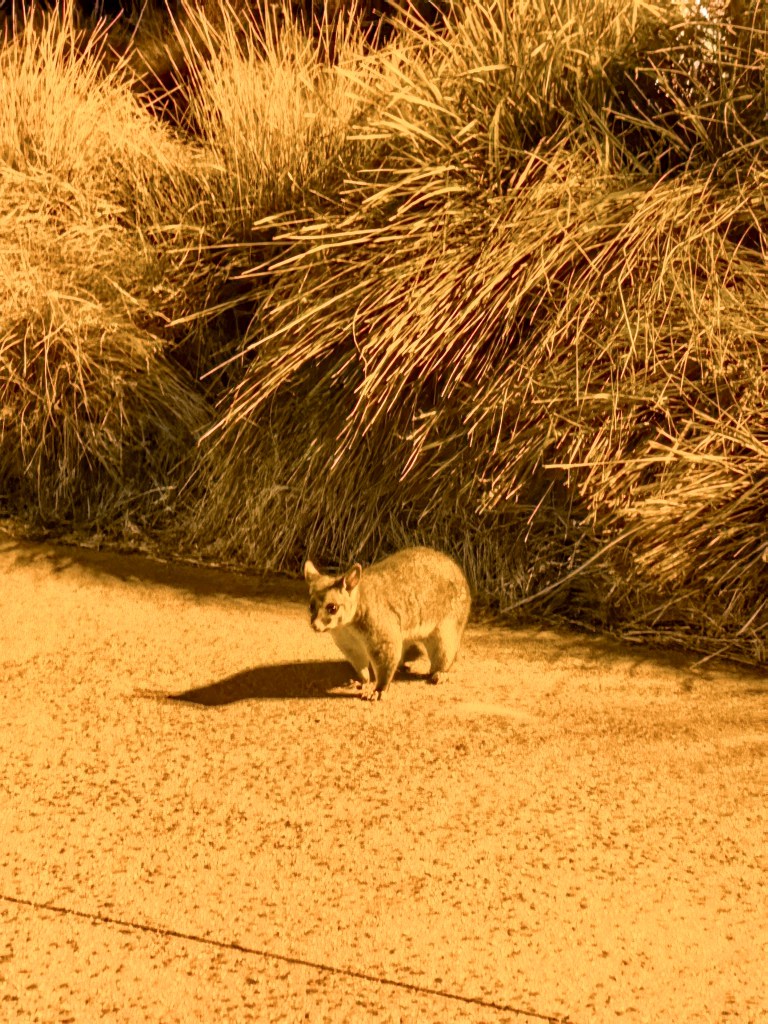
After dark, you might notice possums darting along the boardwalks or rustling in the bushes. Apparently, one of their favourite hangouts is near the rubbish bins by the toilets close to the car park. 🤫They’re classic nocturnal residents of the Australian bush. And if you’re lucky, you might even spot a bandicoot scurrying past.
🐍 Snakes
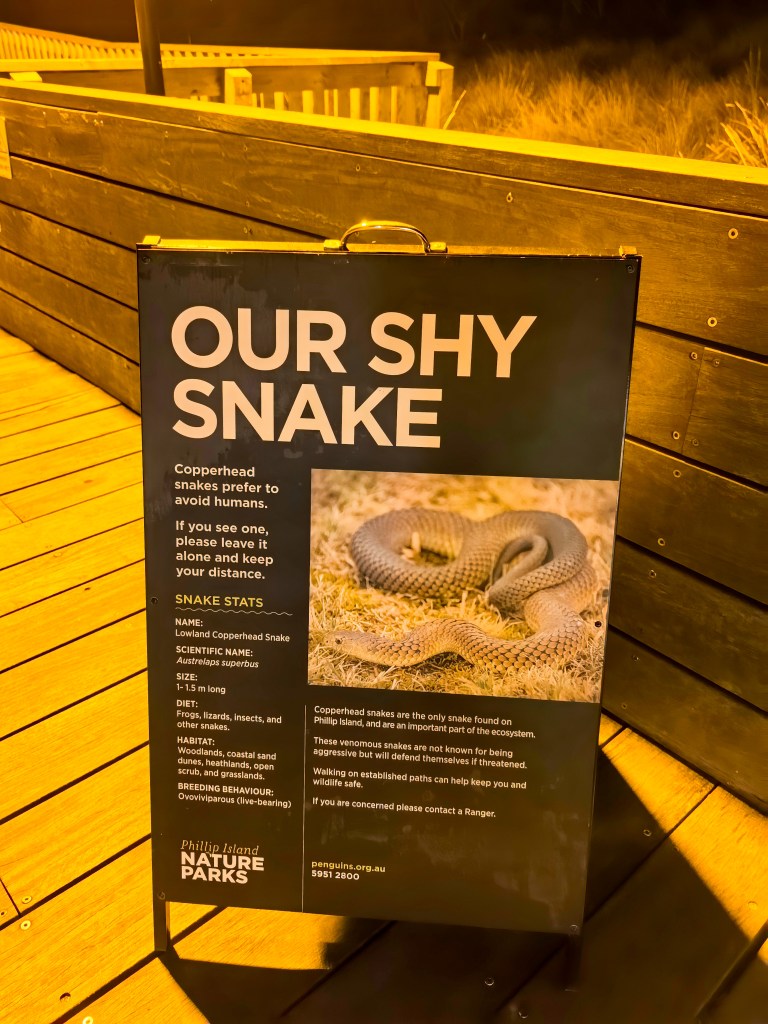
As you walk along the boardwalk towards Summerland Beach, you’ll see warning signs about the only snake species found on Phillip Island – the lowland copperhead (Austrelaps superbus).
These snakes are said to be quite shy and generally avoid people. However, they are venomous, so if you do happen to see one, keep a safe distance and let it go on its way.
🐦 Birds
Apart from the usual seabirds like seagulls, we also spotted plenty of Cape Barren geese roaming around this part of the island. The next day, on our way to the Nobbies Centre, we passed even more of them – they clearly feel very much at home here.

What to Know Before Your Visit – Practical Tips
📆 Book your tickets in advance
To secure your spot at this incredible natural spectacle, it’s best to book your Penguin Parade tickets online ahead of time – especially during the busy season.
🕐 Arrive early
The Visitor Centre opens between 4:00 pm and 6:00 pm (depending on the month), and the penguins start returning to shore just after sunset. Arriving early gives you time to explore the exhibition and grab a good viewing spot.
🧥 Dress warmly
Even in the height of summer, evenings on the island can be surprisingly chilly. Bring an extra layer to throw on. If you’re planning to sit on the sand, a blanket or beach towel will make things much more comfortable.
🚫 No photography after dark
For the penguins’ wellbeing, photography and filming are strictly prohibited once the sun has set. These little birds are extremely sensitive to light, and flashes or bright screens can disorientate them.
☔ Weather conditions
The Penguin Parade runs all year round, whatever the weather. If rain is forecast, make sure to bring an umbrella or a waterproof jacket, as most of the experience takes place outdoors.

Our Experience at the Penguin Parade
Seeing the Penguin Parade had been a dream of mine for a long time, so we were buzzing with excitement that day. We honestly couldn’t wait for a crowd of sweet little penguins to pop out of the ocean!
We arrived at the Penguin Parade Visitor Centre just over two hours before sunset. We wanted enough time to explore the interactive exhibition and make sure we secured good seats on the viewing platform. We chose the most affordable option: General Viewing.
We took our time walking through the exhibition, which focuses mainly on little penguins, though you can also learn about larger penguin species from other parts of the world.
A few fun facts really stuck with us. For example, little penguins are excellent jumpers – they can leap as high as their own body length! They’re also incredible divers, plunging underwater to hunt between 200 and even 1 300 times a day! The record depth they’ve reached? An impressive 72 metres!
And once their food is digested… well, let’s just say little penguins hold the title for the fastest poo in the animal kingdom – which apparently helps keep their burrows clean. 🙈
There’s also a small section dedicated to Aboriginal communities and their native languages. It’s well worth a look if you’d like to better understand just how culturally and linguistically diverse Australia really is.
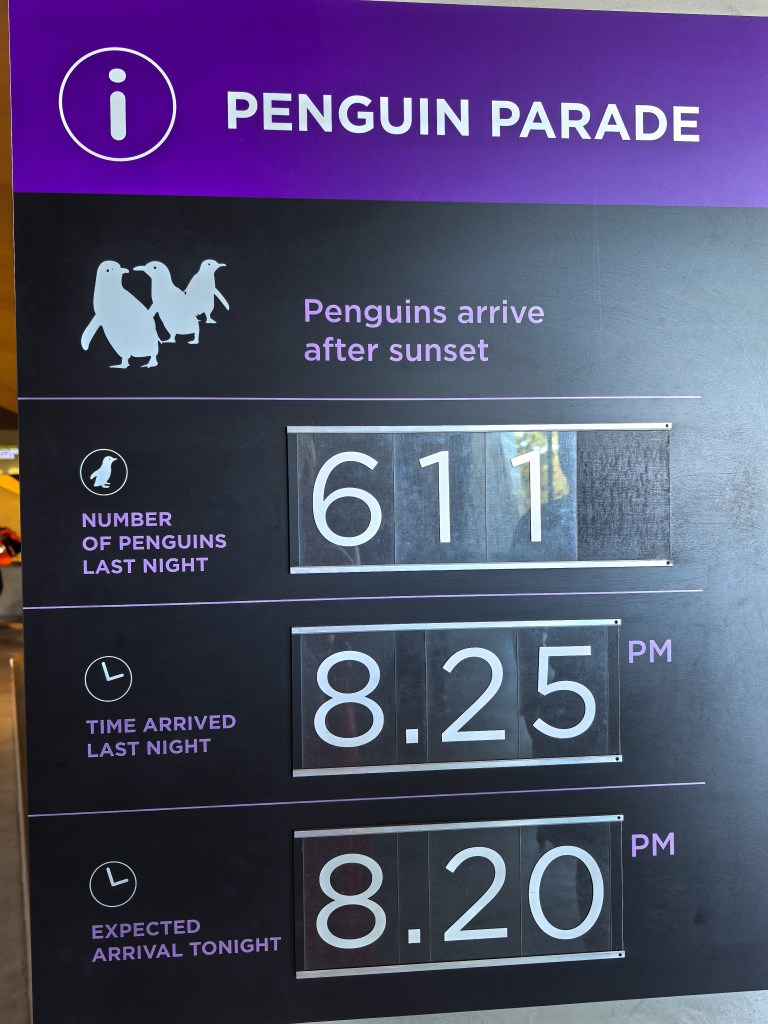
At the end of the Visitor Centre, you’ll find the ticket gates for the Penguin Parade. A screen nearby displays the expected arrival time of the evening’s main stars. In our case, the penguins were running a little later than predicted.
Around an hour before their anticipated arrival, we were allowed onto the boardwalks leading to Summerland Beach. On the way, we passed penguin burrows and wooden nesting boxes, as well as plenty of wallabies and Cape Barren geese.
When we reached the viewing platform, it was still fairly quiet. Following the advice of the staff, we chose seats in the corner, right on the sand – apparently the best spot. That said, even though it was still late summer, in early March, the sand was damp and freezing cold. Despite a scorching hot day, we ended up in long trousers and softshell jackets.
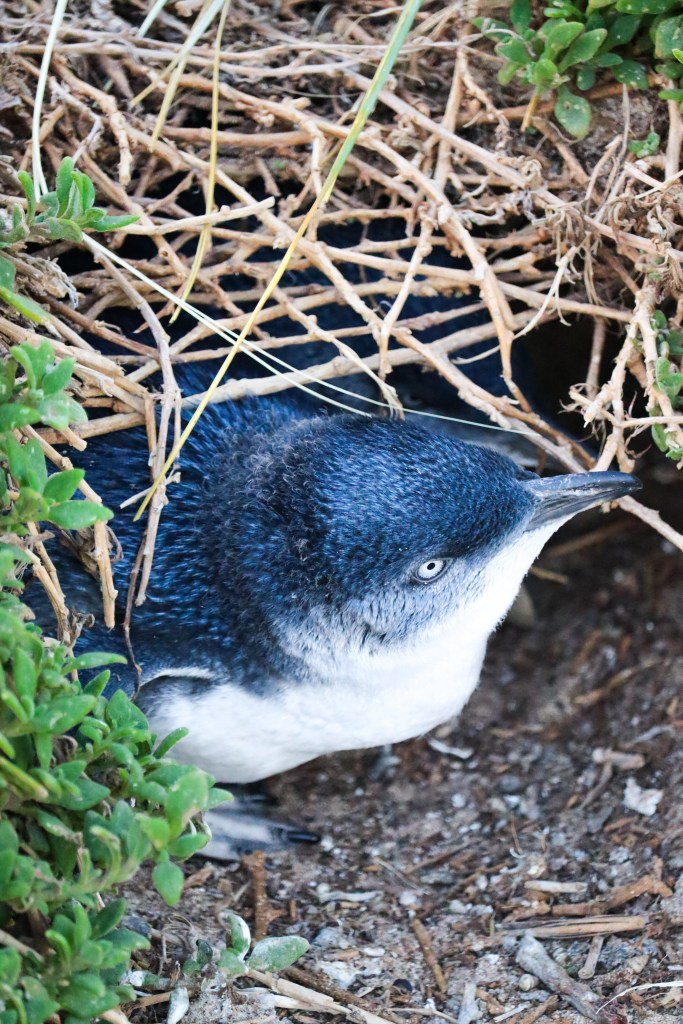
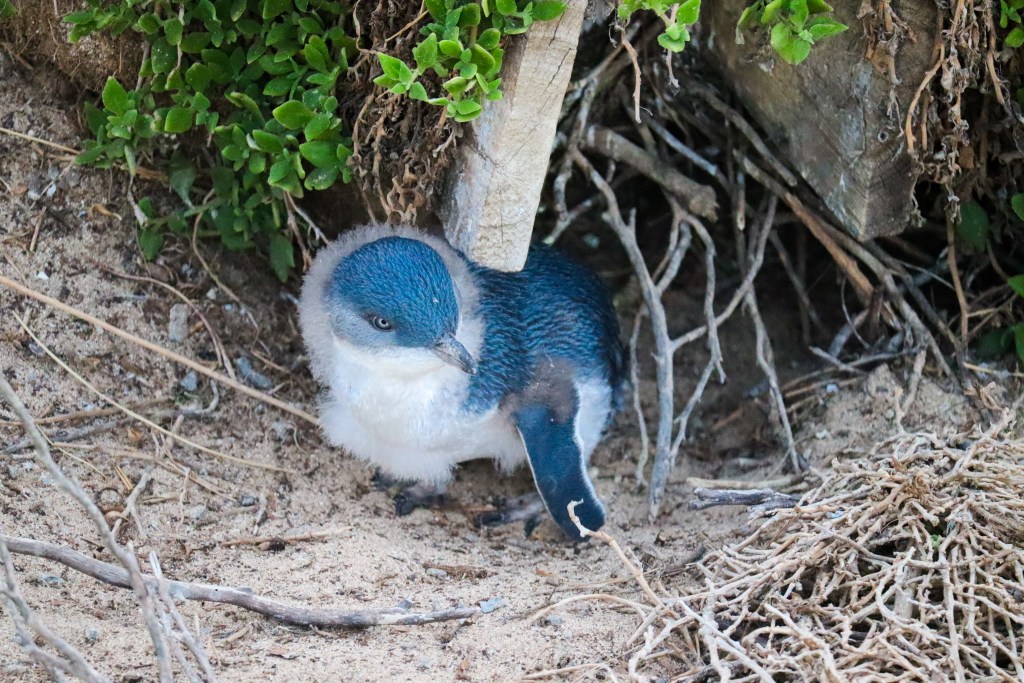
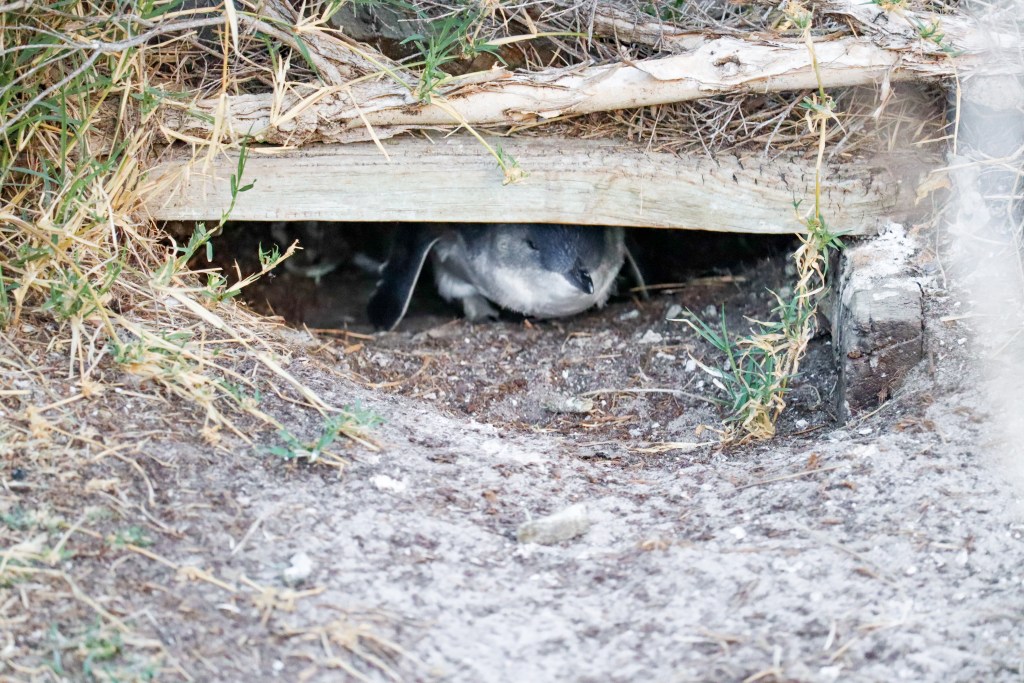
With time to spare before dusk, we took turns exploring the surrounding area – and that turned out to be a brilliant decision. We spotted a bandicoot, several small wallabies, and, best of all, penguins sitting in their nests! Until sunset, photography was allowed, so we managed to leave with our own pictures – not of the parade itself, but of the little penguins of Phillip Island.
Just before dark, there was a short talk, and once the night fell, we sat there excitedly scanning the waves. It took a little while, but eventually the first penguin emerged from the sea and waddled literally just a few centimetres past us. It was incredible!
The penguins are quite shy, though. All it took was someone in the audience standing up to send them retreating back towards the water. That’s why we really recommend sitting in the front row on the sand if you can!!
That evening, around 900 penguins came ashore.
After leaving the beach, we walked back along the wooden boardwalks. Underneath us, penguins were calling to one another and scurrying around in search of their burrows. It was another chance to see them up close – although sadly, not everyone respected the no‑photography rule.
Along the way, a few nimble possums also darted past our feet.
Watching penguins in their natural habitat for the very first time was a truly special and unforgettable experience for us.
Can You See Penguins on Phillip Island for Free?
If you want to see little penguins in Australia, there’s honestly no better place than Phillip Island. Taking part in the Penguin Parade practically guarantees that you’ll watch them returning to their burrows after a long day out in the ocean.
So, is there anywhere else on Phillip Island where you might spot penguins without paying for a ticket?
It’s hard to give a clear yes or no. In some seasons, it might be possible – but there’s no guarantee.
The parade is organised in a way that protects both the penguins and visitors, while also supporting conservation efforts. Outside of the official viewing areas, penguins can sometimes be seen in the wild, but sightings depend heavily on the time of year, the time of day, and a bit of luck.
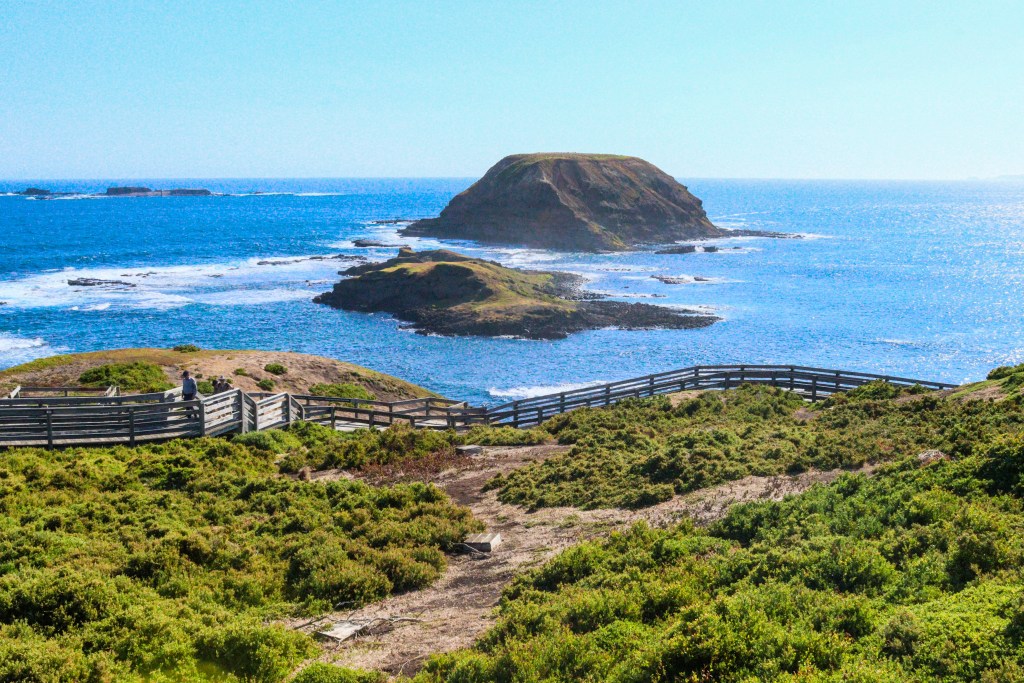
During the day, head out for a walk along the boardwalks at the Nobbies Centre. They’re very similar to the ones at Summerland Beach. Down below, you can sometimes spot natural burrows as well as wooden nesting boxes that are home to little penguins.
While we were there, we couldn’t stop marvelling at the fact that these tiny, seemingly clumsy flightless birds manage to scramble up such steep cliffs – and do it every single day!
The adult penguins from the colony spend their days out at sea, but the chicks stay in their nests during daylight hours. So if you visit at the right time of year (November to April), there’s a good chance you might spot a few of them tucked away in their burrows.
Attractions Nearby
🌊 The Nobbies & Nobbies Centre (about a 5-minute drive)
This is easily one of the most spectacular spots on the island!
Wooden boardwalks run along dramatic cliffs overlooking the Southern Ocean, offering stunning coastal views. The area is famous for the Blowhole rock formation and Seal Rocks, home to one of Australia’s largest fur seal colonies.
Inside the Nobbies Centre, you’ll find an interactive exhibition about marine life, a children’s play area, and a café with panoramic ocean views. It’s well worth a stop – even if just for the scenery. 🌊
🐨 Koala Conservation Reserve (about a 15-minute drive)
This reserve gives you the chance to see koalas up close while walking along elevated boardwalks set among the treetops, all without disturbing them.
You can also spot plenty of other Australian wildlife here, including wallabies, kangaroos, echidnas, and a variety of bird species.
It’s a fantastic place for families and anyone who loves Australian fauna. 🐾
⛵ Boat trip to the seal colony at Seal Rocks
If you’ve got a bit more time on the island and fancy seeing wildlife from a completely different perspective, consider taking a boat trip to Seal Rocks – home to one of the largest fur seal colonies in Australia, with around 25 000 individuals!
- Tours depart from Cowes Jetty or from San Remo and are run by local operators (such as Wildlife Coast Cruises).
- During the two-hour speedboat trip, you’ll cruise along the dramatic coastline and cliffs all the way to Seal Rocks, located just off the Nobbies.
- Along the way, you’ll see not only hundreds of seals lounging on the rocks, but also seabirds – and if you’re lucky, even dolphins or whales. 🐬🐋
Is the Penguin Parade on Phillip Island Worth Visiting?
Taking part in the Penguin Parade and watching these incredible flightless birds up close, in their natural habitat, is a truly special experience – especially if you love animals and nature.
Unlike many tourist attractions, the real stars here are wild animals, and nothing is staged.
You get the chance to see penguins at close range as they waddle between the waves and their burrows, completely unfazed by the people around them – as long as everyone behaves, of course. It’s authentic, moving and completely unique – we’ve never experienced anything quite like it.
Don’t let the no‑photography rule put you off. Instead, sit down on the sand and simply watch those tiny penguin feet shuffling awkwardly across the beach. 👣
The Penguin Parade on Phillip Island is unique on a global scale. This is the largest permanent colony of wild little penguins in the world, and the parade itself – their daily return from the ocean to their burrows on shore – is something you simply won’t see anywhere else in quite the same way.
In our opinion, the Penguin Parade is an absolute must‑do on Australia’s southern coast. It’s not just another tourist attraction, but a genuine, living encounter with nature in its most authentic form.
And on top of that, by taking part in the parade, you’re directly supporting the conservation of little penguins. 🐧💗
Are you planning to visit Australia? Check out our other posts, too:
Leave a Reply