
This post is also available in: 🇵🇱 PL | 🇵🇹 PT
Hong Kong is a truly unique destination where towering skyscrapers rise beside temples, and modern life blends with centuries-old traditions. It’s the place where East meets West, creating a fascinating cultural mix.
But not only modern buildings tower over Hong Kong – the city is also surrounded by numerous hills, and one of them is home to a massive Buddha statue. The majestic Tian Tan Buddha, located on Lantau Island, is one of Hong Kong’s biggest attractions. And literally – it is the world’s largest bronze statue of a seated Buddha! It’s no wonder that, besides Buddhist pilgrims, it draws crowds of tourists as well.
Wondering how to plan your visit, what to expect, and why the Tian Tan Big Buddha is worth seeing? You’ll find all the answers right here in this guide. 😊
Tian Tan Buddha at a Glance
📍 Location: Lantau Island, Hong Kong
🗺️ Getting there: easiest by cable car or bus
💰 Entry fee: free
⏰ Best time to visit: autumn (October – mid-December), in the morning or afternoon

A Brief History of the Tian Tan Buddha
Tian Tan Buddha – Key Facts and Fascinating Details
The Big Buddha, as the Tian Tan Buddha is often called, impresses visitors not only with its stunning setting among the green hills of Lantau Island but also with its size. Before diving into its history, let’s take a look at some fascinating facts about this colossal statue.
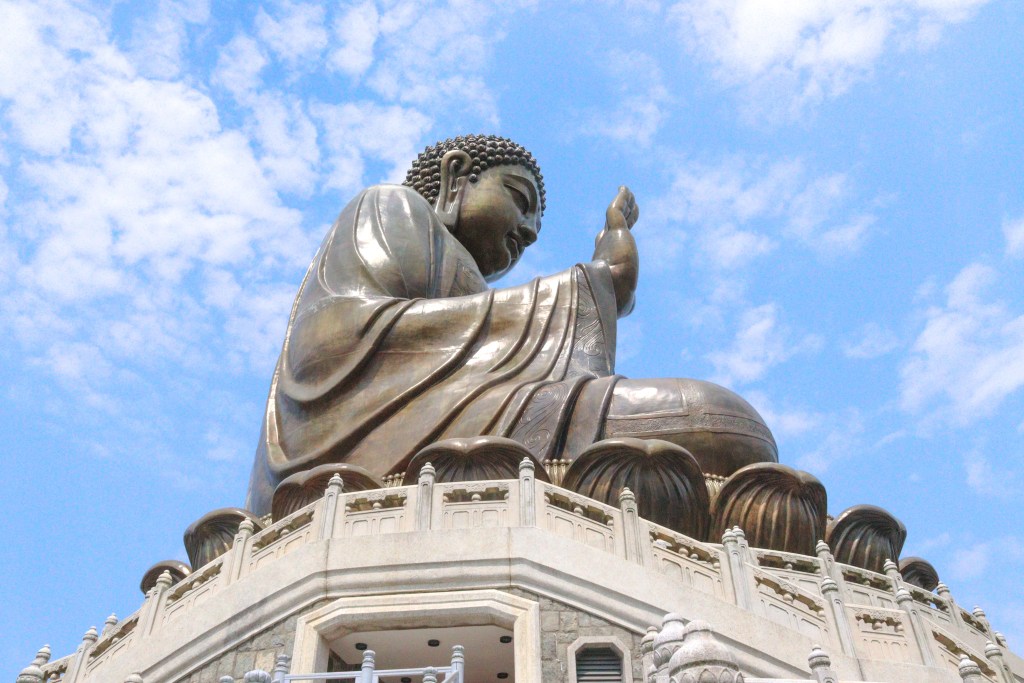
The Tian Tan Buddha is large not just in name – it owes this to its 34-metre height (including its pedestal), making it one of the largest seated Buddha statues in the world and the biggest made of bronze.
A statue of this scale naturally comes with an enormous weight – over 250 tonnes! The Big Buddha’s steel frame is covered with 202 cast bronze segments. Interestingly, the face was made from a single piece measuring approximately 4 x 6 metres, and transporting it up the winding roads of Lantau Island to the hilltop was an incredible feat of engineering!
Another major challenge was Hong Kong’s capricious weather, including humidity and seasonal typhoons. To withstand these conditions, the bronze statue had to be covered with a special protective coating.
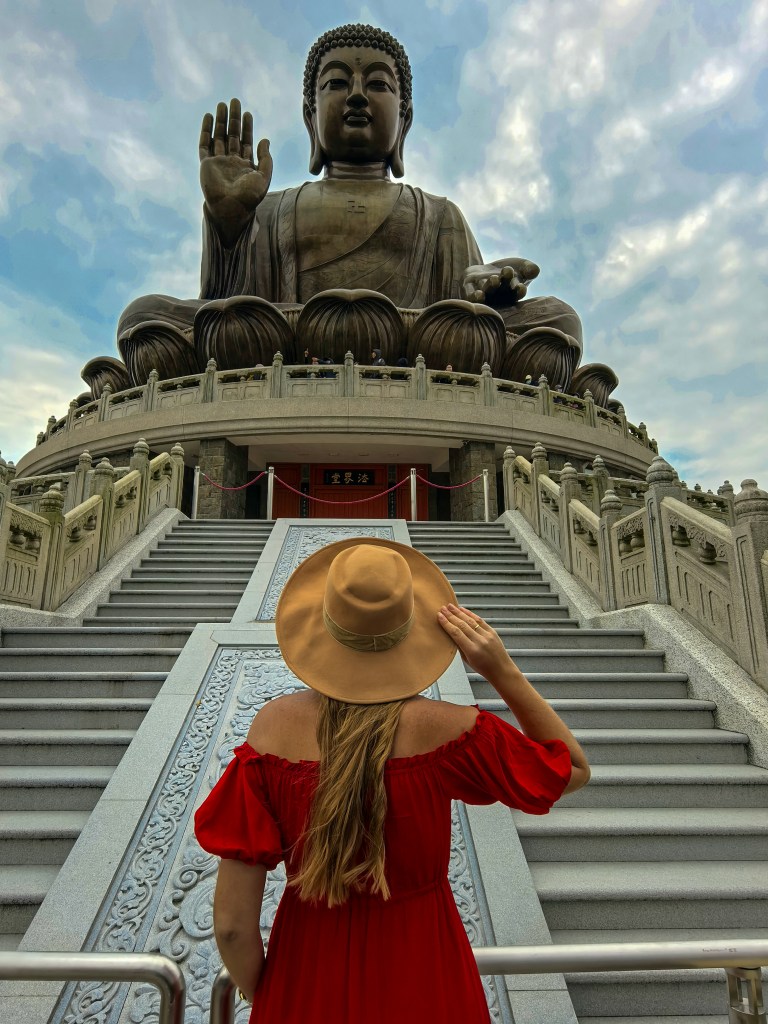

The Buddha’s pose also carries significance and hidden symbolism. Seated with one hand raised in the abhaya mudra (gesture of protection and blessing) and the other resting on the knee, it symbolises inner peace as well as compassion.
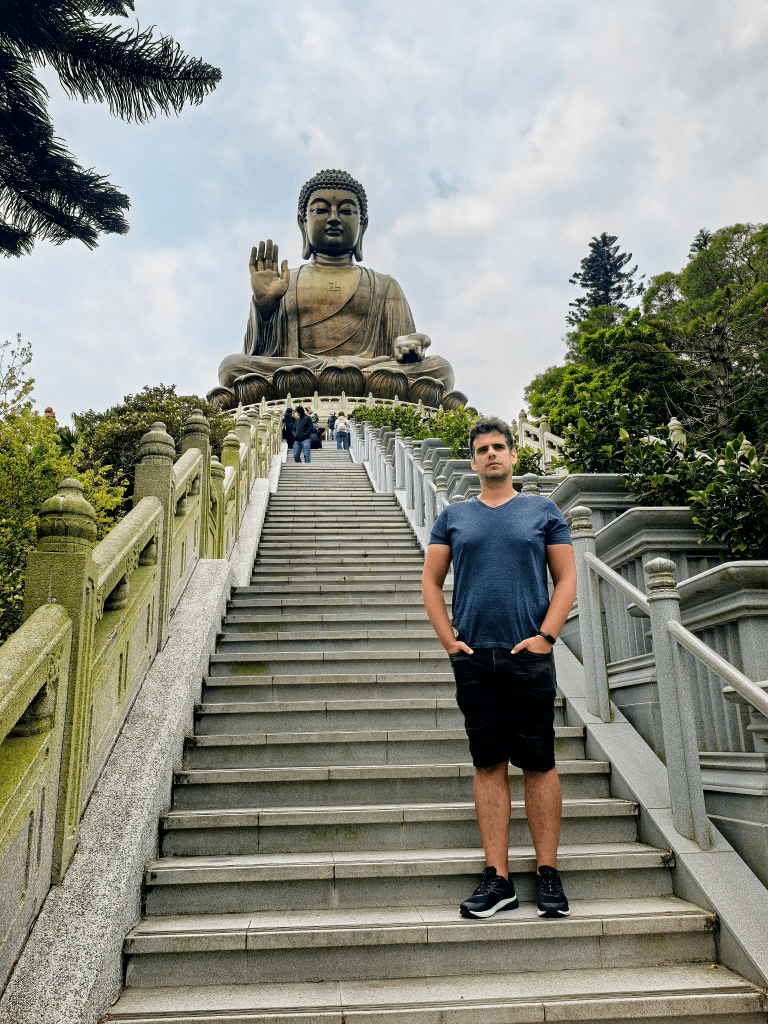
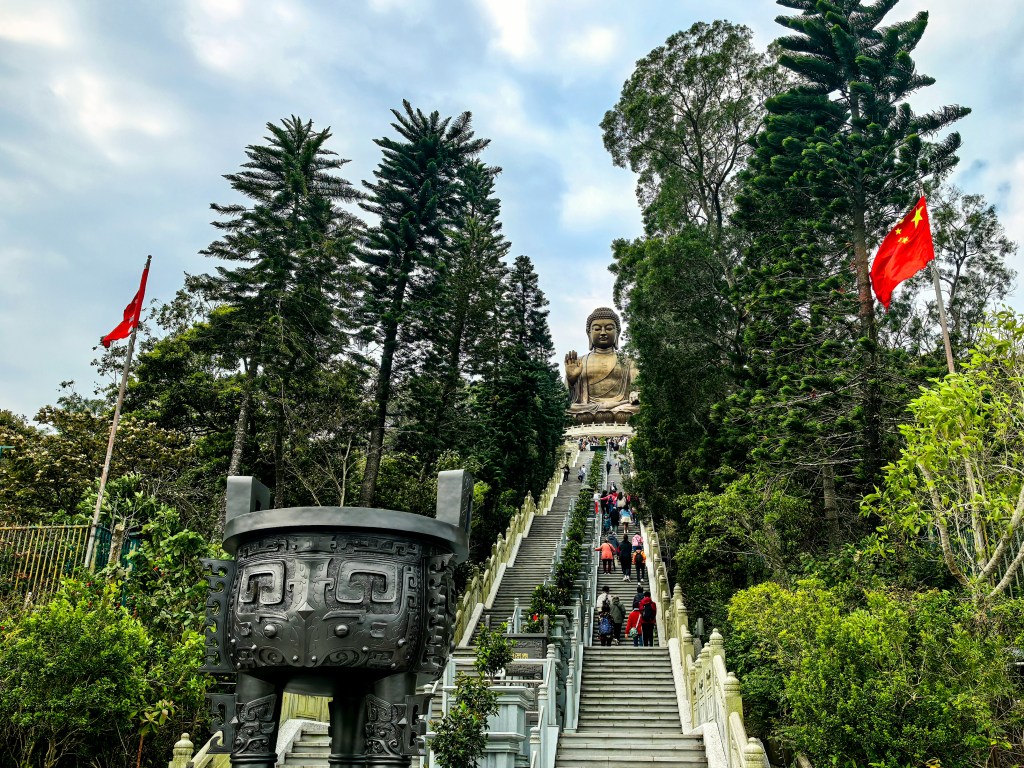
The Big Buddha sits proudly on a hill on Lantau Island, about 482 metres above sea level. The statue itself measures 34 metres high, and to reach it, you need to climb 268 steps. These steps tend to get crowded during the day, so going early in the morning is the best way to enjoy a quieter experience.
Thanks to its unique hilltop location, the Tian Tan Buddha can be seen from afar and offers one of Hong Kong’s most breathtaking viewpoints. 😊
🧐 Fun fact: The Big Buddha’s name in Hong Kong comes from the Temple of Heaven (Tian Tan) in distant Beijing, highlighting the spiritual connection between heaven and earth.

The Origins of the Statue – When and Why Was It Built?
Although the Tian Tan Big Buddha was only completed in 1993, the idea and planning began much earlier, back in the 1970s.
The story began when Buddhist monks from Hong Kong were invited to Japan, where they were deeply impressed by the massive Great Buddha statue in Kamakura. Inspired, they immediately made a vow to create a similar statue in Hong Kong.
Just a year later, in 1974, the government granted the monastery the land intended for the Buddha’s construction. However, the actual design phase didn’t begin until 1981. It’s worth noting that the location wasn’t chosen at random – Lantau Island is known for its hilly landscapes and peaceful atmosphere, making it the perfect place for contemplation and spiritual retreat.
The construction itself took 12 years, and by 2000, the statue was celebrated as one of Hong Kong’s “Engineering Wonders“.
The colossal statue is not only a tribute created by Hong Kong’s Buddhist community; it also serves as a reminder of core Buddhist values such as peace, harmony, and living in balance with nature.
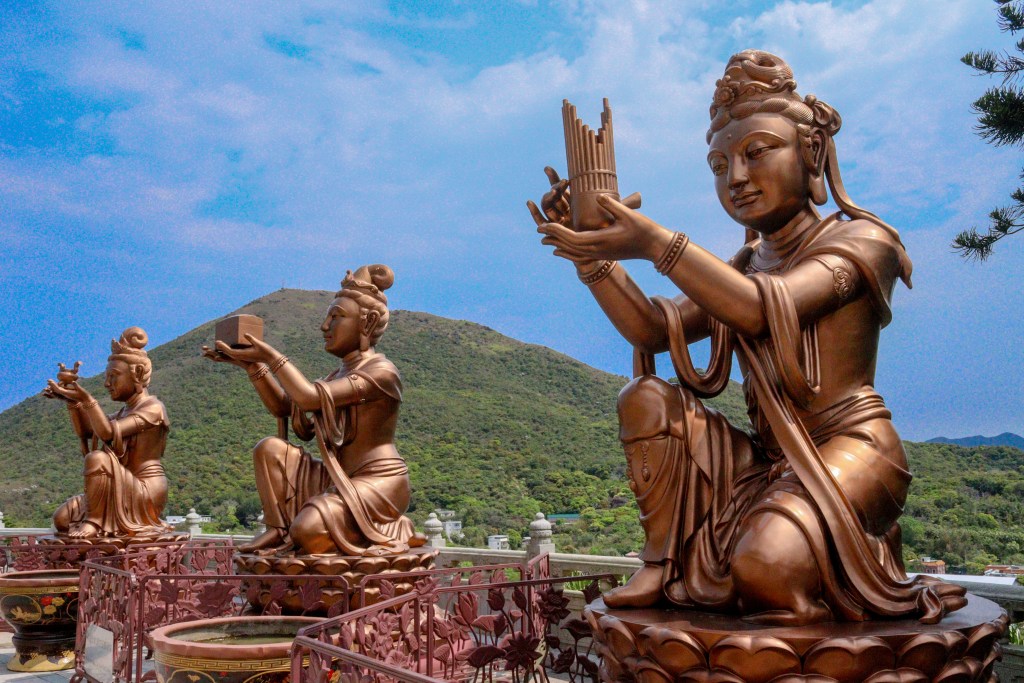
🧐 Fun fact: On the Buddha’s pedestal, you’ll find six smaller statues known as the “Offering Devas” – each holding different gifts like incense, flowers, lamps, or musical instruments. They represent six Buddhist virtues: generosity, morality, patience, zeal, meditation, and wisdom.
The Tian Tan Buddha was designed not only as an impressive work of art and engineering, but also as a spiritual centre and symbol of hope for Buddhists. Unsurprisingly, it quickly became one of Hong Kong’s major tourist attractions.
🧐 Fun fact: Unlike most Buddha statues, which traditionally face south, the Tian Tan Buddha faces north, towards Beijing, to highlight the spiritual connection with China. It’s worth remembering that during the Buddha’s construction, Hong Kong was still a British colony.
Inside the Tian Tan Buddha
After admiring the massive Tian Tan Buddha statue, don’t miss the chance to step inside. Within its three floors, you’ll find halls with both museum-style displays and sacred spaces, including a relic of the Buddha. Although the exhibition seems largely unchanged since the statue’s completion, it still offers plenty of interesting insights.
Each hall has its own name and highlights a different theme:
- Hall of the Universe – here, you can learn about the construction of the Tian Tan Buddha, as well as discover more about the Buddha himself and his teachings;
- Hall of Benevolent Merit – this hall presents the history of the nearby Po Lin Monastery and the people who contributed to the creation of the Tian Tan Buddha;
- Hall of Remembrance – for Buddhist devotees, this is the most important part of the interior. Pilgrims come here to see a relic of the Buddha, specifically a fragment of his bone gifted by Sri Lanka.
Visiting the interior of this monumental statue is therefore also an opportunity to explore the history and symbolism of this unique statue, as well as the spiritual traditions connected to it.
Where Is Tian Tan Buddha Located?
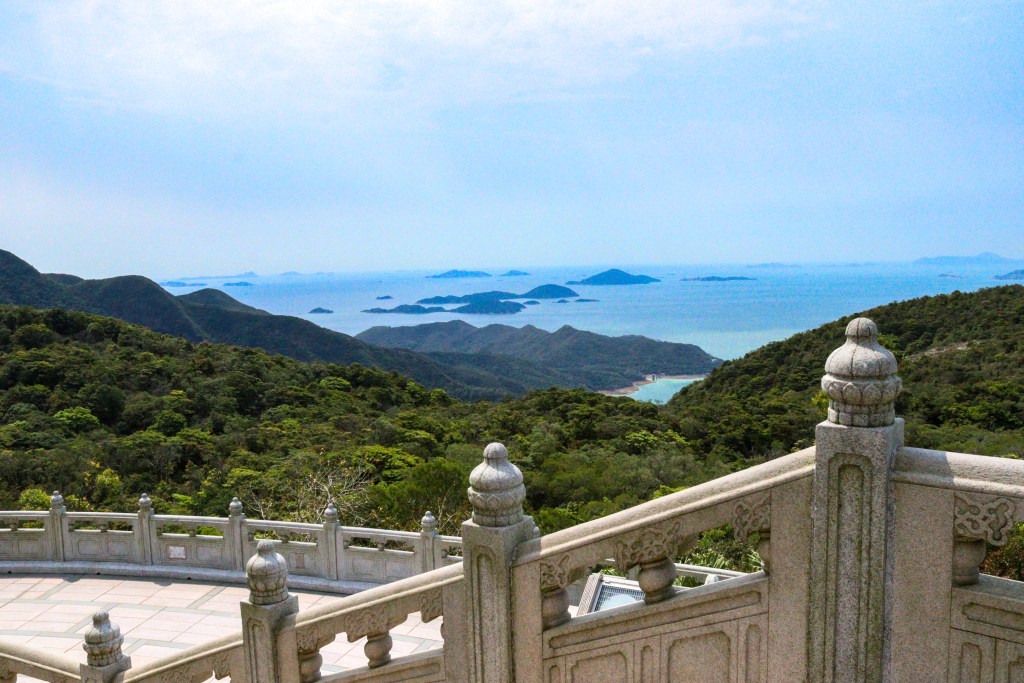
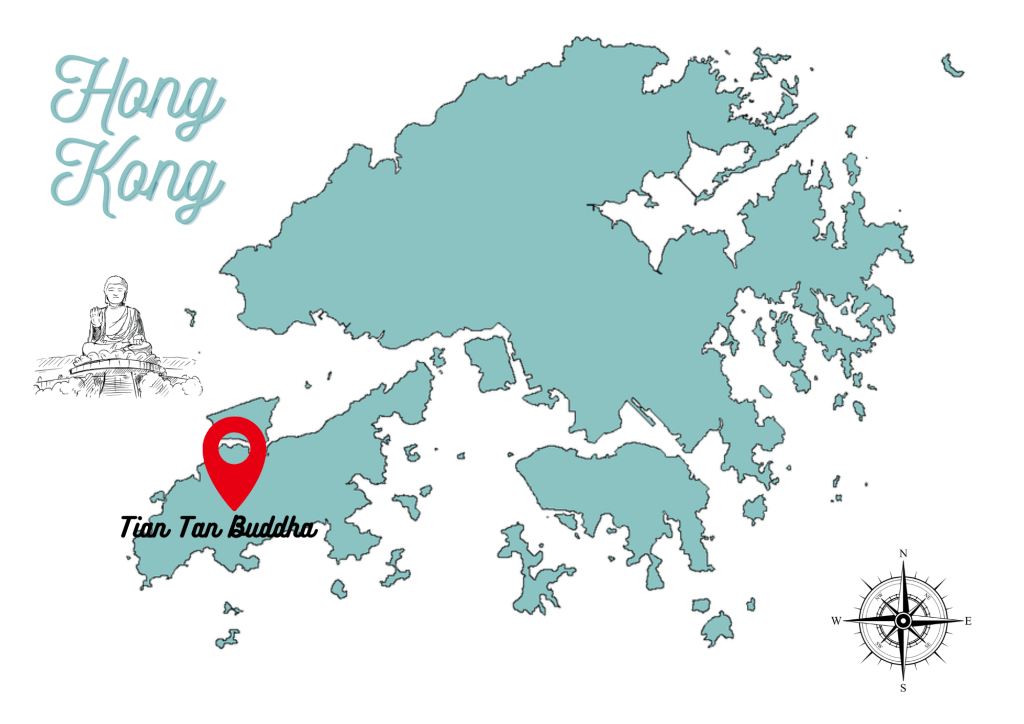
The Tian Tan Buddha sits on the picturesque Lantau Island, one of Hong Kong’s largest islands. It’s perched atop Ngong Ping hill, close to the village of the same name (Ngong Ping Village) and the Po Lin Monastery.
How to Get to Tian Tan Buddha?
Most visitors base themselves in Kowloon or on Hong Kong Island, so the first step is usually making your way to Lantau.
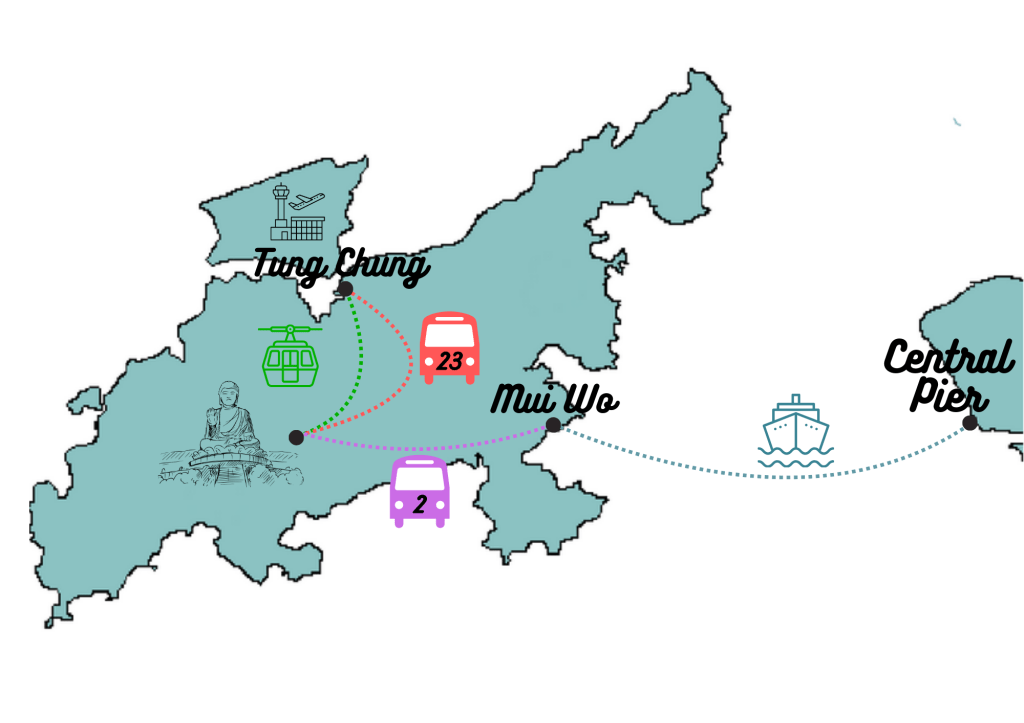
You can get there in several ways – from the stunning Ngong Ping 360 cable car, which is an attraction on its own, to more traditional (and budget-friendly) buses. Here are the most popular ways to reach this iconic landmark:
1. Ngong Ping 360 Cable Car
Taking the cable car is by far the most enjoyable and scenic way to reach the Tian Tan Buddha. The 25-minute ride offers breathtaking views – from the lush green hills to the South China Sea, and even the 50-kilometre bridge connecting Hong Kong, Zhuhai, and Macau in the distance. For a bit of an adrenaline rush, try the Crystal Cabin with a transparent floor! 😵
📍 Route
The cable car connects Ngong Ping Village with Tung Chung station, which is easily accessible by metro.
⏰ Opening hours
- Weekdays: 10:00 a.m. – 6:00 p.m.
- Weekends and public holidays: 9:00 a.m. – 6:30 p.m.
🎟️ Ticket prices (HKD)
| Ticket type | Standard Cabin | Crystal Cabin |
|---|---|---|
| One-way (adult) | $195 | $235 |
| One-way (child 3–11) | $95 | $135 |
| Round-trip (adult) | $270 | $350 |
| Round-trip (child 3–11) | $135 | $215 |
💡 You can also combine a one-way Standard Cabin ride with a return Crystal Cabin ride – a perfect compromise between cost and experience!
Tickets can be purchased on-site, but during peak season and weekends it’s best to book online.

🧐 Fun fact: Ngong Ping 360 cable car was named one of the 10 best cable cars in the world by CNN Travel! 🚠
2. Bus from Tung Chung
A cheaper, though less scenic, alternative to the cable car is taking the bus, which also departs from the Tung Chung area.
In our case, this was the only way to reach the Big Buddha, as the Ngong Ping 360 cable car was closed for maintenance during our visit.
- 🚌 Route: Bus No. 23
- ⏳ Travel time: approx. 50 minutes
- 📍 Route: Tung Chung Tat Tung Road Bus Terminus → Ngong Ping Village
- 💰 Ticket prices (HKD):
| Day of the week | Price |
|---|---|
| Weekdays & Saturdays | 20.4 HKD |
| Sundays & public holidays | 37 HKD |
📌 Tickets are purchased directly from the driver.
📢 Important: It’s best to pay with an Octopus Card – otherwise you’ll need exact amount, as no change is given.
💡Tip: The Octopus Card makes getting around Hong Kong much easier. You can use it on the MTR, buses, trams, ferries, and even in many shops, restaurants, and vending machines.
3. Ferry + Bus
Opting for the ferry instead of the MTR takes you to a completely different side of Lantau Island. Once you arrive in Mui Wo, hop on a bus that will take you straight up to Ngong Ping and the Tian Tan Buddha.
Sun Ferry runs between Central and Mui Wo, and both the duration of the trip and the ticket price depend on whether you choose a regular or fast ferry, as well as on the day of the week.
Ferry to Lantau Island
📍 Route: Central Ferry Pier → Mui Wo (Lantau)
⏳ Travel time:
- Regular ferry: 50–55 min
- Fast ferry: 35–40 min
💡 More details and the full timetable are available on the Sun Ferry website.
🎟️ Ferry ticket prices (HKD):
| Type of ferry | Weekdays & Saturdays | Sundays & Public Holidays |
|---|---|---|
| Regular ferry (adult) | 17.20 HKD | 25.60 HKD |
| Regular ferry (child 3–12) | 8.60 HKD | 12.80 HKD |
| Fast ferry (adult) | 34.10 HKD | 48.90 HKD |
| Fast ferry (child 3–12) | 17.00 HKD | 24.50 HKD |
From Mui Wo to the Big Buddha
🚍 Bus no. 2 – runs from Mui Wo Ferry Pier to Ngong Ping
⏳ Travel time: about 45 minutes
💰 Bus fares (HKD):
| Day of the week | Price |
|---|---|
| Weekdays & Saturdays | 20.4 HKD |
| Sundays & Public Holidays | 37 HKD |
🎟️ Tickets can be purchased directly from the driver, but remember to carry the exact fare because no change will be given.


How Much Is the Entrance Fee to the Tian Tan Buddha?
Good news – entry to the Tian Tan Buddha, as well as to the Po Lin Monastery and Ngong Ping Village, is completely free of charge.
Tian Tan Buddha Opening Hours
The official opening hours of the Tian Tan Buddha are 10 am – 5:30 pm (daily, including public holidays).
Po Lin Monastery, on the other hand, can be visited from 9 am – 6 pm.
Attractions Around the Tian Tan Buddha
Although the Big Buddha is the symbol of Lantau Island, it’s not the only attraction in the area. You can easily spend a whole day here, especially if you decide to go hiking on one of the longer trails. The main highlights nearby include:
- Po Lin Monastery – the spiritual heart of Lantau Island, renowned for its beautiful temples and vegetarian cuisine.
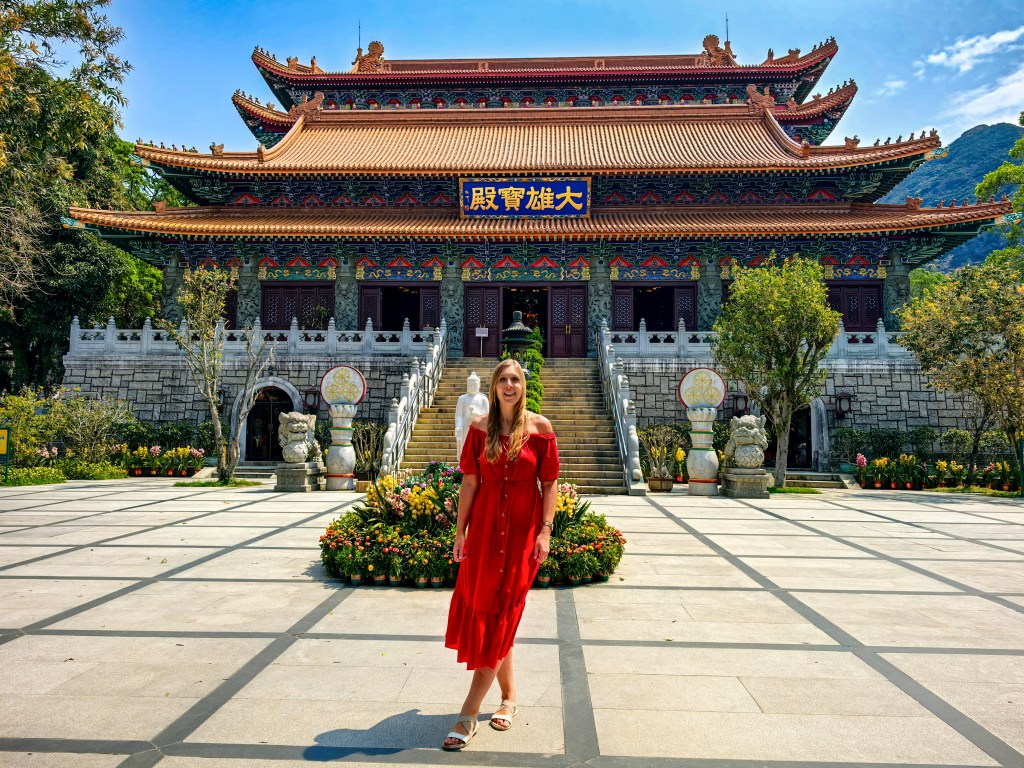
Nestled among mountains and lush greenery, the Po Lin Monastery was founded in 1906 by three Buddhist monks from mainland China. Today, it is one of Hong Kong’s most important Buddhist sanctuaries.
Its name translates to “Precious Lotus Monastery,” referring to the Buddhist symbolism of purity and enlightenment.
The monastery is best known for its beautiful temples, richly decorated with colorful rooftops, intricate carvings, and golden statues.
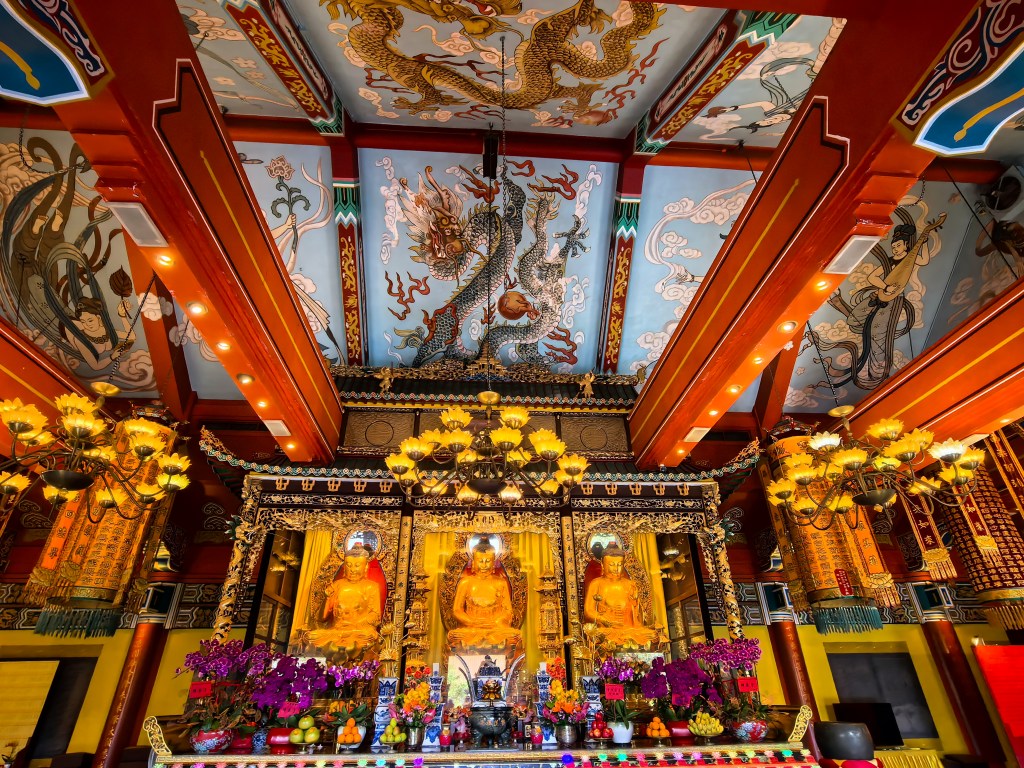
Don’t miss the three Buddha statues in the main temple – representing the past, present, and future.
If you have a bit more time, you can also try traditional dishes at the monastery’s vegetarian restaurant (open from 11:30 am – 4:30 pm).

- Ngong Ping Village – a charming area with shops and restaurants, perfect for a short break.

If you take the cable car to the Tian Tan Buddha, you’ll arrive right at Ngong Ping Village. This small, picturesque village was designed as a cultural centre where you can experience a traditional Chinese atmosphere. Along the main promenade, you’ll find restaurants, tea houses, and, of course, souvenir shops.

- Hiking Trails – Lantau Island is a paradise for nature lovers and outdoor enthusiasts.
The most popular trail is the Wisdom Path, where 38 wooden columns are engraved with verses from the ancient Heart Sutra, one of Buddhism’s most important texts. The trail is short and easy, about 1.5 km round trip, and takes roughly 30 minutes to complete.
Other longer trails in the area worth considering include the Lantau Trail, Sunset Peak, and the route to Shek Pik Reservoir.
What to Know Before Your Visit – Practical Tips
Best Time to Visit the Tian Tan Buddha
A visit to the Tian Tan Buddha is a must during any trip to Hong Kong. To fully enjoy this remarkable site and its mystical atmosphere, it’s important to plan the time of your visit carefully. Otherwise, you may encounter the characteristic fog that often surrounds the area obscuring both the distant views and the statue itself.
The best time to visit the Tian Tan Buddha is in the autumn, from October to mid-December. During this season, temperatures are comfortable for climbing the famous 268 steps, humidity is lower, and the chances of rain are reduced. Clear skies are more likely, which means better visibility and minimal risk of fog.
When planning your visit, try to avoid weekends and public holidays, such as the Buddha’s birthday or the week-long Chinese New Year celebrations. While these periods offer a unique atmosphere, this religious center and tourist attraction is usually much more crowded.
If you’re staying in Hong Kong for several days, aim to visit Lantau on a day with the lowest risk of rain and fog.
Due to the large number of visitors to the Tian Tan Buddha and Po Lin Monastery, the best time of day to explore is in the morning, shortly after opening.
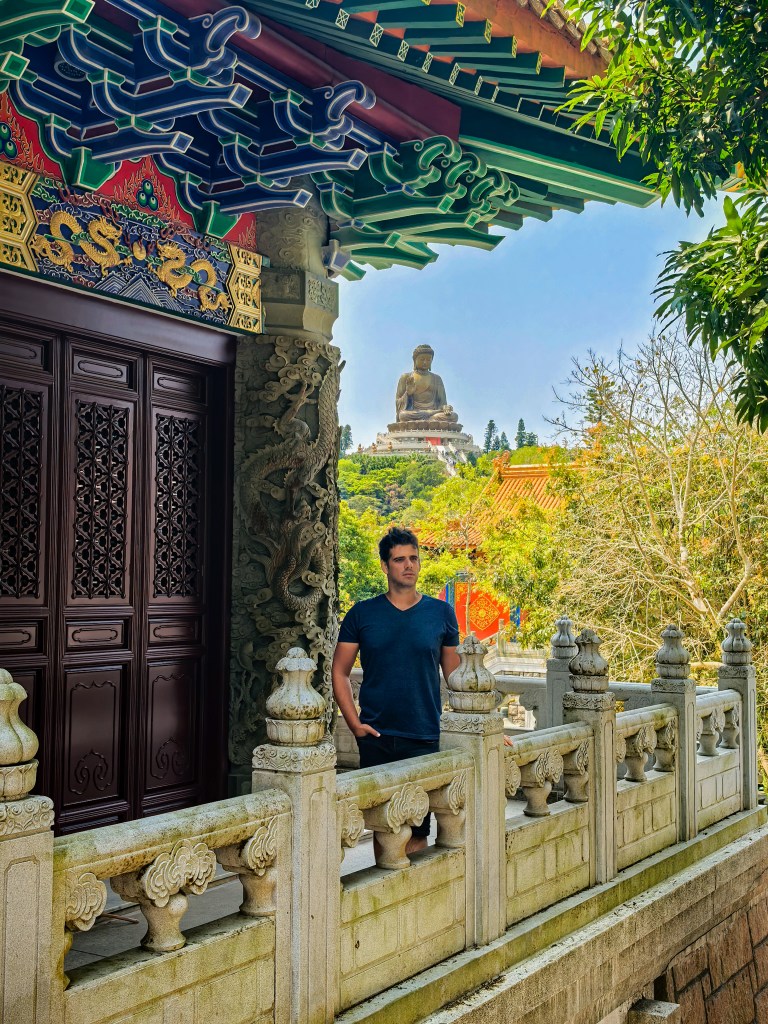
🤠 From Our Experience: During our two days in Hong Kong in mid-March, we picked the day with no rain forecast to visit the Tian Tan Buddha. Luckily, the sky was clear and there was no fog—what a relief! But the temperature had dropped noticeably compared to the previous day and was much lower than in Kowloon. Add a chilly wind on top of that, and exploring the site became quite uncomfortable. Our tip: check the weather forecast carefully and be prepared for sudden changes in the higher parts of the island!

To Sum Up:
Best Time of Day
- Morning (9 am – 11 am) – this is the best time to avoid crowds and enjoy the peaceful atmosphere. The morning light makes the statue look especially picturesque. Officially, the Tian Tan Buddha opens at 10 am, but the monastery can already be visited since 9 am.
- Afternoon (after 3 pm) – if you’d like to watch the sunset over Lantau Island, late afternoon is a good choice.
When to Avoid?
- Summer (June – September) – during this period it is very hot and humid, making sightseeing uncomfortable. In addition, this is also typhoon season.
- Public holidays and weekends – during Chinese holidays, weekends, and the Chinese New Year period, the site becomes extremely crowded, and waiting times for the Ngong Ping 360 cable car can be really long.

What to Bring?
- Water and snacks – visiting the Tian Tan Buddha can easily take several hours, plus you usually need to count in the journey from Kowloon or Hong Kong Island. That’s why it’s worth bringing water and snacks. You can also buy them on-site – in Ngong Ping Village there are several restaurants as well as a 7-Eleven.
- Comfortable shoes – essential for climbing the 268 steps and exploring the surrounding area.
- Light clothing – of course adapted to the weather. On cooler days, a light jacket will come in handy, while in summer breathable clothes that offer sun protection are best.
- In summer: sunglasses, a hat, and sunscreen are absolute must-haves.
- Raincoat or umbrella – as mentioned earlier, the weather in Hong Kong can be unpredictable, especially in summer. 😅
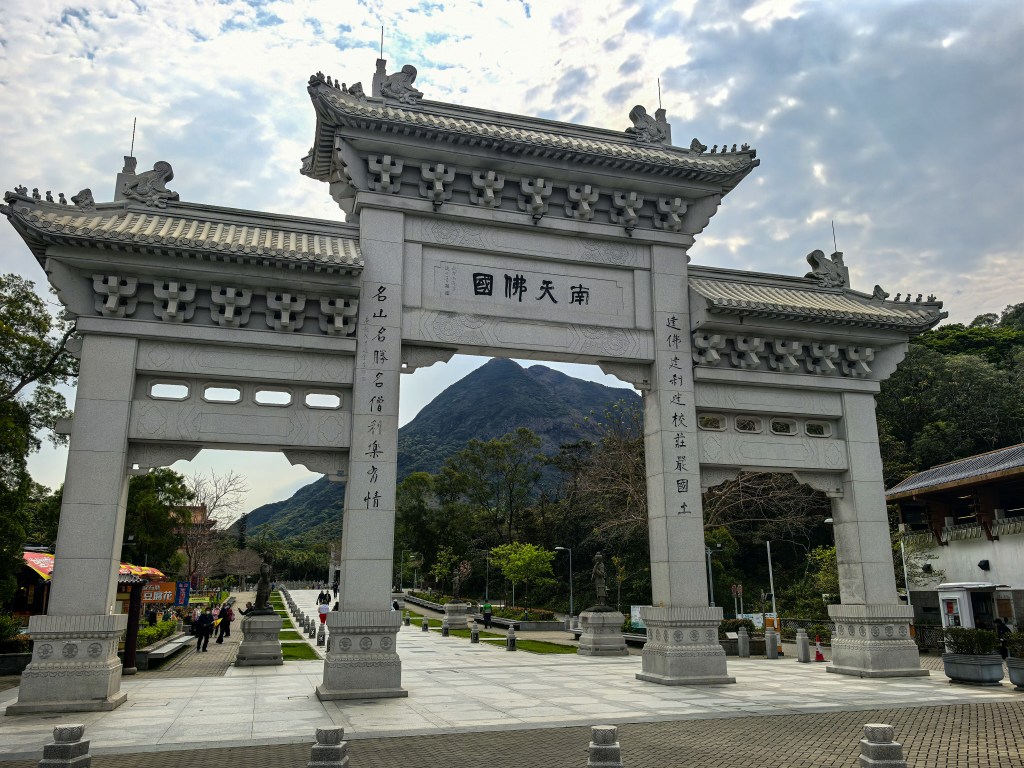
📢 Important: If you plan to fly a drone, there’s bad news – at the entrance to the Tian Tan Buddha a notice clearly states that drone flights are prohibited.
How to Avoid the Crowds
To avoid the crowds when visiting the Tian Tan Buddha, plan your trip for a weekday rather than a weekend or public holiday – these tend to attract not only tourists but also Buddhist pilgrims. The best time to arrive is shortly after opening.

Is It Worth Visiting the Tian Tan Buddha?
Absolutely yes! In our opinion, the Tian Tan Buddha is a must-see spot on the Hong Kong map — not only for culture and spirituality enthusiasts but also for anyone who simply wants to experience something truly unique. It’s one of those places that makes an instant impression — not only because of the statue’s sheer size but also thanks to the special atmosphere at the top of Ngong Ping hill.
It’s an attraction unlike any other — instead of city noise, here you’ll find the scent of incense, the rustling of trees, and breathtaking views. The Tian Tan Buddha is a wonderful escape from the urban jungle, though not necessarily from the crowds. 🙊 Especially during the high season, it’s best to plan your visit early in the morning, when the site still radiates calm and hasn’t yet been taken over by tourist groups.
And then there’s the Ngong Ping 360 cable car ride, which is an attraction in itself. The panoramic views of the mountains and the sea surrounding Lantau Island are the perfect introduction to what awaits at the top.
In short — if you want to discover a different side of Hong Kong, more reflective, spiritual, and close to nature, the Tian Tan Buddha is the perfect choice. 🌿
Happy exploring! 🤠
Leave a Reply