

This article is also available in: 🇵🇱 PL | 🇵🇹 PT
Venice can take your breath away – but it can also catch you off guard. Especially on a first visit, it’s easy to lose yourself in the maze of narrow streets and feel a little overwhelmed by the ever-present crowds. This is a city unlike any other, in more ways than one. Set on a lagoon and quite literally floating on water, Venice plays by its own rules.
Everything works in a unique way here – from the unusual way of getting around, through the recently introduced entrance fee to the city, to some rather unexpected regulations that can leave an unsuspecting tourist with a fine. It might sound a bit daunting, but don’t worry – in this post we’ll guide you step by step and share what’s worth knowing before travelling to Venice, so your visit becomes truly special and unforgettable.
Quick overview – here’s what you’ll find in this post:
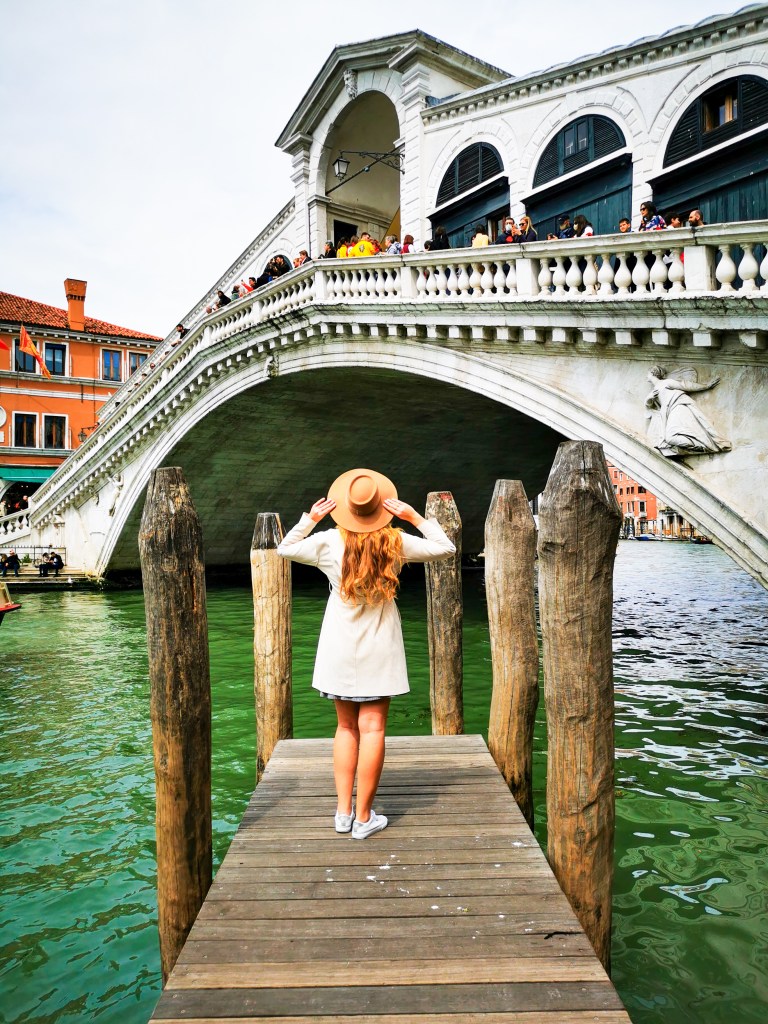
Best time to visit Venice
There’s no single perfect time to visit Venice. It all depends on what you expect from your trip. Do you want to avoid the crowds, combine sightseeing with a beach escape to Lido, or experience the magic of the Carnival? The city feels completely different in every season, and each comes with its own charms – and challenges.
🌞 Venice in summer
Summer is the season of school holidays and annual leave – and, as a result, the time of the biggest crowds in popular destinations, including Venice. The days are wonderfully long, but the heat can be intense and make sightseeing more tiring.
Pros of visiting Venice in summer:
- long days allow you to make the most of your time on the lagoon,
- beautiful summer weather brings out the colours of the water and makes Venice even more photogenic,
- more events, attractions and concerts take place, including the Festa del Redentore in July and the Film Festival in August,
- warm evenings are perfect for strolls along the canals,
- a longer stay can be combined with some beach time in Lido,
- rainfall is relatively unlikely.
Cons of visiting Venice in summer:
- peak season means bigger crowds and long queues at major attractions,
- heat – usually around 26–30°C during the day,
- high temperatures combined with humidity can feel exhausting in narrow streets,
- accommodation prices are at their highest,
- it can be harder to feel the “magic of Venice”.
📢 Important: Ferragosto (15 August) is one of Italy’s most important holidays and the peak of the summer season. In Venice, this means very large crowds, high prices and possible organisational disruptions. Some smaller, local restaurants and shops may be closed, especially outside the most touristy areas, although popular bars and restaurants usually operate as normal.
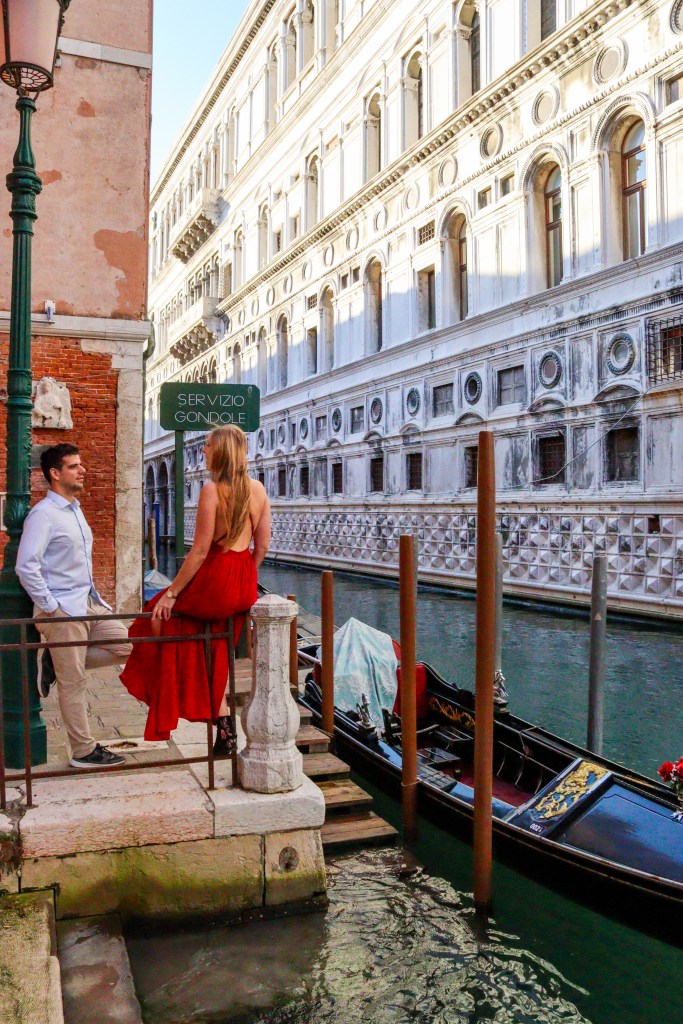
🍂 Venice in spring and autumn
Spring, especially late spring, and early autumn are in many ways the best times to explore Venice. Temperatures are gentler, the days still pleasantly long, and although the city remains lively, it feels far less overwhelming than in the summer rush.
Pros of visiting Venice in spring and autumn:
- fewer crowds than in high season, yet still plenty to see and do,
- pleasant weather ideal for wandering around the city,
- September and early October are often considered the best time to visit Venice,
- soft light that’s perfect for photography.
Cons of visiting Venice in spring and autumn:
- a higher chance of rain, especially in spring (a raincoat is a good idea!),
- October tends to be cloudier, and the risk of acqua alta increases,
- mornings and evenings can be quite chilly.
📢 Important: Even in these seasons, prices and visitor numbers can spike around Easter, long weekends or during major events such as the Biennale.
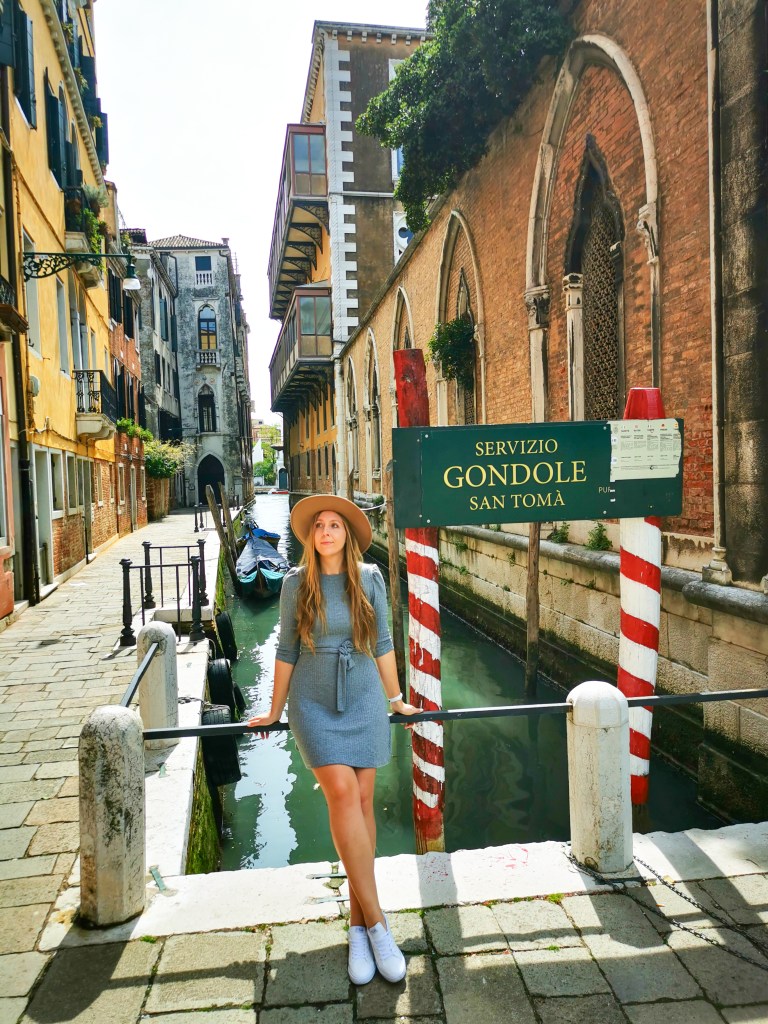

❄️ Venice in winter and during the Carnival
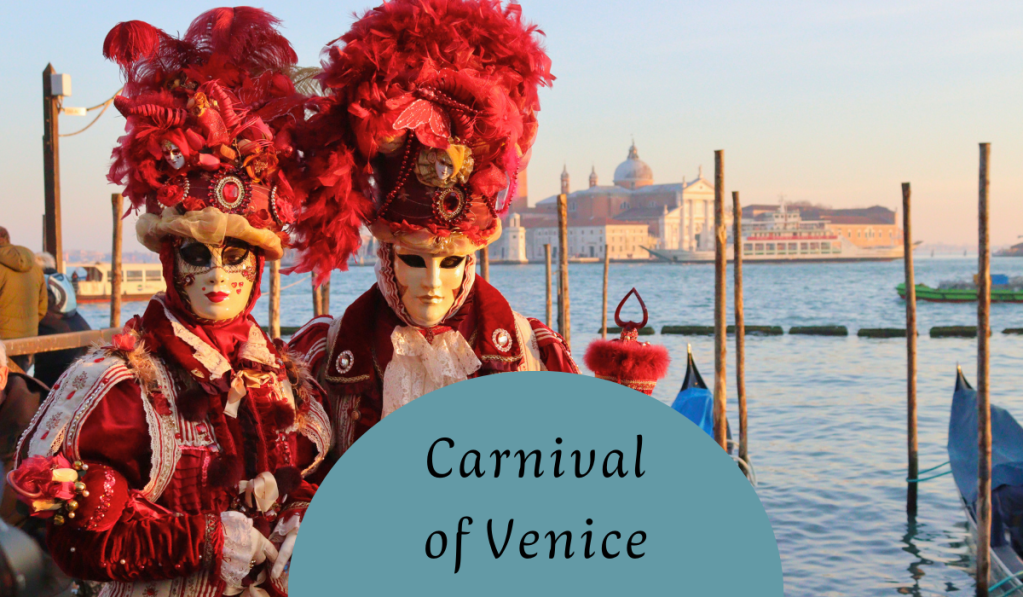
Winter is a very particular time to visit La Serenissima. Venetian winters are usually cold and damp, and the perceived temperature often feels much lower than the thermometer suggests. On the other hand, thanks to the Carnival, winter becomes one of the most fascinating moments to experience the city – colourful masks, parades and events fill the streets, and the atmosphere is truly one of a kind.
Pros of visiting Venice in winter:
- the chance to take part in the famous Venetian Carnival, which feels like stepping back in time – extraordinary atmosphere, masks everywhere and countless events,
- outside the Carnival period there are far fewer tourists than in high season – getting around is easier and prices are much lower.
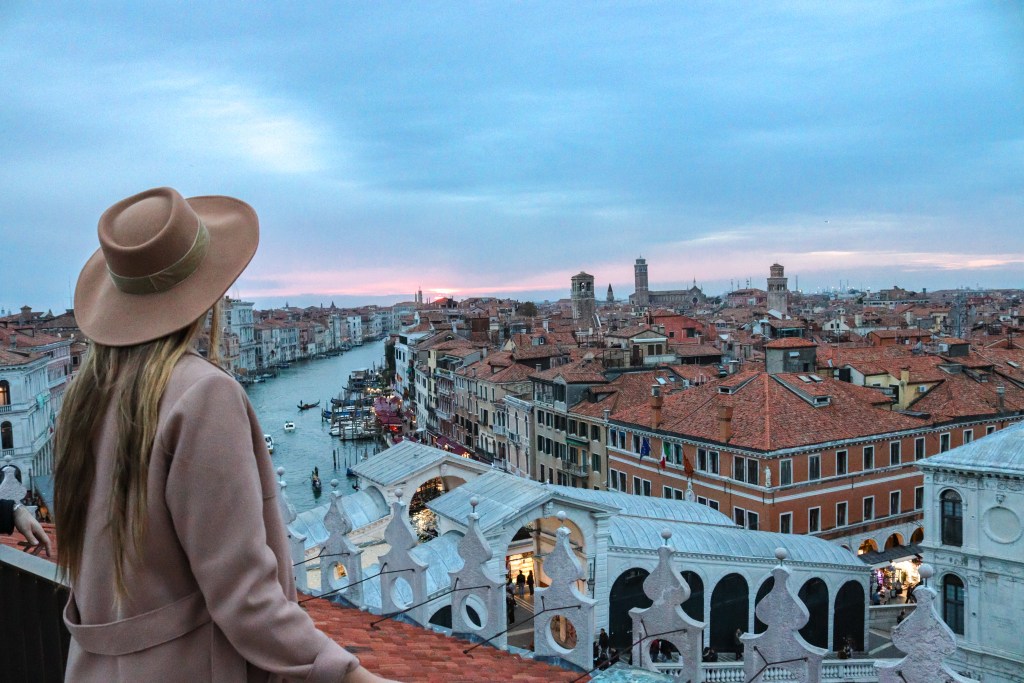
Cons of visiting Venice in winter:
- during the Carnival sightseeing can be difficult because of the crowds, and prices rise significantly,
- short days limit sightseeing time,
- winters in Venice are cold and damp – you can really feel the chill!
- higher risk of acqua alta (flooding) – you may need to use temporary walkways and expect occasional disruptions,
- reduced availability of some attractions.
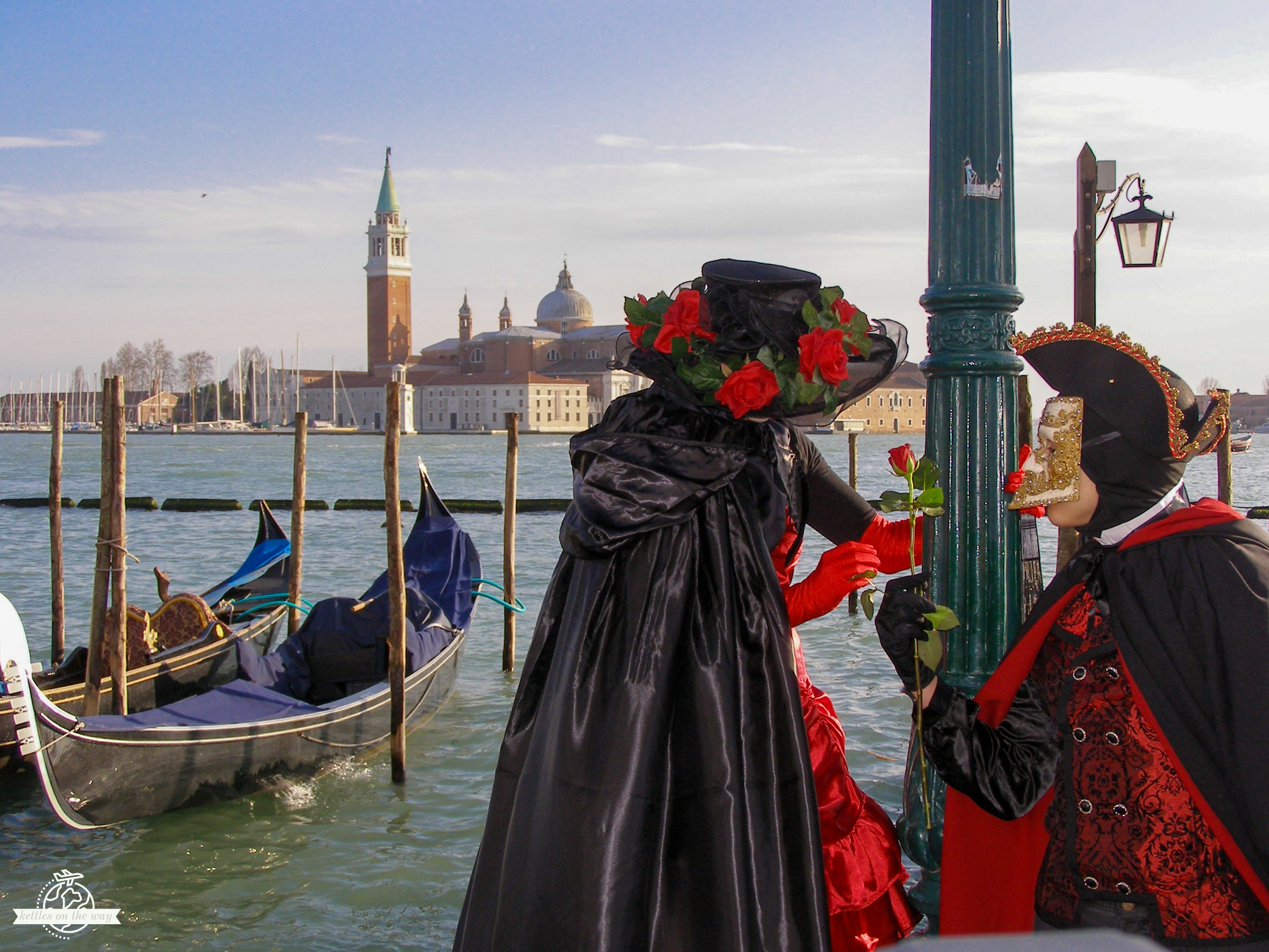
Venice for the first time – when is the best time to go?
If you’re travelling to Venice for the first time, spring or autumn will be your safest bet – a lovely balance between pleasant weather and manageable visitor numbers, making it easier to soak up the city’s unique atmosphere. But if you dream of something truly unforgettable, consider the Carnival – as long as you’re ready for bigger crowds, higher prices and cooler temperatures.
💡 Did you know? Venice has many names
Over the centuries, Venice has collected an entire gallery of nicknames – and each of them says something meaningful about its history. The most famous is La Serenissima, meaning “The Most Serene” or “The Most Tranquil”. This was the official title of the Venetian Republic, highlighting its power, independence and extraordinary position on the map of Europe.
You’ll also often come across the name City of the Doges – a reference to the rulers who, for centuries, guided the fate of the republic from the Doge’s Palace on St Mark’s Square. Venice is frequently called the Queen of the Adriatic as well, because it was the sea that built the city’s wealth and turned it into a mighty trading empire.
And on a more poetic note? The City of Bridges, the City of Canals, sometimes even the Floating City – although, in truth, Venice doesn’t actually float at all. It stands firmly on thousands of wooden piles driven deep into the bed of the lagoon. One city, many names – and every single one fits perfectly.
How to avoid the biggest crowds
A few simple choices can make a huge difference to your comfort while exploring Venice:
- try to avoid summer (June–August), weekends and Italian or international holidays such as Easter, 1 November, Christmas and Ferragosto (15 August),
- if your main goal is relaxed sightseeing, steer clear of major events like the Carnival, the Art Biennale or the Regata Storica – they not only attract massive crowds but also push accommodation prices up significantly,
- get up early and start your day at dawn – most visitors appear around 9:00–10:00, and organised tour groups usually arrive in the city by midday.
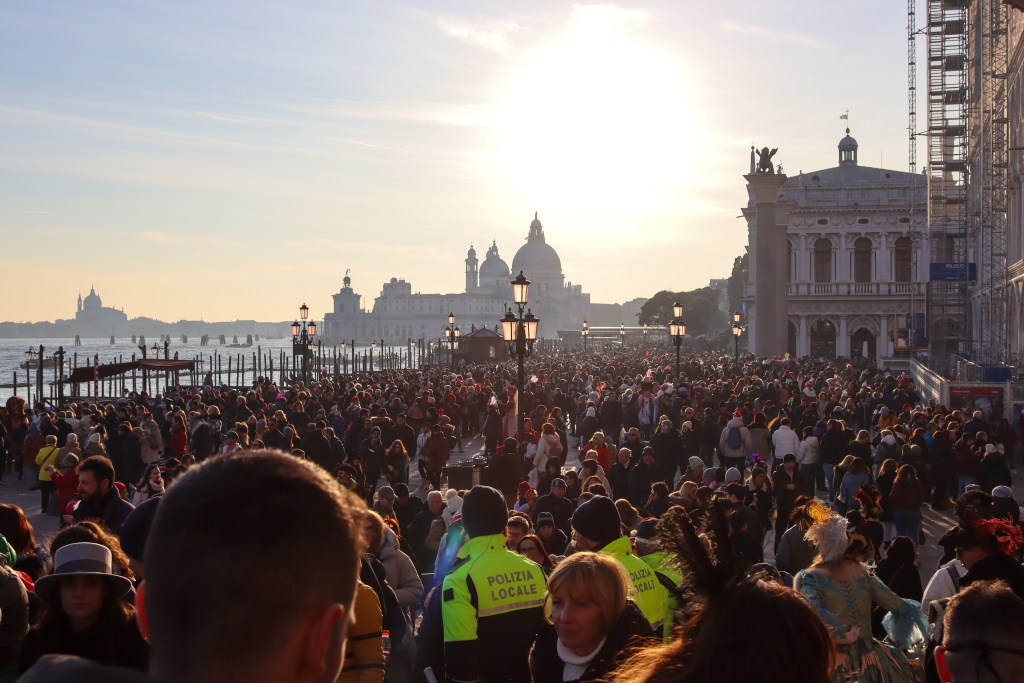
How much time should you spend in Venice?
Venice’s historic centre isn’t particularly large, but it’s packed with hidden gems.
Most of the main sights can easily be seen in two days. The City of Canals is a perfect destination for a weekend city break, giving you a taste – or at least a “sip” – of its unique character.
In our opinion, though, adding an extra day is the way to go. Three days in Venice allow you to explore the most popular attractions of La Serenissima at a relaxed pace, while also venturing into more authentic, atmospheric corners of the city.
It’s worth spending at least two mornings wandering around – taking the time to admire palaces and squares, strolling along the narrow streets, or calli, and simply observing how Venice comes to life… gradually filling up with people with each passing vaporetto.
That extra day can also be spent exploring other lagoon islands – the colourful Burano or the glass-making hub of Murano.
Does this mean it’s not worth spending more than three days in Venice? Absolutely not. If you enjoy unhurried sightseeing and discovering off-the-beaten-path spots, La Serenissima has so much more to offer.
Art lovers will lose track of time exploring priceless works hidden in nearly 140 churches. Beach enthusiasts can relax in Lido, combining sightseeing with a bit of seaside leisure. And the adventure seekers can head to less touristy Venetian Lagoon islands – like Torcello, the first inhabited Venetian island; San Giorgio Maggiore, with its unmatched view over the City of Doges; or San Lazzaro degli Armeni, famous for its 12th-century monastery.
But is it worth visiting Venice for just one day? Let’s not sugarcoat it – in our opinion, it’s not ideal. A one-day trip usually means being there only during “peak hours”. Of course, you can still see St Mark’s Square, the Doge’s Palace, and the Rialto Bridge. Outside the high season, it can be a satisfying experience, but at the peak – not so much. That said, if it’s your only chance to visit Venice, we’d say it’s better to see it in a short visit than not at all. 😅


⏱️ In short: how many days to spend in Venice?
- 1 day – express version: A “first hello” rather than a proper exploration of the city.
- 2 days – the solid minimum: Two days let you catch your breath and see Venice outside the busiest hours. A good choice for those who want to soak up the atmosphere rather than just tick off attractions.
- 3 days – the golden middle way: The best option for a first visit: main sights at a relaxed pace, plus a trip to Murano and Burano, or discovering quieter districts.
- 4+ days – for Venice lovers: For those who enjoy a slower pace: small churches filled with art, long dinners away from the centre, beach time in Lido, or trips to lesser-known lagoon islands. A longer stay reveals a completely different, more local side of Venice.
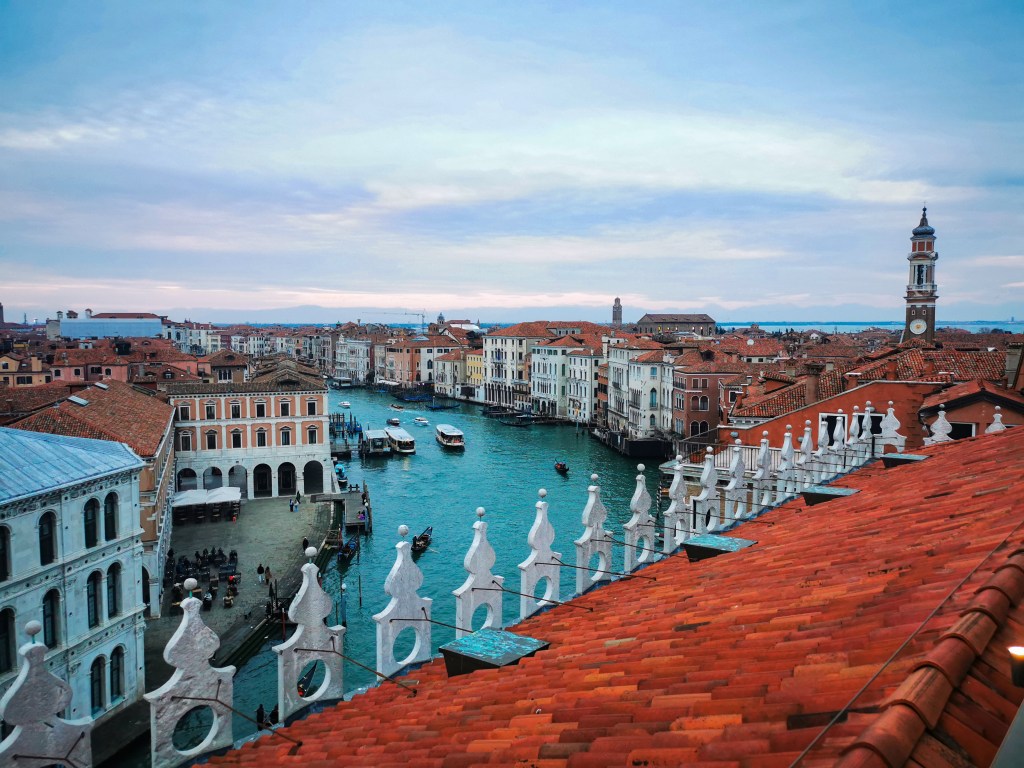
Where to stay in Venice?
The first – and perhaps most important – decision about accommodation in Venice is: the island or the mainland?
Let’s help you figure that out. And don’t worry – there’s no single “right” option. It all depends on what you want from your trip: saving money or soaking up the city’s unique atmosphere.
Accommodation on the islands, in the heart of historic Venice, is definitely less budget-friendly. So if you’re looking for the cheapest option, Mestre on the mainland is your best bet.
Mestre
From Mestre, you can reach central Venice in about 10 minutes by train (Venezia Mestre → Venezia S. Lucia, ticket cost: €1.50). An alternative is the bus to Piazzale Roma – from there, it’s just a short walk to the heart of the City of Doges.
The only drawback is the schedule – early morning connections are less frequent. Unless you plan to start your day very early, this shouldn’t be a big issue.
In short, this option works if:
- You’re not after calm Venetian mornings,
- You plan to spend your days sightseeing intensively,
- You mainly return to your hotel just to sleep.
Central Venice
While staying in Mestre is cheaper, accommodation on the lagoon offers something else – the true magic of Venice.
Sleeping in an old palazzo and getting a closer look at daily life makes it easier to immerse yourself in the city. Forget about traffic jams and racing bicycles – you won’t find those in the heart of La Serenissima.
Early morning walks, before trains and vaporetti bring waves of tourists into the city, are truly magical. If your budget allows, we’d say these moments are worth choosing a place right in the historic centre.


Which sestiere to choose?
If you’ve decided it’s worth stretching your budget to stay in the centre, the next step is picking a district.
Venice is divided into six districts, or sestieri: San Marco, Cannaregio, Dorsoduro, Castello, Santa Croce, and San Polo. Each has a completely different character, with its own churches, markets, and traditions! Each also has its own rhythm and atmosphere – so your choice of neighbourhood can really shape how you remember the city. Here are our subjective tips:
San Polo – the heart of Venice with a human touch
If we had to pick the most “universal” option, it would be San Polo. This is where the Rialto Bridge and famous market are located, yet just a few streets away you’ll find surprisingly quiet corners.
San Polo has everything that’s best about Venice: small bakeries wafting focaccia in the morning, local shops, and beautiful churches. It’s very central, but not as overwhelmingly touristy as San Marco. Perfect for a first visit – and every visit after that.
We’ve stayed in San Polo twice and can’t wait to go back.
Dorsoduro – artistic, more “local” Venice
Dorsoduro is another great option. This sestiere has an artistic, small-town vibe – no wonder the Gallerie dell’Accademia and Peggy Guggenheim Museum are here. It’s also home to Università Ca’ Foscari, giving the district a completely different vibe.
In the evenings, this part of the city moves to a more local rhythm: students gather on Campo Santa Margherita, and the bars are filled with residents rather than tourists (which usually means it’s a great place to eat!). If you’d like to see a less postcard-perfect, more everyday side of Venice, this is a brilliant address.
San Marco – beautiful, but intense
Let’s be honest: San Marco is the most spectacular part of Venice. The Basilica, the Doge’s Palace, the most elegant cafés and views straight out of the films – everything is right at your fingertips.
The problem is, everyone knows it. In high season, this is where the biggest crowds gather, and accommodation and restaurant prices can be eye-watering. If you dream of waking up to an empty St Mark’s Square without a long walk, staying here does make sense – but be prepared for it to be noisy and very touristy during the day.
In our opinion, San Marco can feel a little overwhelming, and it’s often better to look for accommodation in the surrounding districts.
Cannaregio – the Venice where people actually live
Cannaregio has been gaining more and more attention in recent years – and we’re not surprised at all. It feels more local, relaxed and slightly cheaper than the very centre.
This is where you’ll find the former Venetian Ghetto, as well as plenty of excellent restaurants favoured by residents. Its proximity to Santa Lucia station makes it a very convenient base, especially for a shorter stay.
Castello – the further from San Marco, the calmer it gets
Castello is the largest sestiere in Venice and one of the most varied. The area near St Mark’s Square can be busy, but the further east you go, the quieter and more authentic it becomes.
It’s a good option for those who want to stay close to the main attractions while still enjoying peaceful evenings and early morning walks without the crowds.
Our tip: if you’re considering accommodation in Castello, it’s worth focusing on its western part. Otherwise, you might find yourself facing quite a long walk to other, more central districts.
Santa Croce – practical, though less romantic
Santa Croce is the most “transport-friendly” part of the city – close to Piazzale Roma and the railway station. That makes it a convenient choice for a short stay, especially if you’re travelling with larger luggage.
However, it has to be said that it’s less romantic than San Polo or Dorsoduro. It’s more of a practical base than a district you’ll fall in love with at first stroll.
To sum up – how we’d rate the different accommodation options in Venice:
- Looking for a balance between local charm and convenience? → San Polo
- Dreaming of a more authentic, artistic Venice? → Dorsoduro
- First visit and want to be “closest to the icons”? → San Marco (with a warning about crowds!)
- Prefer something calmer and more neighbourhood-like? → Cannaregio or the quieter parts of Castello
- Cheapest and most practical? → Mestre or Santa Croce
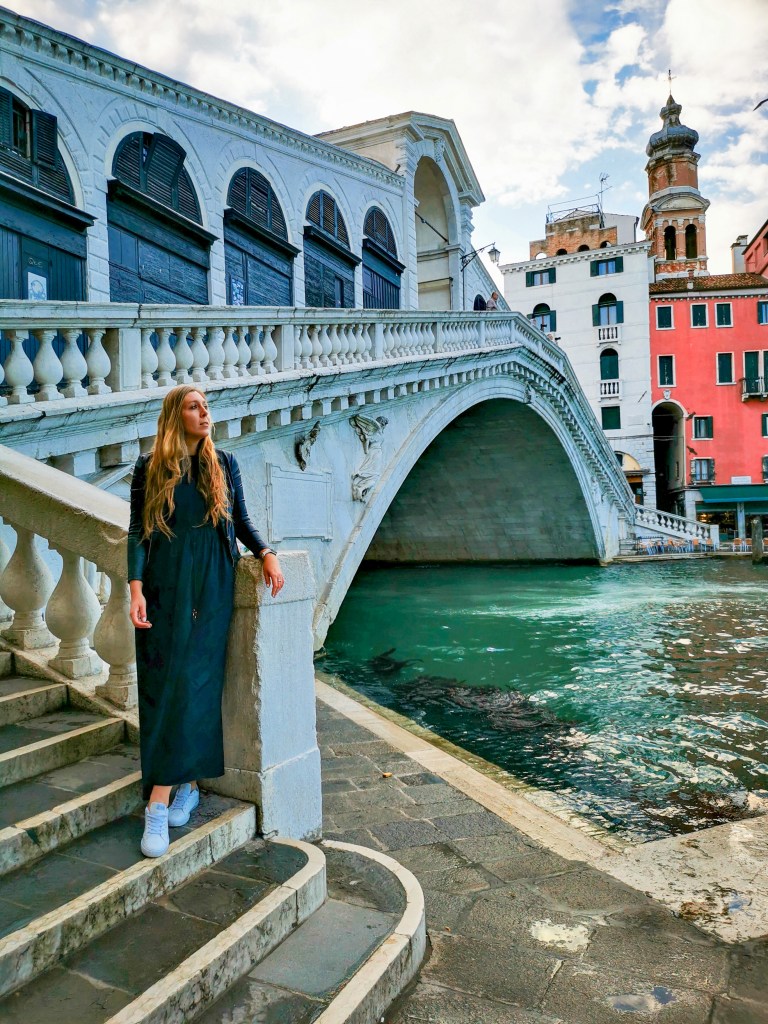

How to get to Venice from the airport (Marco Polo and Treviso)
Venice is served by two airports used by travellers heading to the city: Marco Polo (VCE) and Treviso A. Canova (TSF). Although both handle flights to Venice, they differ in location, transfer time and available transport options. Choosing the right airport – and then the right transfer – can have a big impact on both the comfort and the overall cost of your trip.
Venice Marco Polo Airport (VCE)
Venice’s main airport – named after the city’s most famous explorer, Marco Polo – lies right on the edge of the lagoon, just 12 km from the historic heart of the City of Doges.
If you land at Marco Polo, you’ll have more options for reaching Venice than from Treviso:
Main transfer options:
- Water transport (Alilaguna) – the most unique way to arrive in Venice. Water buses run to areas around St Mark’s Square, Rialto, Murano and Lido. A perfect choice if you want to “feel Venice” from the very first minutes.
- Bus to Piazzale Roma (ACTV or ATVO) – the fastest and cheapest option. The journey takes about 20–30 minutes, and Piazzale Roma is the last point in Venice accessible to road vehicles. From here you continue on foot or by vaporetto.
- Taxi – available in both land version (to Piazzale Roma) and water version (directly to your hotel). The most convenient option, but also the most expensive.
💡 Tip: If it’s your first trip to Venice, Marco Polo + bus or Alilaguna is the easiest and most straightforward choice.

Treviso Airport (TSF)
Treviso Airport, also known as A. Canova Airport, is located much further from Venice and is mainly used by low-cost airlines. As a result, transfers to and from the city take a little longer.
Main transfer options:
- ATVO bus to Piazzale Roma – a direct connection to Venice and the most popular choice among tourists.
- Bus to Treviso Centrale + train to Venice – a cheaper and fairly efficient option, but it requires a change. Trains arrive at Venezia Santa Lucia station, right in the heart of the city.

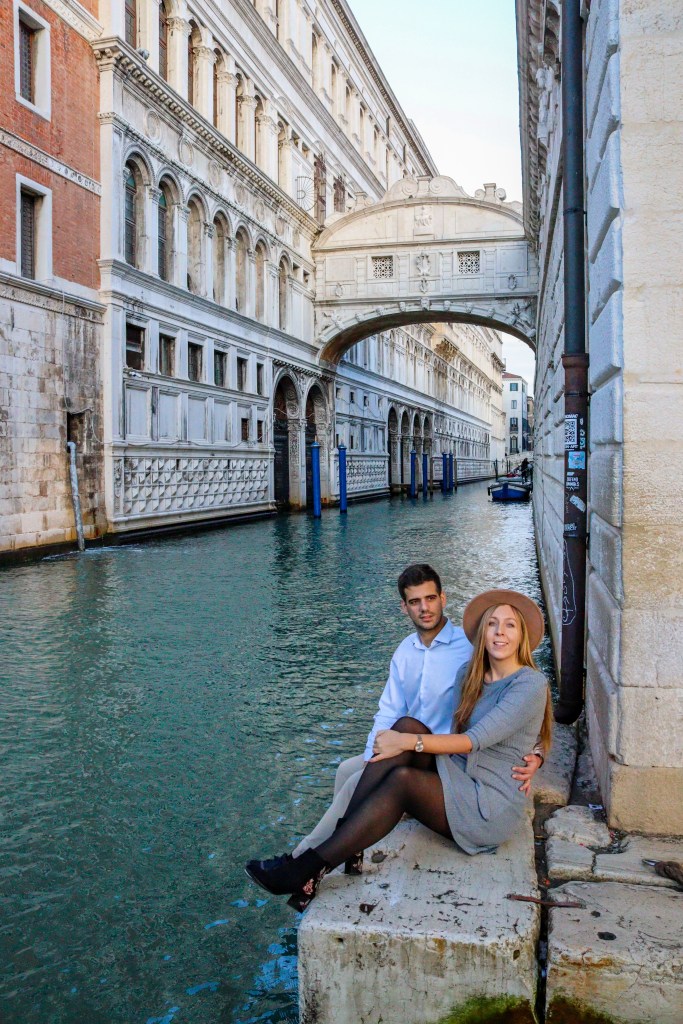
Venice entrance fee
The Venice entrance fee is one of the more controversial topics surrounding a visit to the city. It was introduced mainly with day-trippers in mind – visitors who don’t stay overnight in Venice but still contribute to overcrowding and strain on local infrastructure.
Officially, this is not an “entry ticket” but a special contribution designed to help maintain the city and limit the number of visitors on the busiest days. In practice, this means that not every tourist – and not on every day – has to pay it.
How much is the Venice entrance fee?
The standard fee for a day visit to Venice is €10, but it can be reduced to €5 if paid in advance.

When does the entrance fee apply?
The fee only applies on selected days of the year, mainly:
- from spring to summer,
- on weekends and public holidays,
- that is, when Venice receives the highest number of visitors.
Outside these dates, entry to Venice is free of charge.

It’s always best to check the up-to-date calendar on the official city website (Venezia Unica).
During which hours does the fee apply?
On fee-applicable days, the charge only applies between 8:30 and 16:00.
If you arrive in Venice late in the afternoon or in the evening, you don’t need to purchase a ticket for that day.
Where to pay the Venice entrance fee?
You can pay the fee:
- online on the official city website,
- or in person at a tabaccheria (Italian tobacco shops).
After payment, you will receive a QR code by email.
📢 Important: Always keep the QR code with you in case of checks around the city.
📢 Important: The rules surrounding the Venice access fee can change from time to time, so before your trip it’s always worth checking the most up-to-date information on the official city website or in our detailed guide dedicated to this topic.

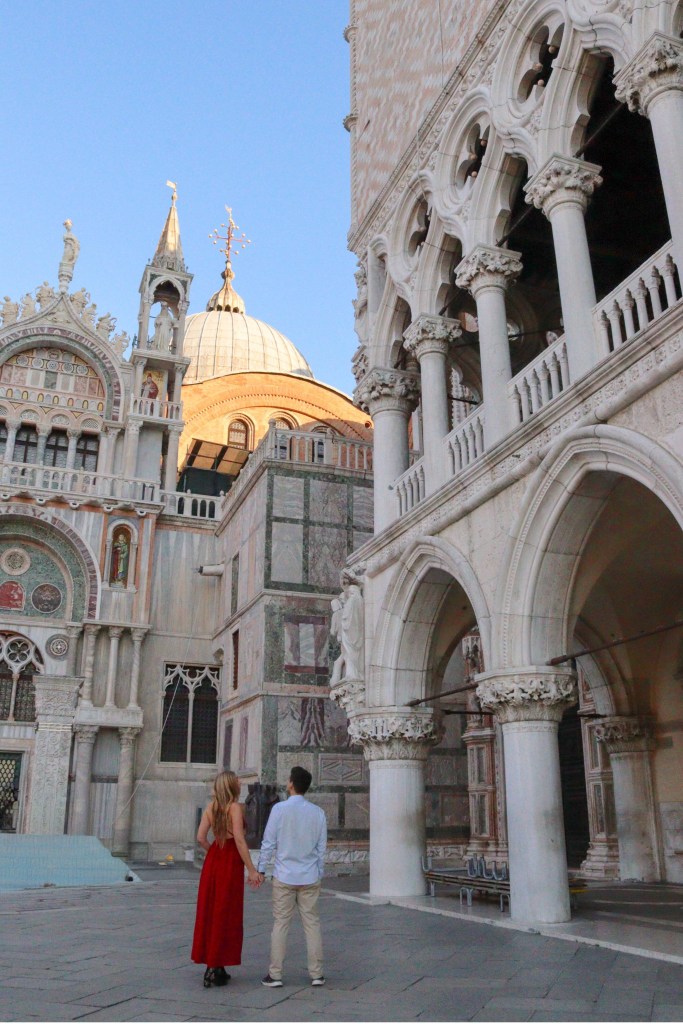
Who is exempt from the fee?
The fee does not apply to, among others:
- visitors staying overnight in Venice, Mestre or on the islands of the lagoon,
- children under the age of 14,
- travellers simply passing through designated transit areas (such as Piazzale Roma or Venezia Santa Lucia railway station),
- visitors travelling exclusively to other lagoon islands, without entering the historic centre,
- people with disabilities and their carers,
- those visiting residents of Venice.
In most cases, a hotel reservation confirmation or a valid ID is sufficient proof.
How to get around Venice?
Venice is a truly unique city – and that includes the way you move around it. Built on 126 islands connected by hundreds of bridges, it has never been adapted for land transport. There are no cars, buses or bicycles here – instead of streets there are canals, and instead of crossroads… bridges and narrow passageways.
That’s why getting around Venice is all about walking and water transport.
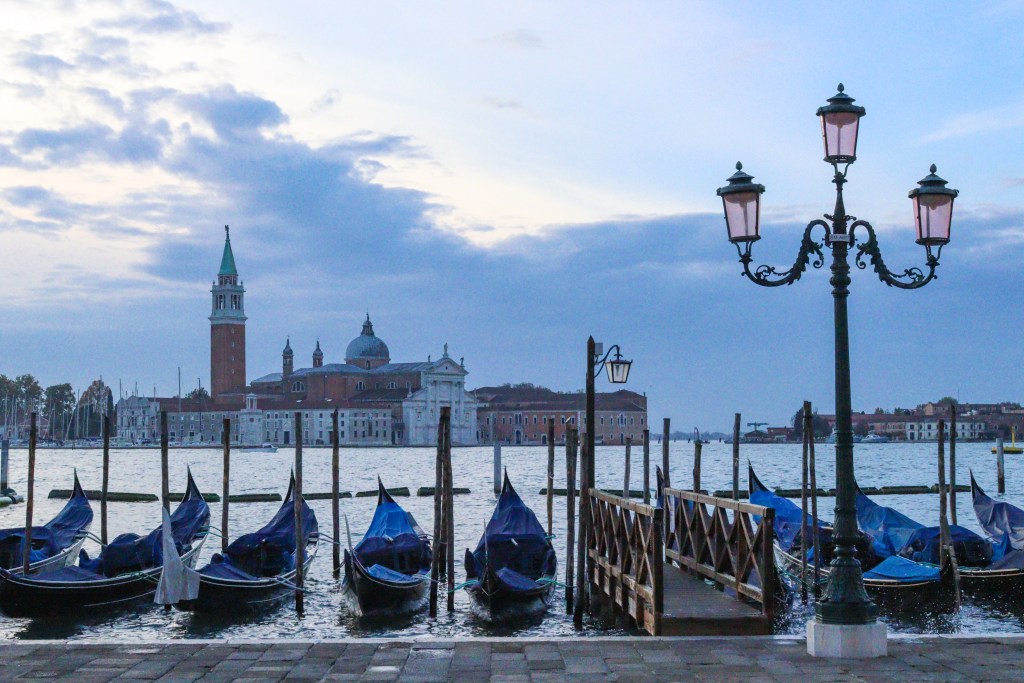
Exploring Venice on foot – the best way to discover the city
In our opinion, walking is the best way to experience Venice, especially on your first visit. The city is compact, and most major sights – such as St Mark’s Square, the Rialto Bridge or the Bridge of Sighs – are only a short stroll apart.
It’s through wandering on foot that you discover the real Venice: small squares, quiet alleys, canals with laundry hanging overhead and bars filled with locals. Venice doesn’t reveal itself straight away – it’s best enjoyed when you allow yourself to get a little lost.
That said, it’s worth keeping a few things in mind:
- the city is full of bridges and steps (no lifts or ramps),
- getting around with a large suitcase or a pushchair can be tiring,
- when heading to major sights, follow the signs painted on the walls (“Per Rialto”, “Per San Marco”),
- GPS can be unreliable and Google Maps doesn’t always suggest the best route,
- narrow streets often get congested, so moving around can take longer than navigation apps indicate.
💡 Tip: If possible, pack light for Venice – a backpack or small bag will make your life much easier than a big suitcase.
Vaporetto – Venice’s water buses
The second main way of getting around Venice is the vaporetto, the city’s water bus system. Vaporetto lines run along the Grand Canal, smaller canals and between the lagoon islands (such as Murano, Burano and Lido).
Vaporetto is particularly useful:
- for longer distances,
- when travelling with luggage,
- for trips to other islands,
- when your legs are tired after a full day of sightseeing.
Keep in mind, however, that vaporetto can be expensive and crowded, especially during peak season. For short distances, walking is often faster and much more pleasant.
📢 Important: Vaporetto tickets must be validated before boarding!
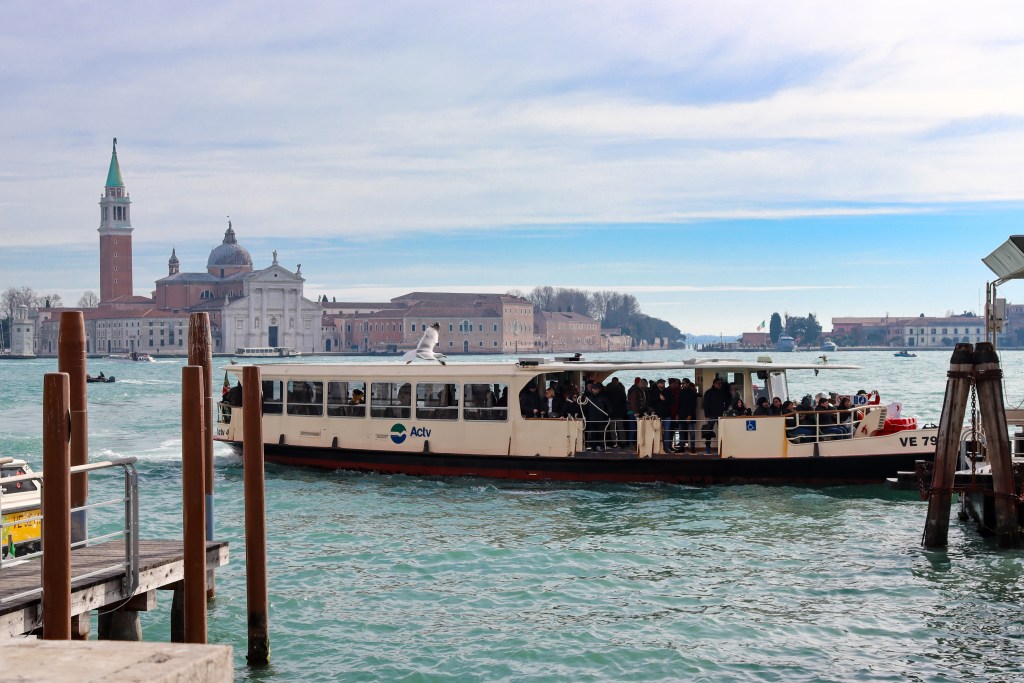
💡 Fun fact: The first vaporetto appeared in Venice in 1881, having arrived from France. The idea didn’t go down well with gondoliers, who organised protests against it.
Alilaguna vs vaporetto
Alilaguna is often confused with vaporetto, as it is also a water-based transport service operating on the lagoon. In reality, these are two completely different systems.
Alilaguna is a separate transport network, mainly serving routes between Marco Polo Airport and Venice, as well as selected lagoon islands — not individual stops within the city itself.

Gondolas, traghetto and other transport options
Besides vaporetto, you’ll also come across:
- gondolas – iconic and romantic, but pricey,
- traghetto – a cheaper gondola service used to cross the Grand Canal at specific points,
- water taxis – comfortable but expensive,
- People Mover – an automated train connecting Tronchetto car park, Piazzale Roma and the cruise terminal.
Each of these has its purpose, but not all are necessary for a short, classic visit to Venice.


Venice and acqua alta – what you need to know
Venice’s location almost on the water means the city has lived to the rhythm of the tides for centuries. One of the most distinctive – and often emotional – phenomena is acqua alta, the periodic rise in the lagoon’s water level.
Acqua alta literally means “high water” and refers to seasonal flooding that can cover the lowest squares, quays and streets. It’s most often associated with a flooded St Mark’s Square, although in reality it doesn’t affect the whole of Venice equally.
When does acqua alta occur?
The phenomenon appears mainly in autumn and winter (from October to March). It’s encouraged by high tides, strong winds pushing water into the lagoon, low atmospheric pressure and heavy rainfall. In summer, acqua alta is rare and usually very mild.
How long does acqua alta last?
In most cases, not long at all. After reaching its peak, the water usually recedes within two to three hours, and the city quickly returns to normal.
Can acqua alta be predicted in advance?
Yes – and with impressive accuracy. Water level forecasts are published for specific times of day, allowing you to plan your sightseeing or even decide whether you’d like to see Venice in this unique, watery version.


Does acqua alta make sightseeing difficult?
Usually only slightly. In key areas, raised walkways (passerelle) are set up, and public transport generally operates as normal. It’s still wise to wear waterproof shoes, especially when higher water levels are expected.
Importantly, even during acqua alta a large part of the city remains dry, and higher districts such as Cannaregio or Dorsoduro often function with little disruption.
Is acqua alta a reason to skip Venice?
Absolutely not! For many visitors it becomes one of the most unique experiences, offering a completely different view of the city. The key is awareness and a bit of preparation – then acqua alta becomes part of Venice’s charm rather than an obstacle.

Bans and restrictions – what NOT to do in Venice
No one needs convincing that Venice is a city like no other. But did you know that what’s also unique are its… rules?
In recent years a number of regulations have been introduced that may surprise visitors – and unfortunately, not knowing them won’t protect you from a fine.
So before your first trip, it’s worth learning what is strictly forbidden and what is simply frowned upon, to avoid any unpleasant surprises.
❌ Eating and drinking in the “wrong” places
This ban mainly concerns sitting and eating on steps, bridges, canal banks and in squares within the historic centre. So forget about that quick sandwich or takeaway pizza enjoyed on a picturesque staircase.
It’s worth remembering this, so you don’t instinctively sit down for a snack on the nearest steps with a slice of pizza bought around the corner.
Whether it’s strict Venetian rules or tourists getting a little carried away, some stories have become legendary. In 2019 a German couple had the “brilliant” idea of brewing coffee on a portable stove… on the steps of the famous Rialto Bridge. The result? A €950 fine and expulsion from the city.
📢 Important: Fines can reach several hundred euros!
❌ Sitting on the ground or on steps
Exploring a crowded city can be exhausting, and a pavement or quay may look like the perfect place for a rest. In Venice, however, that moment of relaxation can be very costly.
The ban covers, among other places, the steps of historic buildings, bridges and the area around St Mark’s Square.
Instead, look for a bench in the nearest campo. Near San Marco, the Giardini Reali gardens are an ideal spot for a breather.
❌ Swimming in the canals (yes, it really happens… 🫣)
Entering the canals, washing your feet in them or even a “symbolic dip of the hand” is strictly forbidden. Such behaviour:
- can result in a hefty fine,
- may lead to police intervention,
- and in extreme cases even a ban on returning to the city. 🤯
This rule isn’t only about aesthetics or protecting monuments.
🚨 Contact with canal water can be genuinely dangerous to your health.
A famous example is Katherine Hepburn, who fell into a canal while filming Summertime in the 1950s and suffered a serious eye infection with long-term consequences. Although sanitation systems are far better today, the canals are still not safe for direct contact.
This is also why it’s better not to take off your shoes on flooded squares during acqua alta. 🤫
So even if you spot “brave” tourists cooling off in the canals on social media – definitely don’t follow their lead.
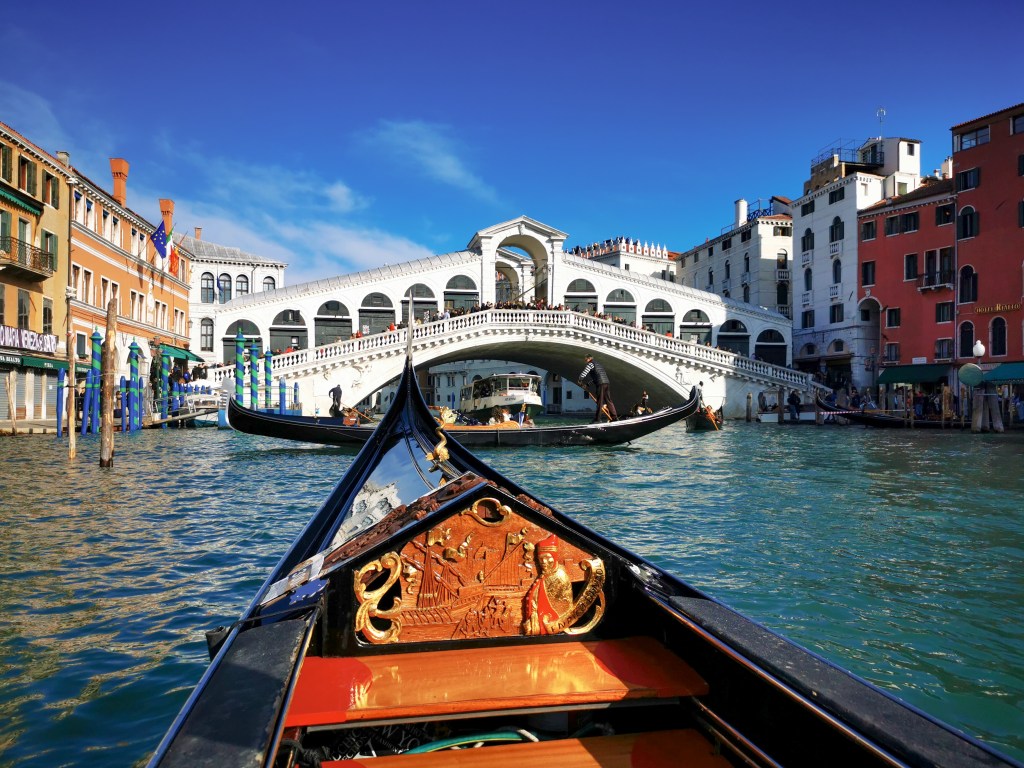
Why can Venice canal water be dangerous?
Contrary to appearances, the issue isn’t just that the canals “look dirty”. The roots go much deeper – into the city’s history and its drainage system.
For centuries Venice functioned without the kind of sewage system we know from other European cities. Traditionally:
- waste from buildings flowed directly into the canals,
- natural currents and tides were expected to “clean” the lagoon.
Today the situation is better – many buildings are connected to modern systems and part of the wastewater is treated. Still, this doesn’t change the fact that:
- not all installations are fully modernised,
- canals still contain bacteria, sediment and pollutants,
- the water often includes traces of fuel, oils and heavy metals from boat traffic.
Even brief contact – especially with cuts or scratches – can therefore lead to infection.
❌ Feeding pigeons
Pigeons may be one of the symbols of St Mark’s Square, but their presence damages historic buildings. For this reason, feeding pigeons in Venice is prohibited and subject to a fine.
👕 Dress code matters (especially in churches)
Although it’s hard to imagine anyone trying, walking around Venice topless or in swimwear is forbidden.
Venice is home to nearly 140 churches, many of which contain priceless works of art. When entering, remember to cover your shoulders and knees – otherwise you may be refused entry.
📌 This also applies to St Mark’s Basilica.
🎒 Backpacks and suitcases – restrictions in some places
Large backpacks and bags may be banned in museums and galleries for security and conservation reasons. You’ll often be asked to leave them in a cloakroom.
At St Mark’s Basilica there is a baggage check, and entry with larger backpacks, travel bags or suitcases is not allowed. There’s no proper storage on site, so it’s best to plan your visit without luggage.
Suitcases on wheels are a story in themselves – hundreds of steps, bridges and narrow streets make them extremely impractical, and dragging them over stone stairs can be seen as a nuisance to residents (and to your arms 😅).
💡 Tip: If you’re coming to Venice just for a few hours or arriving before check-in, it’s worth using one of the luggage storage services near Santa Lucia station, Piazzale Roma or other designated points around the city.


Is Venice expensive? (and how not to overspend)
Let’s be honest — Venice isn’t a budget destination. From accommodation to the most popular attractions, prices can be eye-watering. But there are a few simple tricks that can help you keep your spending under control.
- Explore Venice on foot
As we’ve already mentioned, walking is the best way to experience Venice. The city is compact, and if you’re not in a rush, you can easily reach all the major sights without spending a single euro on transport.
- Consider a vaporetto travel pass
A single vaporetto ticket is expensive, so if you plan to use water transport more than once, a time pass (24 / 48 / 72 hours) is far better value.
Many visitors end up overspending by buying individual tickets on the go instead of opting for a travel card from the start.

- Refill water instead of buying the bottled one
Venice has plenty of public drinking fountains with safe, fresh water. Bringing your own bottle can save you a few euros a day — especially in summer. And it’s kinder to the environment, too. 🩵
- Eat and drink at the counter
Stopping for a quick coffee or snack? If possible, stay at the bar instead of sitting at a table. This makes a noticeable difference in price — the rates displayed at the counter usually apply to “standing” consumption only.
Once you sit down, a different price list often applies, including a service charge.
📢 Important: In Italian restaurants you’ll also come across coperto — a cover charge for bread and table setting, typically €1–5 per person (in Venice, expect the higher end). The price should be listed on the menu, though sometimes it’s hidden in small print at the bottom.
- Supermarkets and Venetian “street food”
Buy food where locals do. Supermarkets like Coop or Conad, as well as small bakeries and bars, offer ready-made snacks, sandwiches and pizza slices at much lower prices than restaurants.
It’s a great option for a quick, affordable lunch — just remember not to turn it into a picnic on steps or by the canals! 🫢
- Skip coffee on St Mark’s Square
St Mark’s Square is tempting, but prices there are firmly aimed at tourists. In many cafés, your bill may include not only service but also a surcharge for live music — turning an innocent espresso into a small luxury experience.
- Avoid restaurants in the most touristy spots
Venice has its fair share of overpriced, mediocre eateries designed for quick tourist turnover. We mostly stuck to takeaway food, but if you’re looking for better value and quality, head to less crowded districts such as Dorsoduro, where many Venetians actually dine.


- Consider staying in Mestre instead of Venice
We’ll be honest — we’re not huge fans of this option, mainly because we love Venice at dawn (though not necessarily the extra-early wake-up 😅). Still, staying in Mestre can significantly cut costs.
From Mestre, you can reach the heart of Venice quickly by train, and both restaurants and supermarkets are usually much cheaper there.
- Free museums
Free museum entry in Venice is harder to come by than in many other European cities. However, on the first Sunday of every month, state museums across Italy offer free admission.
In Venice, these include:
- Gallerie dell’Accademia di Venezia
- National Archaeological Museum (Museo Archeologico Nazionale)
- Museum of Oriental Art (Museo d’Arte Orientale)
- Galleria Giorgio Franchetti alla Ca’ d’Oro
- Museo Nazionale Concordiese
- Museo di Palazzo Grimani
- Museo Archeologico di Quarto d’Altino
- Museo Nazionale di Villa Pisani.


What’s worth booking in advance?
Venice is a city best discovered slowly rather than planned minute by minute. Still, there are a few situations where booking ahead is essential — especially in high season and during major events like Carnival.
You don’t need to pre-book everything, but it helps to know which experiences are worth securing in advance.
🎭 Venice Carnival
Carnival is magical — and incredibly busy. If you’re visiting at this time:
- book accommodation well in advance — prices rise fast and availability drops,
- masked balls and official events require tickets and often sell out months ahead,
- even ordinary restaurants in the centre may need reservations in the evening (and yes, some are classic tourist traps).
If you’re planning a trip, take a look at our detailed guide to Venice Carnival 2026, where we cover dates, events, practical tips and the fascinating history behind the celebrations.

🏛️ Most popular attractions
Most of sights doesn’t require booking, but during peak periods it’s worth reserving:
- St Mark’s Basilica – online tickets let you skip the queue, but you must arrive at your allocated time (with a 15-minute grace period).
- Doge’s Palace – entry is timed, so advance booking is recommended.
- Peggy Guggenheim Collection – usually quieter, but still might be worth reserving.

📢 Important: The terrace at Fondaco dei Tedeschi, once one of Venice’s best free viewpoints requiring advance booking, is currently closed.
Common mistakes in Venice – what to avoid so you don’t ruin your trip
Venice can be breathtaking… but it can also be surprisingly frustrating if you fall into a few very common traps. Most of them aren’t down to bad intentions — just lack of local know-how. So instead of another list of “don’ts”, here are a few things worth keeping in mind.
Starting your sightseeing at noon
We know this isn’t always avoidable — sometimes you simply arrive in the city later or don’t have the flexibility to start earlier.
But if your entire visit falls between late morning and mid-afternoon, there’s a good chance you’ll see Venice at its busiest. This is exactly when day-trippers and cruise groups flood the city.
People who experience Venice only at that time often leave disappointed, calling it overrated. Of course, everyone has their own opinion, but in our view, to truly fall for Venice you need to approach it a little differently.
Early mornings and evenings reveal a completely different city — calmer, more authentic and far more enjoyable to explore.
As a rule, getting up early in Venice really pays off. Many shops and museums may still be closed, but walking between Rialto Bridge and St Mark’s without a sea of people is a whole different experience. It’s also the perfect time to admire the architecture and take beautiful photos.
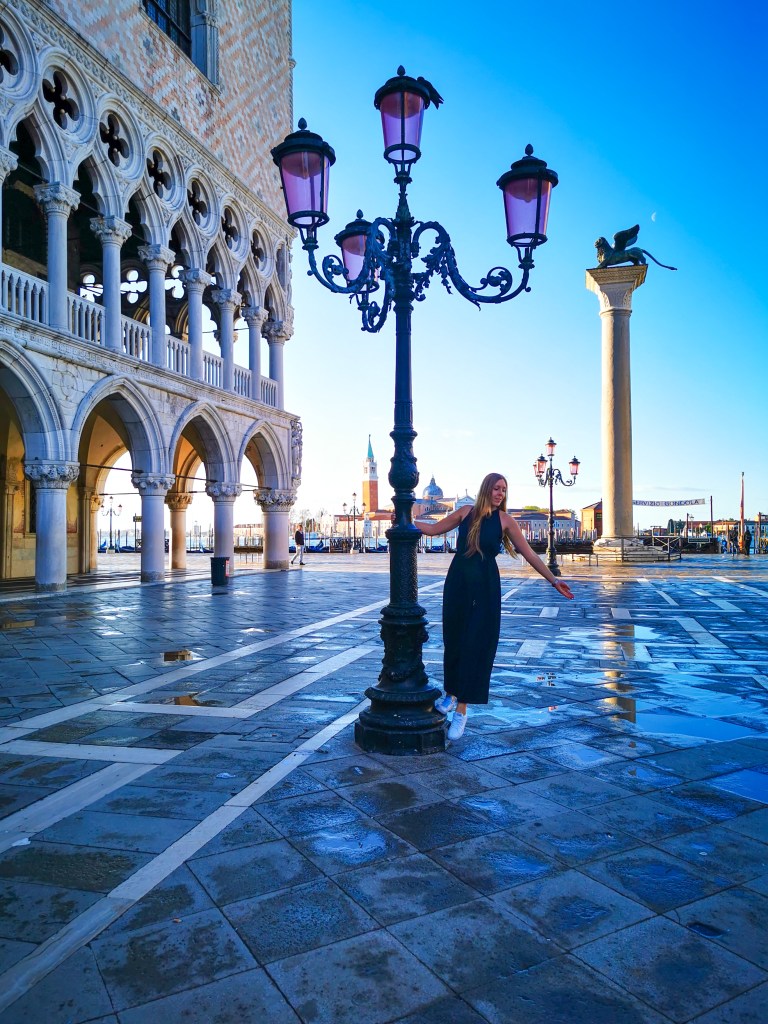
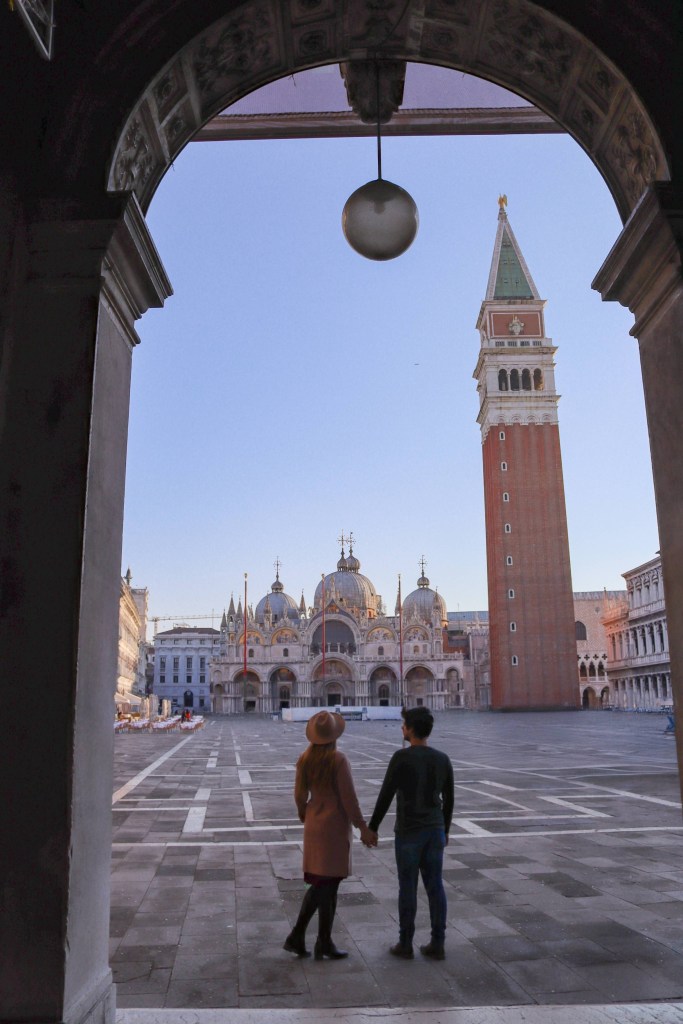
💡 Tip: St Mark’s Square in the morning feels like a different place altogether — although don’t be surprised if a few keen photographers are already there at sunrise!
Eating just anywhere
Venice is full of restaurants aimed purely at tourists — often with menus displayed in photos, pushy staff outside and rather average food for the price. These are the places where it’s easiest to overspend and walk away disappointed.
If you’re after something genuinely tasty, simply step away from the main routes, wander a few streets beyond the top sights or head towards neighbourhoods less dominated by visitors.
Ignoring the city’s rules
Venice isn’t just beautiful scenery — it’s also a city with very specific regulations, and they are actively enforced. Eating a sandwich on steps, sitting on bridges, having a picnic by the canals or spreading out on squares in the historic centre can all result in a fine.
These may seem like small things that many tourists overlook — until the surprise arrives in the form of a rather hefty penalty.
Packing your schedule too tightly
Trying to “do” Venice in a few hours is one of the most common mistakes. Rushing from sight to sight, constantly checking the map and the clock, quickly drains the joy out of being there. And moving fast through crowded streets can be a challenge in itself.
Venice tastes best when you slow down, allow yourself to drift off course and simply get lost in the narrow alleys — that’s often where the prettiest views are hiding.


Buying “authentic” souvenirs without checking
Carnival masks, Murano glass, Burano lace — Venice is famous for its craftsmanship, but it’s just as easy to stumble upon cheap, mass-produced imitations.
If you want something truly local, look for labels, certificates or simply ask the seller about the origin of the product.
And if you just fancy a fun, inexpensive mask to wear during Carnival, that’s perfectly fine too. The key is to know what you’re buying and not feel tricked. 😅

Venice for the first time – a few personal tips
Your first visit to Venice can be a bit overwhelming if you don’t know what to expect. Here are a few lessons we’ve learned along the way:
- Avoid peak season
Exploring Venice in sweltering heat while being carried along by a river of tourists doesn’t sound ideal, does it? Bottlenecks in key spots can quickly lead to frustration, and it’s hard to appreciate the city’s charm in those conditions.
- Don’t try to visit every museum
Unless you’re staying for longer, it’s not worth spending entire days indoors when the city itself is an open-air museum. Pick one or two places that truly interest you and dedicate the rest of your time to wandering.
- Let go of a rigid itinerary
Seeing the Serenissima in a rush is never a good idea. Venice doesn’t like haste — it rewards those who slow down, leave the main route and simply look around, soaking up the atmosphere.
- Check the weather forecast
Acqua alta or rain? Especially outside summer, it’s good to be prepared. Pro tip: umbrellas aren’t great in narrow streets — we’d recommend a waterproof jacket instead.
- Don’t expect Instagram Venice all day long
Many photos of Venice you see online (including ours) are taken at dawn or late in the evening. During the day the city can be noisy, crowded and chaotic — that’s its other face. If you accept this contrast and give yourself time to explore outside peak hours, it becomes much easier to see Venice’s real magic.


Venice – a city that asks for patience (and rewards it generously)
Venice isn’t an easy city. It can be expensive, crowded and at times a real test of patience. But if you give it a little time, slow your pace and dare to step off the beaten path, it will reward you with something you won’t find anywhere else.
This is a city of quiet mornings, unexpected alleyways, the gentle sound of water in the canals and details you only notice when you stop watching the clock. Venice doesn’t like to be rushed — and that’s exactly why it stays in your heart for so long.
If this is your first visit, don’t try to see everything. It’s better to see less, but truly — and let Venice show you its calmer, more authentic side.
Magical exploring!

Heading to Venice during the Carnival? 👉 Check out our guide!
Leave a Reply