
This post is also available in: 🇵🇱 PL | 🇵🇹 PT
If you dream of a little slice of paradise on Earth, you’ll find it in Crete – more precisely at Balos Lagoon. The largest of the Greek islands is famous not only for its rich history, charming towns and beautiful gorges, but also for its spectacular beaches and crystal-clear turquoise waters.
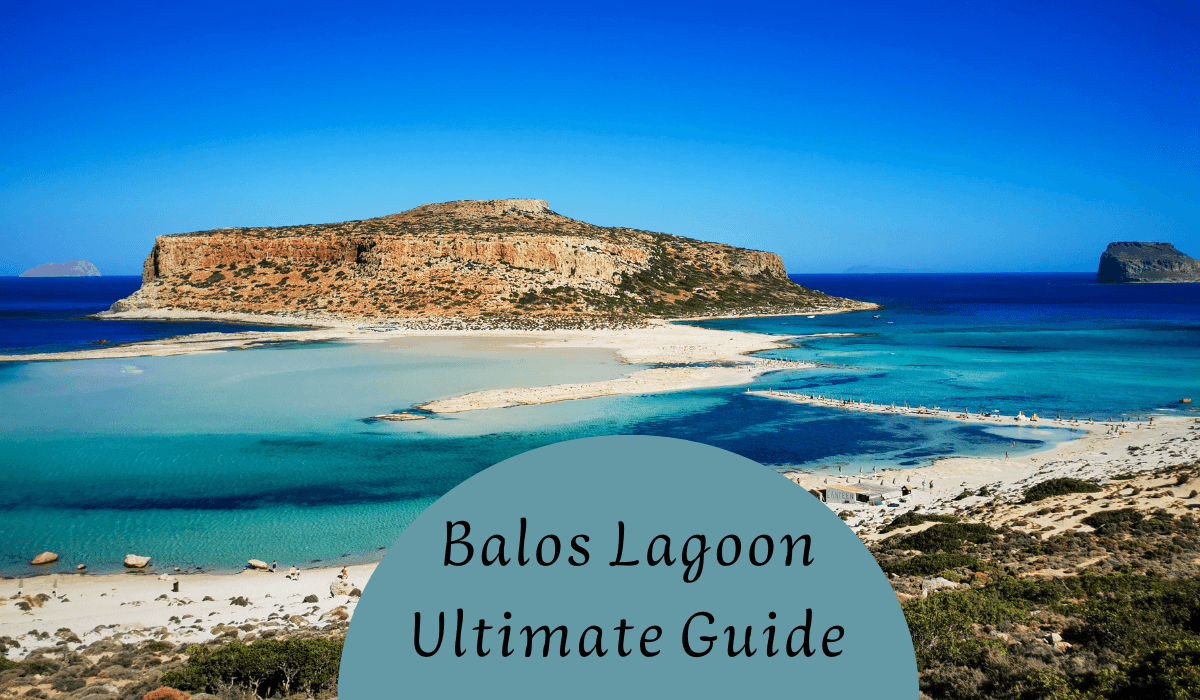
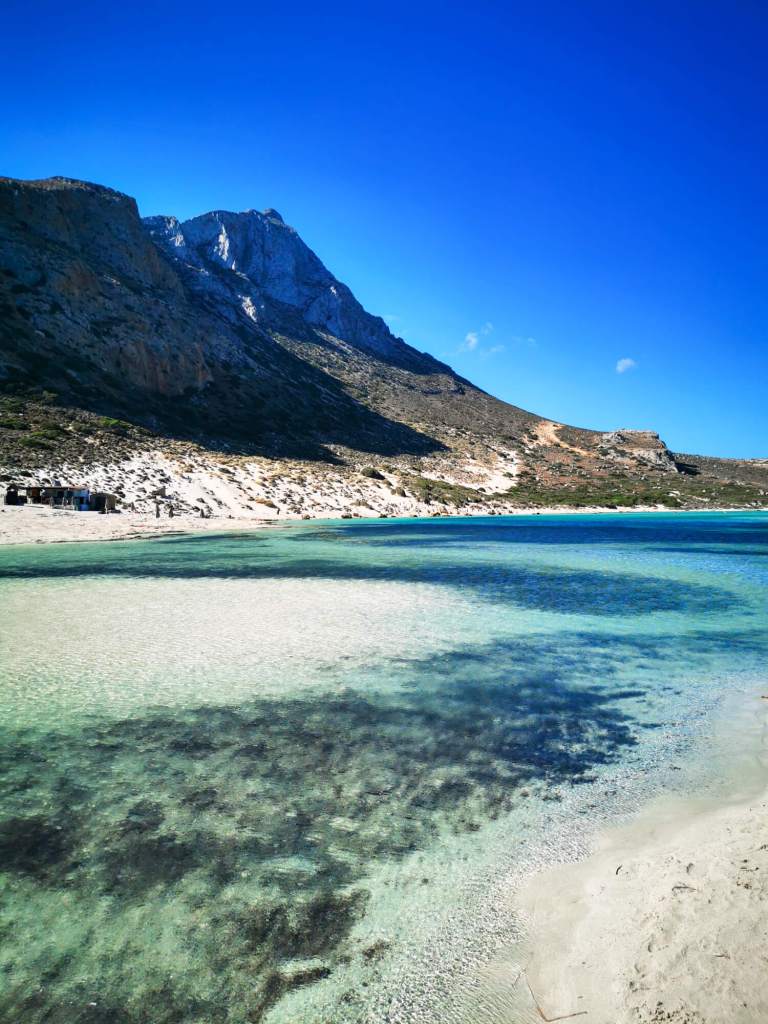
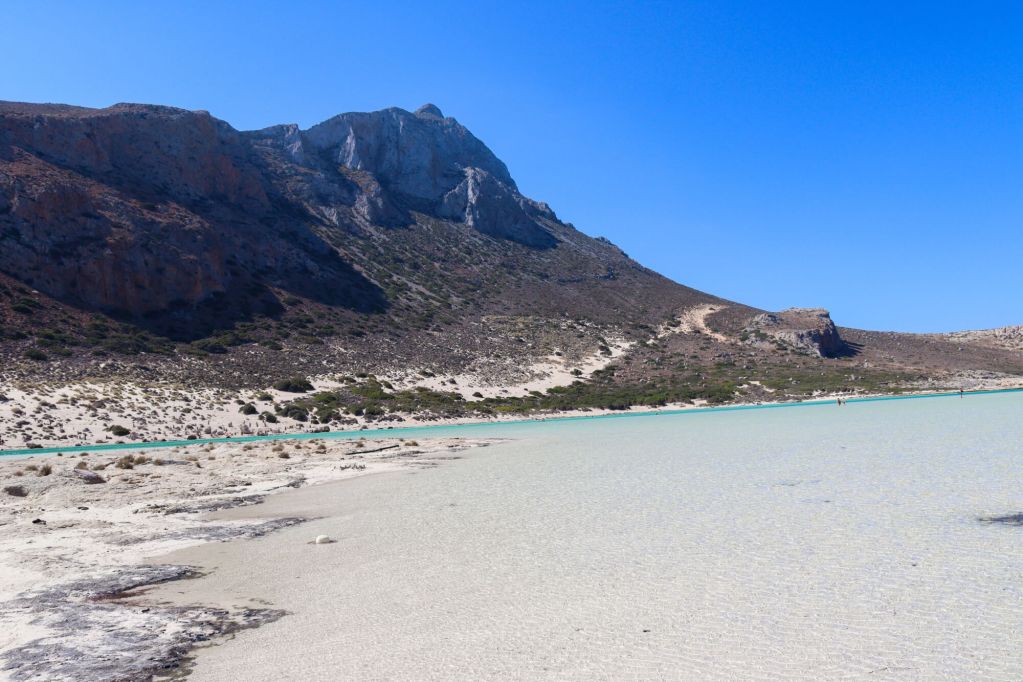
Balos Beach is one of Crete’s greatest gems. Located on the island’s north-western coast, it offers idyllic views that are hard to ignore. White sand, which in some places takes on a delicate pink hue, and transparent water, combined with the rocky slopes of the Gramvousa Peninsula, create a truly postcard-perfect scene. It’s no surprise that this beautiful corner of Crete is considered not only one of the island’s top attractions, but also one of the most beautiful beaches in Europe!
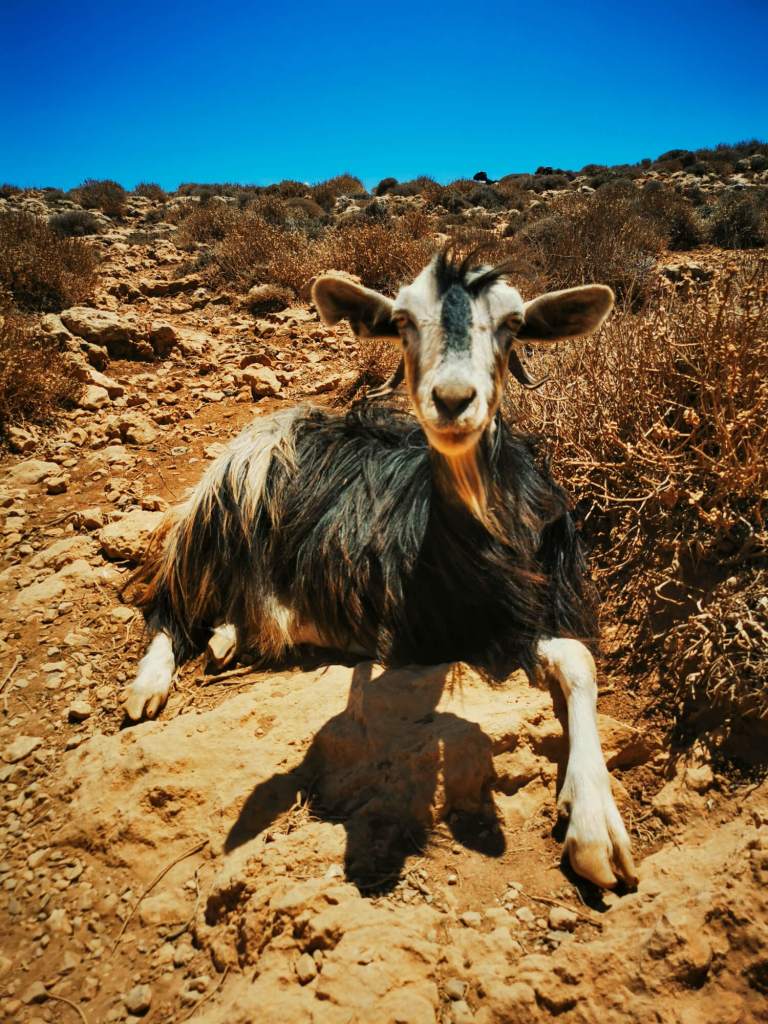
The unique natural environment makes Balos Lagoon even more special. Rare bird species can often be spotted here and, if you’re lucky, you might even see sea turtles. But the animals you definitely won’t miss while walking the trail down to the beach are the charming local goats!
Ready for an adventure at Balos Lagoon? If so, pack your swimsuit, sun hat and sunscreen, and let’s go discover one of Crete’s most stunning beaches!

Balos Beach at a Glance
📍 Location: north-western Crete, Greece
🗺️ How to get there: by car, scooter or quad via a gravel road / by ferry / with an organised tour / via a hiking trail
💰 Entrance fee: free
🚗 Parking: €3 per day + €1 per person for access to the road leading to the parking area
👣 Walking time from the car park: 25–30 minutes
⏰ Best time to visit: late spring (May–June) and early autumn (September–October)
Where is Balos Lagoon?
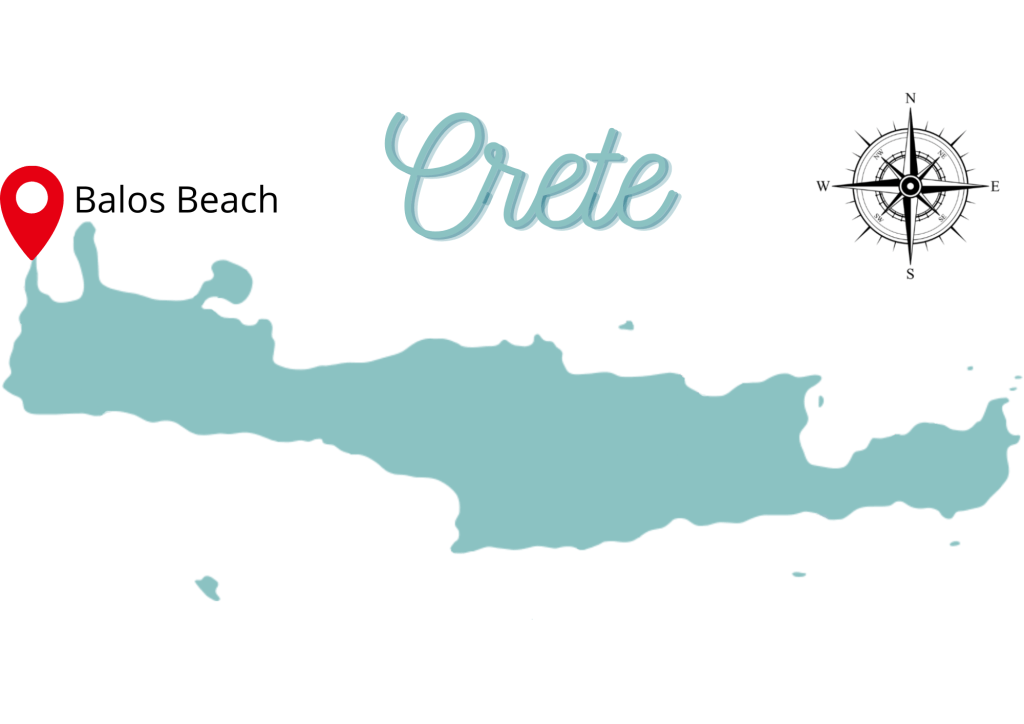
Balos Lagoon lies on the north-western tip of Crete, on the Gramvousa Peninsula, an area dominated by a rather wild and rocky landscape. Balos is about 52 km from Chania and 15 km from the nearby town of Kissamos.
The cliffs surrounding the beach give the area a dramatic character, but also add a certain sense of exclusivity. Although Balos Lagoon is very popular within visitors, getting there still involves a bit of an adventure. 🤠
Pink Sand at Balos Beach
Did you know that Balos is one of three pink beaches in Crete, along with Elafonissi and Falassarna? 😍
In some places, the sand at Balos Beach takes on a pinkish hue, sometimes more intense and sometimes barely noticeable.
Although the idea of a “pink beach” fires up the imagination, it’s best not to expect too much. Only certain sections of the beach actually appear pink. The colour is also most visible when the waves recede, as the pink strip is located right by the waterline. On a sunny day, the pink tones are often easiest to see through sunglasses. 😎

🧐 Fun fact: The number of pink beaches in Crete is quite impressive considering how rare they are worldwide. Outside Crete, a few can be found in places such as Formentera in Spain, Komodo Island in Indonesia (where, from our own experience, the pink colour is much more intense!), as well as in the Bahamas and California.
So what makes the sand at Balos pink? The colour comes from tiny marine organisms with light-pink or red shells. When these shells break down into small fragments, they mix with the sand and give it its characteristic pink shade.
Best Time to Visit Balos Beach
The best time to visit Balos Lagoon is late spring (May–June) and early autumn (September–October). During these months, the weather is perfect both for relaxing on the beach and exploring the surrounding area. Another advantage of visiting in autumn is that the water in the lagoon is still pleasantly warm. There are also fewer tourists than in the peak summer season, allowing you to enjoy the spectacular views in a more peaceful atmosphere.
Of course, the summer months are also great for swimming and sunbathing at Balos. However, you should be prepared to share this slice of paradise with many more visitors. The intense heat can also make the walk back from the beach to the car park quite challenging.
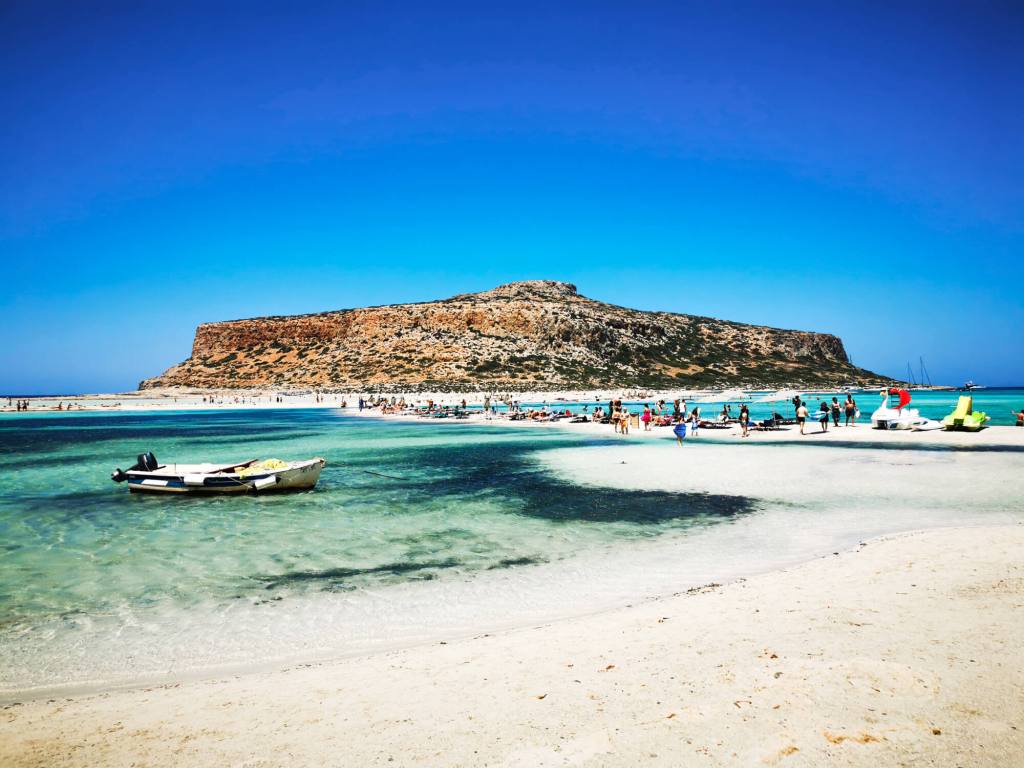
If you want to enjoy a bit more peace and quiet at Balos during the high season, it’s best to arrive early in the morning, ideally before the first boats start arriving.
No matter the time of year, Balos Lagoon never fails to impress. Every visit feels special and lets you experience a little bit of the Greek siga siga way of life.
🧐 Fun fact: Siga siga is a phrase you’ll hear often in Greece. It refers to a slow, relaxed pace of life. More than just an expression, it reflects a philosophy of enjoying the moment and not rushing. In Greek culture, siga siga is about relaxing, savouring a meal or spending time with loved ones.

💡 Tip: Balos Beach can get very windy! Wind speeds can reach 30–40 km/h, with gusts sometimes as strong as 50–60 km/h! It’s a good idea to check the weather forecast before visiting and, if possible, avoid particularly windy days. Unfortunately, we couldn’t reschedule our visit and had to leave the beach quite early. Although the views were absolutely stunning, the wind kept getting stronger and made it difficult to fully enjoy this beautiful spot.
How Much Does It Cost to Visit Balos Beach?
There is no entrance fee to visit Balos Beach. However, if you drive there, you’ll need to pay €1 per person for access to the road leading to the lagoon.
Another cost to consider is the car park near the trailhead, which costed us €3 for the day.

How to Get to Balos Beach
Getting to Balos Beach is an adventure in itself — especially if you’re planning to go there independently. But the moment you see the lagoon and its turquoise water, you’ll realise the effort was absolutely worth it. 🏖️

Reaching Balos Beach by Car
A large number of visitors to Crete decide to rent a car, and in our opinion it’s the best way to explore the island. Having your own vehicle gives you the freedom to reach even the most remote corners of Crete.
However, there’s one small complication when it comes to Balos. Although the lagoon is one of the island’s most famous landmarks (and many car rental companies happily use photos of it on their websites), almost every rental company states in the terms and conditions that driving to Balos is not allowed. At best, they’ll simply tell you that the road is not covered by insurance.
So what does it actually look like in reality? Is the road really that bad?
During our previous travels we’ve driven on some truly terrible roads. On Fuerteventura, we once hit such rough terrain that we ended up scratching the car despite driving very carefully. On São Jorge in the Azores, we even got stuck while trying to turn around on a gravel road that looked much worse further ahead.
The difference was that in those places no one warned us about how risky the roads might be. With Balos, however, we had heard plenty of stories about the infamous road long before visiting Crete.
Naturally, that gave us something to think about — and to be honest, it made us a little nervous.
So what is the road to Balos actually like?
The gravel section is about 8.4 km long, and with light traffic it usually takes around 30 minutes to drive. During peak season, when the road gets busy, the journey can apparently take up to three times longer. At the beginning of July, however, traffic was fairly light.
The road itself isn’t nearly as bad as some people make it sound — as long as you have a car with slightly higher ground clearance. Vehicles with very low suspension might occasionally scrape the ground. In some sections the road becomes a bit narrow, but for most of the route two cars can pass each other without much trouble. Additionally, the uphill sections are reinforced.
One thing you do need to watch out for is goats — they appear quite regularly along the road, so drive carefully!

To sum it up: if you have a car with decent ground clearance and drive cautiously, your chances of reaching the car park without problems are quite high. The large number of cars parked there every day seems to confirm this.
📢 Important: Always read the rental agreement carefully before renting a car in Crete. If you’re planning to visit Balos, be aware of the possible consequences. We’ve read that some rental companies install GPS trackers in their vehicles, and if they see that you drove on the Balos road, they may refuse to return the deposit or charge a penalty of around €360. Our most important tip when renting a car in Crete: check reviews of the rental company on Google Maps before booking!
Can You Reach Balos Without Risking Insurance Issues?
If the idea of risking insurance problems makes you uncomfortable, we completely understand. Fortunately, there are a few ways to reach Balos without unnecessary stress.🙂
Gravel Road Insurance
Many rental companies will tell you that no company on the island allows driving to Balos.
At first it sounded like a challenge, but indeed we couldn’t find many alternatives. Just when we were about to give up, we discovered a solution.
At least one rental company in Crete — The Best Cars — offers gravel road insurance for selected models. If you rent a Dacia Sandero Stepway or a similar model, you can add this option at a reasonable price.
The gravel insurance costs €5 per day and makes Crete’s exploration much easier.
Before booking the car we contacted the company to confirm whether driving to Balos would be allowed. Thankfully, we got the green light!
We can also recommend The Best Cars because of their professional service. Both the pick-up and return process were quick and smooth, and the car itself was in excellent condition — which unfortunately isn’t always the case with rental vehicles. You can find this rental company reviews on Google Maps.
Quite by accident, we ended up renting a hybrid with LPG, which made exploring Crete significantly cheaper. At the time of our travel LPG costed roughly half the price of petrol!

Renting a Scooter or Quad
This option can work well if you’re staying nearby and don’t plan to rent a car.
Rental companies can be found in Kissamos, as well as along the road leading to Balos, just before the toll point (for example ATV BALOS).
However, keep in mind that renting a quad for a day can sometimes cost more than renting a car. 🤫

Where to Park at Balos Beach
If you decide to drive to Balos Lagoon yourself, you’ll probably wonder where you can leave your vehicle.
At the end of the gravel road there is a fairly large paid car park. It costed us €3 for the entire day.
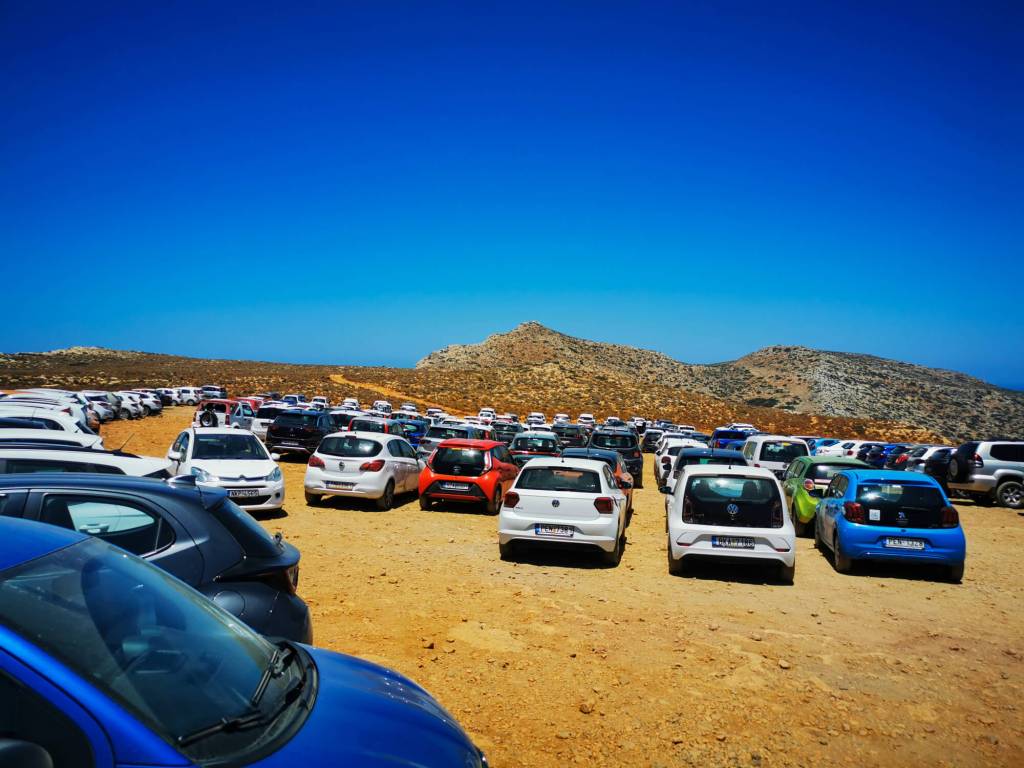
💡 Tip: It’s best to visit Balos early in the morning — later in the day it can be difficult to find a parking spot. We arrived around 8:30 a.m., when there were only a handful of cars. By the time we returned, however, the car park was completely full. During peak season it’s best to get there before 10:00 a.m.
If you drive to Balos, remember that the journey doesn’t end at the car park. To reach the beach you still need to walk down the trail leading to the lagoon. The route isn’t difficult, but the way back involves a fairly steep uphill climb. Fortunately, the steepest section has stone steps.
The Hiking Trail from the Car Park to Balos Beach
If you’ve managed to reach the car park via the famous gravel road, there’s still a 25–30 minute walk downhill ahead of you.
The first section of the path is relatively flat, although the surface is uneven and quite rocky. The next part — leading down towards the lagoon — consists mainly of stone steps.
The trail itself isn’t particularly difficult, but the return walk uphill can be tiring, especially since there’s very little shade along the route.

💡 Tip: On the way down you’ll pass a viewpoint with the most spectacular panorama of the Balos Lagoon. Make sure to stop there for a moment and enjoy the view. Taking a photo there — or rather a whole series of photos — is practically mandatory! 📸
It’s also a good idea to wear trainers or comfortable walking shoes. Flip-flops are probably best saved for the beach itself.
That said, we did see one Italian tourist walking the trail in wedge sandals — and she managed just fine! Still, we wouldn’t necessarily recommend following her example. 🙂

Reaching Balos Beach by Ferry
If you prefer a more relaxed way of getting to Balos, you can simply take a ferry. This is definitely the most comfortable and stress-free option.
Cretan Daily Cruises and Blue Daily Cruises run daily boat trips from Kissamos between roughly April/May and October, depending on weather conditions.
Departure times vary slightly depending on the operator (for example 10:25, 10:50 or 11:00 a.m.). The entire trip usually lasts around 5-7 hours. Before travelling, it’s best to check the latest timetables and prices directly on the ferry companies’ websites.
📢 Important: The €1 entrance fee to Balos Lagoon is usually not included in the ferry ticket, so it’s a good idea to bring some small change.
t’s also worth knowing that ferry trips typically include two stops: not only Balos Lagoon, but also the nearby Gramvousa Island. During the excursion you’ll usually spend around two hours at each location.
A full-day boat trip to Balos and Gramvousa typically costs €38–45 for adults and €22–27 for children, while kids under two/three travel for free.
💡 Tip: If you visit Balos by boat, don’t skip the viewpoint located along the trail leading towards the parking area. It takes a bit of effort to reach it, but the panoramic view is absolutely worth it — it’s a true must-see!

Organised Tours to Balos Lagoon
Besides the ferries, many smaller boats also visit Balos Lagoon.
You can easily find full-day tours both locally (in nearby towns) and online. Some of them include lunch, guided excursions or even private boat trips.
If you’re considering this option, it’s worth browsing tours on platforms such as GetYourGuide.
Hiking to Balos Beach
Walking all the way to Balos is by far the least popular option — which isn’t surprising considering the landscape and the complete lack of shade.
However, if you’re up for a real adventure, you can attempt a three-hour hike from Kaliviani, passing by the small Chapel of Saint George in Tigani along the way.
If you decide to try this route, don’t forget a hat and plenty of water.


Facilities at Balos Beach
Because of its remote location and relatively difficult access, Balos Beach has managed to preserve much of its natural character.
Facilities are fairly limited, but you will find:
- a small beach bar serving drinks and simple snacks
- sunbeds and umbrellas for rent
- toilets
If you want to secure a sunbed, it’s best to arrive early, before the ferries arrive.
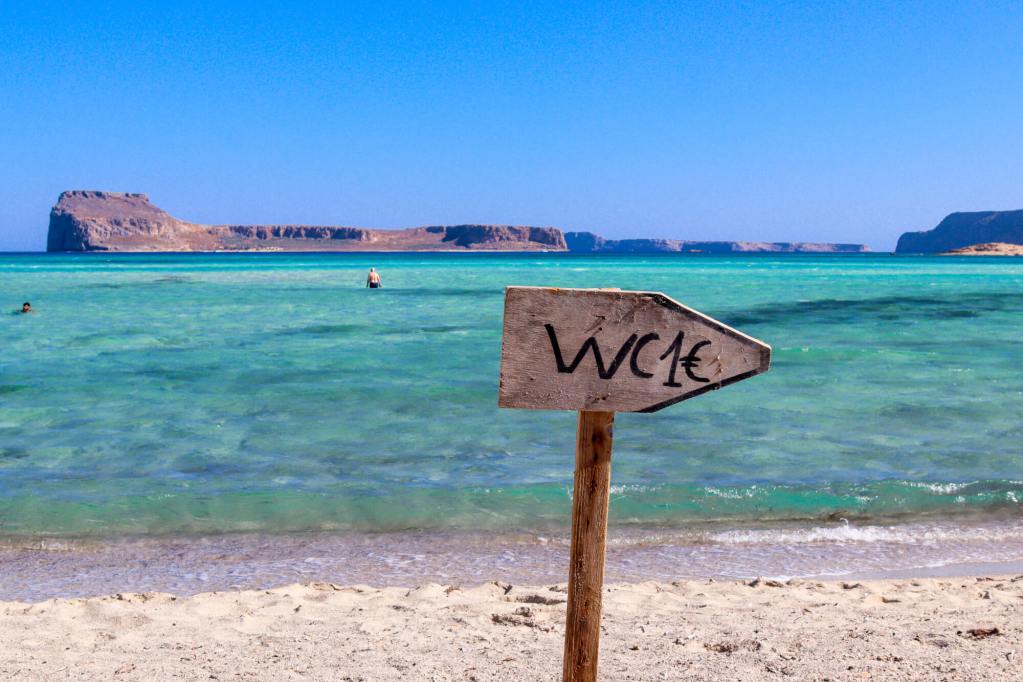
There are also paid toilets (€1) located in the central part of the beach.
After the climb back to the parking area, you’ll also find a small snack bar near the car park, which is a welcome sight after the uphill walk.
💡 Tip: Mobile reception at Balos can be weak or completely unavailable, so it’s good to be prepared for that.
Tips Before Visiting Balos Beach
As mentioned earlier, food options are limited both at the beach and near the car park, so it’s a good idea to bring some snacks with you.
On hot days, bringing enough water is essential, especially if you’ll be hiking back up to the parking area. 🙊
There’s almost no natural shade on the beach, so don’t forget reef-safe sunscreen.


If you plan to drive to Balos or hike to the viewpoint, comfortable walking shoes are highly recommended!
It’s also wise to carry some cash for small expenses such as the road fee or the toilets.
Balos Lagoon looks the most beautiful early in the morning, when it’s still relatively quiet. After 10 a.m., the area usually starts to get crowded.
Interesting Facts About Balos Lagoon
Now that you know when and how to visit Balos, here are a few fascinating facts about this unique place.
If you think Balos is just another beautiful beach, you might be surprised — the lagoon actually hides several interesting stories.
🦜 Pirate History: In the 17th century, the nearby Gramvousa Island served as a base for pirates who used its strategic location to attack merchant ships crossing the Mediterranean. You have to admit — they chose a remarkably scenic hideout.
🐢Rich Wildlife: The waters around Balos are home to the endangered Mediterranean monk seal. You may also spot Loggerhead sea turtle, one of the iconic species of the Greek coastline.
🌍 How the Lagoon Was Formed: Have you ever wondered why the water at Balos Beach is so shallow?
The explanation lies in the tectonic movements affecting Crete. The island sits at the boundary between the African Plate and the Aegean Plate. As the African Plate slowly slides beneath the Aegean Plate, it causes uplift in some areas and sinking in others.
One particularly powerful earthquake in 365 AD, sometimes referred to as the “mega earthquake”, dramatically reshaped the region. The western part of Crete was lifted by up to 10 metres, and the quake also triggered a tsunami that reached the coasts of Africa and southern Europe. 🙀

Is Balos Beach Worth Visiting?
Balos frequently appears on lists of the most beautiful beaches in Europe, and photos of the lagoon often look almost unreal — like they’ve been heavily filtered.
But is it really that beautiful in real life?
In our opinion: absolutely yes! 🌊
Who Is Balos Beach Perfect For?
- Photographers: Balos is a paradise for photography lovers — though the views probably speak for themselves.
- Families with children: The shallow, calm water of the lagoon is perfect for kids, although the walk down from the car park can be tiring for little ones. In that case, taking the boat might be a better option.
- Couples: Balos is also a fantastic place for a romantic day by the sea, surrounded by crystal-clear water and dramatic landscapes.
The beach impresses not only with its colour but also with its wild, rugged scenery. It’s one of those places that stays with you long after the trip — and fills your camera roll in the process. 📸
Of course, it’s worth remembering that Balos isn’t exactly a “quick and easy” beach destination.
Getting there (whether by gravel road or ferry), the hike from the parking area, the lack of shade, paid toilets and limited food options might be drawbacks for some visitors.
But if you’re ready for a small adventure and a bit of effort, Balos will reward you with views that feel almost otherworldly.
We hope these tips will help you prepare for an unforgettable visit to Balos Beach in Crete. May this stunning lagoon — with its pink sand and crystal-clear water — give you memories that last a lifetime! 🤗
Happy exploring! ✨
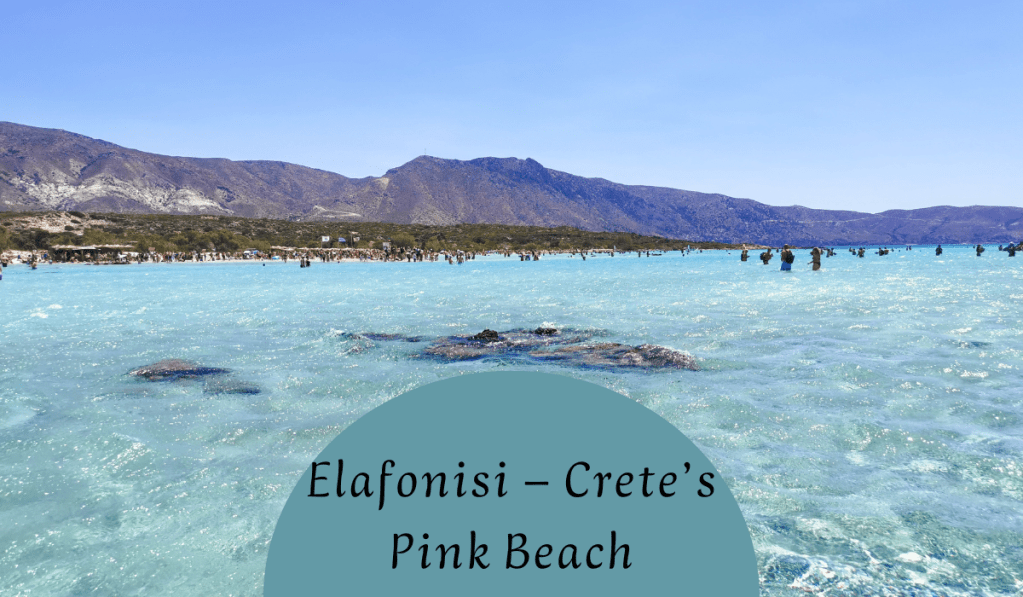
Heading to Crete? Don’t miss our guide to the famous Elafonisi pink beach 👉 Click here!
Leave a Reply