
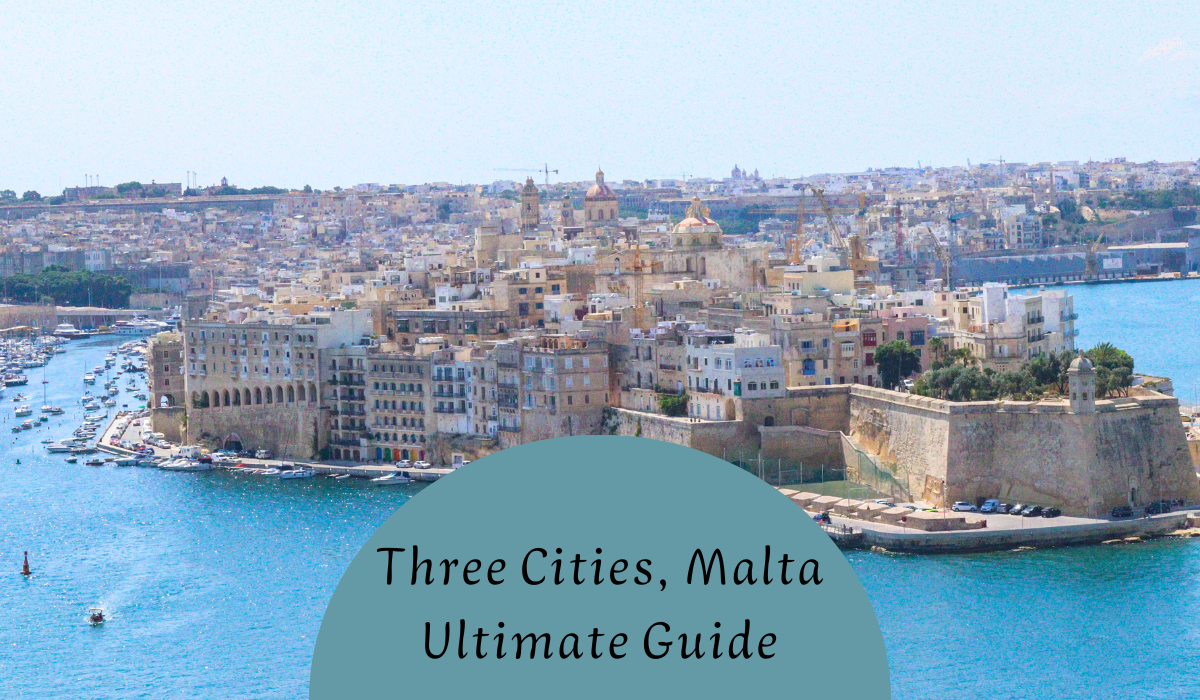
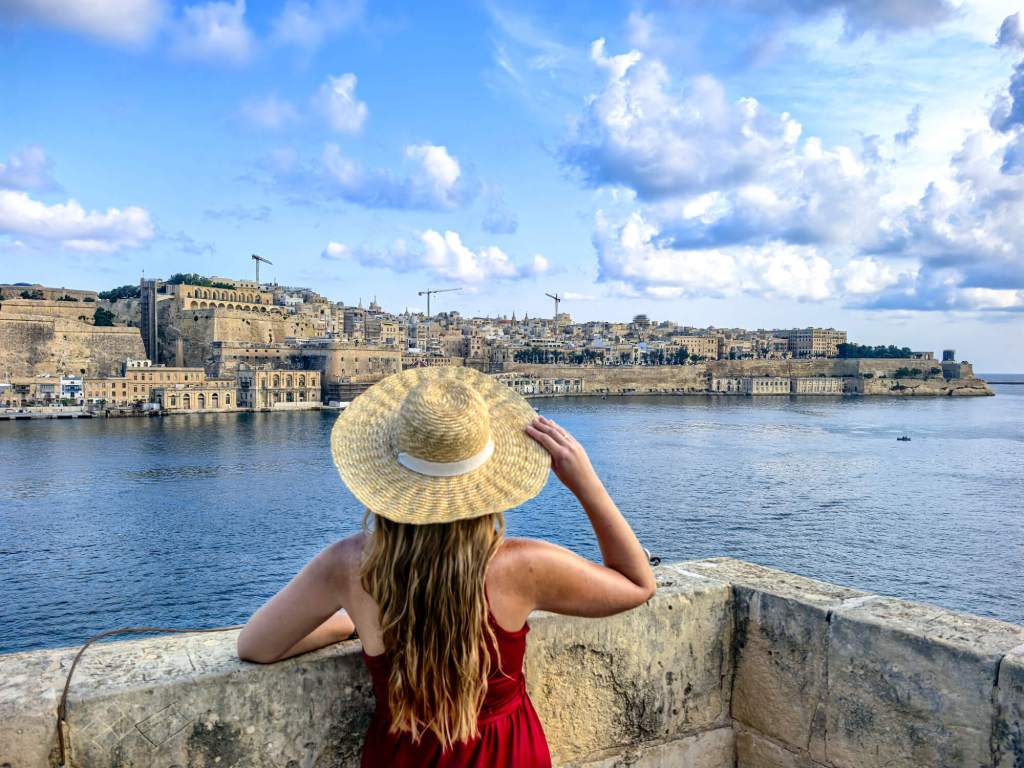
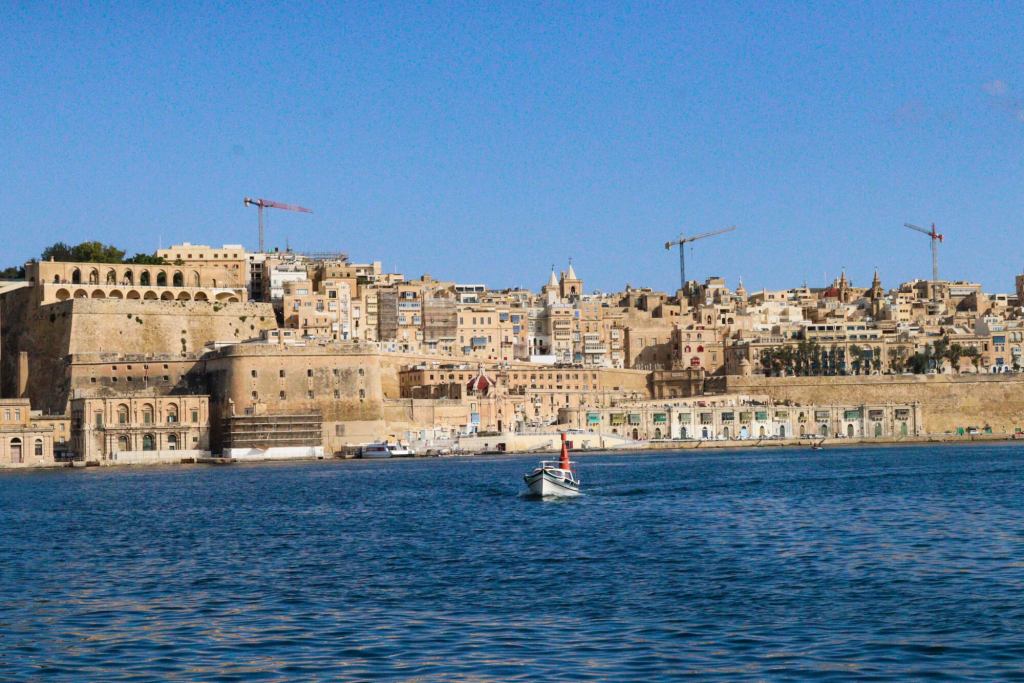
Just across the Grand Harbour from Valletta, three fortified towns stand proudly, known collectively as the Three Cities.
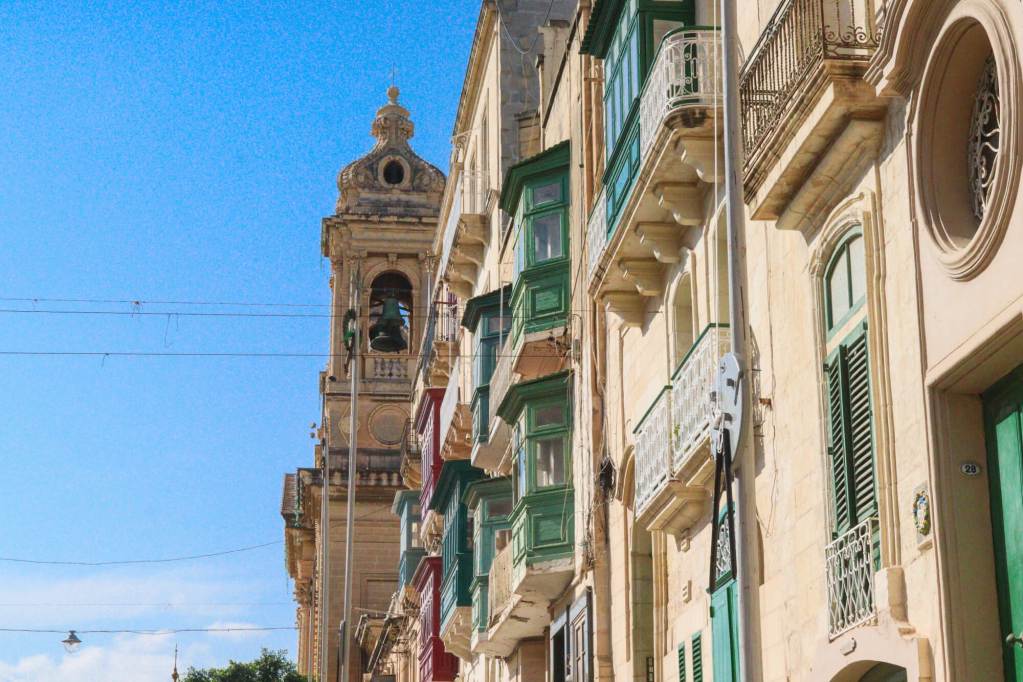
Looking out from the ramparts of Malta’s capital, they are right there in plain sight, yet they often sit in the shadow of their famous neighbour. Quite unfairly, if you ask us! With their golden bastions, winding narrow alleys, and grand church domes, they represent the very best of Maltese architecture. When the afternoon sun hits the limestone, the whole place glows with that iconic honey-like hue. You’ll also find one of the true symbols of the “Pearl of the Mediterranean” here: the vibrant, enclosed wooden balconies known as il-gallarija.
It is a bit of a paradox that many travellers end their journey on the more “polished” side of the harbour. In reality, the Three Cities are actually older than Valletta itself and served as the true heart of Malta for centuries.
This Maltese Three Cities are made up of Birgu, Isla, and Bormla – also known by their knightly titles: Vittoriosa, Senglea, and Cospicua. The former are the original Maltese names, while the latter were bestowed by the Knights of St John. This is where the history of the Order of Malta truly comes to life, and a wander through these streets offers a glimpse into a much more authentic, local side of the island.
In this post, we’re taking you on a journey to the quieter side of Malta. We’ll share the best things to see in the Three Cities, how to get there, how to plan your visit, and why their history is so fascinating.

Where Are the Three Cities – and What Makes Them so Special?
The Three Cities are nestled along the Grand Harbour (Il-Port il-Kbir in Maltese), one of the biggest and most impressive natural harbours in the Mediterranean. It has been a hive of activity since Phoenician times, and for centuries, this very harbour dictated Malta’s strategic fate. Quite simply, whoever controlled the Grand Harbour held the keys to the trade and maritime routes between Europe and Africa.

You’ll find Birgu, Isla, and Bormla sitting directly opposite Valletta. They are separated from the capital by only a narrow stretch of water, which today you can cross in a matter of minutes by ferry. If you look at a map, you’ll see several peninsulas jutting out into the harbour – it is on these very fingers of land that these fortified towns were built, each encased in massive, towering bastions.
With its natural coastline and commanding view of the sea, this area was always a defensive powerhouse. It’s no surprise that when the Order of St John (the Knights Hospitaller) arrived in Malta in the 16th century, they chose to settle right here, making Birgu their first base and headquarters.
Why Are the Three Cities so Important? A Short Story of the Knights
While the Knights of Malta left the biggest mark on the history of the Three Cities, the area around the Grand Harbour was lived in and used strategically long before they arrived.
Back in Phoenician times, the natural harbour provided a safe place for merchant ships crossing the Mediterranean. Later, the Romans and then the Arabs saw how important this location was. The Arabs, in particular, shaped the island’s language and culture for centuries.
In the Middle Ages, the city of Mdina was the main administrative centre, but the area around what is now Birgu slowly became the key hub for sea trade.
This is why, even before Valletta was built, Birgu was the real heart of the island. In 1530, the Order of Malta – also known as the Knights Hospitaller – made Birgu their first home after being forced to leave the island of Rhodes. It basically became Malta’s capital because the old capital, Mdina, was located inland and had no access to the sea.
In 1565, the Three Cities became the stage for one of the most famous events in history: the Great Siege of Malta. The Ottoman Empire tried to take control of the harbour, but the defence of Birgu and its fortifications became a symbol of the Knights’ strength. Isla and Bormla also helped defend the port, though Birgu was the main strategic centre.

After their victory, the Knights decided to build a new, stronger city on the nearby Sciberras peninsula – Valletta, named after the Grand Master, Jean Parisot de Valette. This is how the capital moved across the water. Because of its bravery during the siege, Birgu earned the nickname “Città Vittoriosa“ – the Victorious City.
But the history of the island didn’t stop there. In the late 18th century, the Order lost Malta to Napoleon. However, the French didn’t stay long – by 1800, the island became a British colony.
In the 19th century, the Grand Harbour was the perfect stop for British ships travelling between Gibraltar and the Suez Canal. During this time, Bormla (Cospicua) grew into a major British shipyard.
The 20th century was also difficult. During the Second World War, the Grand Harbour was one of the most heavily bombed places in the world. Isla (Senglea) suffered the most, with about 75% of its buildings destroyed.
Today, you can still see the traces of this long history in the massive walls and narrow streets of the Three Cities – and that is exactly what makes them so special.
🧐 Fun Fact: The Maltese language has Arabic roots. It is the only Semitic language (like Arabic or Hebrew) that is written using the Latin alphabet. Today, it is a unique mix of Arabic, Italian, and English influences – just like the history of the island itself!
Why Do the Three Cities Have Two Names?
When reading about the Three Cities, it’s easy to feel a bit confused. One moment they are called Birgu, Isla, and Bormla, and the next they are Vittoriosa, Senglea, and Cospicua. If you’re wondering where all this confusion comes from, we’re here to help!
The first set of names are the original Maltese ones, often rooted in Phoenician or Arabic traditions.
According to some theories, the name of the oldest city, Birgu, comes from the Phoenician word “borgh“, meaning a walled city or fortification. Another version suggests it comes from the Italian word “borgo” – a small medieval town – which the Maltese eventually turned into Il-Birgu.
Isla (or L-Isla) likely gets its name from the Italian word for island (isola). Interestingly, it actually used to be an island until a bridge connected it to Bormla during the time of the Knights, giving it the peninsula shape we see today!
Finally, Bormla probably comes from the ancient Phoenician or Punic name Burmula. “Bur” meant a place, and “Mula” meant high. This perfectly describes the city’s location, as it stands high above the surrounding area. Another theory suggests it’s a mix of the Arabic word “būr” (well or tower) and the old Phoenician name for Malta, Maleth (meaning shelter or harbour).

Vittoriosa, Senglea, and Cospicua are the official names given by the Grand Masters of the Order of Malta.
Birgu was renamed Vittoriosa (the Victorious City) by Grand Master Jean Parisot de Valette after the victory of the Great Siege in 1565. This new name honoured the city’s heroic defence against the Ottoman Empire.
The victory over the Ottomans was a huge milestone, not just for Malta, but for all of Western Europe. This success allowed the Knights to gather the funds and the support required to build a brand-new fortified city. They named it Valletta, in honour of its founder, Jean Parisot de Valette. As history shows, it became Malta’s new capital around 1571, taking over the role from Birgu (Vittoriosa).
But let’s get back to the Three Cities! Isla, known since the Great Siege as Città Invicta (the Invincible City), also got a new name. Just like the capital, it was named after a Grand Master of the Order: Claude de la Sengle – hence the name Senglea.
The last of the three, Bormla, was honoured in 1722 by Grand Master Marc’Antonio Zondadari with the title Città Cospicua. This translates to the “Conspicuous” or Impressive City. The new name was meant to reflect its importance, highlighting the bravery of its residents during the siege, as well as the city’s grand double fortifications.
Today, both the original and official names are used interchangeably. However, you’ll find that locals almost always use the original Maltese names: Birgu, Isla, and Bormla.
| Maltese Name | Official Name | Meaning / Origin |
| Birgu | Vittoriosa | The Victorious City |
| Isla | Senglea | Named after a Grand Master |
| Bormla | Cospicua | The Conspicuous / Impressive City |
Birgu (Vittoriosa) – The Heart of the Three Cities
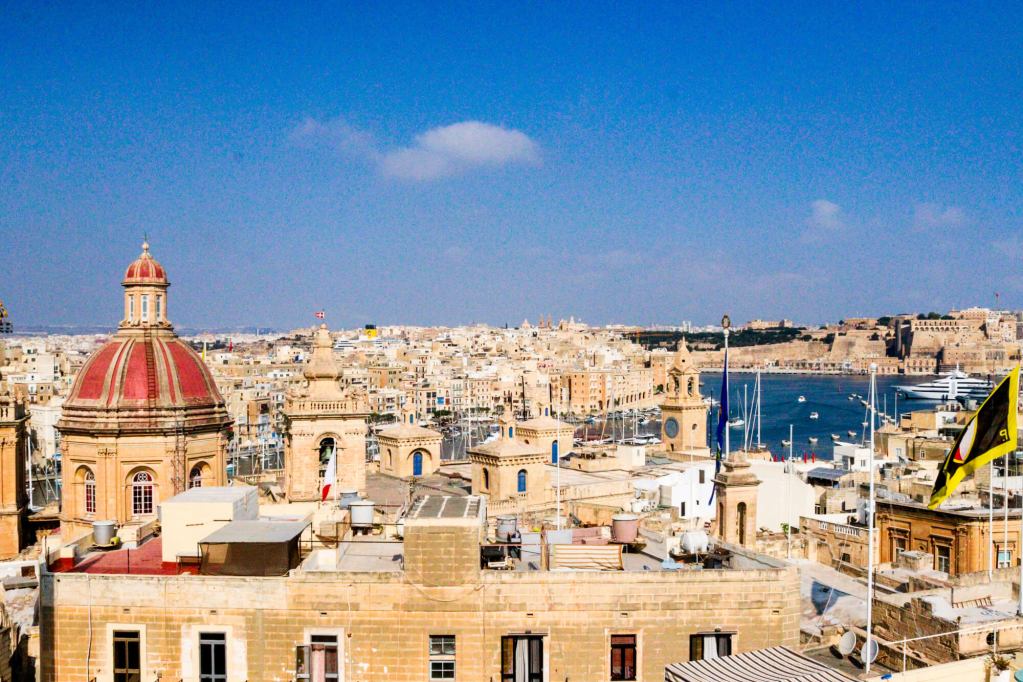
If the Three Cities have a heart, it beats in Birgu. As the oldest and most authentic of the three, this is where Malta’s past feels truly alive. History here isn’t just a story in a guidebook – you can feel it in the ancient walls, the narrow winding streets, and the massive bastions overlooking the harbour. It is the natural starting point for exploring this part of Malta. In fact, if you only have time to see one of the Three Cities, we would choose Birgu without hesitation!
This is where the Knights of St John established their first headquarters in the 16th century, and the mighty Fort St Angelo became the centre of the island’s defence during the Great Siege of 1565. For several decades, Birgu served as Malta’s de facto capital before Valletta took over the role. Traces of those legendary events are still visible today in the city’s fortifications and charming backstreets.
What to see in Birgu?
Fort St. Angelo
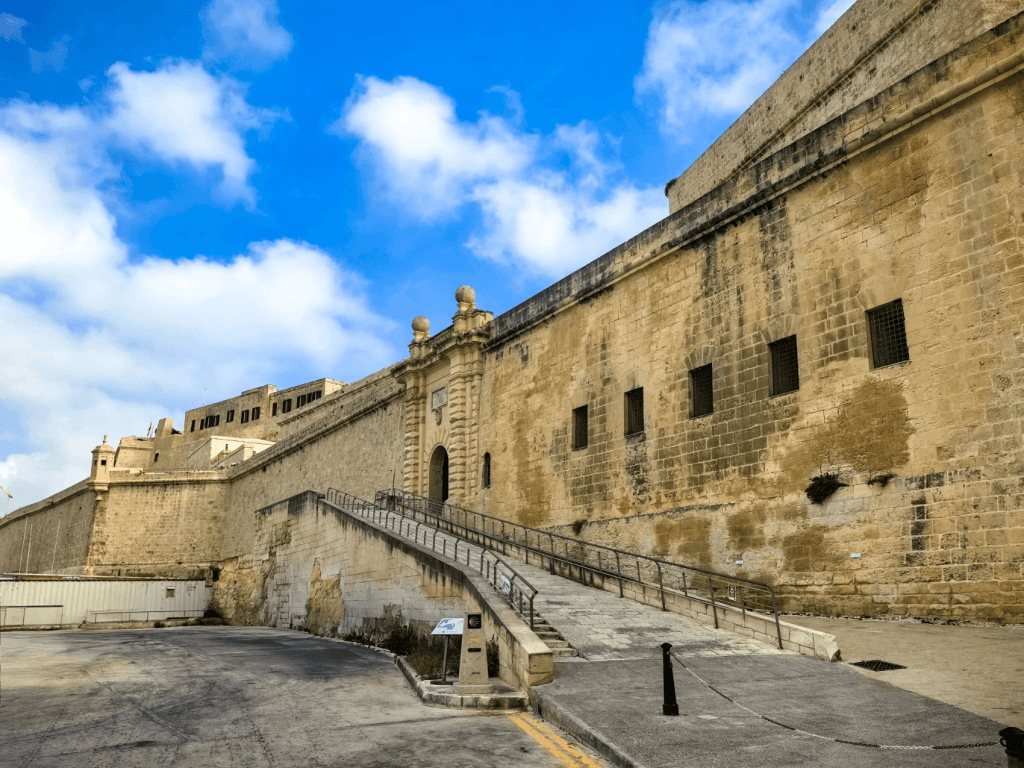
The best place to start your tour of Birgu is its biggest attraction and one of the most important buildings in Malta: the iconic Fort St. Angelo.
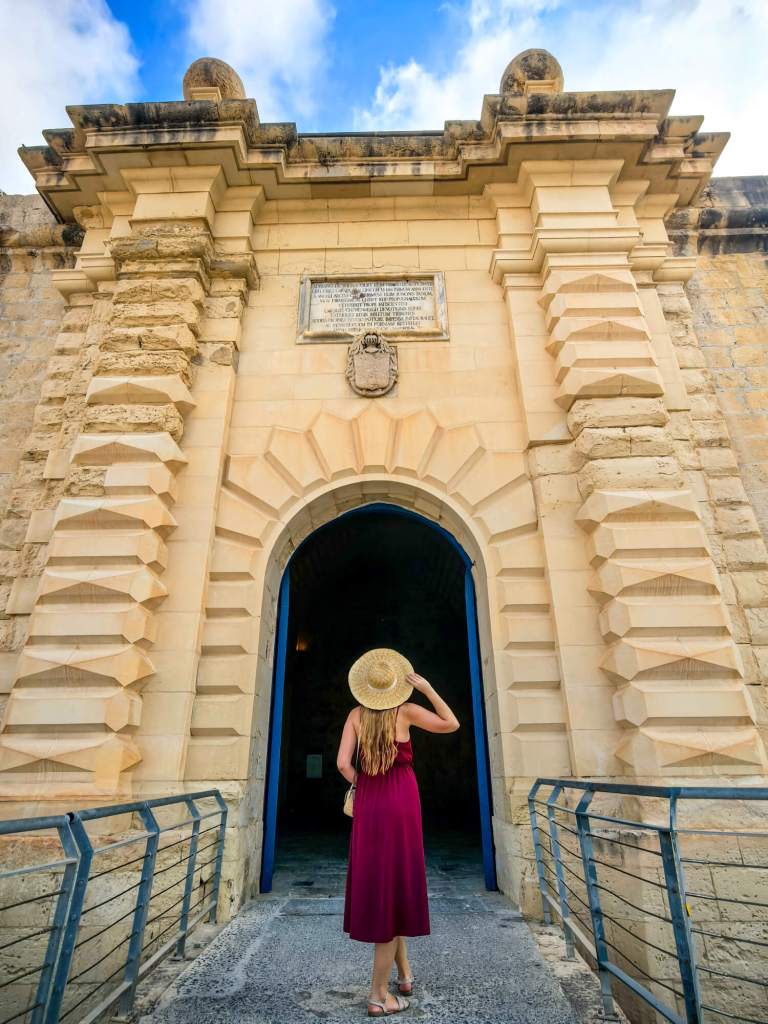
As you step through its gates, you enter the heart of centuries-old history. This is a place that literally decided the fate of the entire island.
The massive fort stands over the Grand Harbour for a reason – its location is perfectly strategic. Its roots go back to the Middle Ages when a castle known as Castrum Maris (Castle by the Sea) stood here. Even more interestingly, there is evidence that the site was used as far back as prehistoric and ancient times – long before the Knights arrived!
When the Knights of St John arrived in the 16th century, they rebuilt the castle into a powerful fort with massive bastions. It was so important that it served as the Order’s headquarters during the famous Great Siege of Malta in 1565. It was from here that the island’s defence was managed during one of the most critical moments in its history.
During the British era, the building was turned into a garrison, and during the Second World War, the fort took a heavy hit from Axis bombings.
🧐 Fun Fact: It is said that the walls of Fort St. Angelo are still haunted by the Grey Lady, a famous figure from Maltese folklore. According to the most popular legend, she was the mistress of a nobleman associated with the Knights of Malta. When their affair was discovered, he reportedly ordered her to be killed, and her body was hidden somewhere within the fort. Since then, her ghost – dressed in a long grey gown – has been seen at night near the bastions. Interestingly, during WWII, British soldiers stationed at the fort reported seeing her just before air raids. Was it a coincidence or a warning from beyond? No one has ever been able to explain it.
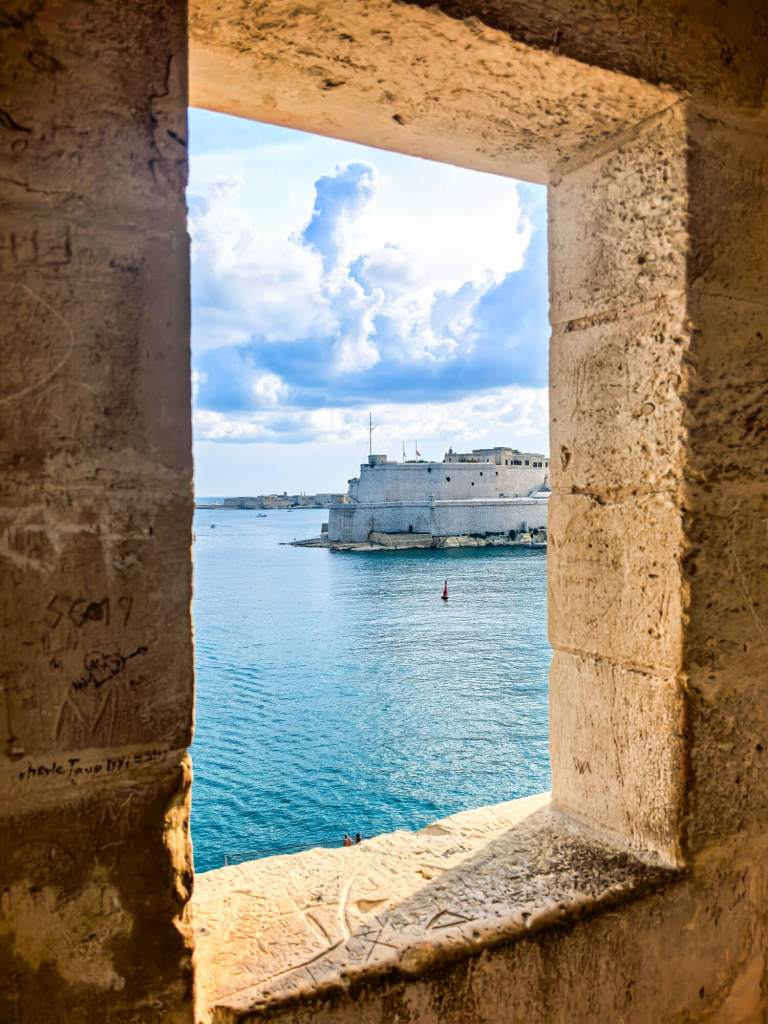
Today, the restored Fort St. Angelo is not just a witness to a turbulent past, but also one of the best viewpoints on the island. From its walls, you can see a stunning panorama of the Grand Harbour and the neighbouring towns – a view that helps you understand why this was the centre of Maltese life and defence for so long.
While you’re there, it’s worth visiting the 13th-century St. Anne’s Chapel. It is believed that a Roman temple may have stood on this exact spot centuries earlier.
And finally, a detail that brings the story full circle: above the fort, next to the Maltese flag, you will still see the flag of the Knights. Since 1998, the upper part of the fort has belonged to the Sovereign Military Order of Malta — the modern continuation of the Knights Hospitaller! It’s hard to find a more symbolic proof that history in Birgu has truly come a full circle.
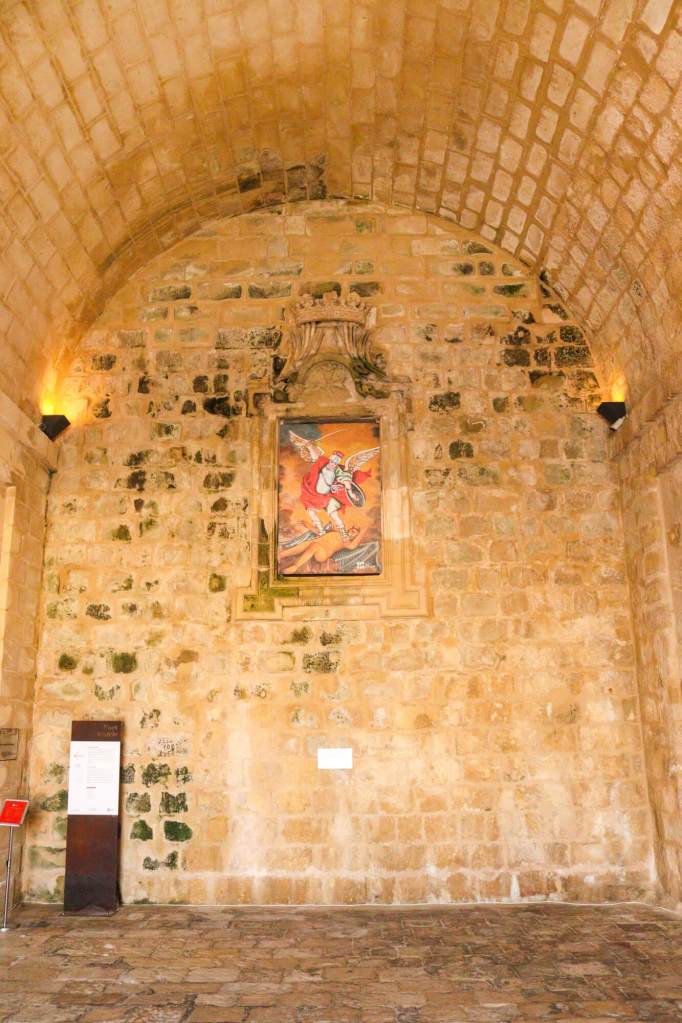
🧐 Fun fact: Can you be a nation… without a country? The Order of Malta is one of the most unusual “sovereign entities” in the world. Even though it doesn’t have its own territory in the traditional sense, international law recognises it as a sovereign power. It maintains diplomatic relations with over a hundred countries, issues its own passports, and has its own car licence plates, postage stamps, and even its own collectible coins.
Sounds like a microstate without a map? And yet, it truly exists – and it still plays an active role on the international stage!
Practical Information:
- Admission: €10 (Adults), €6 (Concessions/Students), €4 (Children aged 6-11)
- Opening hours: Daily 9:00 – 19:00 (1st March – 31st October 2026)
- Visiting time: Approx. 90 minutes
Tip: It is always a good idea to check the official Fort St. Angelo website for the latest prices and opening hours.
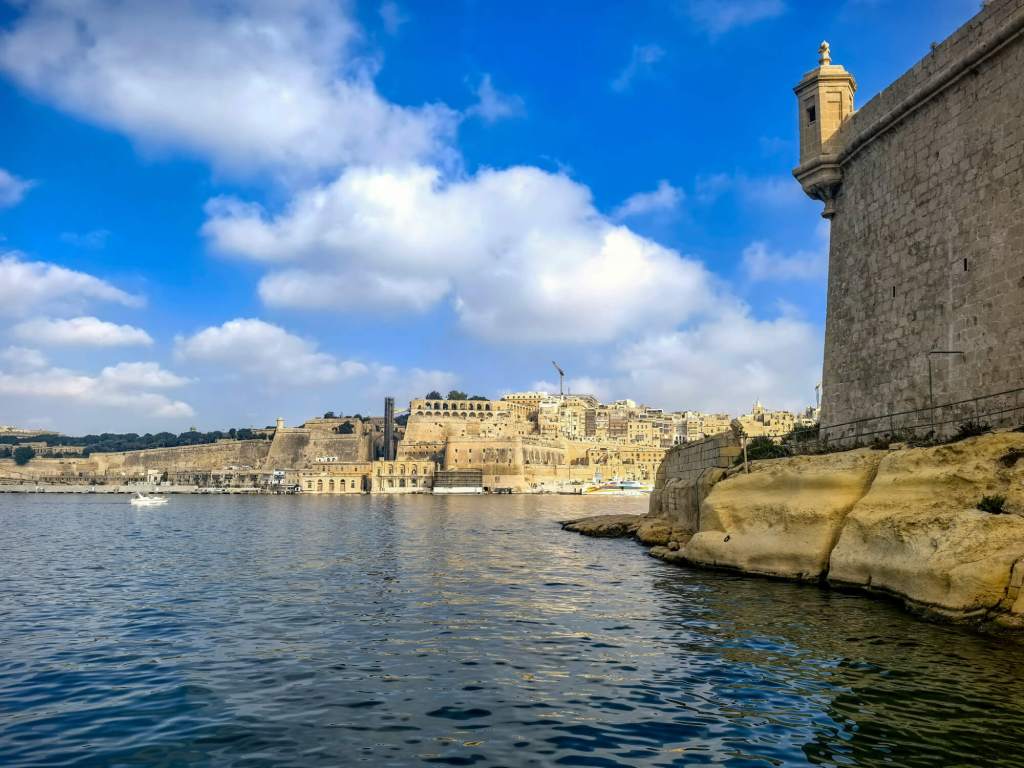
🧐 Fun Fact: Even Caravaggio was a prisoner here!
The famous painter arrived in Malta in 1607 and was even knighted by the Order of St John. However, after a violent brawl with another knight, he ended up in the prison right here in the fort. In 1608, he made a spectacular escape — reportedly by lowering himself down the fortress walls in the middle of the night. The Order was not impressed; they called him a “rotten and fetid limb” and expelled him from their ranks.
The Narrow Streets of Birgu and Their Colourful Balconies

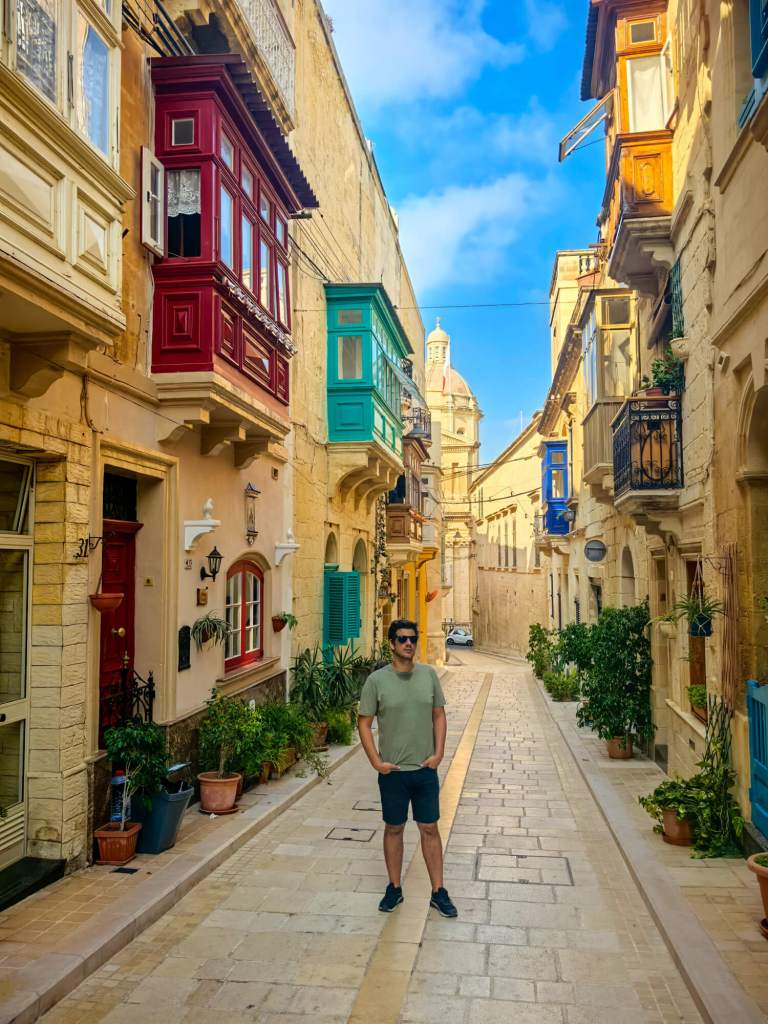
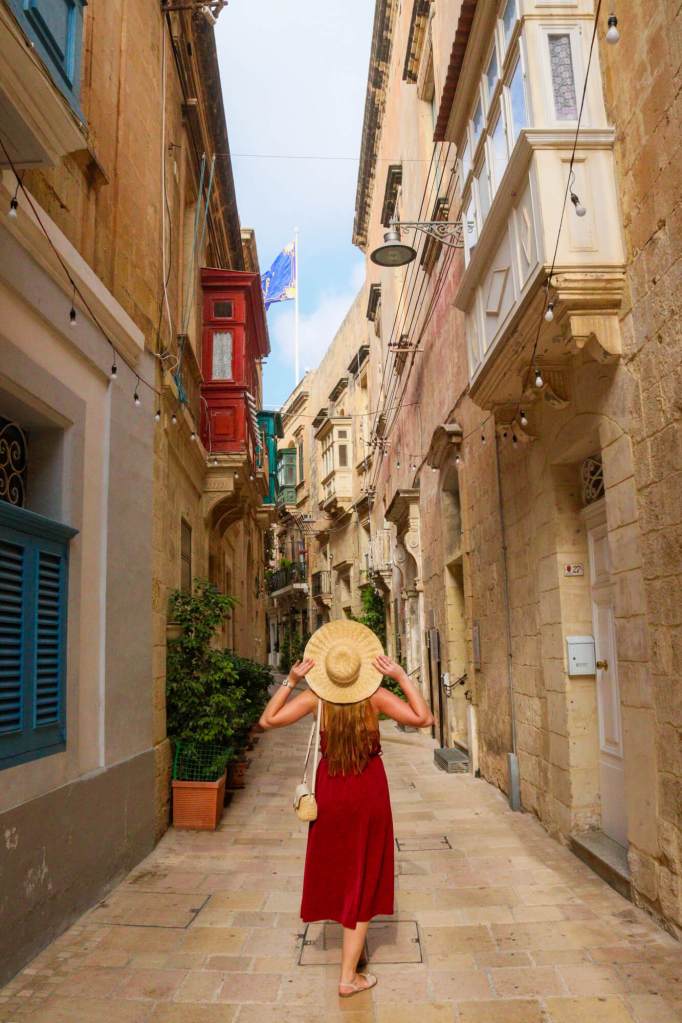
While Fort St. Angelo is undeniably impressive, it is the maze of narrow, shaded, and winding streets that truly steals the show in Birgu.
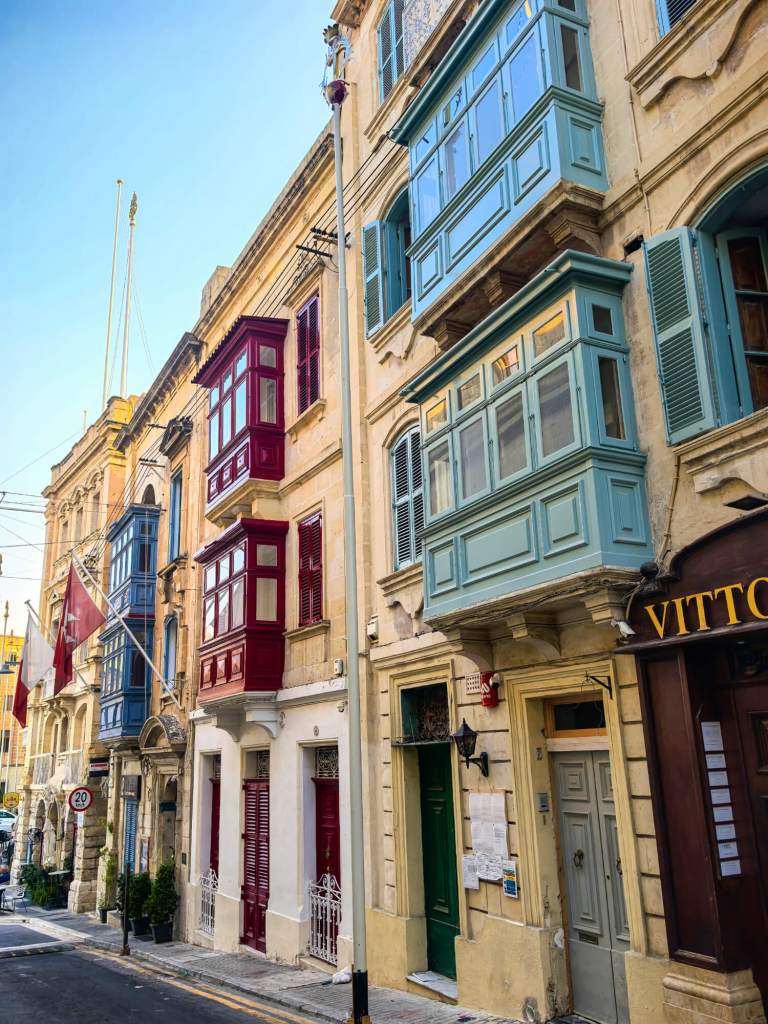
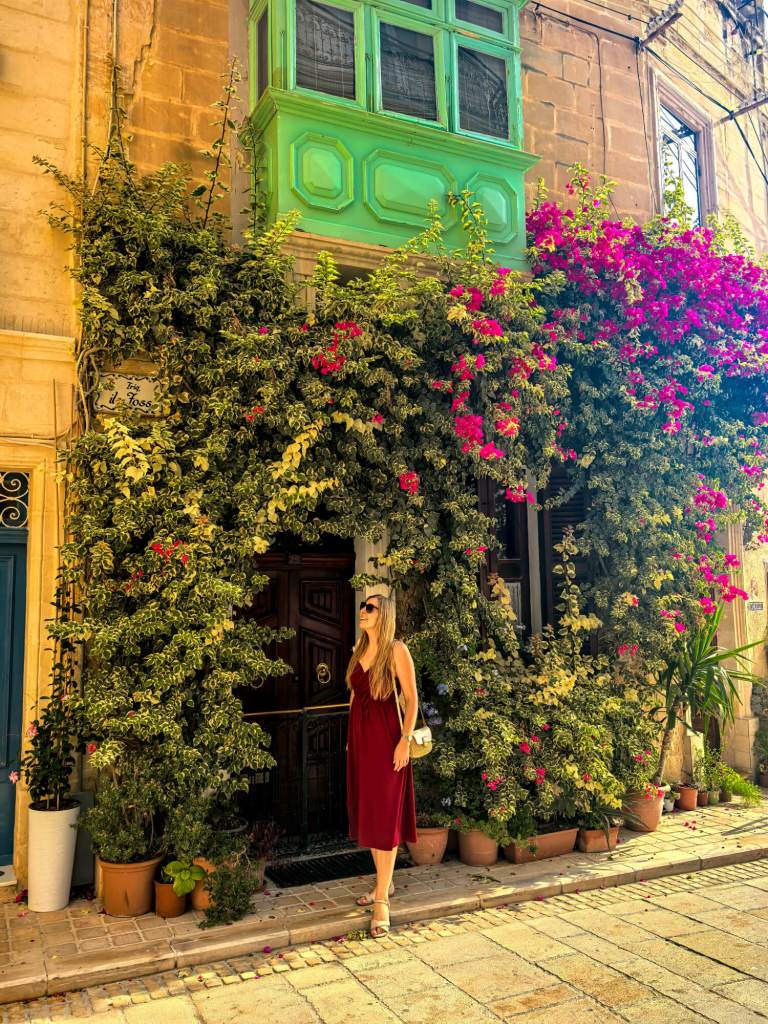
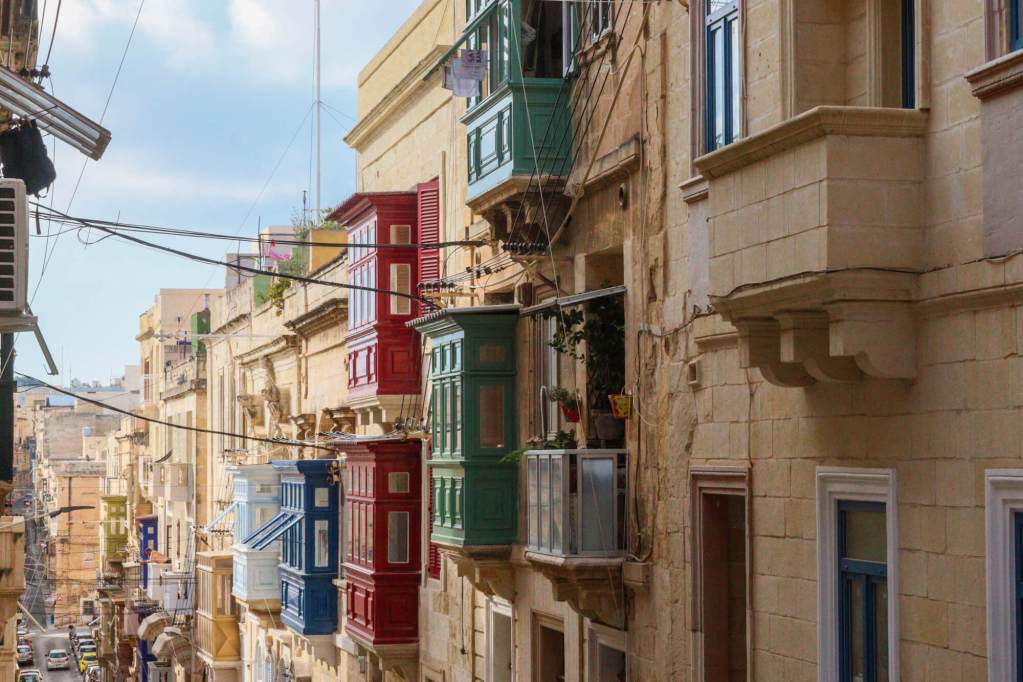
Walking through the town centre, it’s impossible not to fall for the charm of the limestone facades decorated with colourful balconies — the quintessence of authentic Malta. These tall houses with their pastel wooden structures (known as gallarija) create a space where history is everywhere, from medieval alleys to traces of the Knights’ presence.
These iconic enclosed balconies — painted in shades of turquoise, red, or sunny yellow — were originally built to protect residents from the heat and curious eyes, while also adding a bit more living space. Today, they are decorated with flowers and hanging laundry, proving that Birgu isn’t an open-air museum, but a living, breathing city.
At the heart of this tangle of streets is Victory Square (Misraħ ir-Rebħa), which has been the centre of life in Birgu for centuries. Standing proudly here is the statue of the city’s patron, St. Lawrence, alongside the Victory Monument, which commemorates the Knights’ triumph in the Great Siege of 1565, when the city earned the title Città Vittoriosa.

It’s also well worth heading towards the Collachio district. This was the exclusive residential area for the Knights before they moved to Valletta. The Collachio was their administrative hub — organised, strategically located, and close to the harbour. You can still admire the facades of the Auberges (inns) of the various “Languages” (regions), including Aragon, Catalonia and Navarre, France, Italy, England, and Germany. A walk here feels like a journey back to the time when Birgu was the political and military heart of the island.
But honestly? You don’t really need a fixed itinerary for Birgu. Just get lost in the backstreets and let the city tell you its own story.
🧐 Fun fact: The “Languages” of the Order
The Order of St John was divided into “Languages” (Langues), which were groups of knights from different parts of Europe. Each Language represented a different territory — such as Provence, Auvergne, France, Italy, Aragon, England, Germany, and later Castile and Portugal. Each group had its own duties and its own headquarters, called an Auberge (Inn). This reflected the international nature of the Order — even though the knights came from different countries and spoke different tongues, they lived and fought as one community.

The Inquisitor’s Palace in Birgu: One of the Few of Its Kind in the World
Leaving the sun-drenched backstreets behind, we move on to a darker chapter in Malta’s history: the time of the Inquisition.
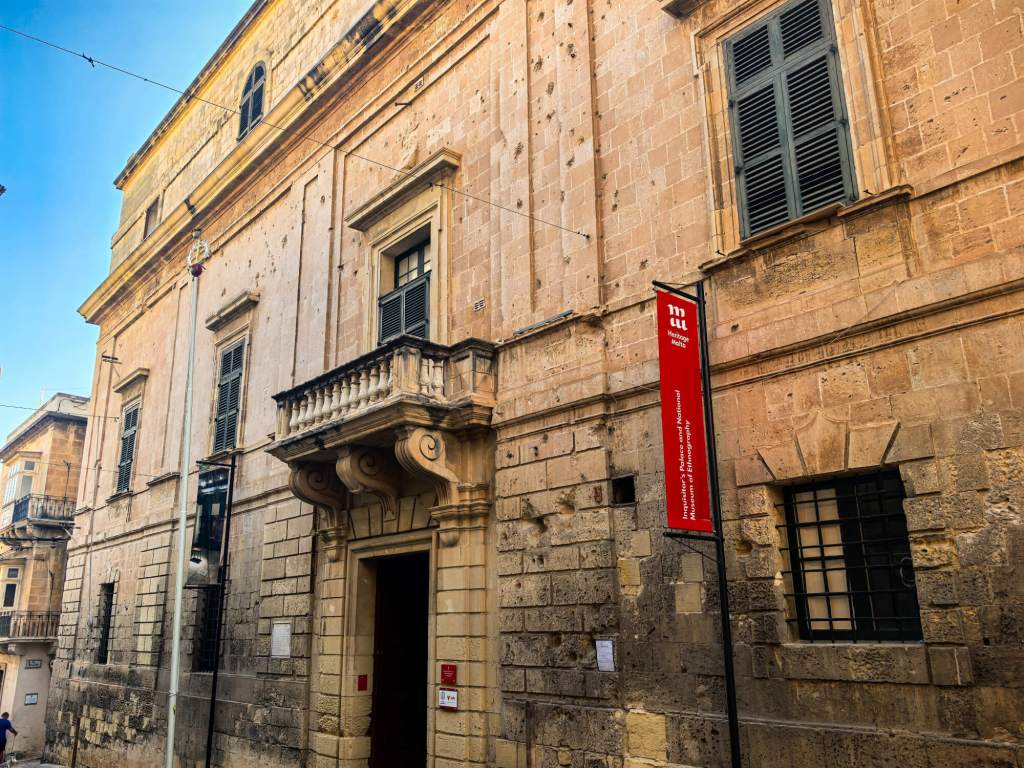
The Inquisitor’s Palace in Birgu is one of the very few buildings of its type to survive anywhere in the world — and it is the only one open to the public. That alone makes it feel both extraordinary and a little bit eerie.
The building was originally constructed in the early 16th century as a courthouse. Over the years, it was rebuilt and renovated several times, but its true role began in 1574 when the Grand Master of the Order of Malta handed it over to the Maltese Inquisition. From then until 1798 — when the Inquisition was abolished during the French occupation — the palace served as the main headquarters of the tribunal. During this time, it was known as the Palazzo del Sant’Officio.
The building housed the Inquisitor’s residence, the courtroom, and a prison. In the dungeons, you can still see the old cells today, with inscriptions and graffiti left on the walls by the prisoners themselves. Interestingly, the Maltese Inquisition was considered relatively “mild” compared to those in other parts of Europe. Most cases involved heresy, blasphemy, or “immoral” behaviour, and the death penalty was very rarely carried out.
After the French arrived, the building changed its purpose, serving as a military hospital, a canteen, and even a convent. Today, it houses the National Museum of Ethnography, which explores not only the history of the Inquisition but also daily life in Malta through the centuries.
Practical Information:
Admission: €6 (Adults), €4.50 (Concessions/Students), €3 (Children aged 6-11)
Opening hours: 9:00 – 17:00, closed on Mondays (1st March – 31st October 2026)
Tip: Be sure to check the official Inquisitor’s Palace website for the latest prices and opening hours.
Birgu Waterfront – A Walk With a View of the Grand Harbour
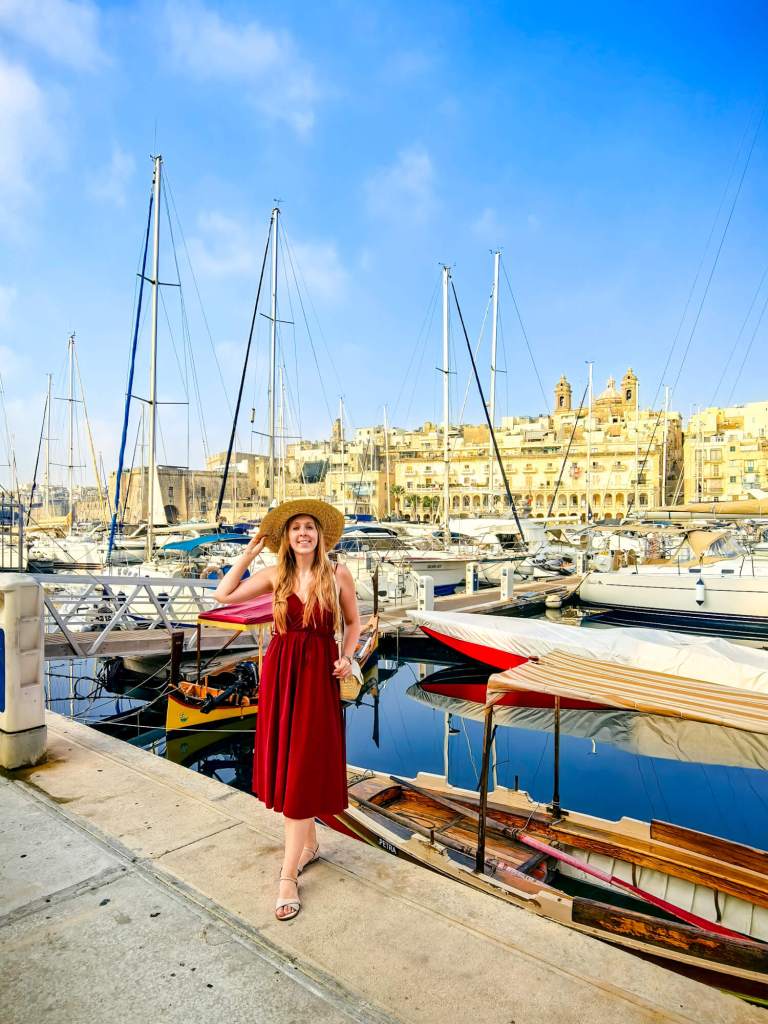

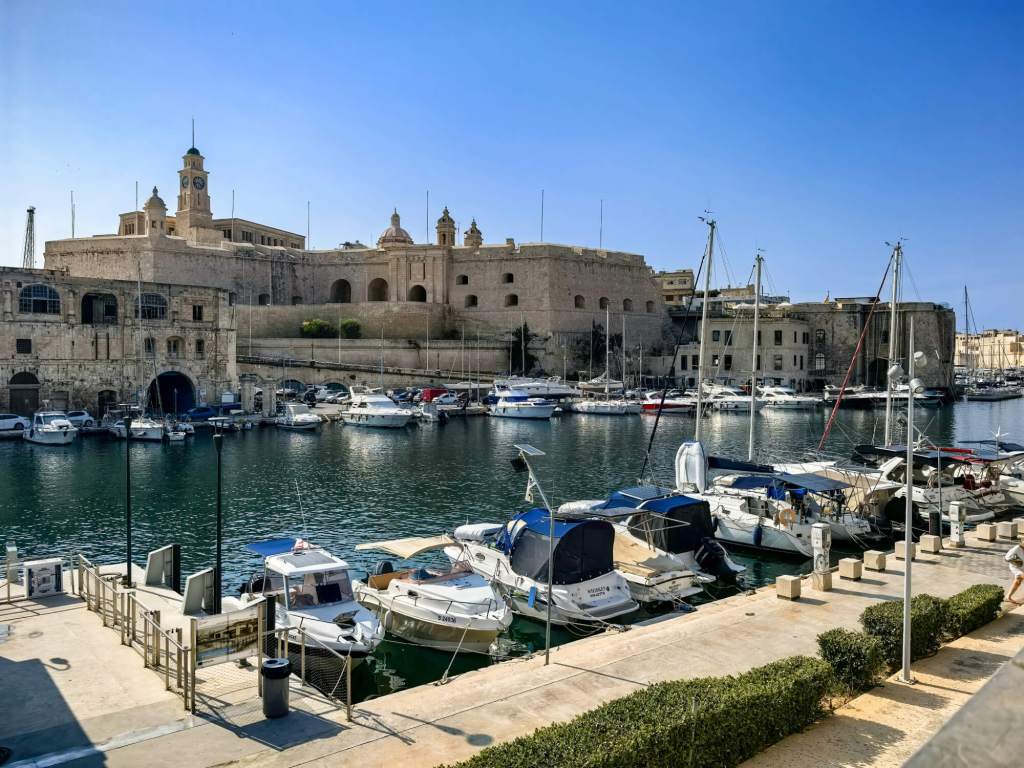
The waterfront, stretching from the Maritime Museum to the tip of the peninsula at Fort St. Angelo, is one of the most beautiful spots in all of Birgu. This is where you can truly feel the scale of the Grand Harbour. You only need to look across the water towards the town of Isla to understand just how strategic and impressive this location really is.
A stroll along the quay allows you to see many different sides of the city at once. On one hand, you have elegant, historic facades and massive, centuries-old fortifications. On the other, luxury yachts sway in the water right next to traditional boats, where you can still see local fishermen busy with their daily work. All of this is framed by the azure water and the light reflecting off Birgu’s honey-coloured limestone walls.
It’s also the perfect place to slow down for a moment. You can sit in one of the restaurants or cafés overlooking the harbour and simply soak up the atmosphere of a place where history and modern life flow side by side.
The Fortifications and City Gates of Birgu
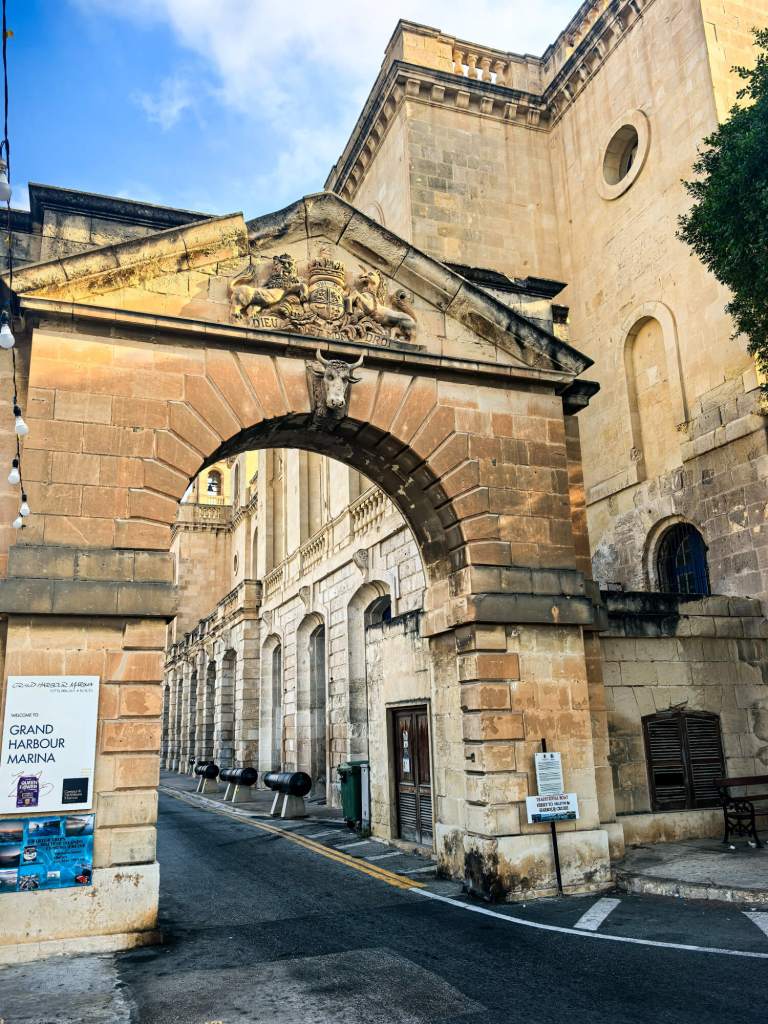
As you walk through Birgu, you’ll quickly realise that this isn’t just an ordinary, charming town with pretty streets. It is a fortress. Every gate, every bastion, and every section of the wall had a specific job: to protect the city from attacks by land and sea.
Impressively, three out of the four original city gates have survived to this day, which is quite a feat considering Malta’s turbulent history and the heavy bombing during WWII. The main entrance leads through a monumental gate, followed by the so-called Couvre Porte — an additional, sheltered defensive gate. This “double protection” system was no accident. The narrow passages and sharp turns in the walls were designed to slow down invaders, allowing defenders to fire from above and from the sides.

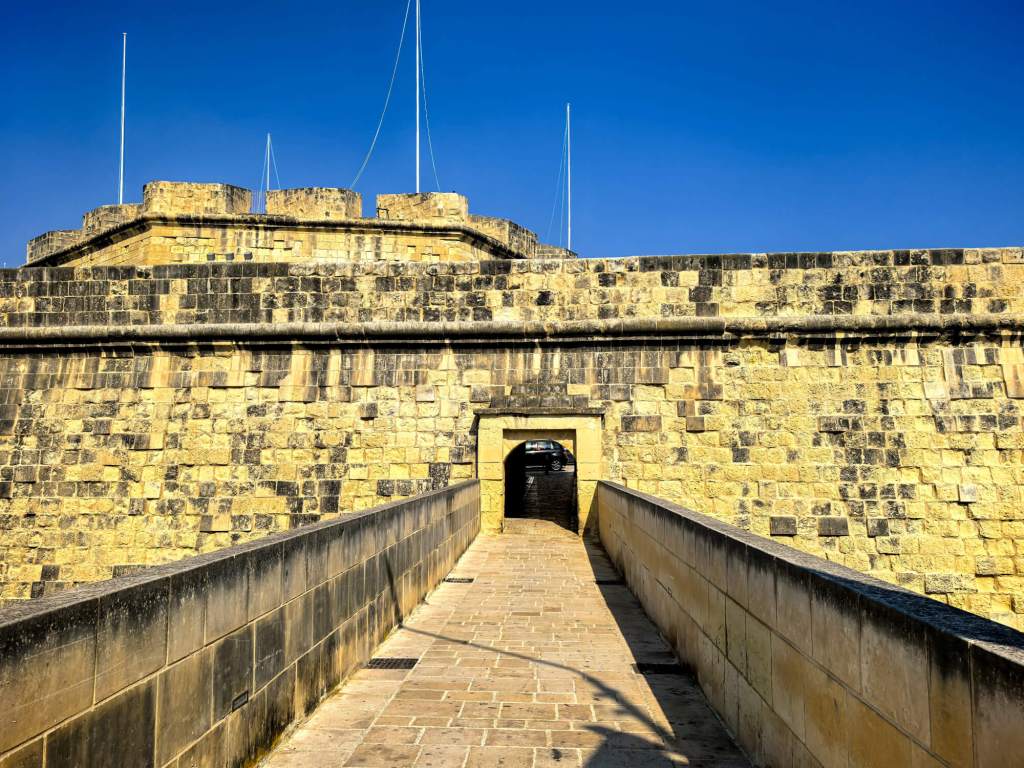
Most of the fortifications you see today were built in the 16th and 17th centuries as the Knights expanded the defences around the Grand Harbour. After the Great Siege of 1565, the city became a symbol of resistance, and its walls were made even stronger. These massive bastions and ramparts formed one of the most advanced defensive systems in the entire Mediterranean.
Today, you can walk along the top of these structures and enjoy the view of the Grand Harbour, knowing that centuries ago, guards stood in this very spot, watching for hostile sails on the horizon.
Malta Maritime Museum – The Island’s Seafaring History
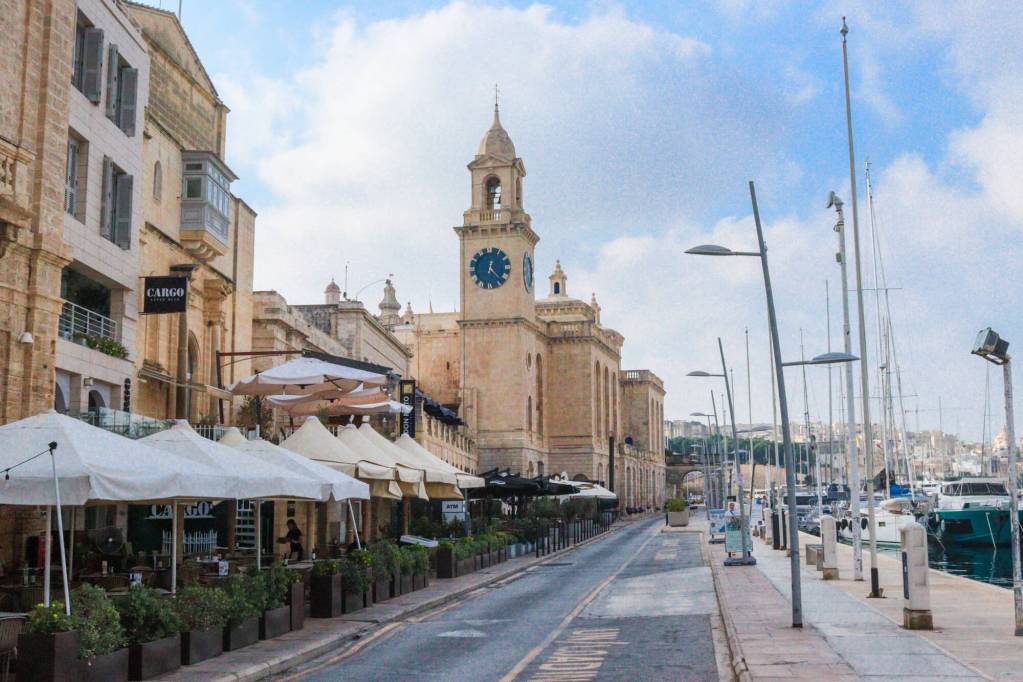
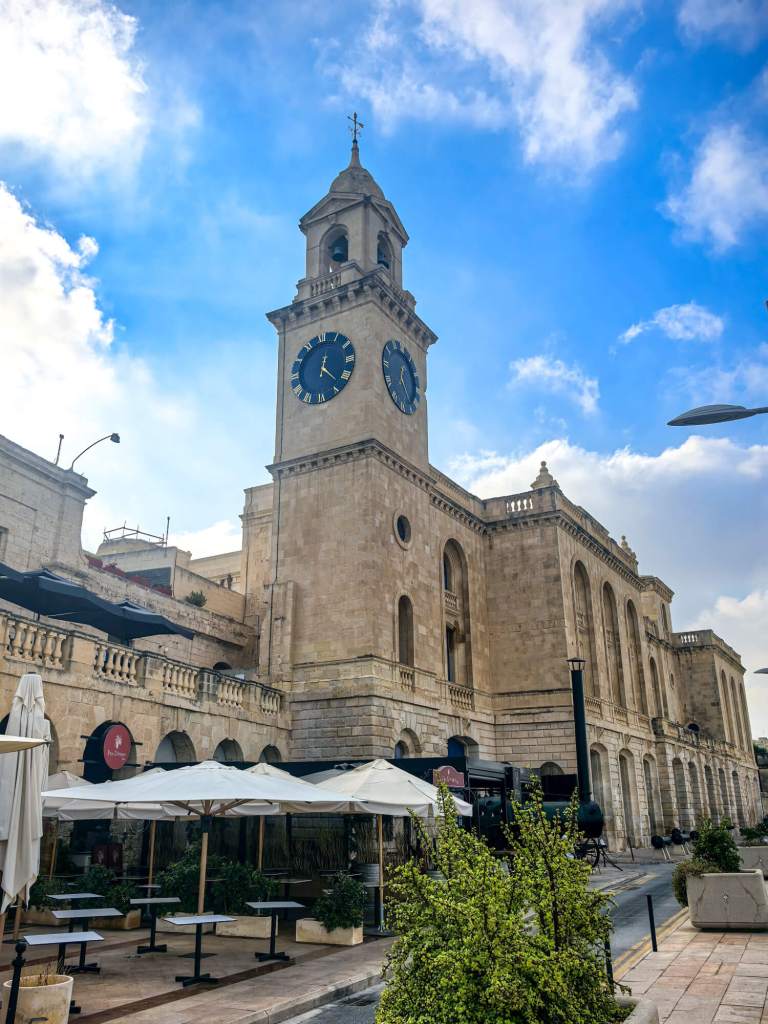
The Maritime Museum in Birgu is a real gem for anyone interested in Malta’s history and its deep connection to the sea. It’s located right on the promenade in the impressive Royal Naval Bakery building. This bakery once served the entire British Mediterranean Fleet, and at its peak, it produced a staggering 14 tonnes of bread every single day!
With over 20,000 artefacts on display, the museum tells the story of how the sea shaped Malta from prehistoric times to the present day. It’s the perfect place to truly understand the strategic importance of the Grand Harbour. As you walk through the exhibits, you’ll discover fascinating tales of pirates, warships, and epic maritime expeditions.
Also, keep an eye out for the clock tower – it’s the oldest of its kind among British naval establishments in Malta.
Note: The interior of the museum is currently closed for renovation, but the building itself is still very much worth seeing from the outside.

Malta at War Museum – Malta During WWII
The Malta at War Museum takes you back to the dramatic years of the Second World War, when Malta was one of the most heavily bombed places in Europe. The museum is housed in a historic complex that includes former barracks and underground air-raid shelters used by locals during the attacks.
The exhibits show what daily life was like for the Maltese people during the war – the food shortages and the constant fear, but also the incredible bravery and solidarity of the community. In 1942, King George VI awarded the island the George Cross to honour the heroism of its people. Today, you can still see this symbol on the national flag. A replica of the cross is on display in the museum (the original is kept in Valletta, across the harbour).
The highlight of the visit is heading down into the authentic air-raid shelters carved into the rock. Walking through these narrow, cold tunnels, you can really imagine what it was like to spend hours underground, waiting for the all-clear. This isn’t just a place that tells history; it’s a place that lets you feel it.
Practical Information:
Admission: €14 (Adults), €7 (Concessions/under 16s)
Opening hours: Monday – Saturday, 10:00 – 16:30
Tip: For more details, visit the official Malta at War Museum website.
St Lawrence’s Collegiate Church – A Cornerstone of Birgu
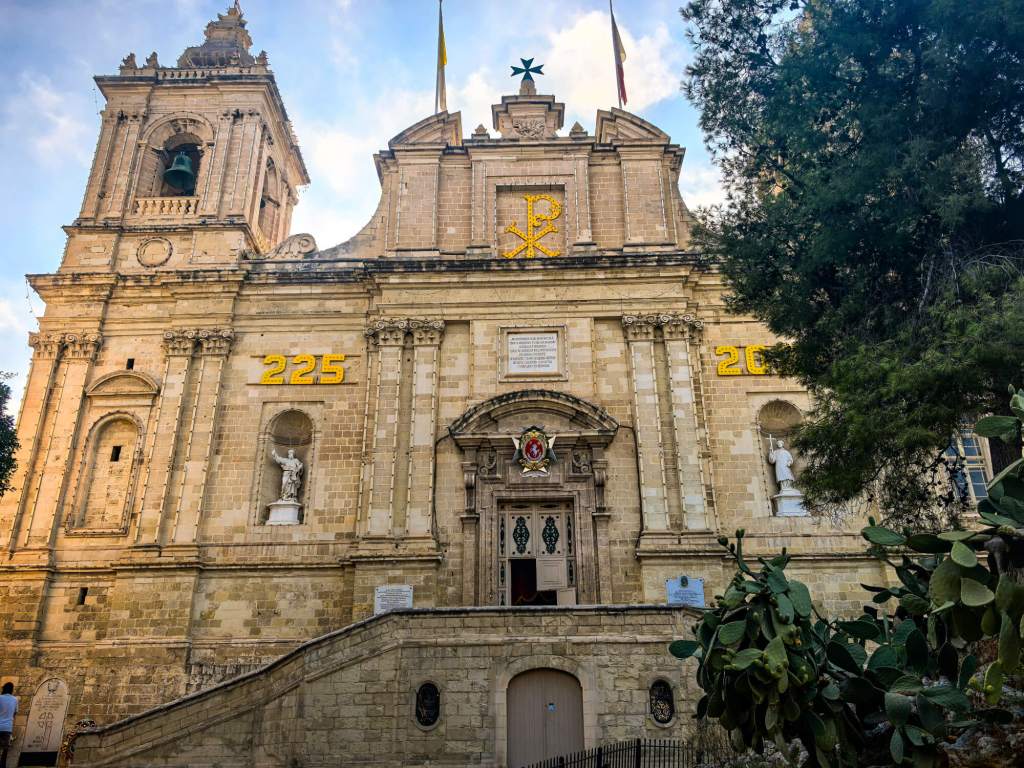
St Lawrence’s Collegiate Church is one of the most important symbols of Birgu and the second oldest parish in Malta. Its history dates back to the time of Spanish rule, when the Aragonese built the first chapel on this site. Later, it was replaced by the grand temple we see today, which became the first conventual church of the Knights after they arrived in Malta.
It was here, after the victory over the Turks in 1565, that Birgu was officially given the title Città Vittoriosa – the “Victorious City”. The church also played a major role during the time of the Inquisition; the inquisitors themselves attended religious ceremonies here, and the church was the true spiritual heart of the town.
Although the building was heavily damaged by bombing during the Second World War, it was – like the rest of Birgu – beautifully rebuilt and restored to its former glory. Today, it impresses visitors with its stunning Baroque interior, rich decorations, and monumental dome.
St Lawrence is the patron saint of Birgu, and his feast day on 10th August is the biggest event in the local calendar. The festa has been held continuously since 1662 and still attracts crowds of locals and tourists alike.
What Else Is Worth Seeing in Birgu?
If you want to explore the less obvious but equally charming corners of Birgu, here are a few more stops:
- The Parish Museum: Located in the former Oratory of St Joseph, this museum houses historic vestments, silver, and memorabilia related to the parish. Among the most fascinating exhibits are the actual sword and hat belonging to Grand Master Jean de Valette.
- The Norman House: Just a few steps away, you’ll find one of the oldest secular buildings in Malta. Its simple, medieval architecture is a rare reminder of what the island looked like before the arrival of the Knights.
- The Sunday Flea Market: If you’re in Birgu on a Sunday morning, head outside the city walls to the local flea market. It’s a great place to watch daily life unfold, hunt for some vintage treasures, or simply soak up a less touristy side of Malta.
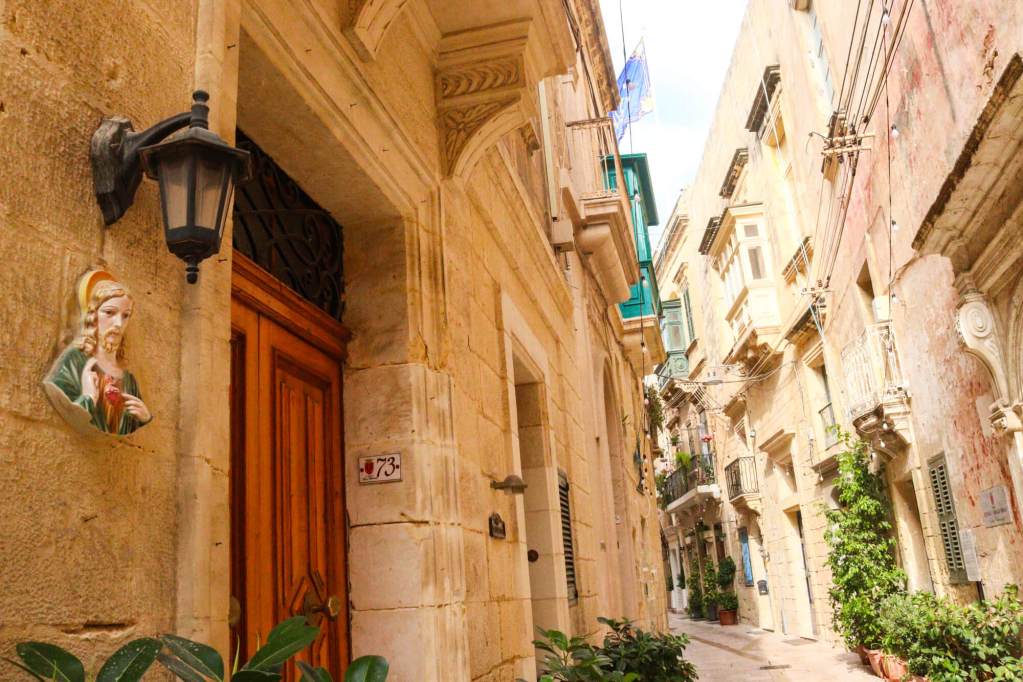
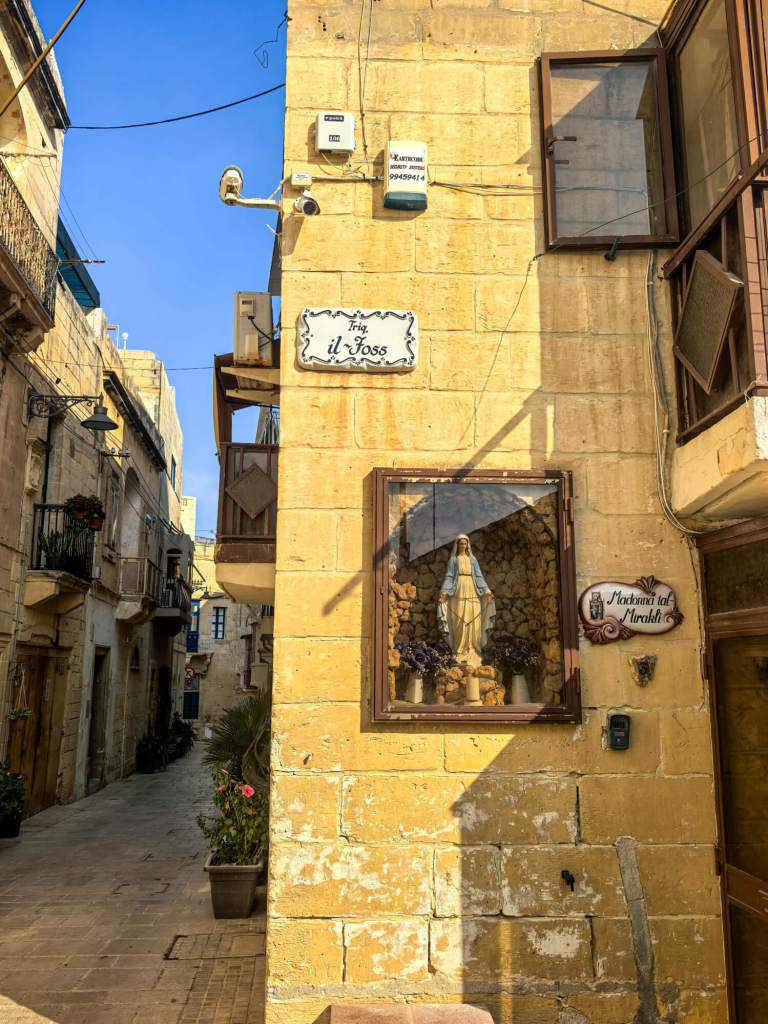
- Hidden details: As you wander the streets, keep an eye out for the traditional Maltese balconies, small shrines tucked into wall niches, and hidden courtyards. It’s in these small details that Birgu reveals its most authentic face.
- Birgu Ditch Gardens: For a quick break from the stone walls, head down to the Birgu Ditch Gardens. These gardens are built into the former defensive moats. Today, it’s a peaceful, green walking space at the foot of the fortifications – a perfect example of how the city cleverly blends its history with modern public spaces.
Isla (Senglea) – the Best Viewpoint in the Three Cities
Isla, also known as Senglea, is the smallest and most seaward of the Three Cities. It stretches along a narrow peninsula almost completely surrounded by water, so even a simple walk through its streets comes with a real sense of the harbour and the open horizon.
Although its history is closely tied to the Knights and the Great Siege — which is where its nickname Città Invicta (the Invincible City) comes from — today Senglea is loved mostly for its peaceful atmosphere, local feel, and some of the best views in Malta. It is the kind of place where it is very easy to slow down and feel as if time moves a little more gently.
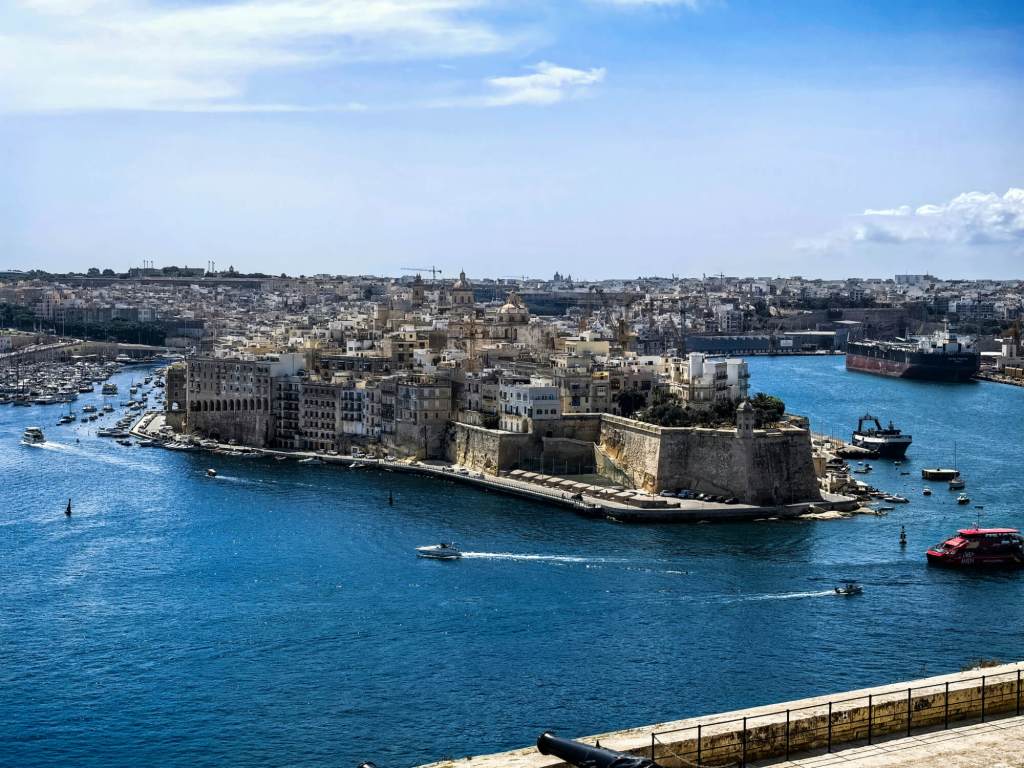
The main highlights of Isla are its massive fortifications, narrow steep streets decorated with colourful il-gallarija balconies, and the panoramic views of the Grand Harbour, which are best seen from Gardjola Gardens.
What to see in Isla (Senglea)?
Gardjola Gardens
Right at the tip of the peninsula lies a small green oasis: Gardjola Gardens. The gardens were created in what was once a highly strategic spot — on top of the city’s main bastion, built by the Knights of St John.
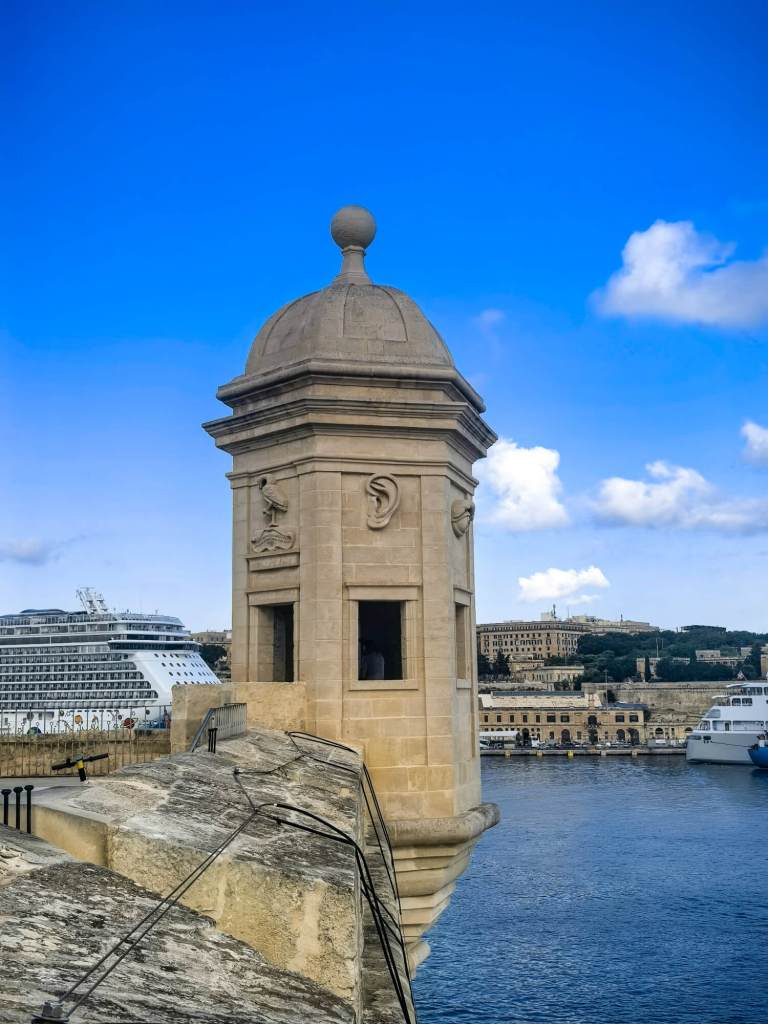
A reminder of the gardens’ defensive past is the 16th-century hexagonal watchtower known as Il-Gardjola. It is worth taking a closer look, because its decorations are quite unusual. On the side walls, you can spot reliefs of an eye and an ear — symbols of the qualities every good guard should have.
Above the entrance, there is also a crane, another symbol of watchfulness and vigilance. According to an old belief, the bird stood on one leg while holding a stone in the other; if it fell asleep, the stone would drop and wake it up.
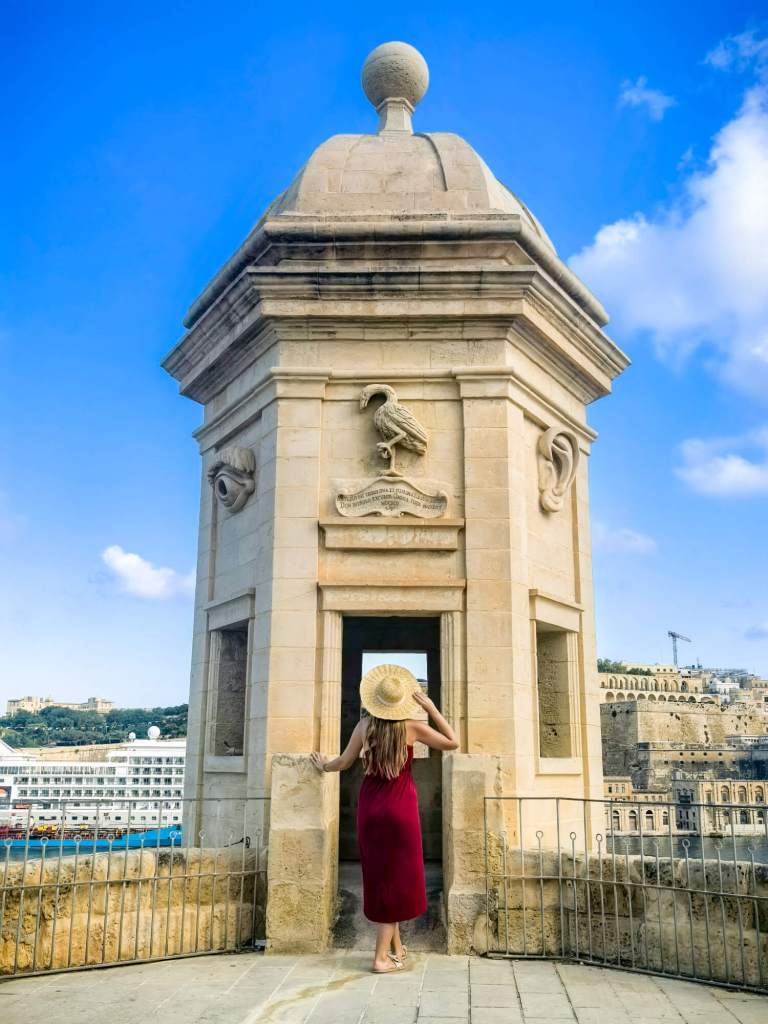
🧐 Fun fact: The crane as a symbol of watchfulness
In ancient times, the crane was a well-known symbol of alertness, mentioned by writers like Pliny the Elder. In Malta, this motif appears in several forts to remind people of the constant threat from enemies, especially after the dramatic events of 1565.
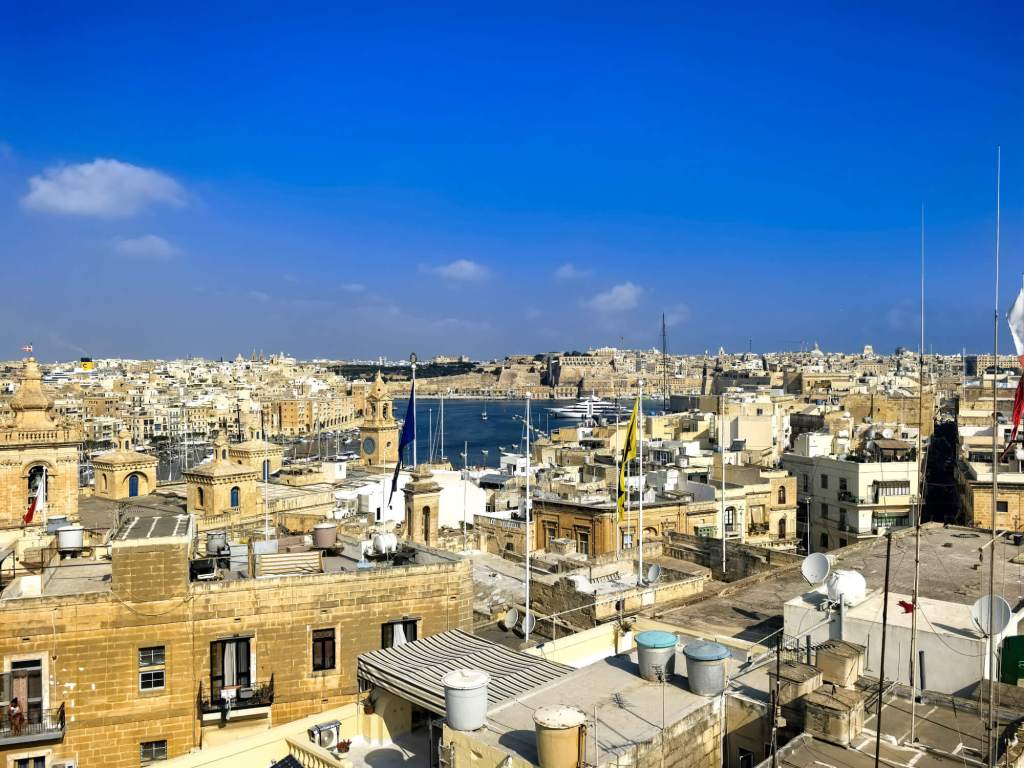
Gardjola Gardens are also famous for their incredible views. From here, Valletta is almost within arm’s reach — you can perfectly see the massive scale of its walls and bastions. You can also spot Birgu with Fort St. Angelo towering over it, and the vast waters of the Grand Harbour, one of the most important ports in the Mediterranean.
This is the perfect place to take a break in the shade after exploring Birgu. Bring some water and your camera, because the views of Valletta are absolutely stunning — especially at sunset.
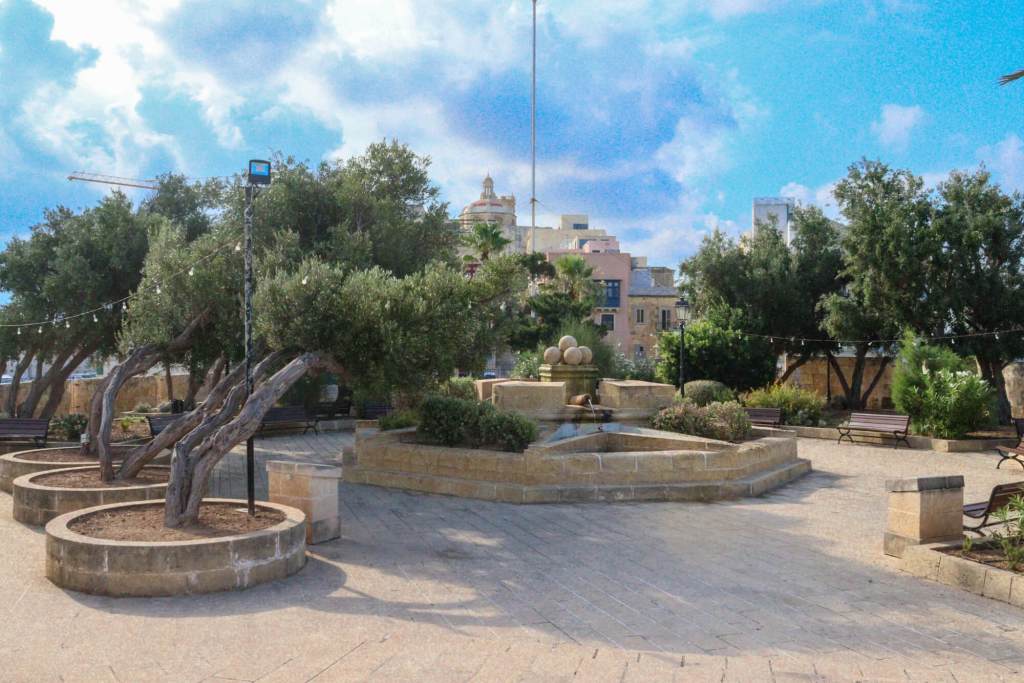
The Fortifications of Senglea: Bastions Guarding the Grand Harbour
From the very beginning, Isla was designed to be a fortress. Its narrow peninsula, jutting deep into the Grand Harbour, was strategically vital — whoever controlled Senglea controlled the entrance to the port.

When the Knights arrived in Malta, they immediately saw its potential. In the 16th century, they began building massive defensive walls to protect the city from Ottoman attacks. The key part of this system was Fort St. Michael, built at the tip of the peninsula. Some of the most dramatic moments of the Great Siege of 1565 took place right here. It’s thanks to these very walls that Isla earned its nickname: the unconquered “Città Invicta”.
Senglea’s fortifications may not be as monumental as those in Valletta, but they have a unique charm. The line of the walls almost seems to blend into the water, and walking along the bastions feels like balancing between the town and the sea. The thick walls and stone artillery positions are a reminder that this small town was once the front line of defence for Christian Europe.

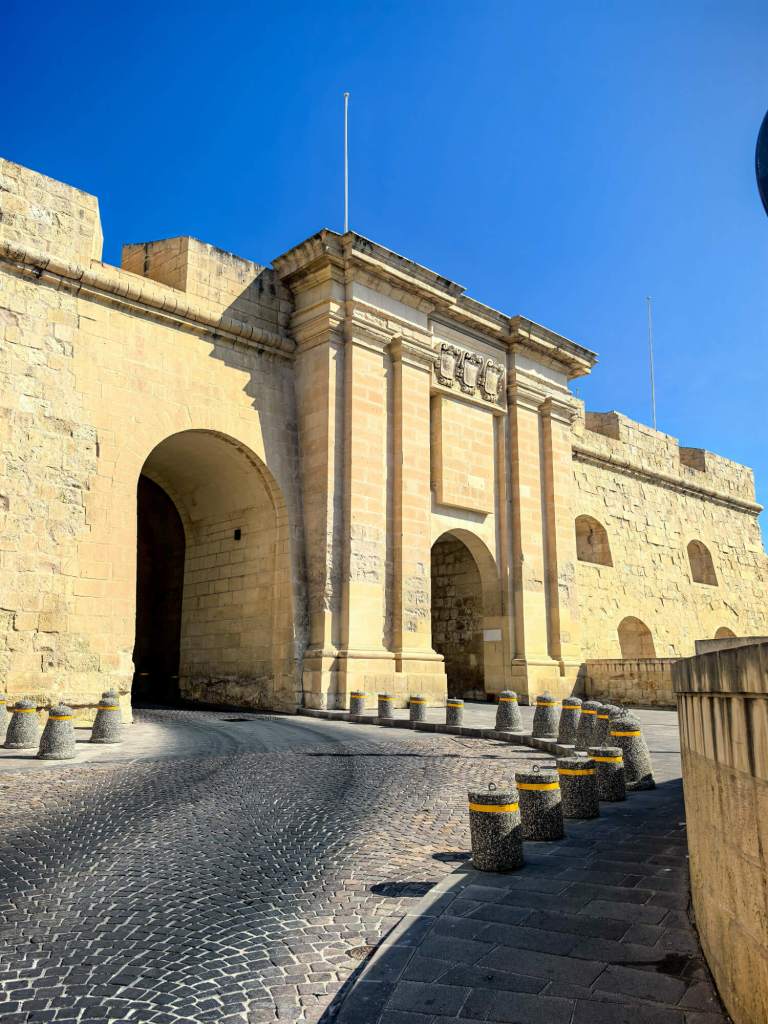
Today, these old defences offer one of the most picturesque walking routes in Malta — especially at sunset, when the stone takes on a warm, golden glow and the harbour slowly goes quiet.
The Historic Heart of Senglea
The heart of Isla is its quiet, compact centre, where life has revolved around the main church for centuries: the Basilica of the Nativity of Mary (also known as Our Lady of Victories). The name is no accident — the church was built to give thanks for the Christian victory over the Ottoman Empire during the Great Siege of 1565.
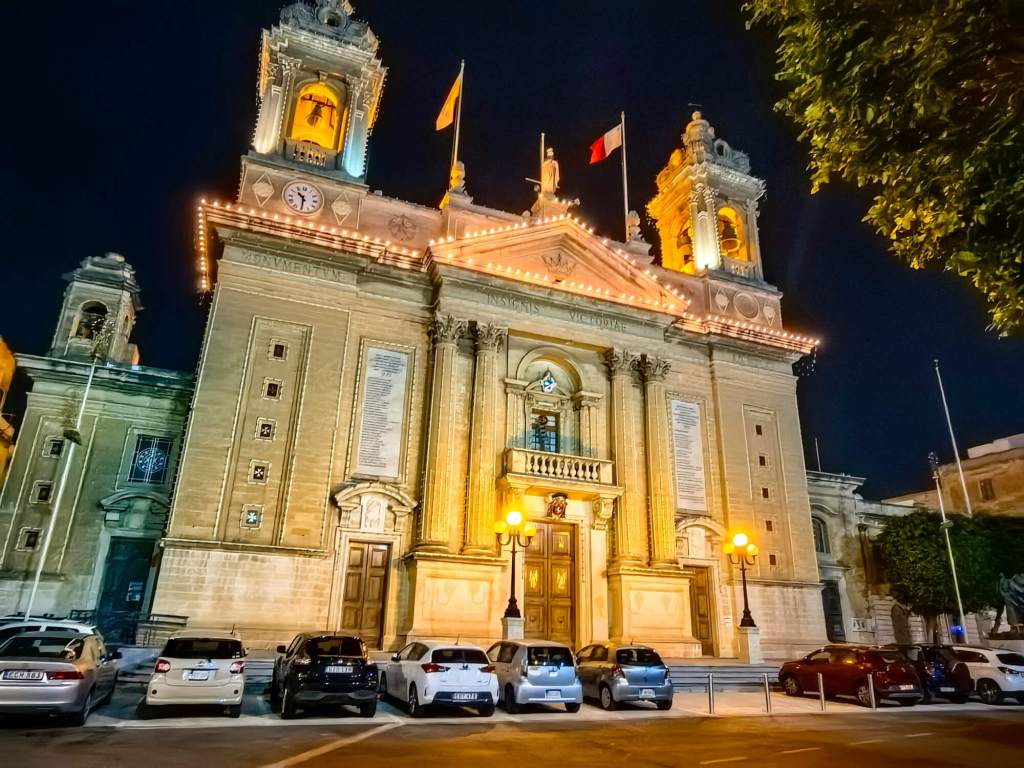
Inside, you’ll find a deeply revered statue of the Virgin Mary and Child, known as Il-Bambina (“The Baby Girl”). The locals believe the statue has protected the city through many hardships, including the 19th-century cholera epidemic and the heavy bombings of WWII.
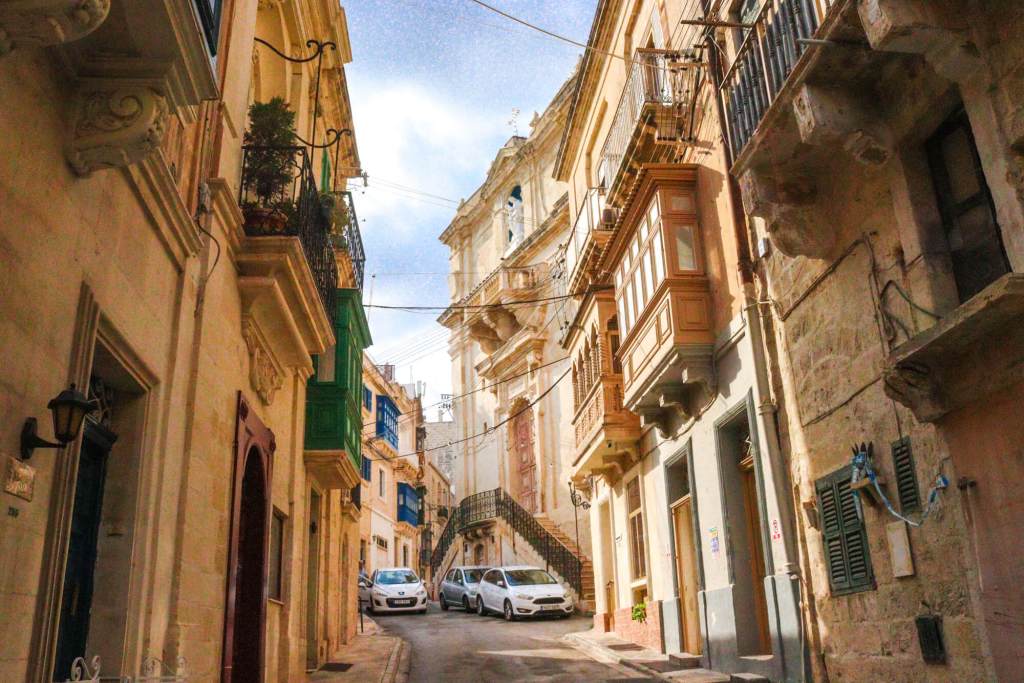
Leading away from the basilica is Victory Street (Triq il-Vitorja), the city’s main thoroughfare. This is the best place to spot Malta’s iconic colourful wooden balconies (il-gallarija), tiny local shops, and doors painted in shades of blue, green, and red. A stroll down this street lets you experience the local, everyday side of Senglea — with no rush and no crowds.
Don’t be afraid to duck into the narrow side alleys! Senglea is small but full of hidden gems: niches with statues of saints, old street signs, and stone steps leading down toward the water. This city is best discovered slowly, by letting yourself get a little lost in its winding streets.
💡Tip: When entering Maltese churches, remember to cover your shoulders and knees. This is usually checked at the door, but most churches provide wraps or shawls you can borrow.
Isla’s Waterfront
A stroll along Senglea’s waterfront is a fantastic way to see the town from a different perspective — right from the water’s edge. You’ll see traditional boats and small yachts bobbing in the water, and you can smell the salt in the air and hear the gentle clinking of masts in the breeze. From here, you get a perfect panoramic view of the Grand Harbour, with the shores of Birgu and Valletta clearly visible across the water. It’s a wonderful spot to relax and soak up the nautical vibe.

As you walk past the buildings along the shore, look out for a small street shrine — the Madonna Niche. This humble niche is a lovely example of the Maltese tradition of placing religious statues in public spaces. Shrines like this were meant to protect locals and sailors alike, acting as a reminder that while the sea gives life, it can also be unpredictable.
The waterfront in Isla is a place where nobody is in a rush. You can grab a seat on a bench, watch the harbour life go by, and feel the rhythm of a town that has been in a constant conversation with the sea for centuries.


Bormla (Cospicua) – The Largest of the Three Cities
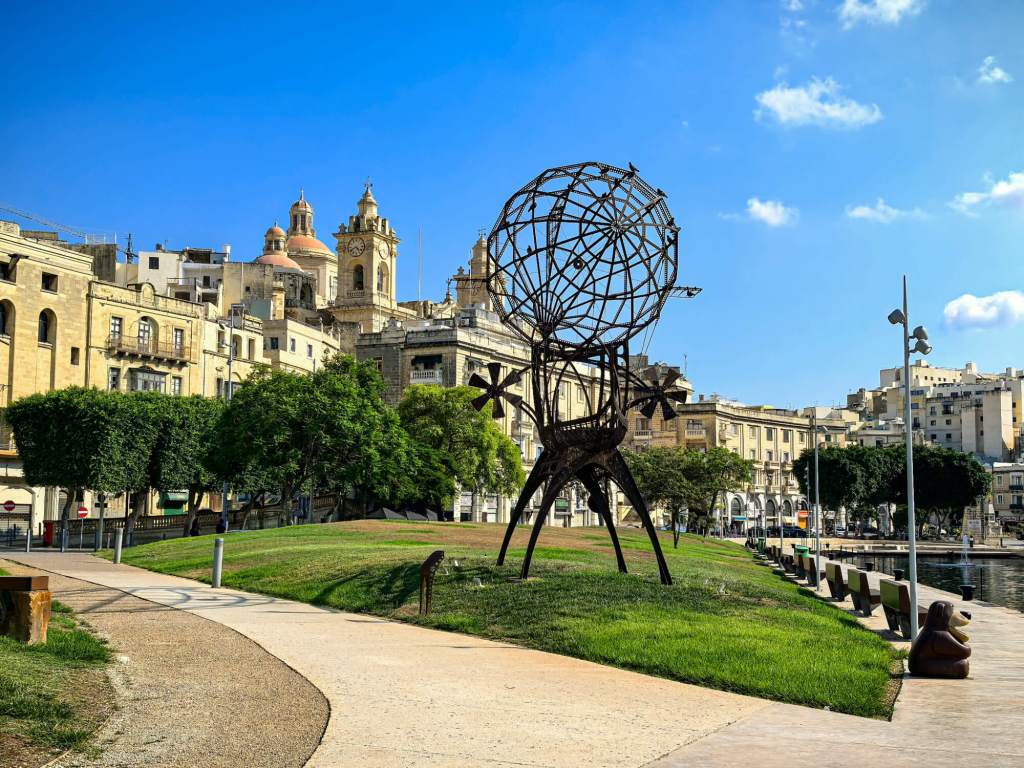
Bormla, also known as Cospicua, is the largest of the Three Cities, but it often sits in the shadow of its more photogenic neighbour Birgu and the intimate charm of Isla. Which is a shame, really — because this is where you can truly see how closely Malta’s history is tied to the sea and its shipbuilding heritage.
The city truly flourished during the 17th and 18th centuries when the Knights of St John began expanding the harbour facilities and the defensive system around the Grand Harbour. It was during this time that the massive fortifications known as the Cottonera Lines were built. These were designed to protect not only Cospicua itself but the entire dockyard area of the Three Cities. Bormla became a vital hub for the Order, serving as a workplace for the craftsmen, sailors, and shipbuilders who maintained the Knights’ fleet.
The city stretches along Dockyard Creek and, for centuries, served as a key naval and military base. With its massive lines of fortifications, wide waterfronts, and less touristy feel, Bormla can seem a bit more raw — but also more authentic. It’s a great place to catch a glimpse of everyday local life and to see that the Three Cities aren’t just a collection of monuments, but a living, breathing dockside community.
What to See in Bormla (Cospicua)?
The Church of the Immaculate Conception
The spiritual heart of the town is the Collegiate Parish Church of the Immaculate Conception, an imposing Baroque building that towers over the Bormla skyline. The church sits atop L-Għolja tal-Ġonna (the “Hill of Gardens”), offering a great view of Dockyard Creek. It was built in the 18th century on the site of an even older chapel.
From the outside, you can’t miss the monumental facade and its two bell towers, designed by the famous Maltese architect Lorenzo Gafà. Inside, the church is just as impressive, with rich Baroque altars and beautiful ceiling paintings by Giuseppe Calì.
Miraculously, this was one of the few churches in the Three Cities to survive the heavy bombings of World War II. Because of this, you can still admire its original interior and numerous historical artworks today.

The Santa Margherita and Cottonera Lines – Malta’s Massive Fortifications
Bormla’s “double fortifications” are among the most impressive defensive systems in Malta. The city is surrounded by majestic walls and monumental gates that form two distinct layers of protection: the Santa Margherita Lines (the inner ring) and the Cottonera Lines (the outer ring). Together, they stretch for over 4 km around the Three Cities.

These bastions, ditches, and gates — such as the stunning Baroque St Helen’s Gate, the town’s main entrance — were built to protect not just Bormla, but the entire Grand Harbour area from inland attacks. It was because of these massive structures that Grand Master Zondadari gave the city the title Città Cospicua back in 1722, which translates to the “Impressive” or “Conspicuous” City.
During the British era, some parts of the walls were taken down to make room for the growing shipyard industry. Despite this, a huge part of the fortifications still stands today, telling the story of Malta’s turbulent past.
Dockyard Creek Waterfront
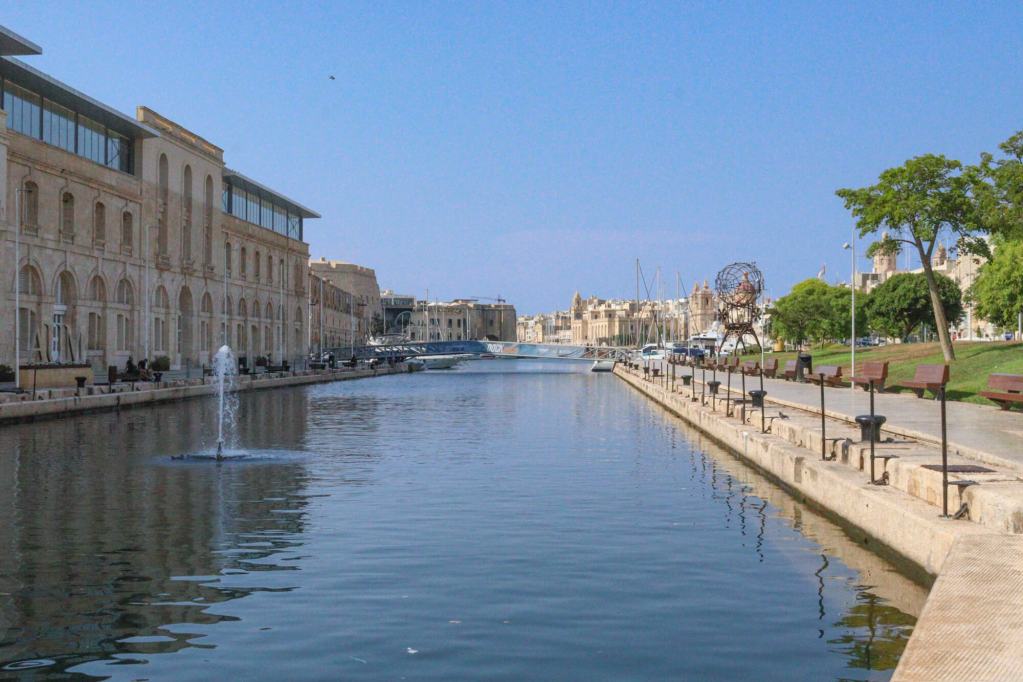
The waterfront at Dockyard Creek was once the bustling heart of Bormla’s port. For centuries, this was where the shipyards and workshops operated, serving the fleet of the Knights and, later, the British Royal Navy.
Today, it has been transformed into a much more peaceful promenade. It’s a lovely place to walk and admire the views of the massive fortifications that surround the harbour. It is also the perfect spot to see just how much this town was — and in many ways still is — defined by the sea and its shipbuilding roots.
🧐 Fun Fact: During the Second World War, Bormla was one of the most heavily bombed areas in Malta. Because it was so close to the vital shipyards and port infrastructure, it became a primary target for Axis air raids. Many historic buildings were either destroyed or badly damaged, which is why much of the architecture you see in Bormla today is the result of post-war reconstruction.
How to Plan Your Visit to the Three Cities: A Practical Guide
How to Get to the Three Cities?
🚤 The Ferry from Valletta
This is by far the most scenic way to get there and a great alternative to the bus. You have two choices: a traditional small boat or the larger ferry.
Traditional dgħajsa boats: From the waterfront at the foot of the Upper Barrakka Gardens (you can get down there by the lift or the stairs), you’ll find traditional wooden boats called dgħajsa. They take passengers directly across to Birgu. The trip only takes a few minutes, but the view is absolutely spectacular — the massive fortifications rising straight out of the water are a sight to behold. A trip usually costs around €2-3 per person, and the boat departs once a small group has gathered.
Valletta Ferry Services: Alternatively, you can take the regular ferry that runs between Valletta and Bormla (Cospicua). It’s a bit larger and feels more like “public transport” than the dgħajsa, but it still offers great views and runs on a fixed schedule. The ferry leaves every 30 minutes.
- Price: €3.00 single / €4.80 return.
- Night service (from 19:30): €3.50 single / €5.20 return.
- Tip: You can buy tickets at the kiosk on the quay. Check the official Valletta Ferry Services website for the latest schedules. and updated fares.
🚌 By Bus
Reaching the Three Cities from Valletta by bus is very easy. Look for lines 1, 2, 3, or 4 (note: line 2 does not stop in Bormla). This is the cheapest option, though it can get quite crowded during the high season.
- Fare: €2.00 in winter / €2.50 in summer.
- Tickets are valid for 2 hours and allow for transfers. You can pay the driver directly with a card or cash (it’s best to have the exact change).
- For detailed schedules, visit the Malta Public Transport website.
💡Pro Tip: If you plan on using public transport frequently, consider getting the Explore card. It costs €27 and gives you 7 days of unlimited travel on all day and night bus routes in Malta.
🚗 By Car
If you prefer independence and flexibility, renting a car is a great way to see Malta. While you can easily drive to the Three Cities, parking inside the historic city walls can be a nightmare. We highly recommend parking just outside the fortifications.
Here are the parking locations we used:
- 📍 Isla (Senglea)
- 📍 Birgu (Vittoriosa)
- 📍 Bormla (Cospicua) – Triq l-Inkurunazzjoni
📱 Bolt
You’ll notice very quickly that Bolt is a hugely popular way to get around Malta. You can easily order a car through the app — it’s fast and convenient, though obviously more expensive than the bus or ferry.

⏳ How Much Time Should You Spend in the Three Cities?
To see the Three Cities properly, you should set aside at least 3 to 4 hours. This will allow you to see the main highlights during a fairly brisk walk. However, this is more of a “quick tour” option.
If you plan on visiting the museums, stopping for a coffee with a view of the Grand Harbour, or simply want to soak up the coastal atmosphere, we recommend dedicating at least half a day — or better yet, a full day.
The Three Cities may seem compact, but they are incredibly detailed and full of surprises.


👣 How to Get Around the Three Cities
The best way to explore the Three Cities is definitely on foot.
Birgu, Isla, and Bormla are located right next to each other, and you can easily walk between them. Moving from one town to the next takes anywhere from five to fifteen minutes.
Walking through the narrow streets and along the waterfront is the only way to truly notice the differences between them and feel the unique character of each one.

If you’re heading to the Three Cities from Valletta, here is our suggested route:
- Take the boat to Birgu – in our opinion, it’s the most interesting of the three fortified towns.
- Stroll along the waterfront to Bormla.
- Continue your walk to Isla.
- Take the bus back to Valletta from Isla or Bormla.
💡Tip: The Three Cities are also a great base for exploring the rest of Malta. Accommodation prices are usually lower than in Valletta, but you can still get to the capital quickly and cheaply by ferry, bus, or car.
Is It Worth Visiting the Three Cities in Malta?
Birgu, Isla, and Bormla might not be the most “obvious” choice for every visitor to Malta — at least not compared to Valletta. They don’t have one single, world-famous landmark that appears in every single travel brochure. Instead, they offer something far more special: history at every turn, a truly authentic feel, and a peaceful escape from the island’s more crowded hotspots.
Here, the massive fortifications aren’t just monuments; they are a natural part of the landscape. The waterfronts still hum with the rhythm of the harbour, the narrow streets with their colourful balconies are endlessly charming, and the local churches and small shrines remind you of the strong sense of identity held by the people who live here.
When visiting Malta, don’t limit yourself to just the capital and the coastline. If you have the time, make sure to discover this quieter, more genuine side of the island. It’s the best place to feel that Malta is more than just a holiday destination — it’s a seafaring nation with a fascinating history that has shaped every corner of the landscape.
So, which of the Three Cities do you want to visit first? Let us know in the comments! And if you’re looking for more Malta travel inspiration, be sure to check out our post on visiting Gozo in one day.
Happy exploring! 🤠
Frequently Asked Questions – The Three Cities, Malta
Are the Three Cities Worth Visiting?
Absolutely! Birgu (Vittoriosa), Isla (Senglea), and Bormla (Cospicua) offer a completely different vibe compared to nearby Valletta. Instead of the usual tourist crowds, you’ll find peaceful backstreets, historic fortifications, colourful balconies, and stunning views of the Grand Harbour. It’s the perfect place to experience the more authentic, local side of Malta.
Which of the Three Cities Should I Visit?
Each city has its own unique charm. If you’re short on time, we recommend Birgu (Vittoriosa) — it’s home to the main tourist highlights like Fort St. Angelo and the Inquisitor’s Palace. For the best views of the Grand Harbour, head to Isla (Senglea) and the Gardjola Gardens. Bormla (Cospicua) is ideal for those wanting to see a more authentic, less touristy side of Malta and its massive walls. Our advice? See all three, as each of them has a distinct character!
How Much Time Do I Need to See the Three Cities?
You should set aside at least 3 to 4 hours for a brisk walk through the main highlights. However, if you want to explore the museums (like Fort St. Angelo or the Inquisitor’s Palace), enjoy a long lunch by the harbour, and truly soak up the atmosphere, plan for at least half a day — or even a full day.
What’s the Easiest Way to Get to the Three Cities from Valletta?
The most scenic way is definitely by traditional boat or ferry from Valletta to Birgu. It’s a short trip across the Grand Harbour and offers a beautiful perspective of the shoreline. Alternatively, you can take a local bus or a quick ride with Bolt.
Can the Three Cities Be Explored on Foot?
Yes — and it’s by far the best way to do it! Birgu, Isla, and Bormla are right next to each other, and walking between them usually takes just 5 to 15 minutes. Exploring on foot also allows you to discover charming alleys and viewpoints that you’d easily miss from a car window.
Is It a Good Idea to Stay in the Three Cities?
Definitely! It’s a fantastic alternative to staying in Valletta or Sliema, especially if you’re looking for a quieter, more relaxed atmosphere. In the evenings, Birgu and Senglea are much less crowded, and a stroll along the waterfront with views of a lit-up Valletta across the water is truly magical.
Should I Visit the Three Cities on My First Trip to Malta?
If you have even just a few hours to spare, then yes! The Three Cities allow you to see a more authentic side of Malta and help you understand the island’s rich history — from the time of the Knights to the events of the Second World War.

Are you planning to visit Malta? Check out our other posts, too:
Leave a Reply