

This post is also available in: 🇵🇱 PL | 🇵🇹 PT
🌋 KĪLAUEA ACTIVITY STATUS
Current status: 🟠 ERUPTION UNDERWAY – EPISODE 55 – Kīlauea remains in the precursory phase ahead of the main lava fountaining episode.
Last updated: 14 September 2026, 11:00 a.m. HST (GMT-10)
Forecast for the onset of fountaining : No current forecast window but lava fountaining can start any time soon
Over the past day, intermittent spatter bursts from the north vent have built a small cone around the vent. Eruptive activity has slowed significantly since about 6 a.m. HST. No precursory lava flows have occurred since September 12.
Slow summit inflation stalled last night. Although the level of summit inflation remains well above the level at the start of Episode 54, the lack of further inflation will delay the onset of Episode 55 fountaining. The USGS cannot currently say how long the precursory activity may last.
⚠️ It is worth checking the webcams and USGS updates regularly. Activity may change again, and the main fountaining phase could begin without much advance warning.
[ 👉 CHECK THE LIVE WEBCAMS ]
Volcanic eruptions stir up very mixed emotions. On the one hand, they remind us just how powerful and unpredictable nature can be. On the other, they are mesmerising in a way that is hard to compare with anything else. Lava fountains shooting high into the sky, the deep rumble coming from inside the Earth, an orange glow lighting up the night, and that unmistakable smell of sulphur in the air — it is the kind of experience that stays with you for life.
There are not many places in the world where you can watch volcanic activity from relatively close range, legally, and in controlled, safe conditions. Even fewer places have eruptions frequent enough that, with a bit of luck and careful planning, you can time your trip to coincide with actual lava activity.
One of those places is Kīlauea — the youngest and most active volcano on Big Island, Hawaiʻi, and one of the most active volcanoes on Earth. This is where the land is quite literally being created before your eyes, and the landscape changes with every new eruption.
The current situation at Kīlauea is especially unusual. Since December 2024, the volcano has been in an episodic eruption phase, which has continued for more than a year and a half! This event has already made history, breaking records for the number of lava fountains within a single eruptive cycle.
So what does that mean if you want to see it for yourself?
This is not a steady lava flow that you can simply turn up and watch at any time. Instead, the eruption happens in short, extremely intense bursts. For a few hours or days, the volcano produces spectacular lava fountains, and then everything pauses. During that break, the volcano “rests”, inflates again, and builds up pressure for the next dramatic episode.
The key, then, is timing your visit to match an active episode. It really is a lava chase — one that means staying alert and following updates almost hour by hour.
Can you actually see lava with your own eyes? Where are the best places to watch the Kīlauea eruption? How can you check whether the volcano is currently active? Is it safe, and how should you prepare? In this guide, you will find a complete, practical overview of how to witness one of the most extraordinary natural spectacles on our planet.
Kīlauea Volcano at a Glance
📍 Location: Halemaʻumaʻu Crater, Hawaiʻi Volcanoes National Park, Island of Hawaiʻi — also known as Big Island — Hawaii
🌋 Status: Active since December 2024 as an episodic eruption
🗺️How to get there: By car — this gives you the best chance of reaching the viewpoints in time to see lava. Having your own transport is also the only practical way to get close to the crater at night, when the lava is at its most spectacular.
💰 Entrance fee: $35 per private vehicle or $15 per pedestrian/cyclist. The national park ticket is valid for 7 days, and the America the Beautiful Pass is accepted.
🚗 Parking: You’ll find parking areas at Kīlauea Visitor Center, Kīlauea Overlook and Devastation Trailhead. During active eruption episodes, these car parks can fill up very quickly!
⏰ Opening hours: The park is open 24/7.

Before You Go: How to Check If the Volcano Is Active
The current Kīlauea eruption began on 23 December 2024 inside Halemaʻumaʻu Crater, within Hawaiʻi Volcanoes National Park. From the very beginning, it has been an episodic eruption — meaning that periods of spectacular, intense activity are followed by phases of complete quiet. Lava is erupting from two vents: a northern vent and a southern vent.
That is exactly why watching the Kīlauea eruption can feel a bit like playing the lottery. One day, you might witness huge lava fountains shooting into the sky. The next, all you may see is a steaming crater and a dark, solidified crust of lava.
To improve your chances in this volcanic treasure hunt, it helps to understand the cycle Kīlauea is currently following.
How to Read the Volcano: Understanding the Eruption Cycle
The Kīlauea eruption tends to move through several repeating phases:
Lava Fountaining
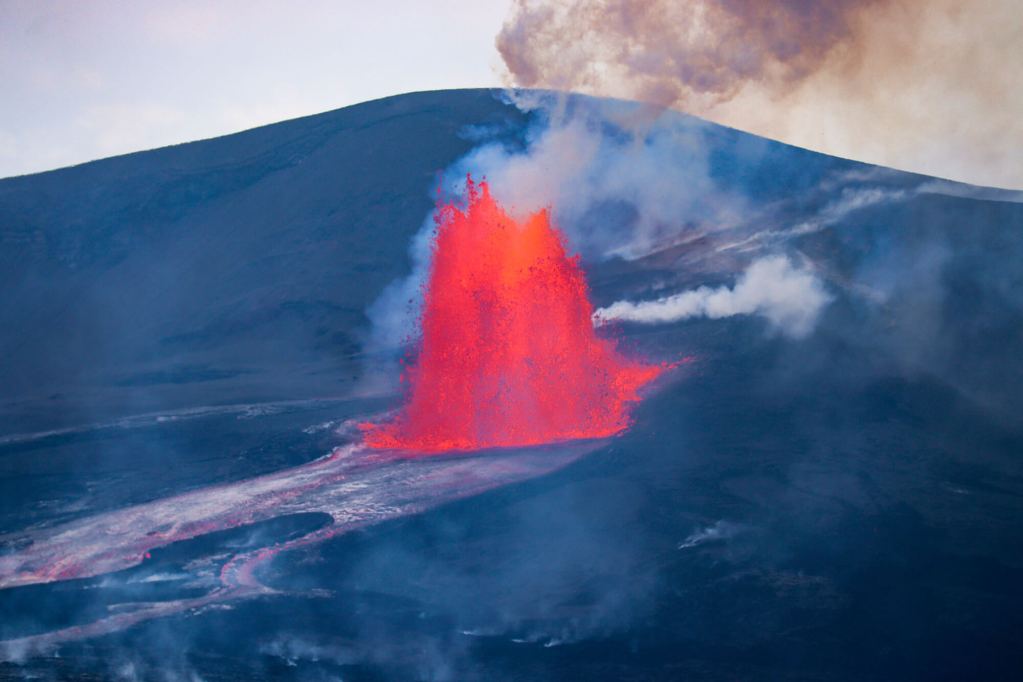
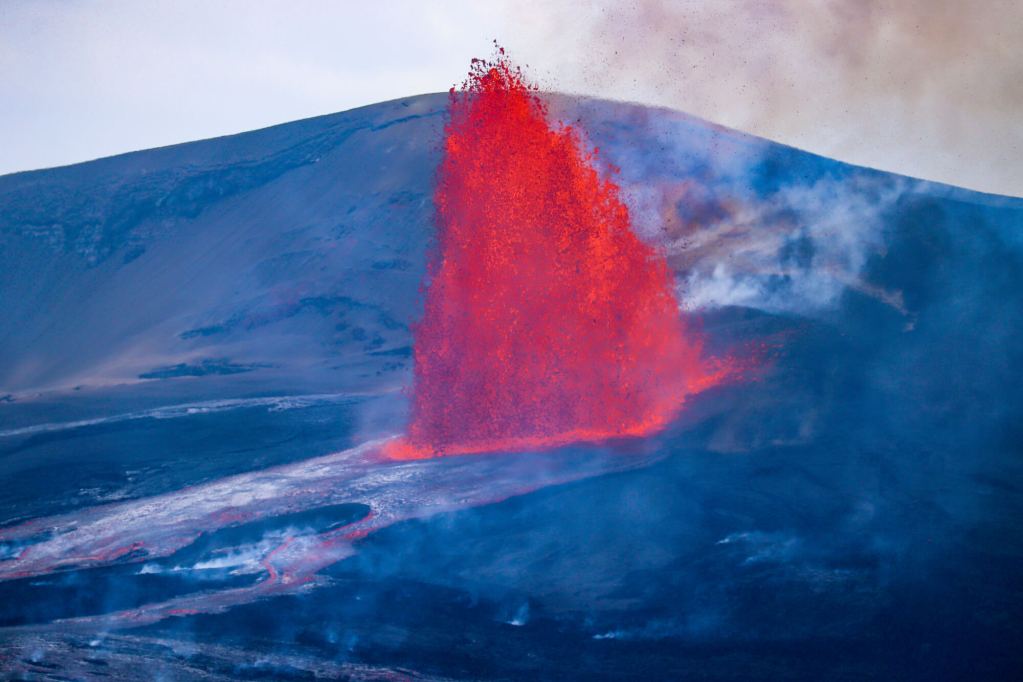
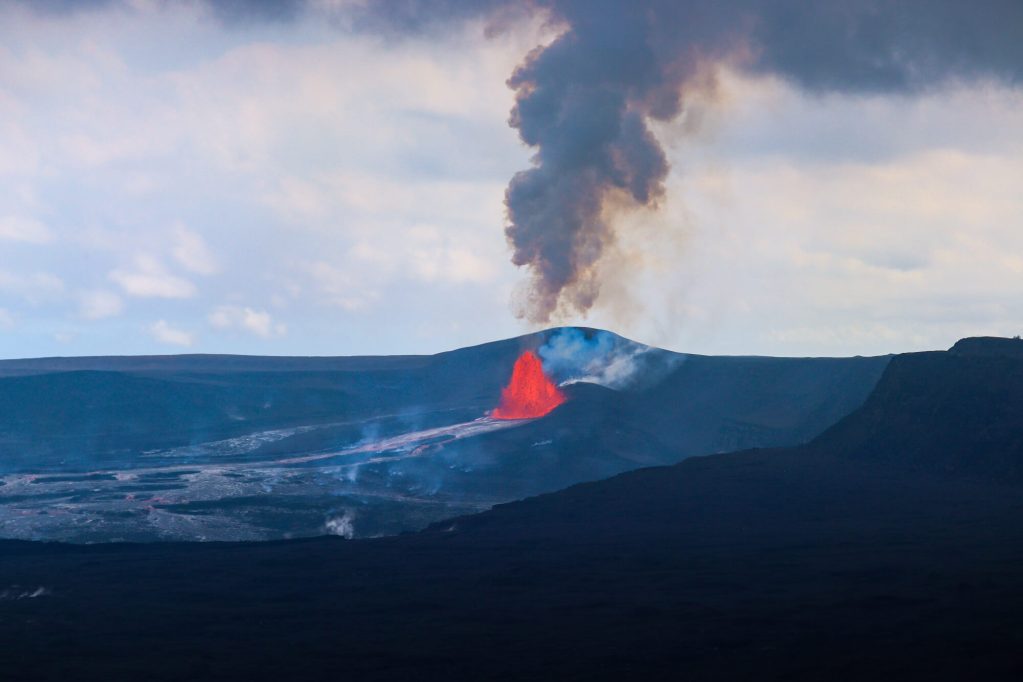
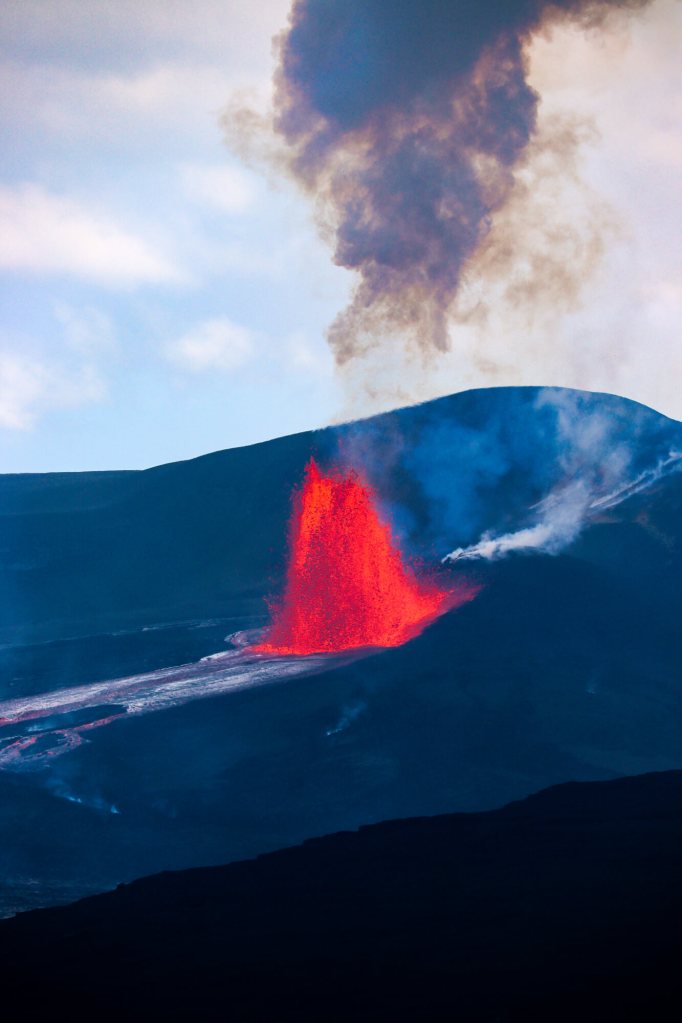
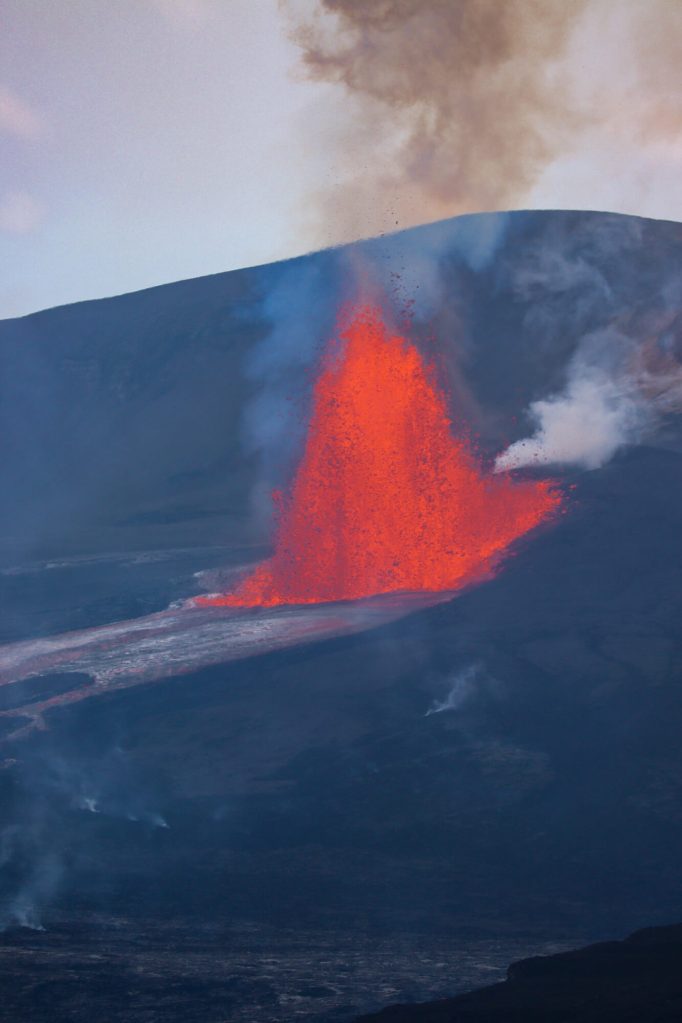
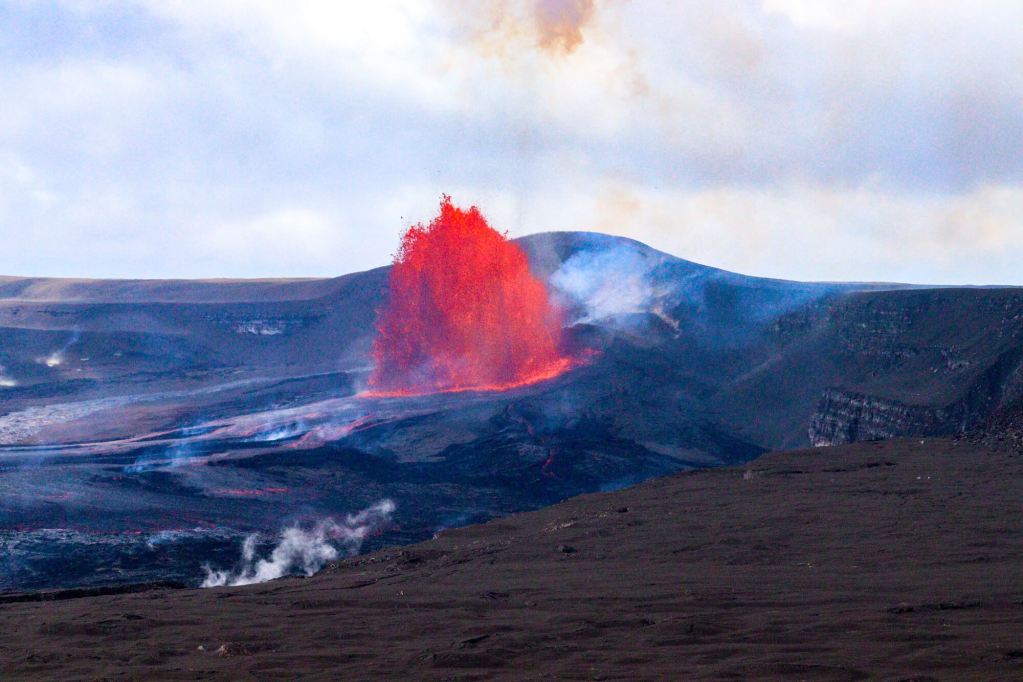
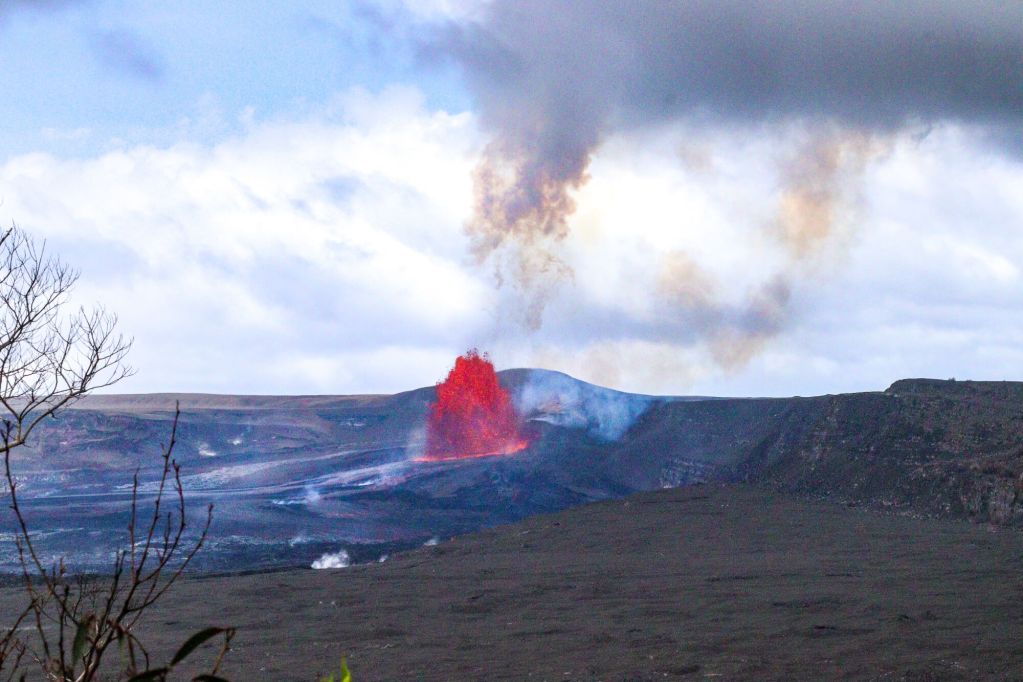
This is the most spectacular stage of the eruption. Lava, forced upwards under enormous pressure, shoots high into the air, creating towering fiery fountains that feed newly formed lava lakes on the crater floor.
During this phase, Halemaʻumaʻu quite literally looks as if it is on fire. At night, the sky above the caldera glows an intense orange, visible from miles away. This is when the most impressive photos and videos are taken.

Pause
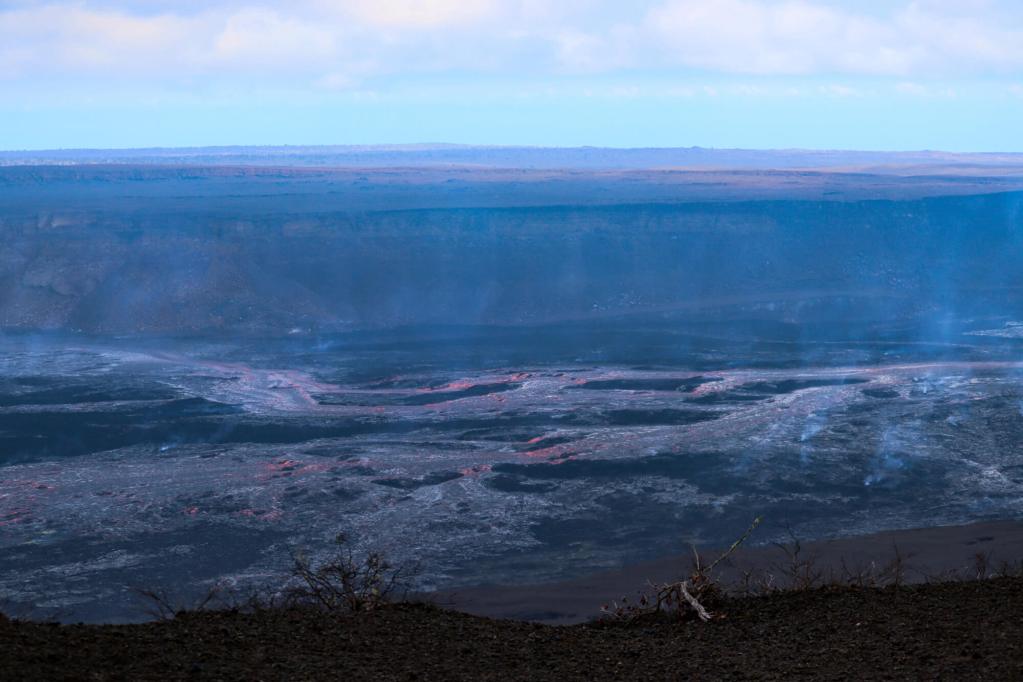
After the intense fountaining phase, the volcano suddenly quietens down. The fountains disappear, the magma level drops, and the surface of the lava lake begins to cool, forming a black basalt crust.
The volcano may still release gases and steam, and at night you might still spot a faint glow coming from cracks in the crust, but the dramatic fountain show is temporarily on hold.
Re-inflation
This is the volcano’s “recharging” phase before the next eruptive episode. Magma begins to flow back into the reservoir beneath the crater, causing the volcano to quite literally swell.
Although there may be nothing obvious to see on the surface, scientists monitor this process using tiltmeters. When these instruments record a sharp increase in pressure and ground uplift, it often means that the next spectacular episode could begin within the next few hours or days.
💡Tip: Lava fountains and lava lakes look most impressive after dark. The blackness of the night intensifies the glow of the magma, while the sky above the crater shimmers in deep shades of red and orange. If Kīlauea’s active phase happens to fall during the night, make sure you head to the crater then — it is absolutely worth it!
How Often Does Lava Erupt from Kīlauea?
This is the question every traveller asks. The short answer is: Kīlauea is almost constantly active, but lava is not always visible on the surface in a dramatic way.
The current eruption, which began on 23 December 2024 in the Halemaʻumaʻu Crater area, has a unique episodic pattern. Instead of one steady, continuous lava flow, the activity comes in short, powerful episodes, separated by quieter pauses. A single episode can last anywhere from a few hours to several days, followed by a break.
🧐 Interesting fact: If you want to learn more about the current eruption, the United States Geological Survey (USGS) website has plenty of scientific updates, maps and monitoring data.
In 2026, Kīlauea is still pulsing in a rhythm that feels a bit like a giant geyser — or a huge cauldron regularly releasing built-up pressure. The eruption that began in December 2024 is now well into its second year of activity and has already made history, breaking the record for the number of lava-fountaining episodes within a single eruptive cycle of this volcano!
What Does the Current Activity Pattern Look Like?
Eruptive Episodes: Lava Fountains
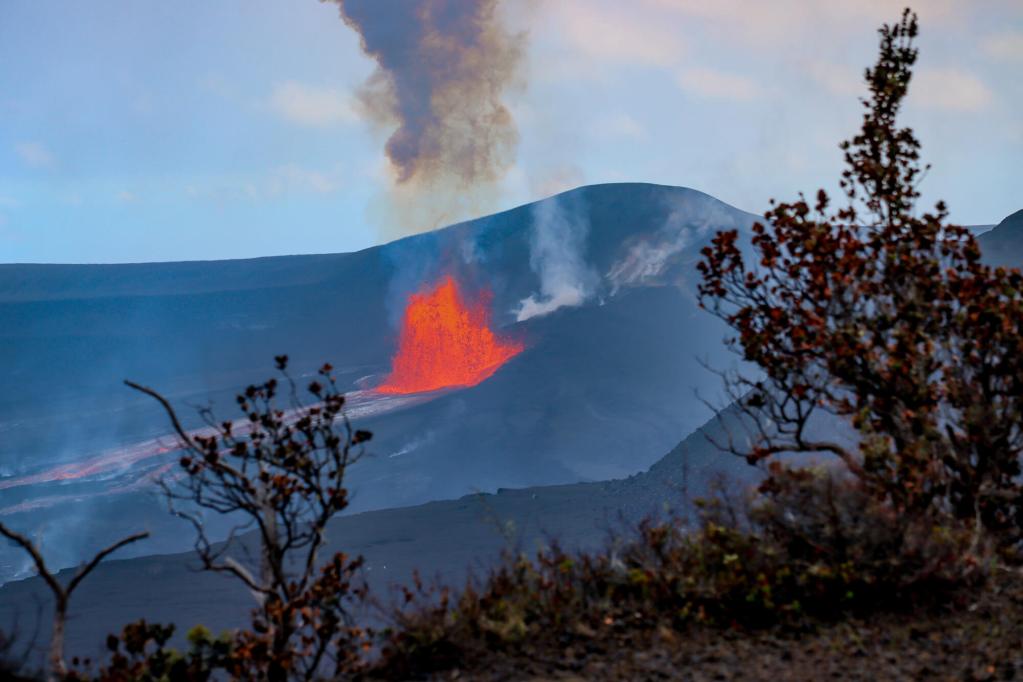
This is the most spectacular phase. Lava bursts from vents inside Halemaʻumaʻu Crater, creating giant fountains and feeding lakes of liquid fire.
- Duration: In 2026, individual episodes are usually short but extremely intense, typically lasting around 8 to 10 hours.
- Scale: The most dramatic episodes can reach truly extreme proportions. Some lava fountains have soared to heights of 300–540 metres, making this one of the most spectacular displays of Kīlauea’s power in decades. The record was set on 10 March 2026 during Episode 43, when lava fountains reached an incredible 540 metres!
Breaks: Pauses Between Episodes
Once the pressure drops, the volcano suddenly quietens down. In 2026, pauses between episodes have usually lasted from a few days to 2–3 weeks — and sometimes even around a month.
This is the moment when the volcano “takes a breath”, while magma gathers again in the reservoir beneath the crater, ready to burst back to the surface.
Interestingly, Kīlauea itself has been active for much of its modern history. Since the 19th century, dozens of eruptions have been recorded, and between 1983 and 2018 it erupted almost continuously for 35 years! There have also been periods in the volcano’s history when a lava lake churned away for years at a time, such as between 2008 and 2018!
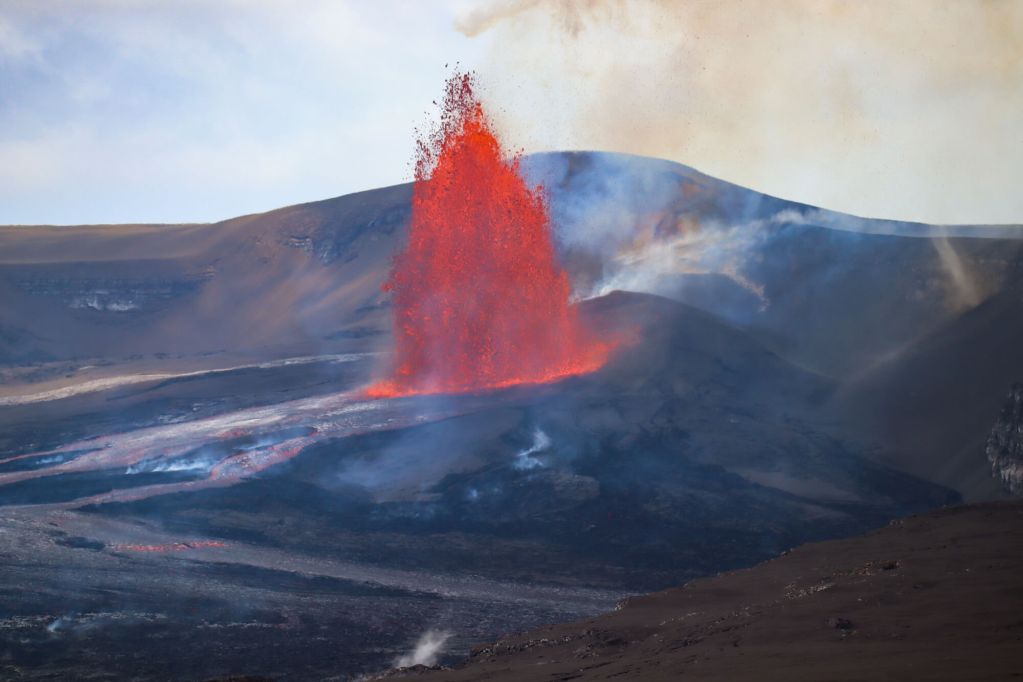
🧐 Interesting fact: The current eruptive cycle is unusual even by Kīlauea’s standards. What makes it stand out is the combination of very high lava fountains and the regular repetition of successive episodes. In 2025, some fountains rose to more than 300 metres — something that had not been seen here for several decades.
🧐 Interesting fact: Every eruption in this cycle has its own episode number. We were lucky enough to witness Episode 46. The current Kīlauea eruption, ongoing since December 2024, is breaking records in terms of the number of episodes. Following this numbering really helps you grasp just how extraordinary this moment in the volcano’s history is!
How to Monitor Kīlauea’s Activity: Step-by-Step Guide
When it comes to watching the Kīlauea eruption, one thing matters more than anything else: conditions can change literally from hour to hour. That is why, before heading to the national park, it is worth checking official updates and live webcams regularly.
During your stay in Hawaii, you basically need to become an amateur volcanologist — and these are the tools that will help you do it.
1. The Most Important Website: USGS Hawaiian Volcano Observatory — the Official Source
The most important and reliable source of information is the USGS website, managed by the Hawaiian Volcano Observatory (HVO). This is where scientists publish all official updates on daily volcanic activity, alerts, ground deformation and forecasts for upcoming eruptive episodes.
On the main page, just below the map, you will find the status bar — a coloured strip that will become your oracle. During the current phase, ongoing since December 2024, there are two key messages to look out for:
- 🟢 ACTIVE: This is your signal to go — immediately! It means lava fountains are erupting and the crater is filling with fresh magma. If you are on the island, drop everything and head towards the national park!
- 🟡 BETWEEN EPISODES: The volcano is currently resting. Visible lava may have cooled and formed a black crust, but underneath, the energy is still building. This is the time to stay alert — the next episode could begin soon.

USGS Updates
We recommend keeping an eye on the short volcano update section, known as observatory messages. This is a brief text log where scientists regularly describe what Kīlauea is doing. It is also where you will spot the first signs that the next eruptive episode may be just around the corner.
Once you learn to recognise a few key phrases, you may know that an eruption is coming before almost everyone else. 🫢
How to Read USGS Updates: A Mini Volcano Glossary
So, what should you pay special attention to? Here are a few examples, with plain-English explanations.
Preparation Phase: “The Volcano Is Taking a Breath”
Update: “The summit of Kīlauea continues to inflate slowly.”
- What does it mean? The summit of the volcano is slowly “swelling”. Magma is building up beneath the surface and pushing the ground upwards.
- What should you do? Stay ready. This is a sign that pressure is increasing, but the actual eruption may still be a few days away.
Forecast: “The Time Window”
Update: “The forecast window for episode 46 lava fountaining is May 4-7 based on current rates of summit inflation.”
- What does it mean? Based on how quickly the ground is swelling, scientists are estimating when the pressure may peak and lava fountaining could begin.
- What should you do? This is the key piece of information for planning your logistics. If your stay on the island overlaps with these dates, you are seriously lucky!
The Warm-Up: “First Overflows”
Update: “Episode precursory overflows began” or “North vent began overflowing.”
- What does it mean? These are the teasers before the main event. Lava is starting to slowly spill over the edges of the vent, but the high fountains have not begun yet.
- What should you do? If you are already on the island, this is the perfect moment to check your gear, charge your batteries and plan your route to the park. It is a very clear warning that the main show may be close.
Zero Hour: “It’s Started!”
Update: “Episode 46 of the ongoing Halemaʻumaʻu eruption began at 08:17 AM on May 5.
- What does it mean? The episode has officially begun! Lava is shooting into the air and forming spectacular fountains.
- What should you do? Head to the park! The peak of the lava fountains can happen very quickly, so make sure you do not miss the show. The activity may be over within a few hours. The best viewing conditions for glowing lava are usually just after sunset or before dawn, depending on the timing of the episode.
The End of the Show: “Curtain Down”
Update: “Episode 46 fountaining ended at 5:22 PM on May 5.”
- What does it mean? The lava fountains have stopped. The active outflow has ended, and the lava lake is beginning to cool, harden and darken.
- What should you do? If you did not make it in time, do not despair. For the next few hours, you may still be able to see a red glow in the cracks, but the most dynamic and spectacular part of the eruption is already over.
Now it is time to go back to step one and wait for news of the next round of “inflation”.

Important: Official updates always come with a slight delay, as they need to be checked and published first. So when the next episode seems only a few hours away, the live webcams are the best source for what is happening right now.
2. Become a Chart Expert: Tiltmeters
This is the “secret weapon” of the most dedicated volcano watchers.
On the USGS website, under Monitoring Data, look for the chart called Deformation (Tilt). It lets you peek beneath the volcano’s surface:
- The chart goes up – Inflation: The volcano is “swelling” because magma is gathering inside. This is a strong sign that pressure is building and another eruptive episode may be approaching.
- The chart drops sharply – Deflation: This often means that magma has just started making its way to the surface. The pressure inside the volcano drops because the lava has found a way out.

3. Live Webcams: Weather and Visibility in Real Time
Before you leave your hotel — especially if you are coming from somewhere like Kona, around two hours away — always check the USGS/NPS webcams. You will find them on the official website, and often as live streams on YouTube as well.
In just a few seconds, they can help you check:
- whether lava is currently visible and whether fountains are forming,
- what the weather is like right by the crater (whether there is thick fog, heavy rain or poor visibility),
- how much volcanic smoke and gas, known as vog, is hanging over the caldera.
Why is this so important? Kīlauea’s summit is often covered in cloud, even when the coast is enjoying full sunshine. The webcams can save you from disappointment — and from driving all the way there only to hit a wall of white mist where you cannot see a thing.
💡Tip: You can sometimes spot the first slow lava overflows on the webcams. But be careful: this is not necessarily your signal to race to the crater just yet! It is, however, a sign to go into high-alert mode. It may still take a day or two, but once you see the lava becoming more active, bubbling and starting to spurt, the official start of the show is probably very close!

🤠 From Our Experience: Eruptive episodes usually last only a few hours and can begin at any time of day… or night. If lava is already overflowing, it is worth checking the updates several times an hour. We were so determined that, during our stay on Big Island, once the first overflows appeared, we set an alarm for every hour through the night just to check the volcano’s status! The irony? The official update announcing the start of the episode appeared in the morning, at the exact moment we were packing towels to go to the beach. The beach had to wait! 🙊
4. Understand the Alert Colours
USGS uses two different alert systems:
- Volcano Alert Level: Advisory / Watch / Warning: This refers to hazards on the ground. A Watch status is standard during an ongoing episodic eruption and means that volcanic activity is elevated.
- Aviation Colour Code: Green / Yellow / Orange / Red: Although the name sounds like it is mainly for aviation, for visitors on the ground the colours to watch are Orange and Red. These indicate active eruptive activity, often with significant gas and ash emissions.
5. Phone Alerts: VNS for Serious Lava Chasers
If you want to be among the first to know, sign up for the Volcano Notification Service, or VNS. It is a free email service that sends updates about any change in the volcano’s status straight to your inbox.
Set a special notification sound for these emails — Kīlauea eruptions do not wait for anyone!
What will you receive?
- daily volcano updates,
- alerts about status changes, for example from Between episodes to Active,
- information about the start of a new eruptive episode,
- safety messages.

Where Is the Best Place to Watch the Eruption? Top Viewpoints
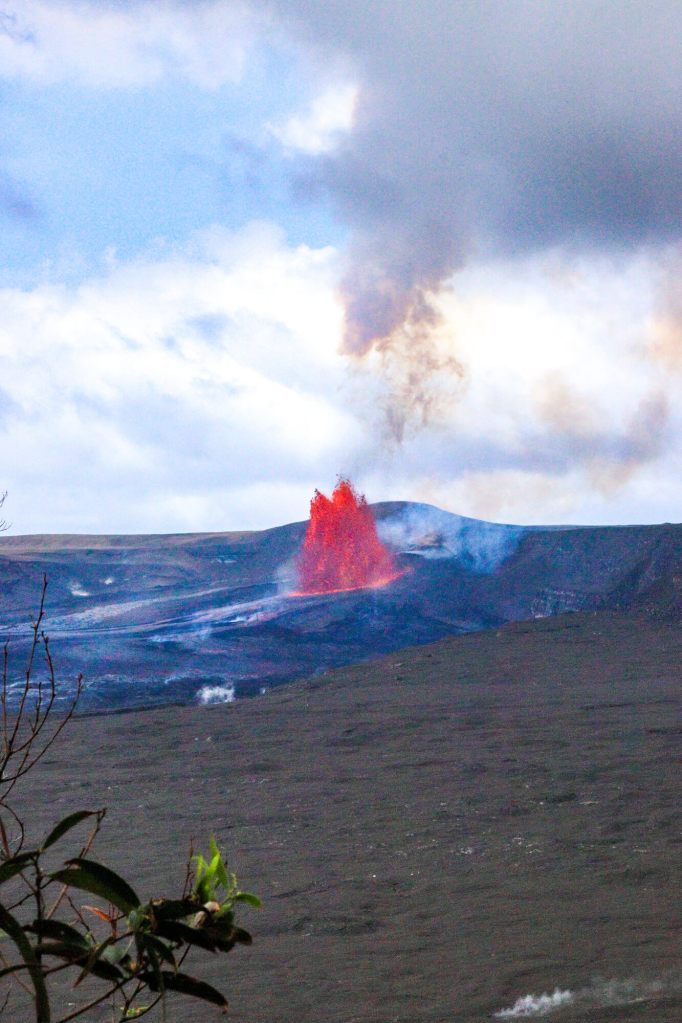
Eruptive episodes usually last only a few hours, so the key to success is having a ready-made plan. There is no time to wander around wondering where to go!
The current eruption is taking place inside the enormous Halemaʻumaʻu Crater, which is around 900 metres wide and 165 metres deep! It is from the rim of this crater that you can safely watch lava fountains and the hypnotic red glow after dark. There are several viewpoints with a direct view of the action.
Below, you’ll find a list of the best places to watch the eruption — from easy “straight from the car” viewpoints to spots that require a slightly longer walk.
🧐 Interesting fact: In Hawaiian, the name Halemaʻumaʻu means “house of the ʻamaʻu fern”, which is said to have once grown around the crater’s edges.
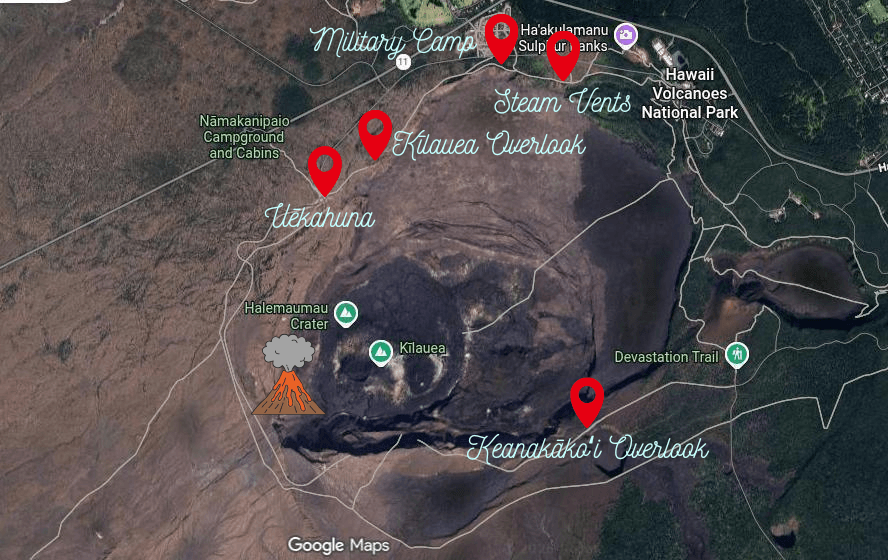
- Kīlauea Overlook – the Best Balance Between Convenience and Views
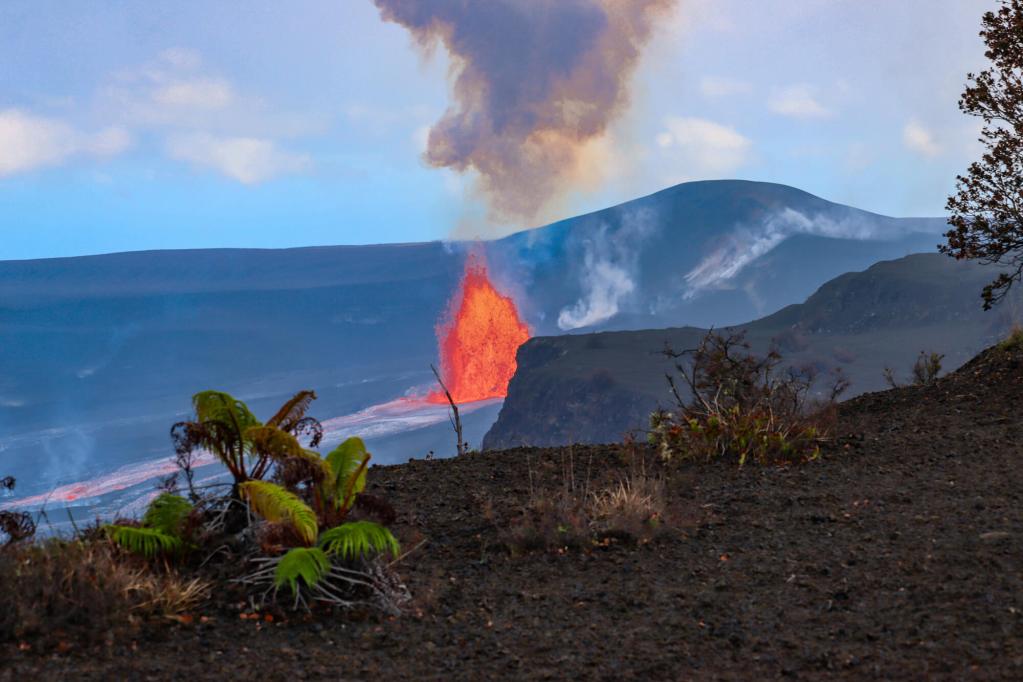
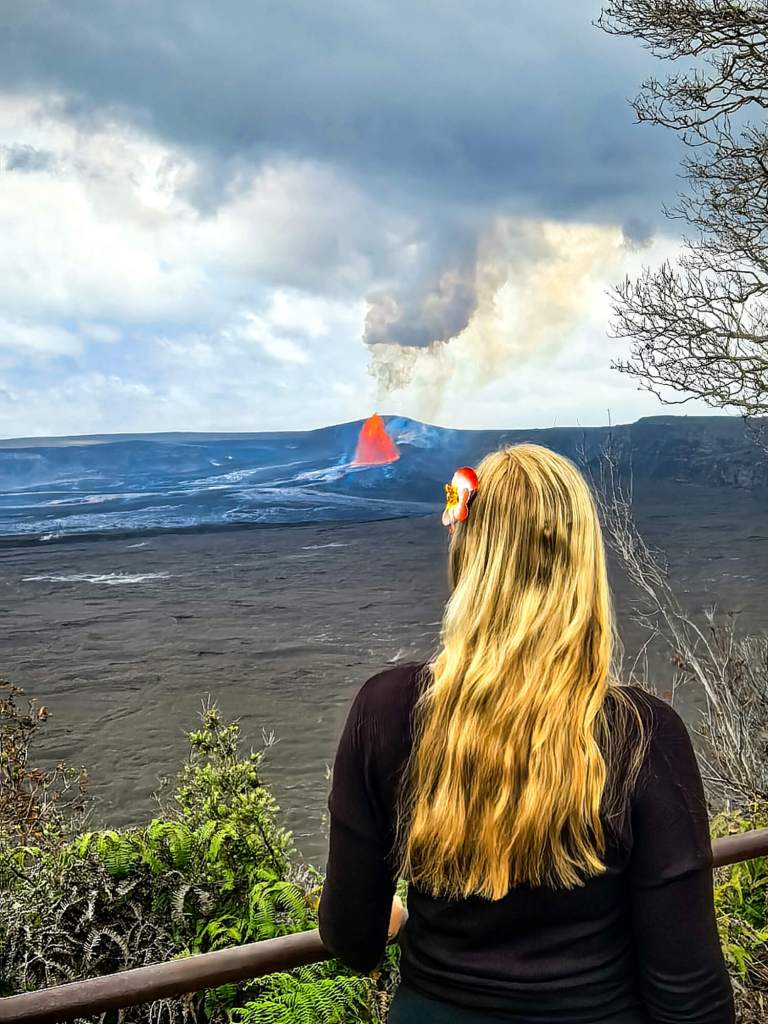
This is a classic viewpoint offering a great panorama of Halemaʻumaʻu Crater. It is also very easy to access, making it a good compromise between convenience and views.
Despite being relatively close, the eruptive vent is slightly obscured from this angle.
Pros: It is close to the car park, which is especially useful if you are short on time or the weather is not on your side.
- Keanakākoʻi Overlook – the Best Close-Up View

This is probably the best viewpoint for watching lava fountains during active eruptive episodes. Depending on current closures, it often allows you to get closest to the active zone.
How to get there: Keanakākoʻi Overlook is located along the section of Crater Rim Drive East that is closed to vehicle traffic. Reaching it requires around 30–40 minutes on foot along a paved road from the Devastation Trail car park.
Why is it worth it? The walk pays off with spectacular views. This is one of the best places to see the tallest lava fountains and fresh lava flows spreading across the crater floor. Many visitors also consider it the best spot for night photography.
Unfortunately, we did not make it there during the eruption — and we really regret it. We only visited a few days later. Do not make our mistake: if the volcano is active, Keanakākoʻi should be your number one choice! 🫢
- Near Kīlauea Military Camp
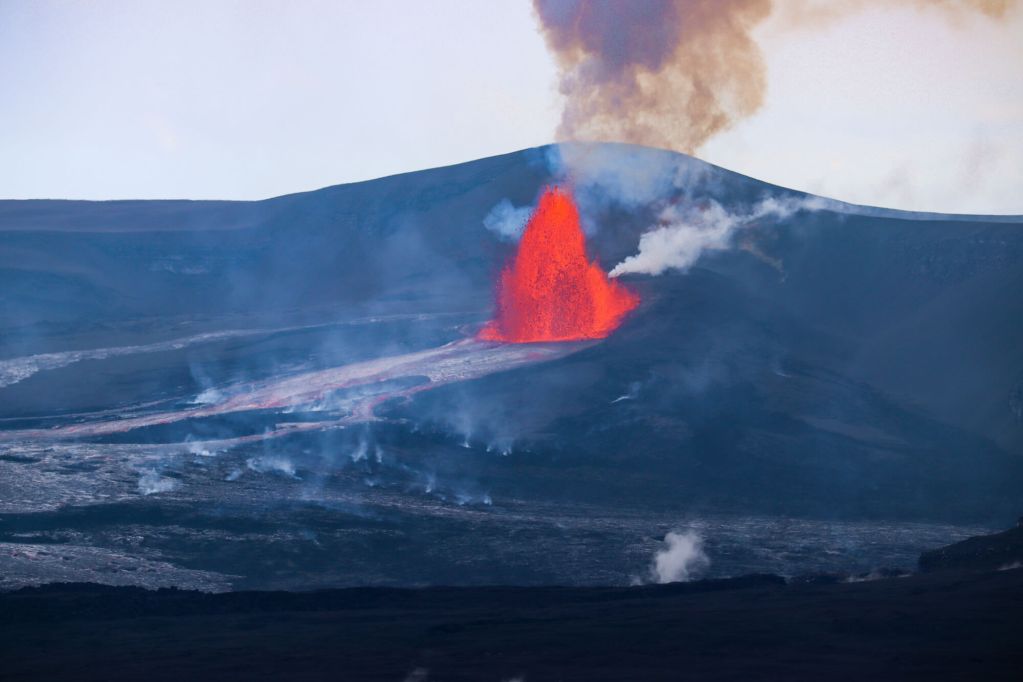
This was the best place from which we personally watched the lava — probably because we did not make it to Keanakākoʻi Overlook. 😅 It is not marked on the map, though.
How to get there: To find it, head towards the crater along the trail that starts opposite Kīlauea Military Camp. At the fork, take the path to the left. After a short walk, you will reach two small viewpoints with an excellent view of the eruptive vent and lava.
- Steam Vents – Easy to Reach, but Busy
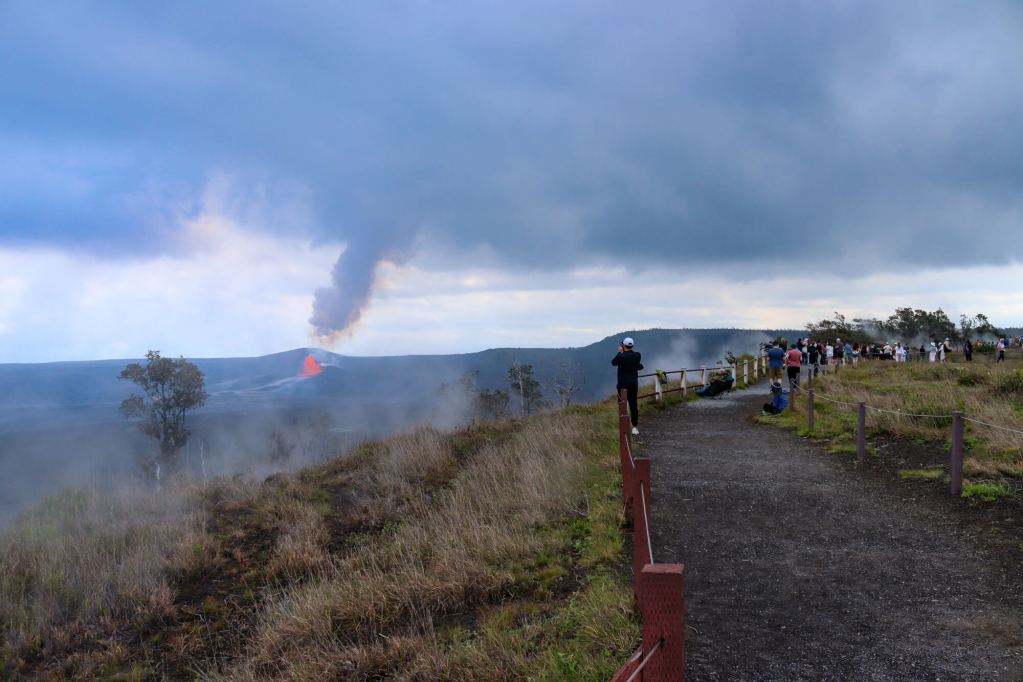
You can also get a good view of the eruption from some very accessible places, and one of them is the area around Steam Vents, the park’s fumaroles.
The trail running along the crater rim here, Crater Rim Trail, is visible from the main road, so it is quick and easy to reach. The view is quite good too. Just bear in mind that steam from the nearby fumaroles can slightly reduce visibility.
- Uēkahuna – the Best Panorama of the Caldera
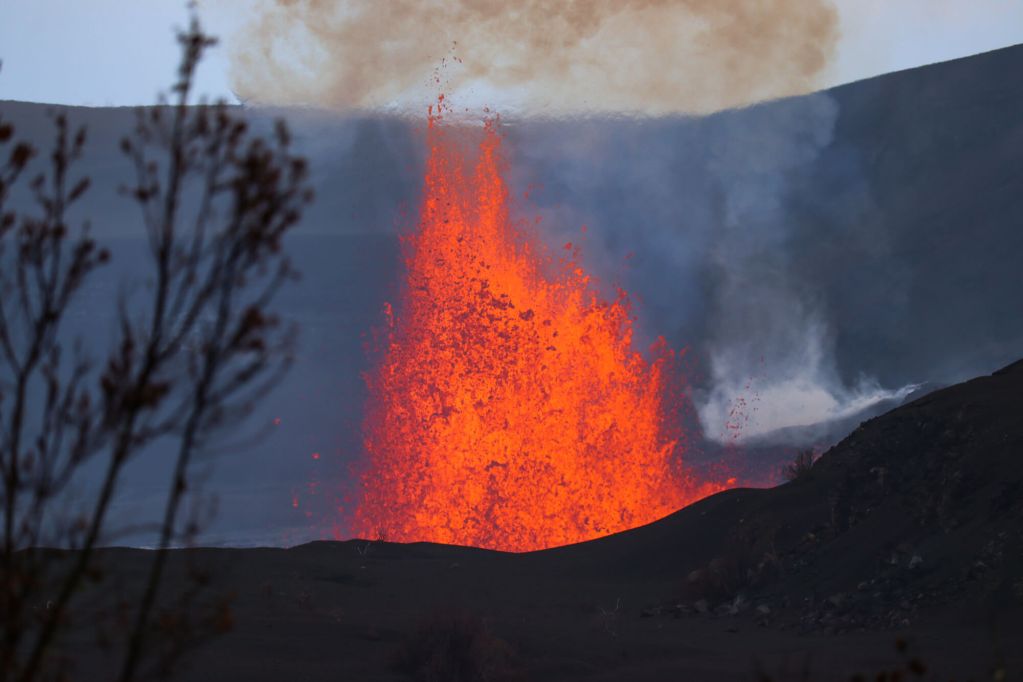
If you are after a wide, panoramic view of the whole caldera, Uēkahuna is a great choice. During the episode we watched, this was actually the place where you could see the lava fountain from the shortest distance.
You can feel the heat coming from the eruptive vent here, although the view of the lava fountains themselves is partly obscured. Depending on the wind direction, access to Uēkahuna may be restricted during an eruption.
📢 Important: Once an active episode is announced, hundreds of people head to the national park. Queues can form at the entrance, and the car parks near the Visitor Center fill up very quickly. Park staff often manage traffic and create temporary parking areas along the roads.
✨ The magic of night: We will say it again — night-time at Kīlauea is magical. It is only after dark that you truly see the power of glowing lava!

📢 Important: Conditions during an eruption can change very quickly. Some viewpoints may be closed within minutes due to a sudden shift in wind direction and high concentrations of toxic volcanic gases. Always follow the instructions of park rangers.
Safety First
Watching the Kīlauea eruption is an incredible experience, but it is easy to forget that you are still standing on the summit of one of the most active volcanoes in the world. Even if the eruption looks calm and “tourist-friendly”, this is still a powerful natural force.
To keep your visit safe, there are three key things to keep in mind: volcanic gases, unstable ground and unpredictable weather.
Vog – Volcanic Smog
One of the biggest invisible hazards during an eruption is vog, short for volcanic smog. It is a toxic mix of volcanic gases and fine particles suspended in the air, mainly formed from sulphur dioxide, or SO₂, released by Kīlauea.
Vog can cause: eye and throat irritation, coughing, strong headaches, shortness of breath and worsening symptoms for people with asthma or other respiratory conditions.
What is important to remember is that vog intensity depends heavily on wind direction. One day, the air may be perfectly clear. The next, a hazy, irritating cloud can cover a large part of the island.
Before heading out, it is worth checking air quality and vog forecasts on the Hawaii Interagency Vog Information Dashboard.
Inside the park, you will almost certainly come across plenty of rangers keeping an eye on visitor safety. If you follow their advice and respect closures, you should be able to enjoy the eruption safely.
Stay on Marked Trails
This is one of the most important rules in Hawaiʻi Volcanoes National Park.
Solidified lava may look like hard rock, but that can be misleading. Beneath the fragile crust, there may be:
- empty lava tubes and hidden collapses,
- extremely hot gases, even long after the lava flow has ended,
- sharp rock edges.
Some areas of ground can remain extremely hot long after an eruption is over. Stepping off the marked trail could result in serious burns or a fall into an unstable crack.
The area around the caldera is also constantly monitored. If you see a barrier or a closed section of road or trail, do not ignore it. Crater rims can become unstable during eruptions and may collapse without warning.
The Weather Can Catch You Out
Forget postcard-perfect Hawaii for a moment. Kīlauea’s caldera sits at around 1,200 metres above sea level, which means it is much cooler here than on the coast.
Fog, cold wind and sudden heavy rain are completely normal — even when the sun is shining in Kona or Hilo.
Checklist: What to Bring for a Volcano Trip
- Warm clothes: At the summit, it can be 10–15 degrees colder than on the coast. It is often windy or rainy too, and evenings can feel especially chilly.
- Sturdy shoes: Trails can be uneven and slippery.
- Rain jacket: The weather around the caldera changes very quickly. Rain and fog are common here, even when the coast is sunny.
- Long trousers: Especially useful for cooler evenings and strong winds.
- Head torch or flashlight: An absolute must-have if you are planning to watch lava after dark. The area around the caldera is very dark at night, and some trails have no lighting at all.
- Water and snacks: Food options inside the park are limited. It is easy to get dehydrated, even in the evening, especially if you are walking longer distances.
- Powerbank: Taking photos and cold temperatures can drain your phone battery very quickly.
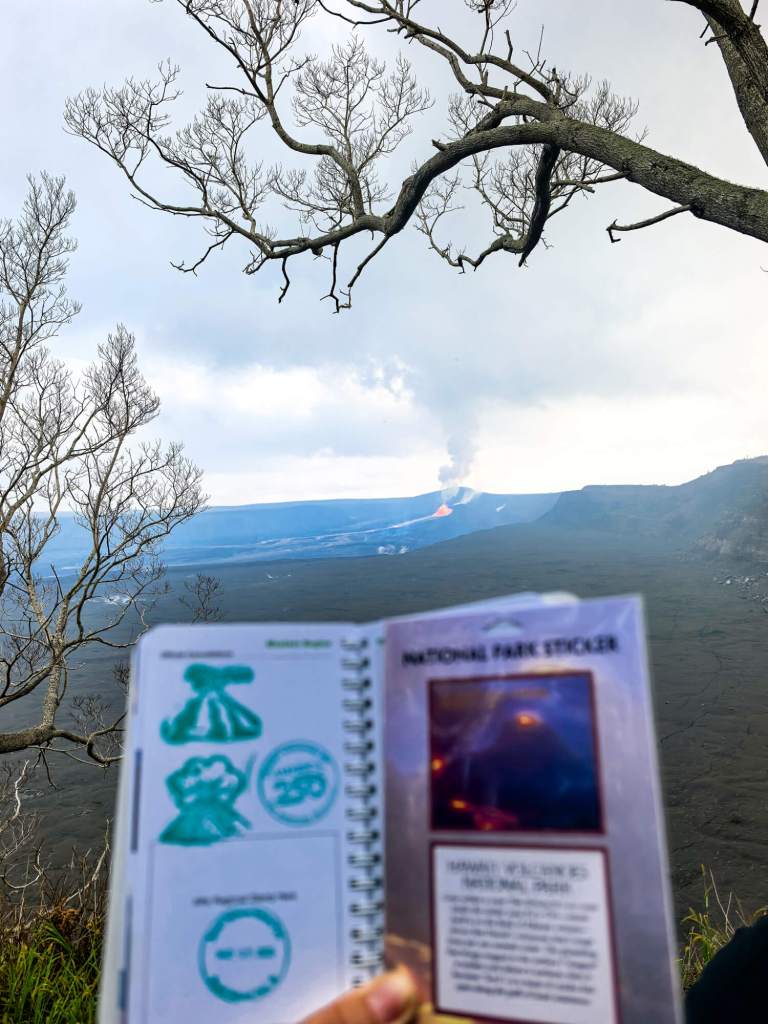
- Binoculars or a telephoto lens: Lava fountains are usually at a safe distance, often several hundred metres away. Binoculars or a telephoto lens will help you see the details of the “dancing” magma that are impossible to catch with the naked eye.
- Tripod: Very useful for night photos of lava and long-exposure shots.
- Lens cloth: Fog, rain and fine volcanic dust can quickly dirty your camera lens.
- N95 mask: This can be useful when vog levels are higher. Just remember: it protects against particles, not volcanic gases!
- Asthma medication or an inhaler: If you have any respiratory issues, make sure you bring your medication in case vog levels suddenly increase.
💡Tip: If there is even a tiny chance of an active episode during your stay on Big Island, prepare a “volcano bag” and keep it in the car. Pack warm layers, a torch, a rain jacket and some snacks. That way, as soon as you see the “ACTIVE” update, you can head straight to the crater without going back to your hotel first!
The Home of the Goddess Pele: The Heart of Hawaiian Culture
Kīlauea is not only a geological wonder, but also a sacred place for Native Hawaiians. According to tradition, it is the home of Pelehonuamea, usually known simply as Pele — the powerful goddess of fire and volcanoes.
For the people of the islands, Pele is not just a figure from legend. She embodies lava and the natural forces that come with an eruption.
Oral tradition says that Pele was born in the distant land of Kahiki, before setting off on a long journey in search of a suitable home. Her travels across the Hawaiian archipelago, dated by some traditions to around 850–1250 AD, eventually brought her here, to the Island of Hawaiʻi, also known as Big Island.
Pele is said to live in Halemaʻumaʻu Crater, at the heart of Kīlauea’s main caldera. This constantly active crater has a long history of spectacular lava lakes, which many islanders see as a physical expression of the goddess’s presence and mood.
Her unpredictable nature reveals itself in the glow of lava lakes, erupting fountains and fiery ribbons flowing down the slopes. Although the sight can feel intimidating, Hawaiians approach Pele with deep respect rather than fear. Traditional Hawaiian chants, known as oli, describe Pele’s dual nature: she destroys what is old, but at the same time, she creates new land.

When you visit Kīlauea, you are entering a sacred landscape. In Hawaiian tradition, it is customary to ask Pele for permission to travel through her land. It is worth remembering to be respectful and quiet in this place.
And never take volcanic rocks with you! According to Hawaiian beliefs, this brings bad luck, and from a cultural perspective, it is also like stealing a piece of the goddess’s own body.
Pele’s Golden Hair
While exploring the summit area or the Kaʻū Desert, you may come across something that looks like clumps of golden hair or shiny straw lying on the ground. We even found some on the bonnet of our car after the eruption! I have to admit, it looked almost exactly like… strands of my own hair. 🫢
Although it looks soft and natural, these strands are actually Pele’s hair — a fascinating by-product of powerful volcanic forces.
What Are Pele’s Hair, Really?
- Pele’s hair consists of incredibly thin fibres of volcanic glass, sometimes only around one micron thick.
- They form during eruptions, when gas bubbles burst violently on the surface of molten lava, stretching it into long, fragile threads.
- A single strand can be up to half a metre long, but it is so light that the wind can carry it for many kilometres.

📢 Important: Although Pele’s hair may look tempting and beautiful, do not touch it with bare hands! It is essentially made of tiny glass needles. The fibres are extremely brittle and sharp — they can easily get stuck in your skin and, even worse, get into your eyes. If you find Pele’s hair on your clothes or car, remove it very carefully, ideally without rubbing it with your hand.
🧐 Fun Fact: Why Doesn’t Kīlauea Look Like a “Real” Volcano?
When most of us imagine a volcano, we picture a tall, steep cone, like Mount Fuji in Japan or Mount Etna in Italy.
But when you look at Kīlauea, you may be surprised. Instead of a dramatic pointed summit, you will see vast, almost flat, gently sloping sides.
So why is that? Kīlauea is a shield volcano. Its name comes from its shape, which resembles a warrior’s shield lying flat on the ground.
Unlike explosive cone-shaped volcanoes, Kīlauea’s lava is very fluid, meaning it has low viscosity. Instead of piling up high around the crater, it flows freely and spreads over huge distances, creating wide, flat layers.
Although it may not look especially high from the road, Kīlauea is a giant. Its slopes are very gentle, tilted by only a few degrees, so when you stand near the summit, it feels more like being on a vast plateau than on top of a mountain!
Is It Worth Chasing Lava on Big Island?
In our opinion — absolutely yes!
Watching the Kīlauea eruption is an experience unlike anything else. It is a rare chance to stand face to face with the forces that shaped our planet!
Just remember: although Kīlauea is still breaking activity records in 2026, nature does not work to our schedule. No one can predict the next episode with absolute certainty, or say how many more are still to come.
Keep your eyes open, check the USGS status regularly, pack warm clothes and, most importantly, approach this spectacle with humility and respect.
If luck is on your side and you manage to catch an active episode, we can promise you one thing: that orange glow over Halemaʻumaʻu will stay in your memory forever.
And you? Are you already planning your trip to Big Island, or have you had the chance to meet Pele face to face? Let us know in the comments!
Hungry for more American adventures? Check out our other USA travel guides:
Leave a Reply