

This post is also available in: 🇵🇱 PL | 🇵🇹 PT
Walking through a tunnel once filled with red-hot lava, feeling the power of an active volcano, driving along one of the most scenic roads on the Big Island, and, if you’re lucky, witnessing one of the most fascinating phenomena on our planet: a volcanic eruption.
You can experience all of this in one place – Hawaiʻi Volcanoes National Park, where the raw power of volcanoes meets lush Hawaiian nature and a history stretching back centuries. The park is home to two active volcanoes, Kīlauea and Mauna Loa, whose activity has shaped the landscape of the Big Island over thousands of years. Here, you’ll find enormous craters, solidified lava lakes, volcanic fields, tunnels carved by flowing lava and black sea cliffs overlooking the Pacific. And all of this on a single island!
In this guide, we’re taking you to 13 top attractions in Hawaiʻi Volcanoes National Park that we think are definitely worth seeing during your visit.
At a glance: attractions covered in this guide
🌋 Kīlauea Caldera and Halemaʻumaʻu
🌿 Kīlauea Iki
💨 Sulphur Banks
🌫️ Steam Vents
🌋 Thurston Lava Tube
🥾 Devastation Trail
🚗 Chain of Craters Road
🪨 Puʻuloa Petroglyphs
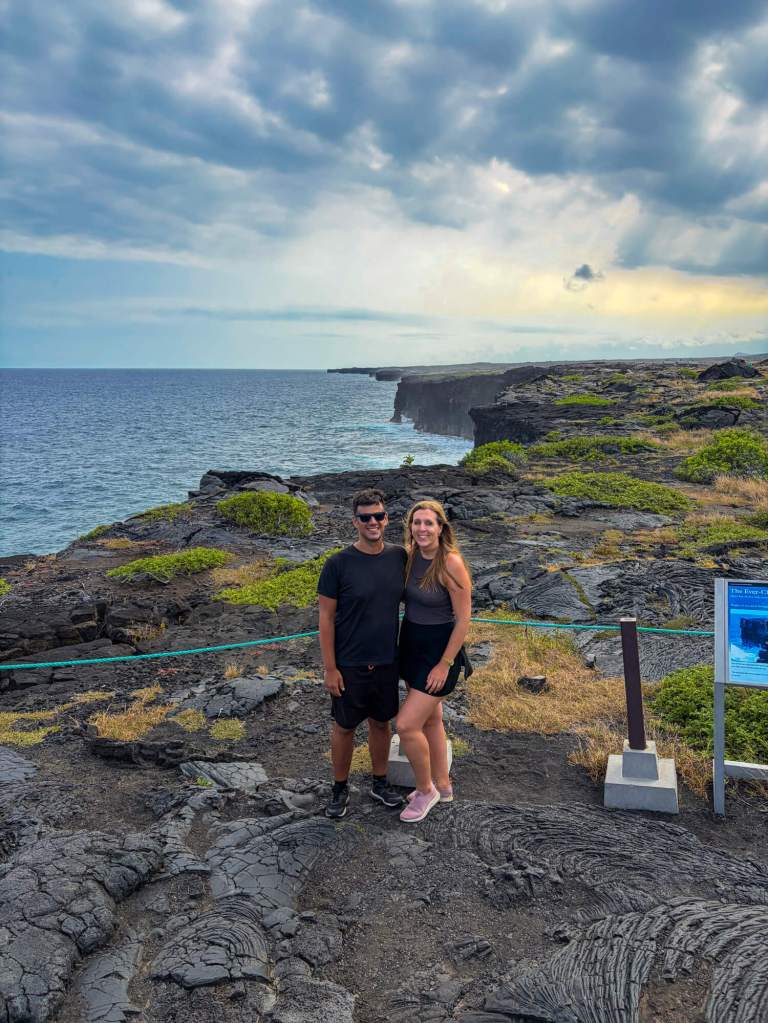
🌊 Hōlei Sea Arch
🌋 Mauna Loa
🍃 Kahuku Unit
Kīlauea Visitor Center
Kīlauea Visitor Center is a great place to start exploring Hawaiʻi Volcanoes National Park. You’ll find plenty of useful information here, and you can speak to park rangers, check the current eruption status, find out about trail conditions and see which viewpoints are open.
Free park maps are available here, and you can also buy more detailed trail maps for around US$2.
You’ll also find a park stamp here – perfect for your National Parks Passport, as well as for a notebook, travel journal or guidebook. We’d only advise against stamping your actual passport! 🙈 It’s a fun and completely free souvenir from the park.
Important: The Kīlauea Visitor Center building is currently closed for renovation, and its temporary location is at the Welcome Center at Kilauea Military Camp.
⏰ Opening hours: 9:00 am–4:45 pm
📢 Important: Before your visit, it’s a good idea to check the latest updates from the NPS (U.S. National Park Service), as road closures, viewpoint access and trail availability in the park can change very quickly – especially during eruptions, heavy rainfall or maintenance work.
Kīlauea Caldera and Halemaʻumaʻu Crater – The Heart of Hawaiʻi Volcanoes National Park
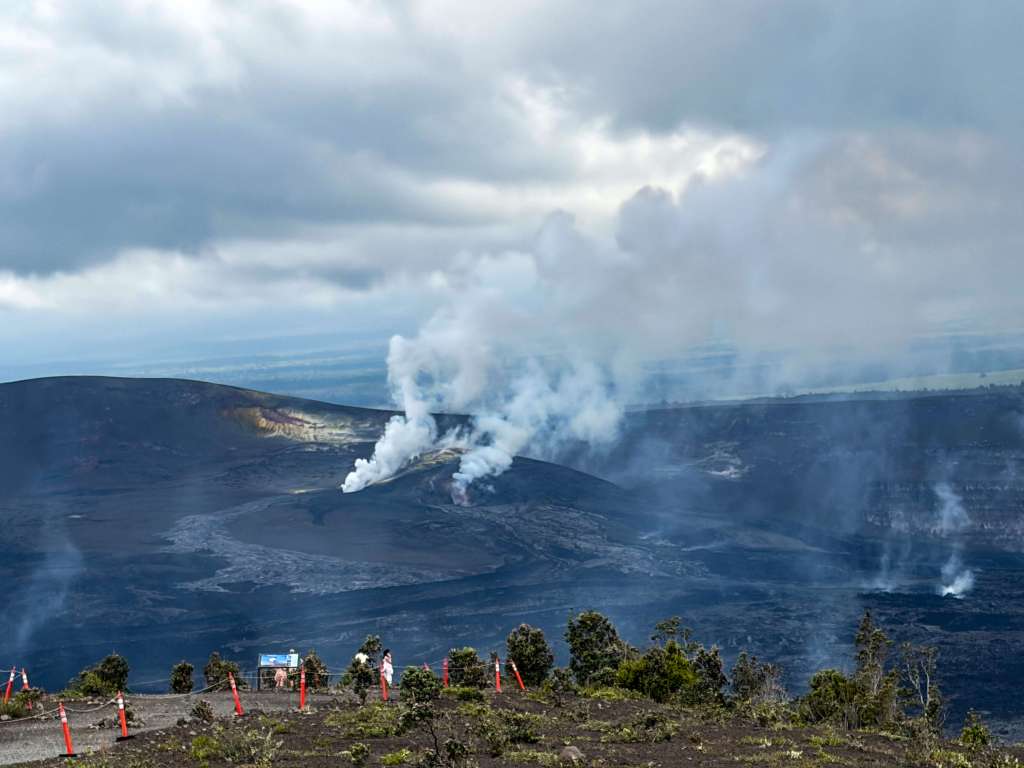
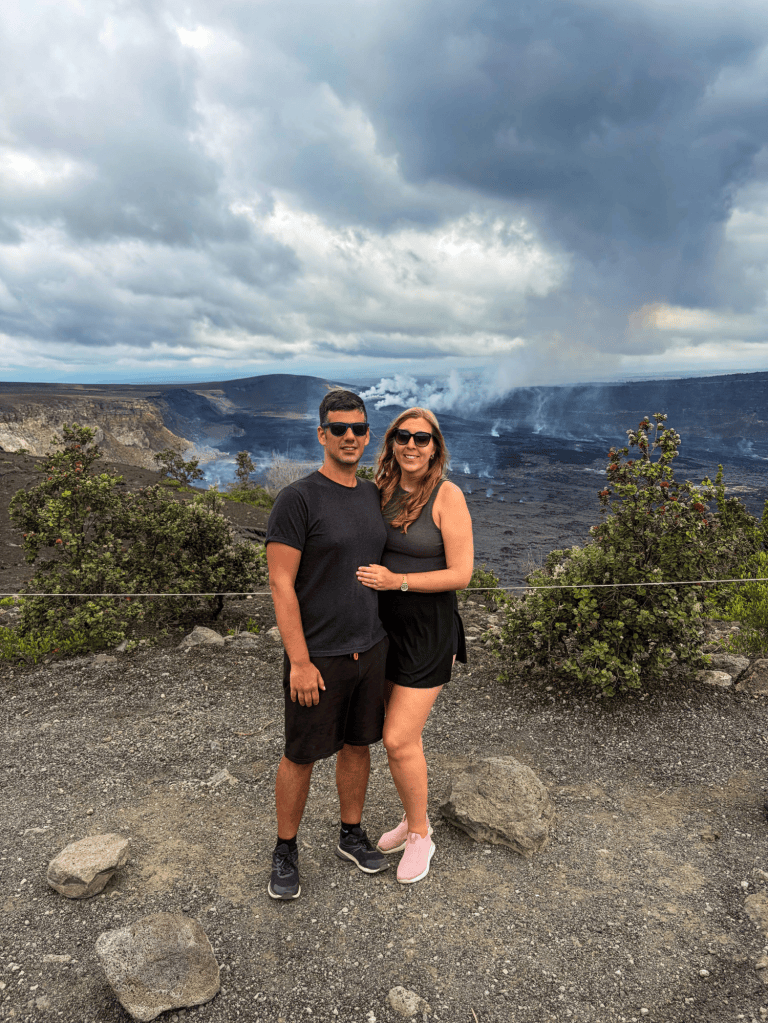
If there’s one place you simply can’t miss in Hawaiʻi Volcanoes National Park, it’s Kīlauea Caldera and the Halemaʻumaʻu Crater within it. Kīlauea is the youngest volcano in the Hawaiian Islands and one of the most famous and active volcanoes in the world! And this is where much of Kīlauea’s volcanic activity is concentrated.
The caldera is around 4.7 km (2.9 miles) long and 3.1 km (1.9 miles) wide, and its sheer scale is best appreciated from the viewpoints along Crater Rim Drive and Crater Rim Trail.
Halemaʻumaʻu holds a particularly special place here. The crater is the centre of Kīlauea’s current volcanic activity and, according to Hawaiian beliefs, the home of Pele, the goddess of fire and volcanoes.
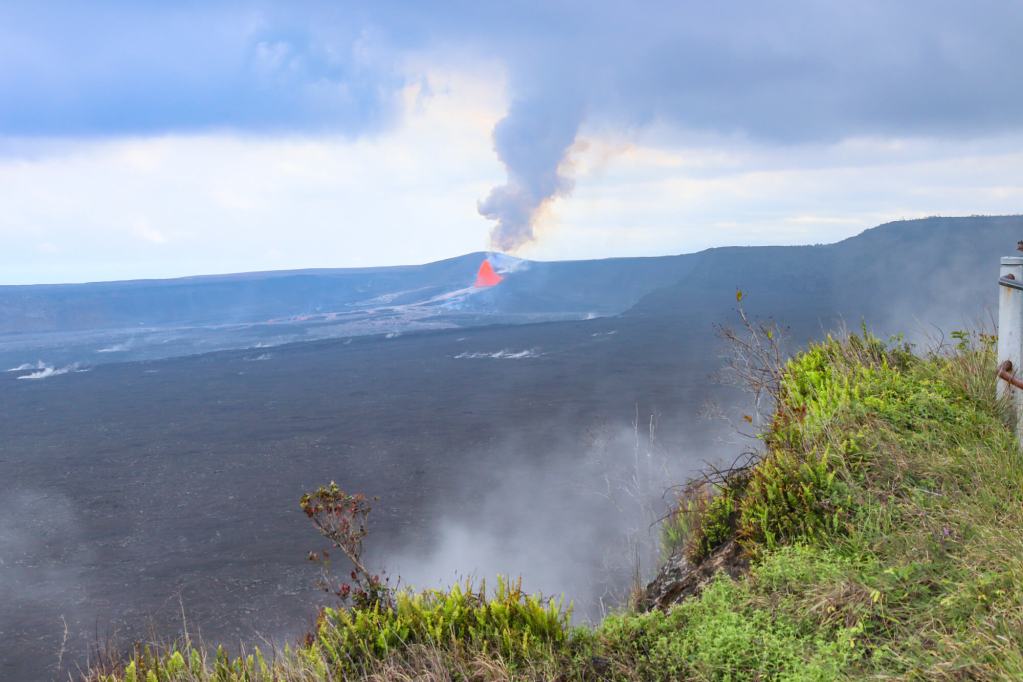
Standing on the edge of the caldera is one of the most extraordinary experiences in the park. You can see vast fields of solidified lava, steam and volcanic gases rising above the crater, and during active eruption episodes, you may even witness spectacular lava fountains and a red glow after dark.

📢 Important: It is currently not possible to descend into Halemaʻumaʻu Crater. The crater can only be viewed from designated viewpoints and trails.
Lava Viewing – An Incredible Experience During Active Eruption Episodes
🌋 Is Kīlauea erupting right now? Check the latest status!
Being able to see an active volcano is undoubtedly one of the most extraordinary experiences you can have on the Big Island. Kīlauea is one of the most active volcanoes in the world, and its eruptions have been attracting travellers, scientists and nature lovers from around the globe for decades.
However, it’s important to remember that lava isn’t a permanent feature of the park. Kīlauea goes through periods of increased activity and pauses, so seeing bright red, flowing lava is never guaranteed. Before your visit, make sure to check the volcano’s current status and the latest NPS information on where it is safe to view an eruption.
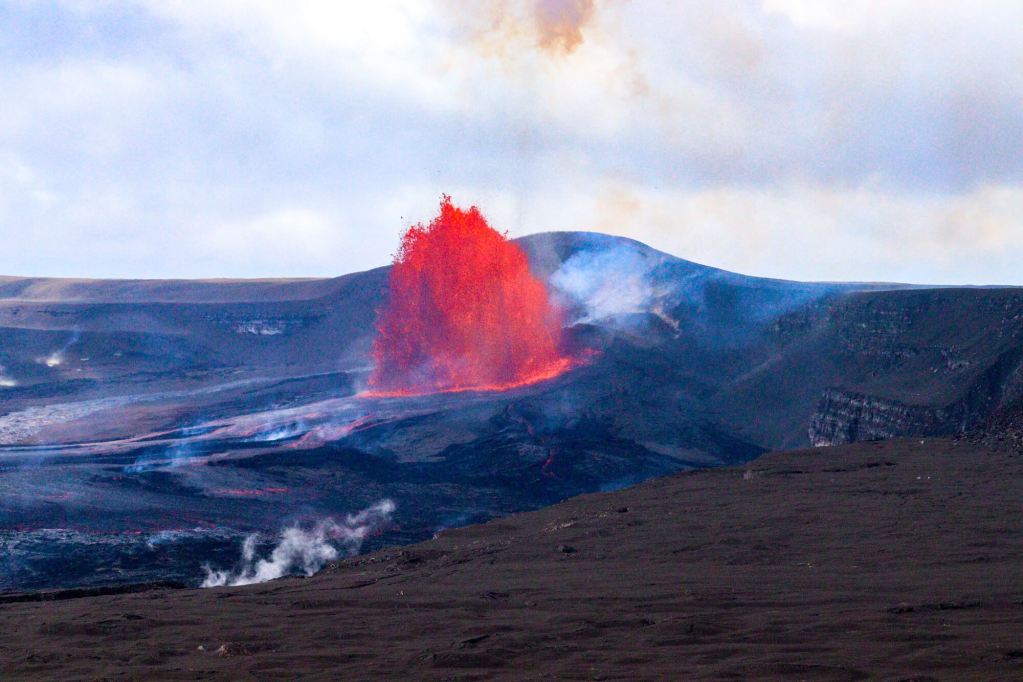
As of 23 December 2024, Kīlauea has been experiencing an ongoing episodic eruption in Halemaʻumaʻu Crater. The eruption is episodic, meaning that lava does not flow from the crater continuously. Instead, it consists of short episodes of lava fountaining, typically lasting several hours and separated by pauses that can last several days or weeks.
Kīlauea Iki Trail – A Walk Across the Floor of a Former Lava Lake
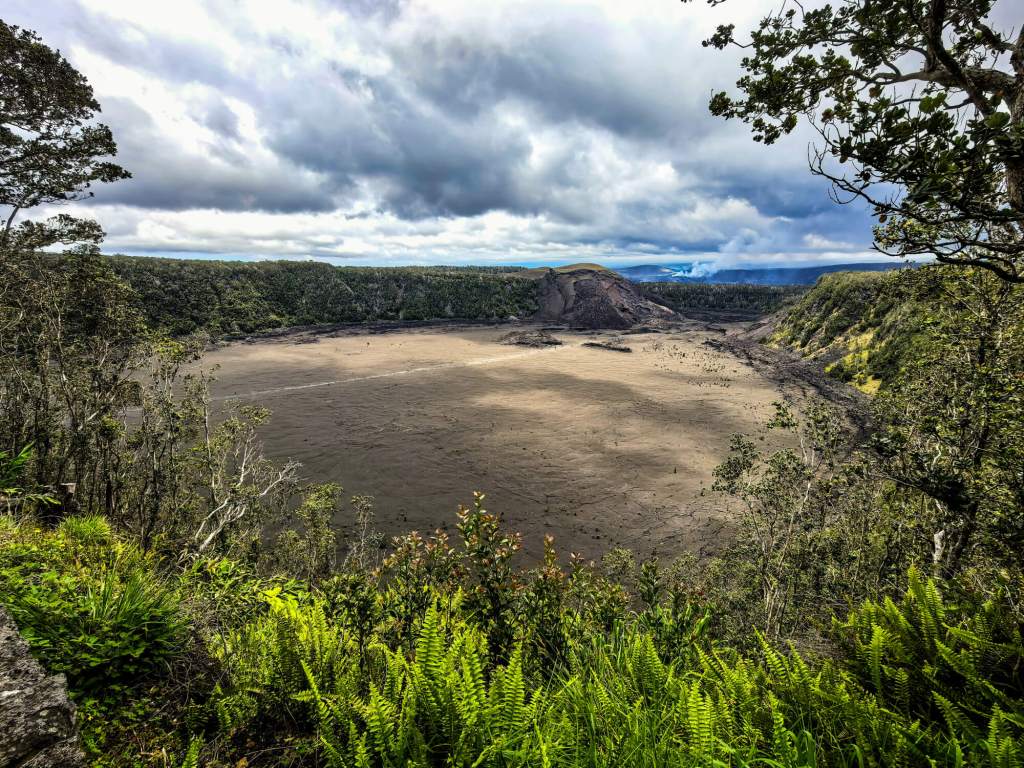
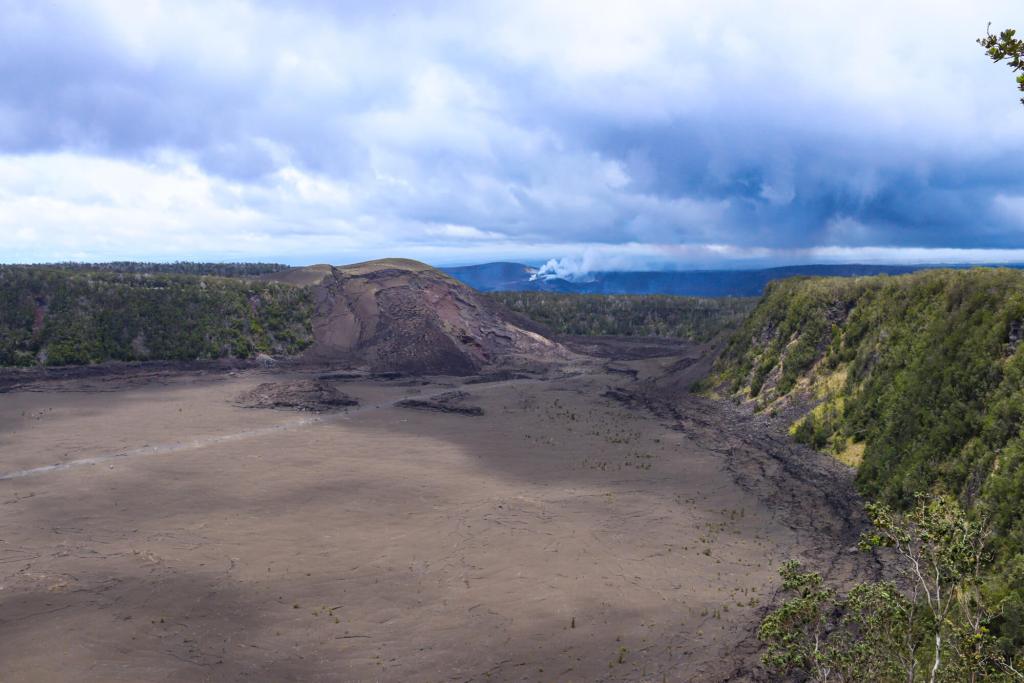
Kīlauea Iki, meaning “little Kīlauea”, is one of the most fascinating craters in Hawaiʻi Volcanoes National Park. Located right next to Kīlauea’s main summit area, it’s definitely a place worth adding to your itinerary – especially if you want to see the aftermath of a powerful volcanic eruption up close.
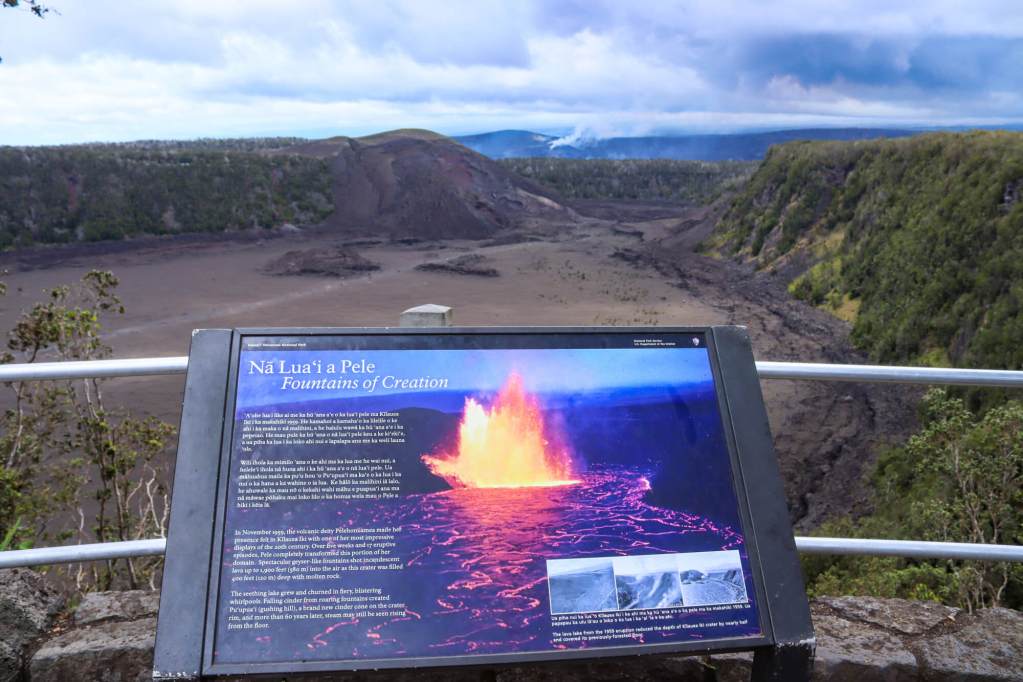
During the 1959 eruption, the crater filled with a lake of molten lava. The lava eventually cooled and solidified, creating a vast, dark and cracked surface that is now crossed by one of the most interesting trails in the entire park.
As you walk along the crater rim or descend to its floor, it’s hard to believe that just a few decades ago, lava fountains hundreds of metres high were shooting into the sky here.
This is one of the best places to see just how dramatically the Hawaiian landscape can change – and how quickly nature can reclaim an area that was once a hot, hostile field of lava. On one side, you have the stark remains of the solidified lava lake; on the other, lush rainforest covering the crater rim. The contrast is truly incredible.
💡 Fun Fact: During the 1959 Kīlauea Iki eruption, lava fountains reached heights of up to around 580 metres (1,900 feet), making it one of the highest measured lava fountains in the history of observations at this volcano.
Sulphur Banks (Ha‘akulamanu)
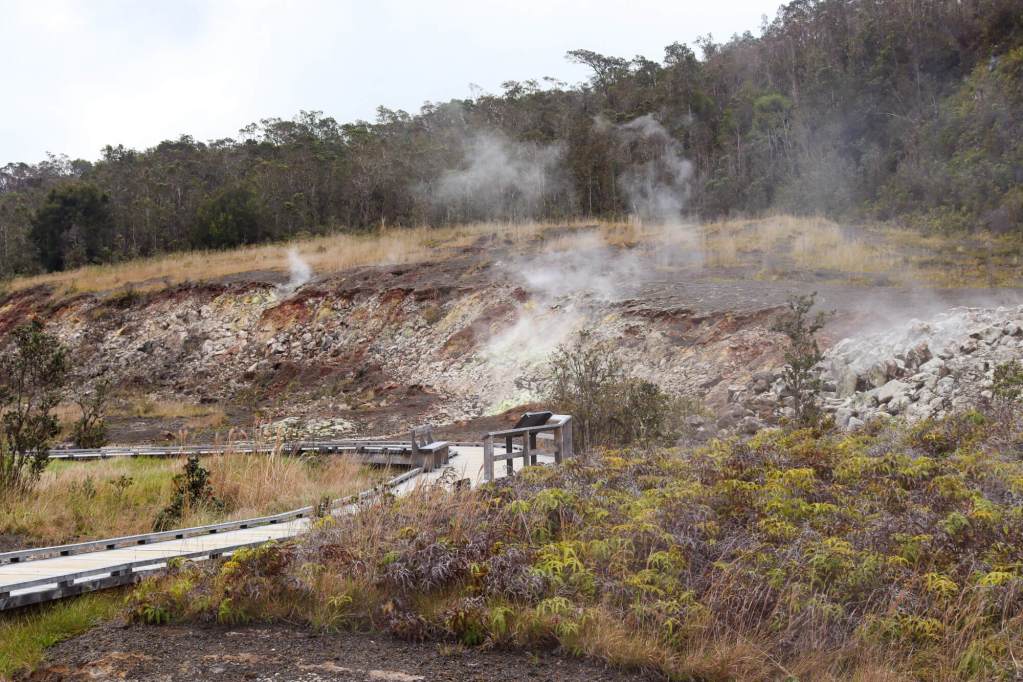
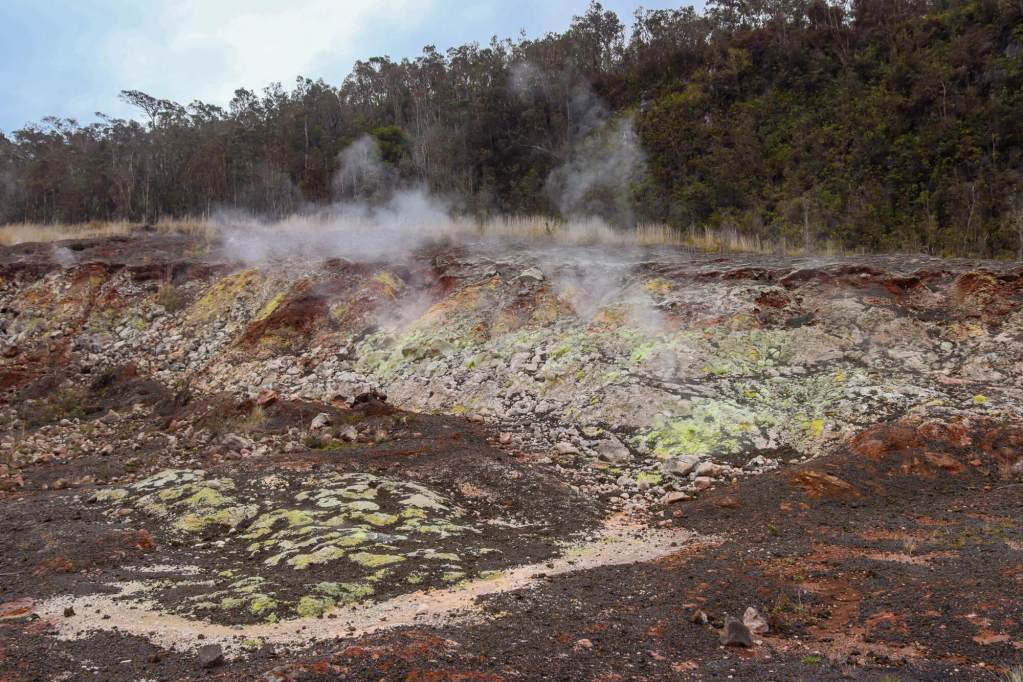
Sulphur Banks, also known by its Hawaiian name Haʻakulamanu, is one of the best places in the park to see – and actually feel – that Kīlauea remains an active volcano, even when an eruption isn’t underway.
Hot water vapour and volcanic gases are constantly escaping through cracks in the ground here, while the rocks are covered in distinctive yellow sulphur deposits and reddish-brown minerals formed through chemical reactions.
The characteristic smell of hydrogen sulphide, clouds of steam and heat rising from the ground make it possible to literally feel that one of the world’s most active volcanic systems lies beneath your feet.
The area also has cultural significance for Native Hawaiians. Yellow sulphur is known in Hawaiian as kūkaepele, meaning “the waste of Pele” – the volcanic deity associated with fire and volcanoes. It may not sound particularly romantic, but the name perfectly illustrates how closely geology, volcanic landscapes and Hawaiian mythology are intertwined on the Big Island.
📢 Important: Because of the presence of volcanic gases, walking at Sulphur Banks is not recommended for people with heart or respiratory conditions, pregnant women, infants or young children.
💡 Fun fact: Although Sulphur Banks is best known for its steam, sulphur and volcanic gases, it’s also a fascinating place to learn about the area’s birdlife. Haʻakulamanu was historically known as a place where birds gathered, as the open thermal area attracted native birds such as nēnē and kōlea. Today, these birds are less commonly seen here, but the traditional name preserves a fascinating connection to the area’s natural history.
Steam Vents (Kūkamāhuākea) and Steaming Bluff
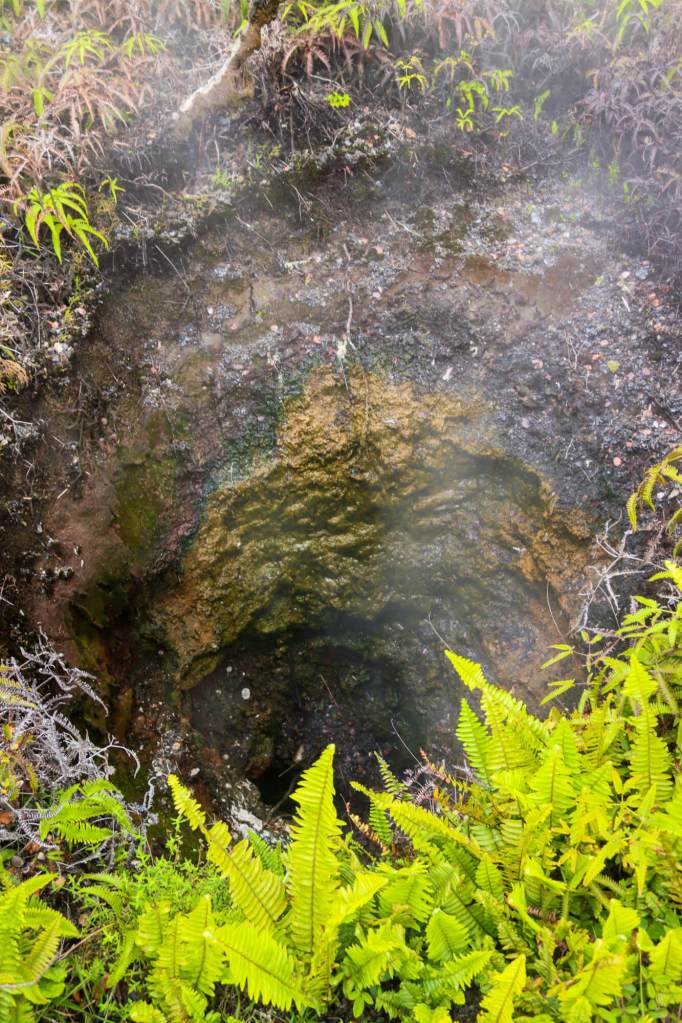
Steam Vents is one of the best places in Hawaiʻi Volcanoes National Park to get a sense of the intense geological processes still taking place beneath your feet. The area is made up of natural cracks in the ground where steam escapes from below the surface.
The steam forms when rainwater seeps deep into the ground and is heated by hot rocks associated with Kīlauea’s magma system. The heated water eventually rises back towards the surface, emerging as steam through cracks in the ground.
It’s one of the best places in the park to literally “feel the breath of the volcano” and get a sense of the intense geological processes still taking place beneath your feet.
The area is also known by its Hawaiian name, Kūkamāhuākea, and the steam rising here has cultural significance for many Native Hawaiians. It is associated with Kū, one of the major Hawaiian akua, or deities.
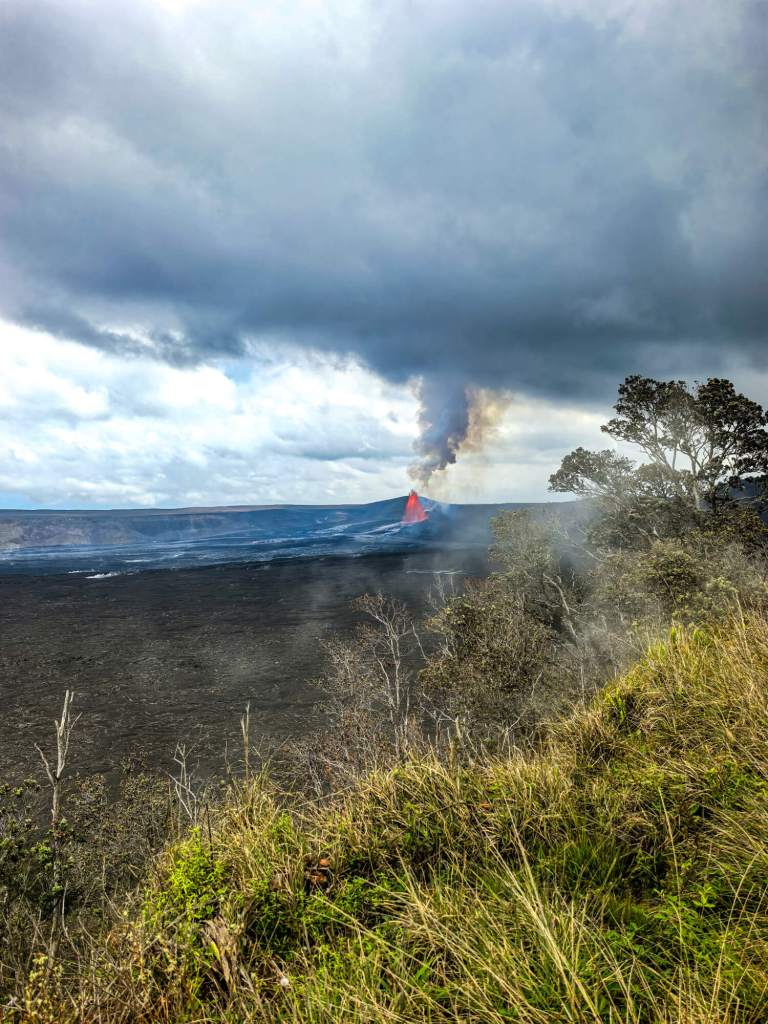
From the Steam Vents car park, it’s also worth walking over to nearby Wahinekapu (Steaming Bluff). Here, alongside steam rising from cracks in the ground, you’ll get views of Kīlauea Caldera and its stark volcanic landscape.
Thurston Lava Tube (Nāhuku) – A Tunnel Formed by Flowing Lava
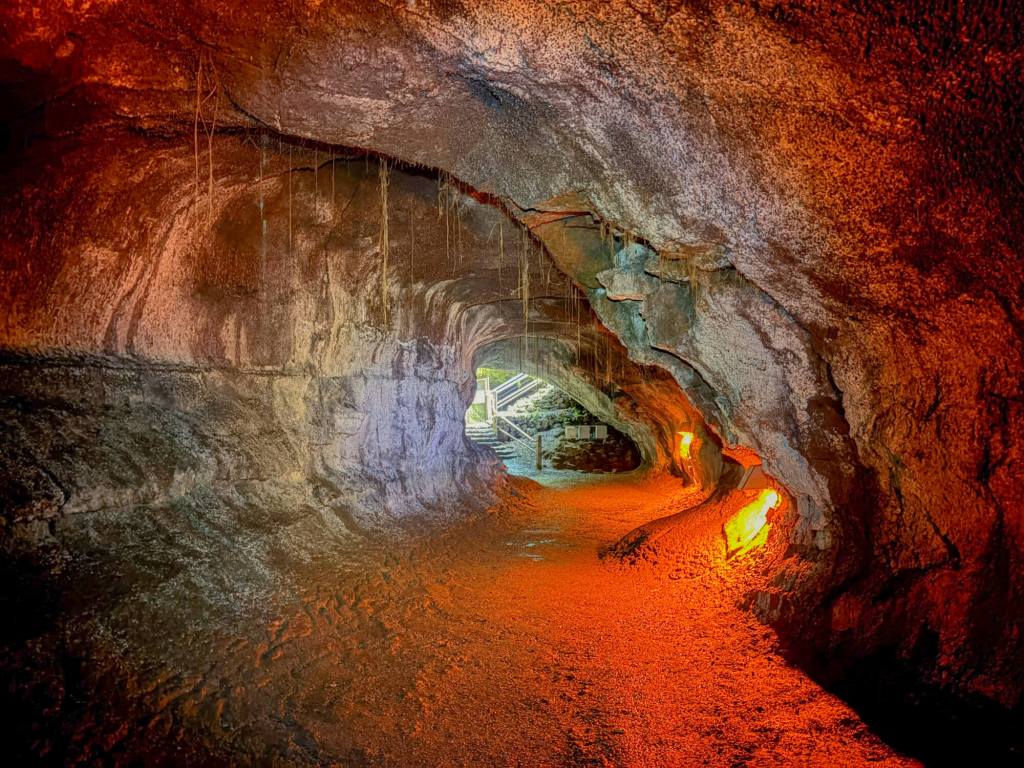
Want to see a volcano from a completely different perspective? Thurston Lava Tube, also known as Nāhuku, is one of the most fascinating attractions in Hawaiʻi Volcanoes National Park. This natural lava tunnel gives you a glimpse beneath the surface of the island and a chance to see evidence of Kīlauea’s past volcanic activity.
The tunnel was formed around 500 years ago during the ʻAilāʻau eruption. Molten lava once flowed through here at temperatures of more than 1,000°C (1,800°F). Today, you can walk through the cool basalt tunnel left behind after the lava drained from the former lava channel.
A short walk through lush rainforest leads into the tunnel, making this attraction accessible to almost everyone. It’s a great opportunity to see one of the results of Kīlauea’s past volcanic activity up close – without having to tackle a long or demanding hike.
Devastation Trail – A Walk Through a Post-Eruption Landscape
Although the name Devastation Trail sounds rather dramatic, it perfectly reflects the history of this place. During the powerful 1959 eruption of Kīlauea Iki, the area was buried beneath ash and volcanic material thrown into the air by lava fountains reaching heights of around 580 metres (1,900 feet).
A forest once grew here, but after the eruption, the landscape was transformed into an almost completely barren field of ash and cinder.
Today, you can see the exact opposite happening – the slow return of life. Young trees, ferns and other plants are emerging among the dark ash and cinder, gradually reclaiming the ground once taken from them by the volcano.
A short and easy walk leads to Puʻupuaʻi Overlook, where you can see the cinder cone formed during the same eruption. It’s a great option if you want to experience a volcanic landscape without committing to a long hike.
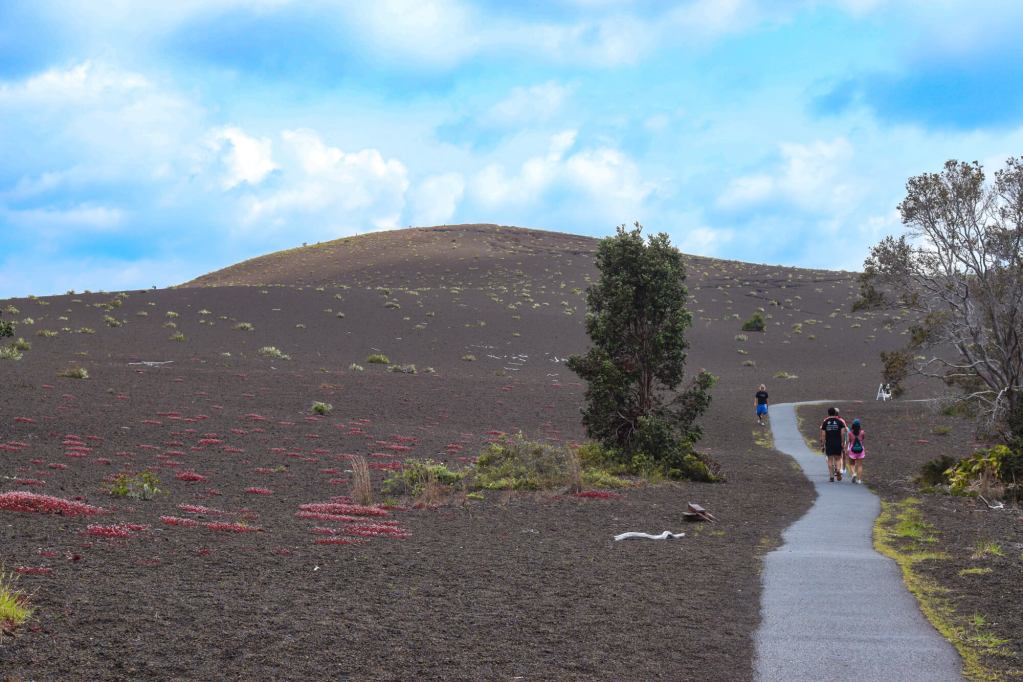
💡 Fun Fact: The name Puʻupuaʻi roughly means “gushing hill” – a fitting description for a cinder cone formed from material thrown into the air by lava fountains during the 1959 eruption.
Chain of Craters Road – A Journey Through a Volcanic Landscape
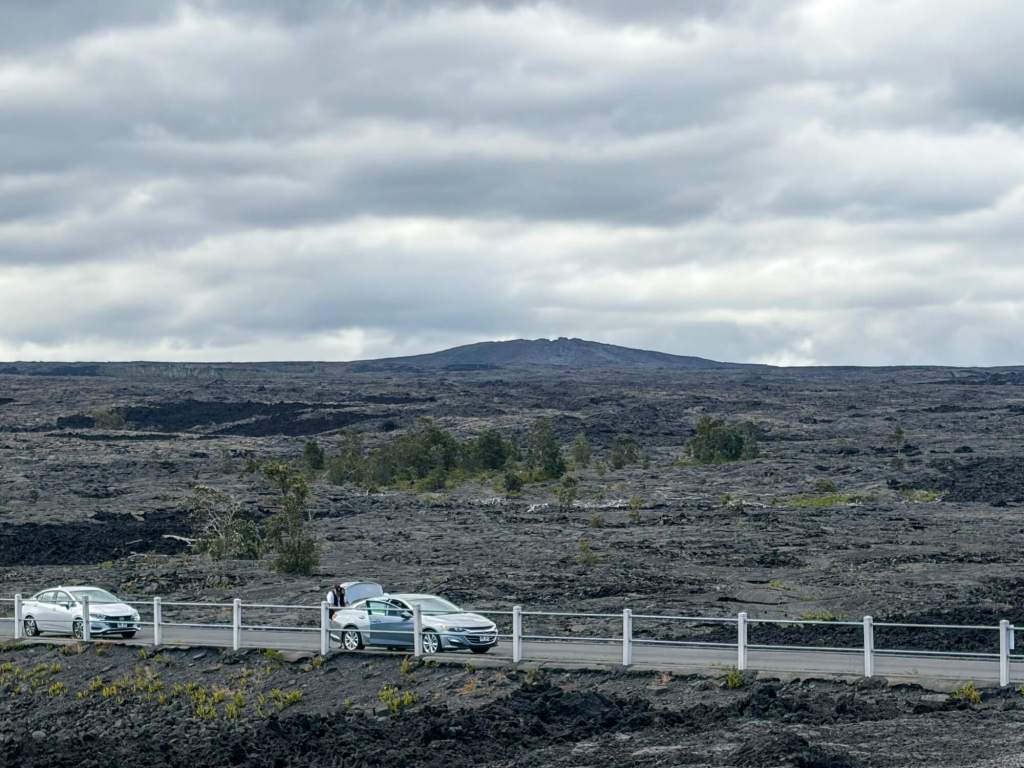
If you want to see how Kīlauea has shaped the landscape of the Big Island over thousands of years, make sure to drive along Chain of Craters Road. This approximately 31-kilometre (19-mile) one-way route runs from the Kīlauea summit area all the way to the Pacific coast, passing craters, volcanic cones and vast fields of solidified lava along the way.
There are plenty of interesting stops along the route, including Maunaulu, Kealakomo Overlook, Puʻuloa Petroglyphs and Hōlei Sea Arch. In many places, you can also see traces of past eruptions – solidified lava flows, sections of former roads and landscapes where nature has quite literally swallowed up signs of human activity.

The road ends beside the Pacific Ocean at Hōlei Sea Arch. It once continued further along the coast, but sections of the road were repeatedly buried by lava during the Puʻu ʻŌʻō eruption, which began in 1983.
Allow at least a few hours for Chain of Craters Road and take your time stopping along the way, as almost every stretch reveals a different side of the island’s volcanic landscape.
📢 Important: Fill up your car before setting off, and bring plenty of water and food – there are no petrol stations, shops or restaurants along Chain of Craters Road.
Hōlei Sea Arch – Where Lava Meets the Ocean
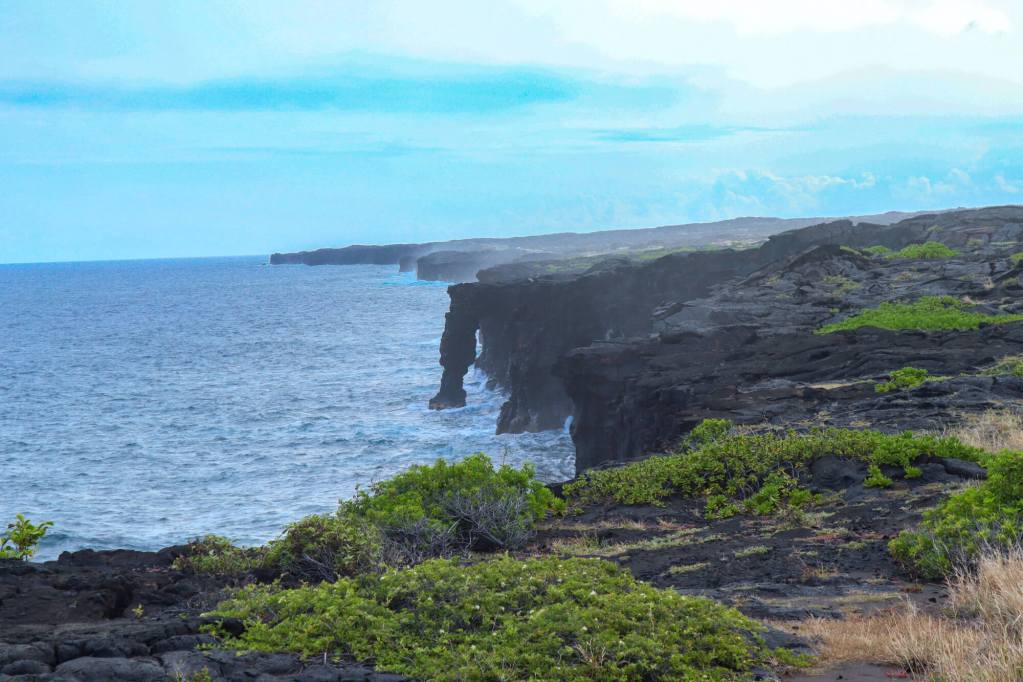
At the end of Chain of Craters Road, you’ll find one of the most iconic landscapes in Hawaiʻi Volcanoes National Park – Hōlei Sea Arch. This natural rock arch stands around 27 metres (90 feet) high and was carved by the waves of the Pacific Ocean into towering basalt cliffs.
The black volcanic rocks, crashing waves and endless ocean create a spectacular contrast, but Hōlei Sea Arch also serves as a reminder of just how dynamic the Big Island’s landscape is. The ocean is constantly eroding the basalt cliffs, so the arch won’t last forever – eventually, erosion will cause it to collapse into the sea.
It’s undoubtedly one of the most photogenic spots along Chain of Craters Road and a spectacular way to end your journey through the island’s volcanic landscape.
Puʻuloa Petroglyphs – Ancient Hawaiian Petroglyphs
Hawaiʻi Volcanoes National Park is about much more than craters, lava and geology. It’s also a unique opportunity to learn about the history and culture of Native Hawaiians.
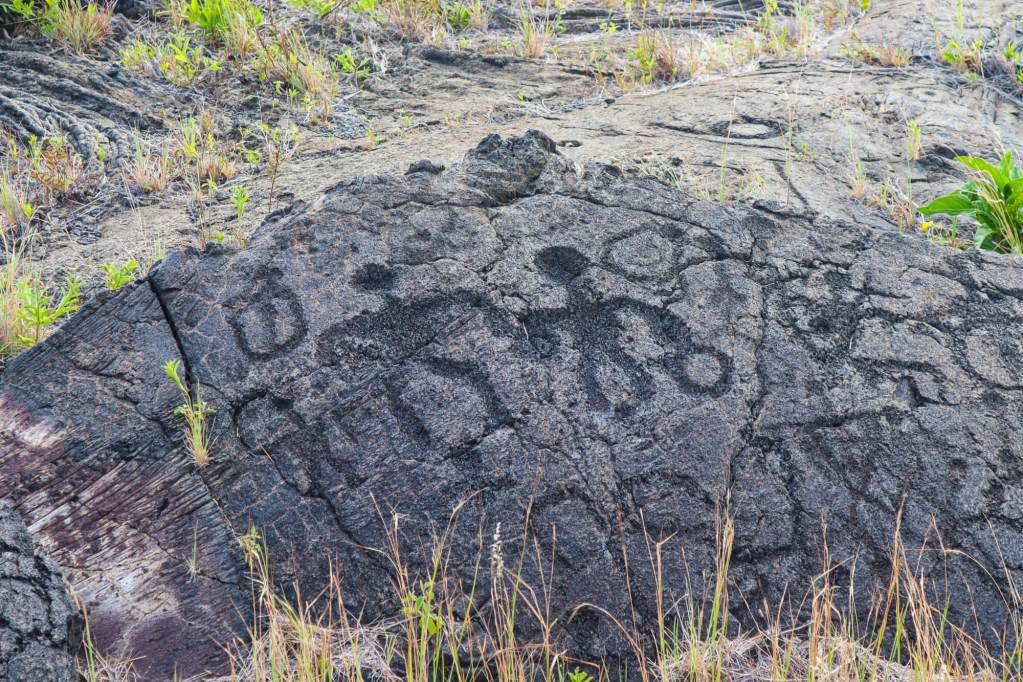
Puʻuloa is a place of particular cultural and spiritual significance. Its name literally means “long hill”, while its deeper meaning is “hill of long life” – a reference to the traditions associated with this sacred site.
More than 23,000 petroglyphs are carved into the hardened lava here, depicting human figures, geometric symbols, canoe sails and other designs. Among the most common features are small, circular depressions known as poho or cupules.
According to Hawaiian tradition, some of these depressions were used to hold the piko, or umbilical cord, of a newborn child, with the hope that Puʻuloa would bless them with a long and prosperous life. It’s hard to imagine a more symbolic place for such a tradition than the “hill of long life” itself.
The petroglyphs, however, represent more than just this one tradition. They are also thought to have recorded journeys, marked trails and boundaries, and documented events and aspects of life in ancient Hawaiʻi.
Puʻuloa is one of the most important archaeological sites of its kind in Hawaiʻi and offers a remarkable opportunity to see traces of the lives of the island’s early inhabitants preserved directly in the hardened lava.

Mauna Loa – The World’s Largest Active Volcano
While Kīlauea gets most of the attention from visitors to Hawaiʻi Volcanoes National Park, another part of the park is home to a true giant – Mauna Loa, the largest active volcano on Earth by volume and mass. It’s so massive that its weight actually causes the floor of the Pacific Ocean to bend beneath it!
Paradoxically, Mauna Loa – rising to 4,169 metres (13,681 feet) and the second-highest summit in Hawaiʻi after Mauna Kea – doesn’t look particularly imposing at first.
But appearances can be deceiving! Measured from its underwater base, the volcano rises around 9,170 metres (30,085 feet), making it taller than Mount Everest when measured from sea level. 🤯
Mauna Loa is a gigantic shield volcano with very gentle slopes. Instead of the dramatic, steep-sided cone you might imagine when you hear the word “volcano”, you’ll see vast slopes stretching towards the horizon. And that’s where its name comes from: Mauna Loa means “long mountain”.
💡 Fun Fact: If Mauna Loa were placed at the bottom of the Mariana Trench, its summit would still rise above the surface of the ocean. 🤯 It’s hard to imagine a better way to appreciate the sheer scale of this giant!
Mauna Loa is between 600,000 and one million years old and is the second-youngest volcano that makes up the Big Island. Its documented eruptive history dates back to 1843, and since then, 34 eruptions have been recorded. The most recent took place in 2022, marking the volcano’s first eruption in nearly four decades!
If you want to see Mauna Loa up close, one of the most accessible places is Mauna Loa Lookout, located at an elevation of more than 2,000 metres (6,500 feet). You can drive there and experience a completely different side of Hawaiʻi Volcanoes National Park – stark, alpine landscapes instead of tropical greenery.
This is also where Mauna Loa Trail begins, leading towards the summit. However, this is far from an ordinary walk. The trail is a challenging backcountry route that reaches high elevations and crosses rough, jagged lava terrain. Completing the full route requires excellent fitness, careful preparation and experience with high-altitude hiking. If you don’t have experience with this type of trekking, this is definitely not the place for a spontaneous adventure.
Mauna Loa Observatory, located on the volcano’s northern slope, is currently not accessible to the general public. The road to the observatory was damaged during the 2022 eruption, and although temporary access for maintenance and operations was completed in 2026, the facility has not yet reopened to visitors.
👉 If you’re not planning a demanding trek, Mauna Loa doesn’t necessarily need to be a must-see on a one-day visit to Hawaiʻi Volcanoes National Park. It’s still worth keeping this giant volcano in mind as you drive through the park – its enormous slopes are an unmistakable part of the Big Island’s landscape.
Kahuku Unit – The Lesser-Known Side of the Park
Hawaiʻi Volcanoes National Park isn’t just about the zone around Kīlauea. Around an hour’s drive from the park’s main area, on the slopes of Mauna Loa, you’ll find Kahuku Unit – a much quieter and less-visited part of the park.
The area encompasses the former Kahuku Ranch, once one of the largest ranches in Hawaiʻi. Its landscape was forever changed by the powerful 1868 eruption of Mauna Loa. For more than 150 years, the ranch was used for cattle ranching and the production of beef and hides, but its peaceful pastoral landscape was repeatedly interrupted by volcanic activity from Mauna Loa.
Today, Kahuku Unit is best known for its many hiking options, with trails of varying lengths and difficulty levels. Some can also be explored by bicycle.
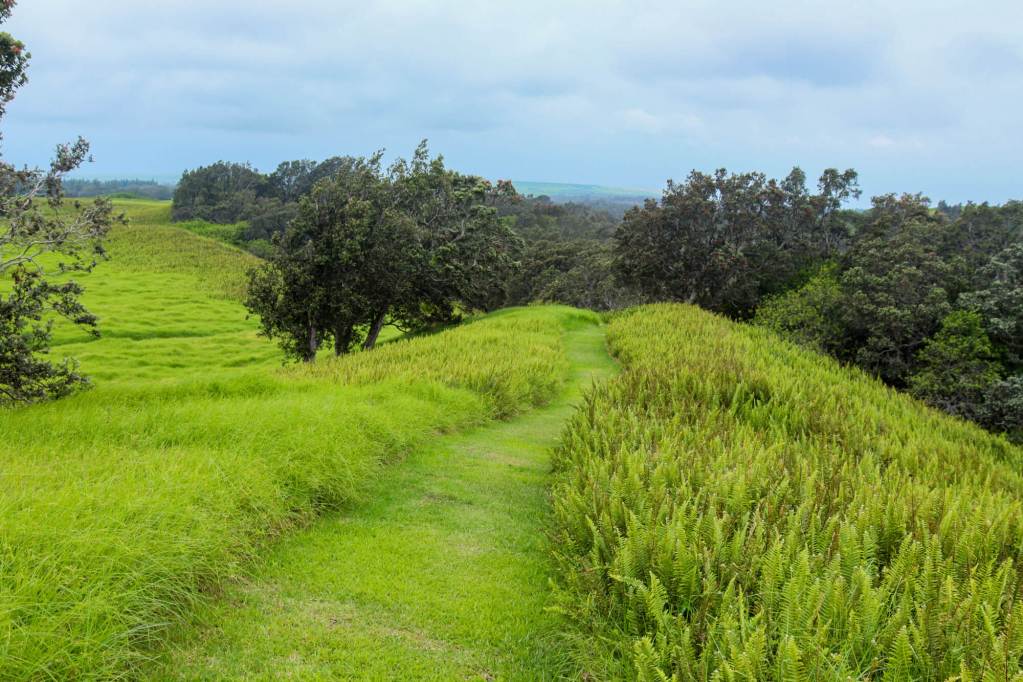
If you’re short on time, you could consider two very short trails that offer a glimpse of how different this part of the park is from the slopes of Kīlauea – there’s noticeably more greenery here:
- Pu‘u o Lokuana Cinder Cone – approximately 0.35 km (0.2 miles) loop;
- Kamakapa‘a Trail – approximately 0.8 km (0.5 miles) loop.
You can find more information about the trails on the Hawaiʻi Volcanoes National Park website.
Unfortunately, during our visit we couldn’t reach the higher-elevation trails because of the poor condition of the road, which had been damaged by flooding that devastated parts of the Hawaiian Islands in early 2026.
📢 Important: Kahuku Unit is about an hour’s drive from Kīlauea Visitor Center and has different opening hours from the main part of the park. It is currently open Thursday to Sunday, from 8:00 am to 4:00 pm, but always check the latest NPS updates before setting off.
💡 Tip: If you’re planning to hike in Kahuku Unit, bring plenty of water – there is no drinking water available on site. At the Visitor Center, you can pick up a trail map and ask park rangers for additional information. You’ll also find portable toilets and National Parks Passport stamps here. They’re different from the ones at Kīlauea Visitor Center, so stamp collectors will be happy!
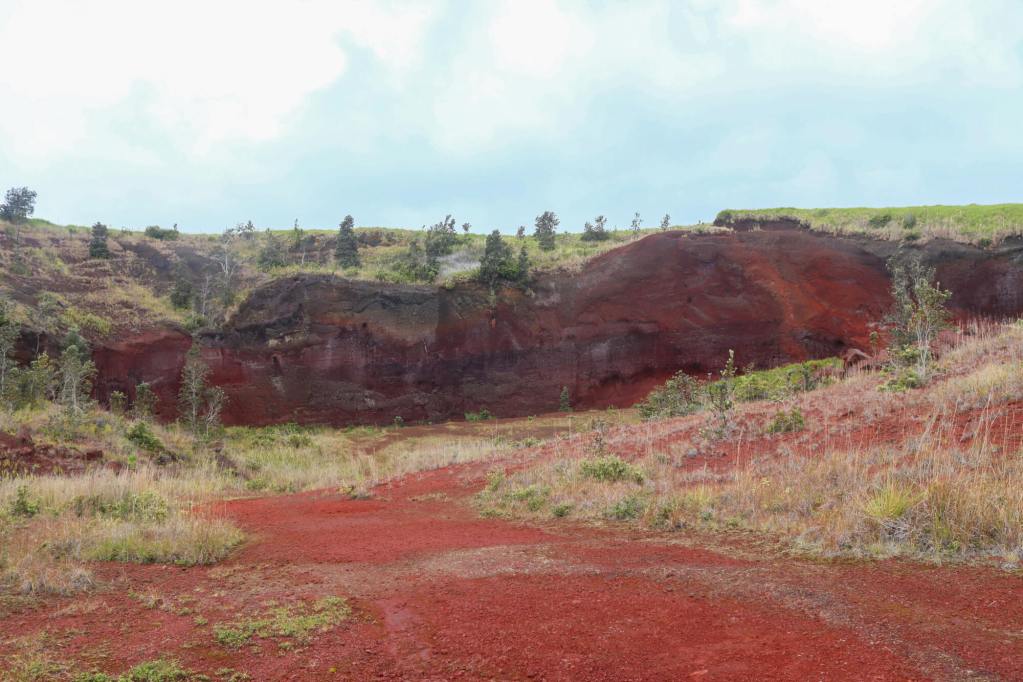
What to See in Hawaiʻi Volcanoes National Park If You’re Short on Time
If you only have a few hours to spend in Hawaiʻi Volcanoes National Park, don’t try to see everything. It’s best to focus on the Kīlauea summit area, where you’ll find the highest concentration of attractions.
🌋 If you have 2–3 hours: Start with Kīlauea Caldera and the viewpoints along Crater Rim Drive, then head to Thurston Lava Tube (Nāhuku). If time and conditions allow, you could also add a short walk around Steam Vents.
🌋 If you have around half a day: In addition to the caldera and Thurston Lava Tube, take on Kīlauea Iki Trail – one of the most spectacular hikes in the park and a great way to see the solidified lava lake up close.
🌋 If you have a full day: Spend part of the day exploring the Kīlauea summit area, then set off along Chain of Craters Road towards the coast. This is the best option if you want to experience as many different sides of the park as possible – from craters and lava fields to petroglyphs and the Pacific coastline.
❤️ If you could choose just one attraction: We’d go for Kīlauea Caldera. This is the heart of the park and the place where you can best appreciate the sheer scale of Kīlauea and its vast volcanic landscape.
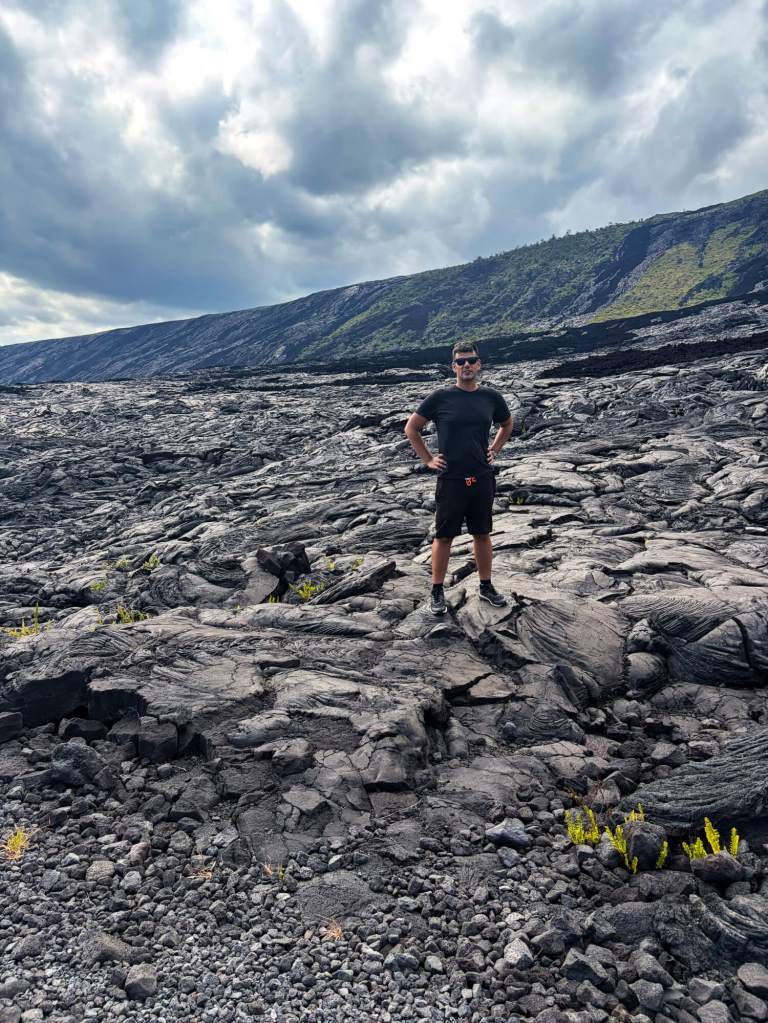

Hawaiʻi Volcanoes National Park – A Place That Stays With You
Hawaiʻi Volcanoes National Park is one of those places that’s difficult to compare with any other national park.
In a single visit, you can stand above the enormous Kīlauea Caldera, walk across a solidified lava lake, venture into a tunnel carved by flowing lava, see steaming vents and vast lava fields, and eventually reach the Pacific coast – where volcanic activity has helped create new land
But perhaps the most extraordinary thing is that this landscape is far from finished!
Kīlauea and Mauna Loa are still active volcanoes. Lava and other volcanic processes continue to reshape the surface of the island, destroying some areas while, over time, vegetation gradually reclaims land lost to eruptions. That means Hawaiʻi Volcanoes National Park could look completely different in another ten or twenty years!
And that’s exactly why it’s worth looking at Hawaiʻi Volcanoes National Park as more than just a place where you can see volcanoes. It’s a living landscape where geology, nature, history and Hawaiian culture are intertwined at every turn.
If you’re planning a trip to the Big Island, make sure to visit Hawaiʻi Volcanoes National Park! If you’re short on time, choose a few places that interest you most and check the latest conditions before setting off – because in Volcanoes National Park, plans can change along with the… mood of the volcanoes. 🌋
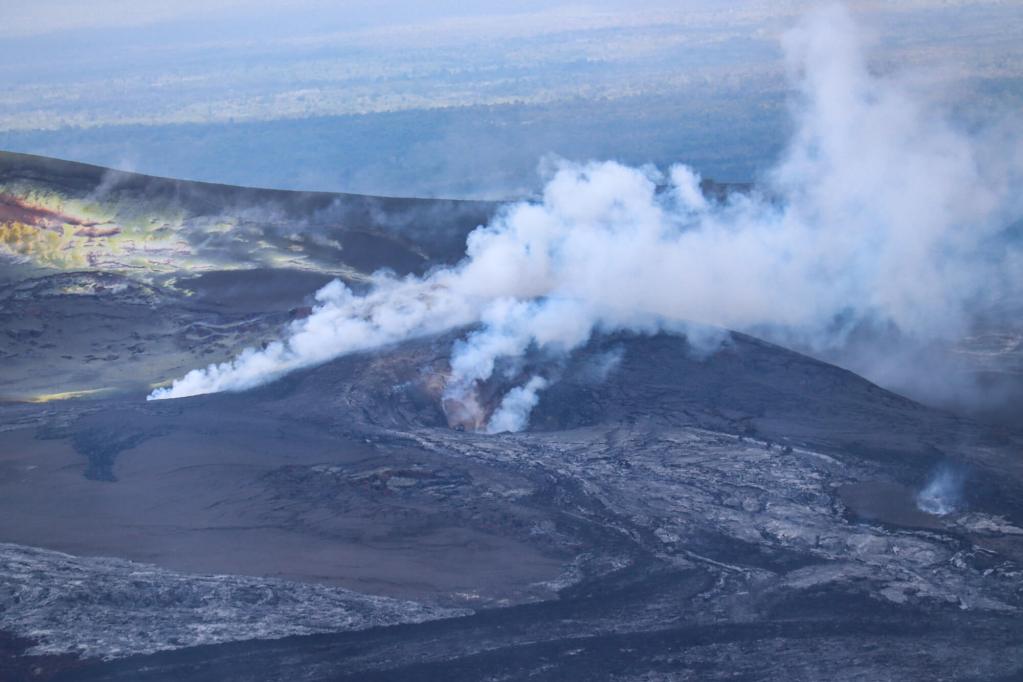
FAQ – Hawaiʻi Volcanoes National Park
Planning Your Visit
How much time do you need to explore Hawaiʻi Volcanoes National Park?
You should allow at least a few hours to see the main attractions around Kīlauea Caldera. If you want to do one or two short walks, visit the main viewpoints and drive part of Chain of Craters Road, it’s best to set aside around half a day.
In our opinion, a full day is ideal if you want to see the park’s main highlights, while those planning longer hikes should consider spending a day and a half or even two days here.
Is Hawaiʻi Volcanoes National Park worth visiting if Kīlauea isn’t erupting?
Absolutely! An eruption is a spectacular bonus, but Hawaiʻi Volcanoes National Park has plenty more to offer. You can see the enormous Kīlauea Caldera, the solidified lava lake at Kīlauea Iki, a lava tube, lava fields, volcanic vents, petroglyphs and the extraordinary landscapes along Chain of Craters Road.
What’s more, even during pauses in the eruption, the volcano remains active and you can still see plenty of signs of this activity.
Is Hawaiʻi Volcanoes National Park open after dark?
Yes! Hawaiʻi Volcanoes National Park is open 24 hours a day. After dark, you can admire the caldera and, if an active eruption episode is underway, you may even see a red glow or lava fountains.
Keep in mind, however, that not all attractions and facilities are accessible around the clock, and some trails may be closed for safety reasons.
Don’t forget to bring a headlamp or torch!
Can you visit Hawaiʻi Volcanoes National Park without a car?
It’s possible, but very difficult. Having a car makes exploring the park much easier, as its main attractions are spread across a large area and public transport doesn’t reach many places, including Chain of Craters Road.
Without a car, your best options are to join an organised tour or focus on the attractions around Kīlauea Caldera.
Is there an entrance fee for Hawaiʻi Volcanoes National Park?
Yes. The park charges an entrance fee, with the price depending on how you enter. Currently, it costs US$30 per private vehicle, US$25 per motorcycle, or US$15 per person entering on foot or by bicycle. The pass is valid for 7 days.
When is the best time to visit Hawaiʻi Volcanoes National Park?
The park can be visited year-round, but keep in mind that the weather at the summit of Kīlauea can be completely different from conditions on the coast.
If you want a quieter visit and hope to avoid the biggest crowds, early morning is a good choice. If, on the other hand, you want to increase your chances of seeing the red glow of lava during an active eruption, it’s worth staying until after dark and checking the latest conditions.
Is Hawaiʻi Volcanoes National Park suitable for children?
Yes. The park has everything from very easy walks to challenging trails. With children, some good options include the short trails around Devastation Trail and Thurston Lava Tube.
Keep in mind, though, that volcanic terrain can be uneven and the weather can change quickly. You should also be aware of volcanic hazards, including uneven ground, crater edges, hot cracks and volcanic gases.
Do you need to reserve your visit to Hawaiʻi Volcanoes National Park?
You don’t need to reserve an entrance pass in advance, but some attractions, events or services may have their own booking requirements.
It’s also worth remembering that car parks at the most popular spots can fill up quickly, especially during active eruption episodes.
Volcanoes and Safety
Can you see lava during every visit?
Unfortunately, no. Lava is only visible during active phases of an eruption, and even then, seeing it isn’t guaranteed.
Kīlauea’s activity can change very quickly, so before your visit, check the latest updates from Hawaiʻi Volcanoes National Park and the Hawaiian Volcano Observatory.
For more information, check out our guide to lava viewing.
Can you enter Halemaʻumaʻu Crater?
No. Visitors can only view Halemaʻumaʻu from designated viewpoints and trails.
Entering the crater is prohibited for safety reasons. Its walls and floor can be unstable, while other hazards include ground cracks, rockfalls, volcanic gases and hot volcanic material.
Wildlife and Attractions
Can you see nēnē in Hawaiʻi Volcanoes National Park?
Yes! Nēnē, the Hawaiian goose, is an endemic and strictly protected species that can be spotted in different parts of the park.
Take particular care when driving, as nēnē often appear on roads, along the roadside and in car parks. Do not approach them and, absolutely never feed them.
What can you see in Hawaiʻi Volcanoes National Park if you only have a few hours?
If you’re short on time, focus on the area around Kīlauea Caldera. See Halemaʻumaʻu from one of the viewpoints, stop at Steam Vents and Sulphur Banks, and, if you have more time, hike Kīlauea Iki Trail or visit Thurston Lava Tube.
If you’re more interested in landscapes and have a car, you could instead spend a few hours driving part of Chain of Craters Road.
Heading to Hawaiʻi? Plan your adventure with us!
Hungry for more American adventures? Check out our other USA travel guides!
Leave a Reply