

Bali, Indonesia’s most-loved island, isn’t just known as the “Island of the Gods” – it’s also the “Island of a Thousand Temples”. Anyone who has caught even a glimpse of life here will surely agree that both names perfectly capture how deeply spirituality is woven into the daily lives of the Balinese people.
Temples of all shapes and sizes are scattered everywhere you look. Some sources say there are 10,000, while others estimate the number could be as high as 20,000 or even 50,000! Why such a massive difference? It’s simple – almost every single home in Bali has its own temple, whether it’s a grand family shrine or a small, humble altar.
Today, we’re taking you on a magical journey to one of the most stunning and popular spots on the island: the macaque-filled Uluwatu Temple, also known as Pura Luhur Uluwatu.
🧐 Fun Fact: In Balinese, the word pura means a Hindu temple.
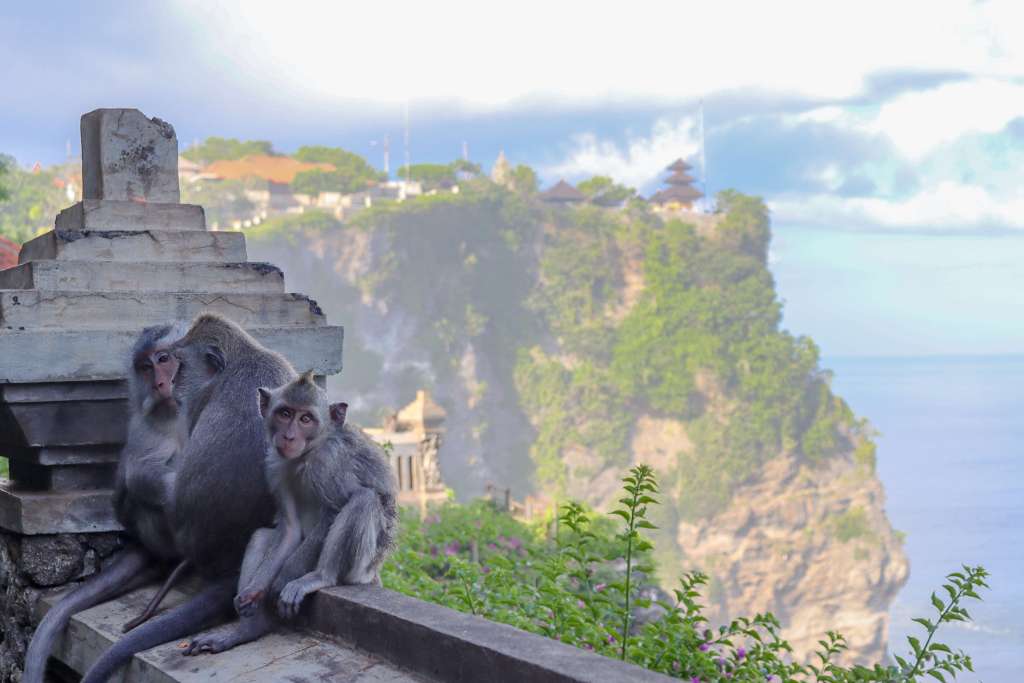
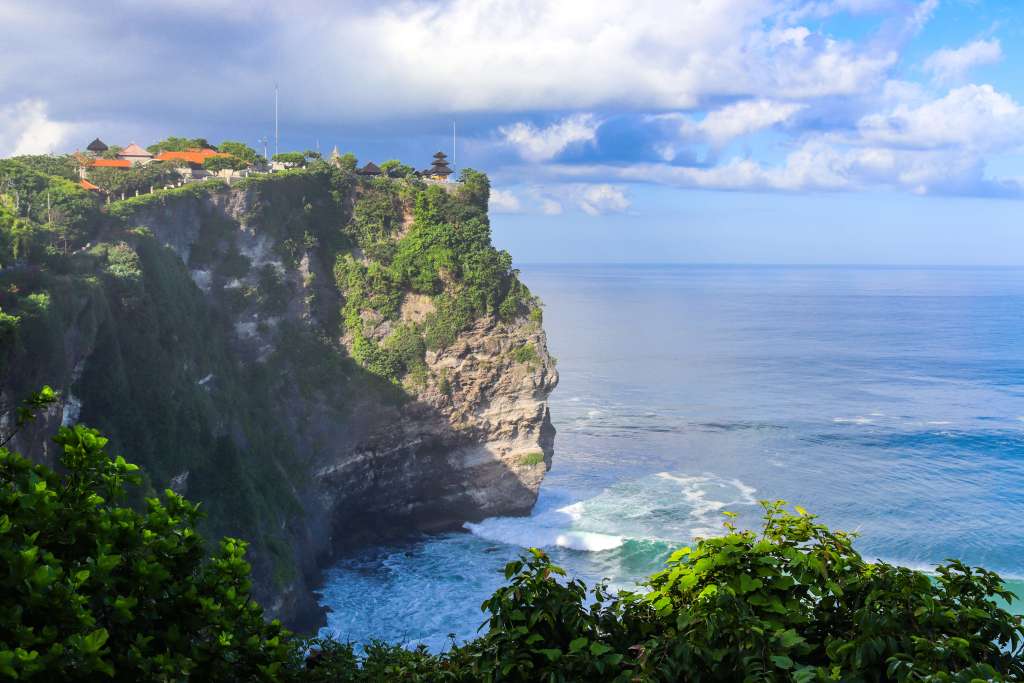
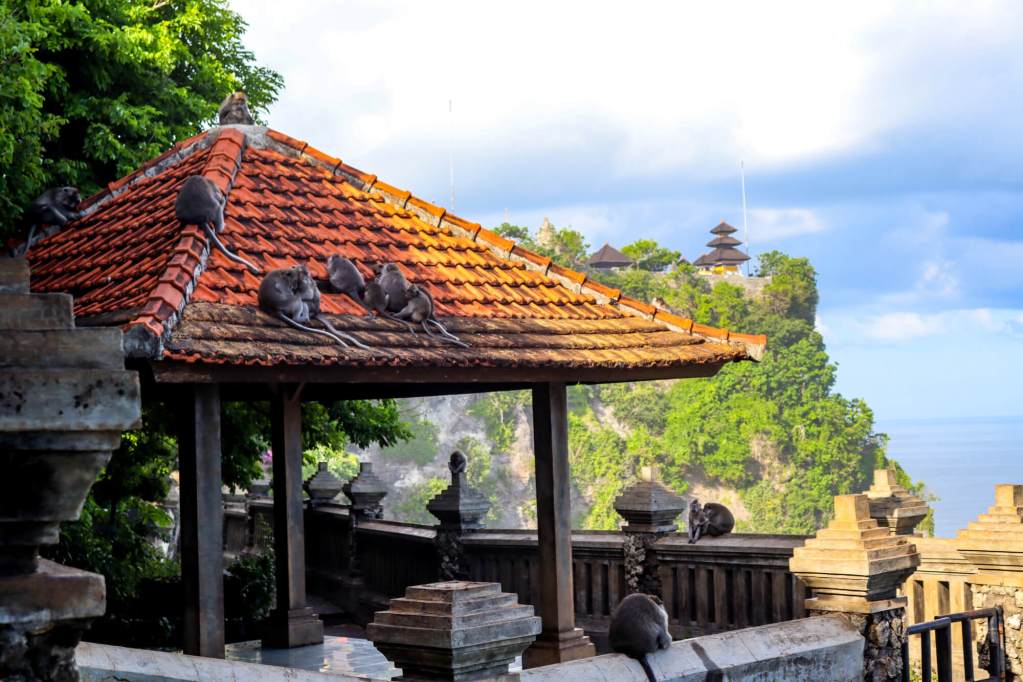
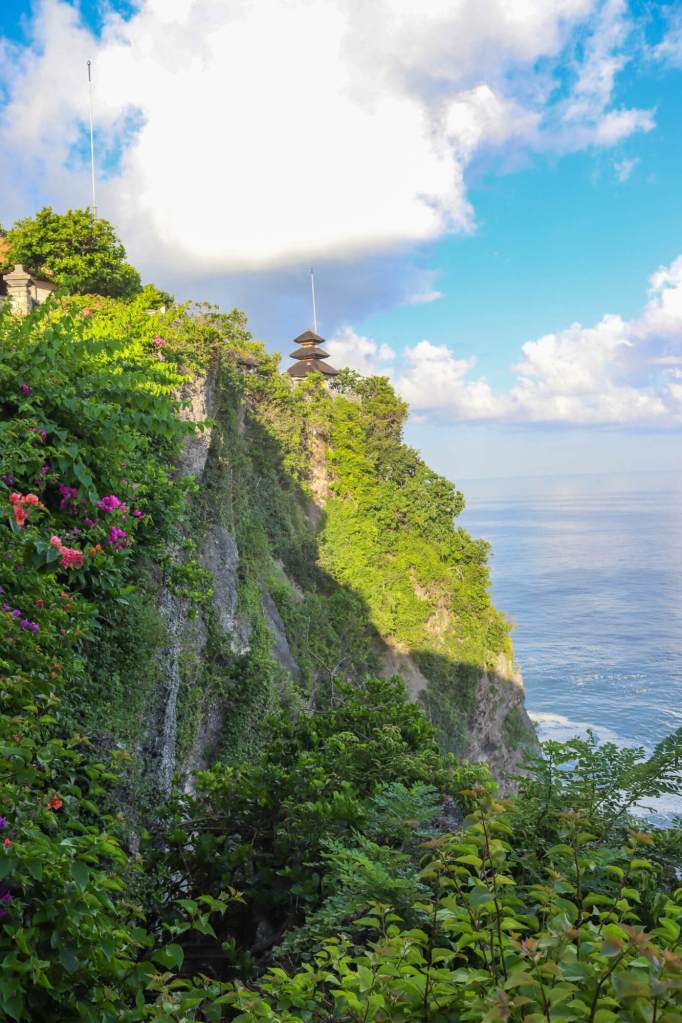
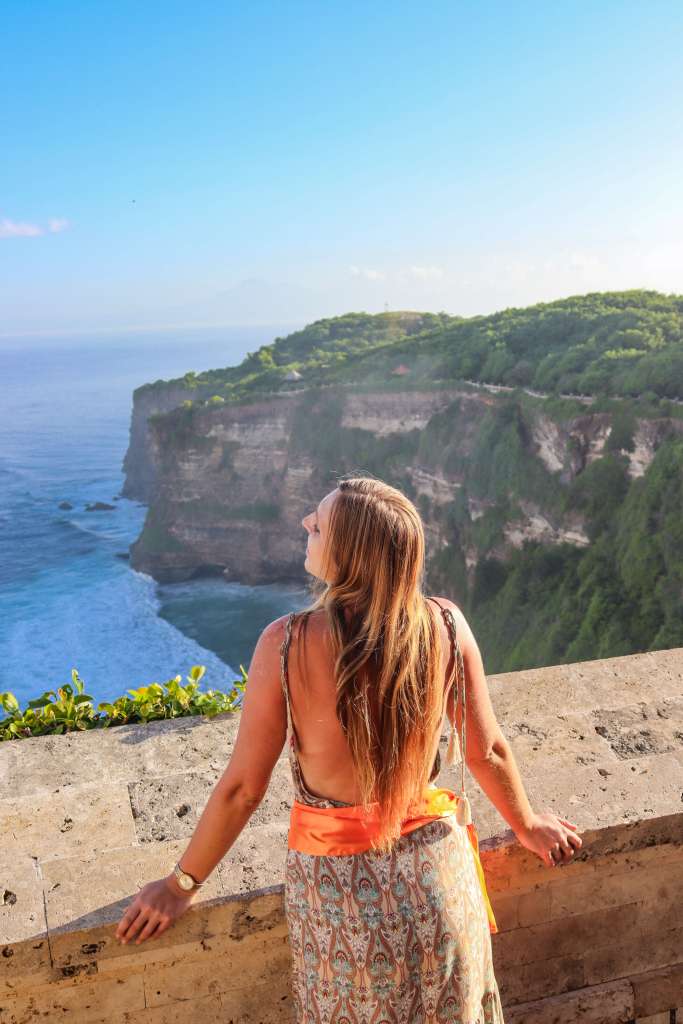
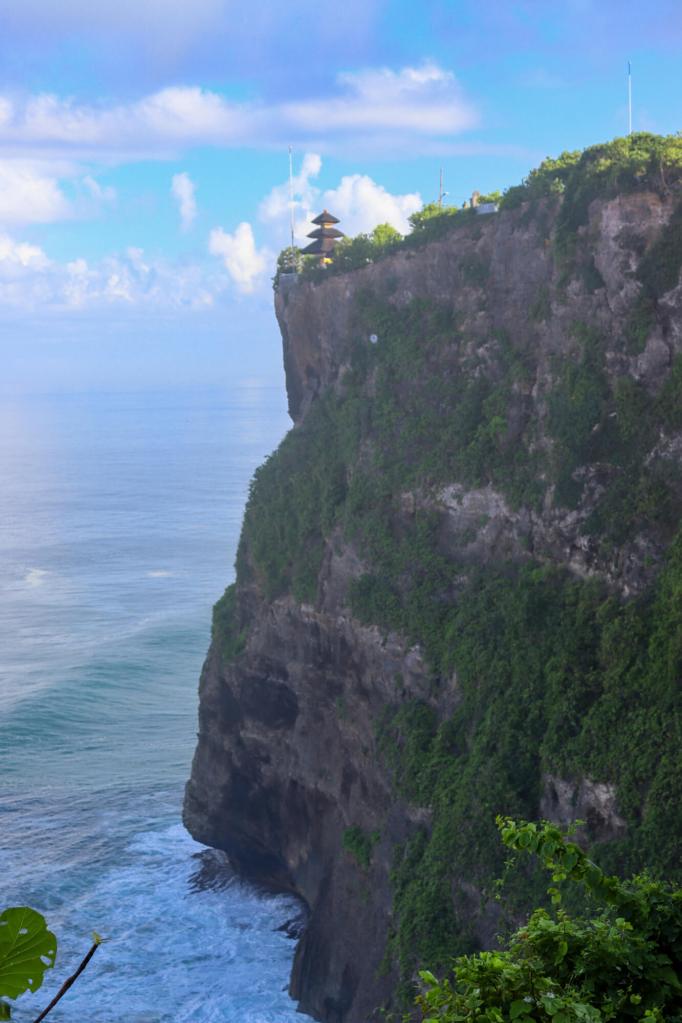
While Uluwatu Temple might seem architecturally modest compared to some of Bali’s other landmarks, it remains one of the absolute must-sees on the Island of the Gods. Its popularity is largely thanks to its spectacular location – it’s perched right on the edge of a 70-metre cliff! This unique setting offers breathtaking views across the Indian Ocean, but that’s not the only thing it’s famous for. The temple is also home to a troop of (not always) adorable macaques. 🐒
Join us as we dive into the secrets of this unique place, explore its history, meet its furry residents, and learn more about the incredible cultural performances that make Uluwatu an essential stop on any Bali itinerary.




Uluwatu Temple at a Glance
📍 Location: Pecatu, Bukit Peninsula; South Bali.
🗺️How to get there: The best way to reach the temple is by renting a scooter. If you’re not keen on braving Bali’s chaotic traffic yourself, you can hire a car with a private driver, take a taxi (using the Grab or Gojek apps), or join an organised tour.
💰 Entrance fee: 60,000 IDR for adults, 40,000 IDR for children (ages 6-12). Note: Tickets for the Kecak Fire Dance are sold separately!
🚗 Parking: There is a large, paid parking area located right by the temple entrance.
⏰ Opening hours: 7:00 am – 7:00 pm.
📆 Best time to visit: The dry season (April – October) is ideal. Aim for the late afternoon if you want to catch the sunset and the Kecak dance, or head there early in the morning if you’d prefer to avoid the crowds.
Where is Uluwatu Temple Located?
Uluwatu Temple is dramatically perched above the Indian Ocean on the southern tip of Bali, on the Bukit Peninsula (the name Bukit simply means “hill” in Indonesian). The temple is roughly 20km from Ngurah Rai International Airport, 25km from the island’s capital, Denpasar, 35km from Canggu, and about 55km from Ubud.
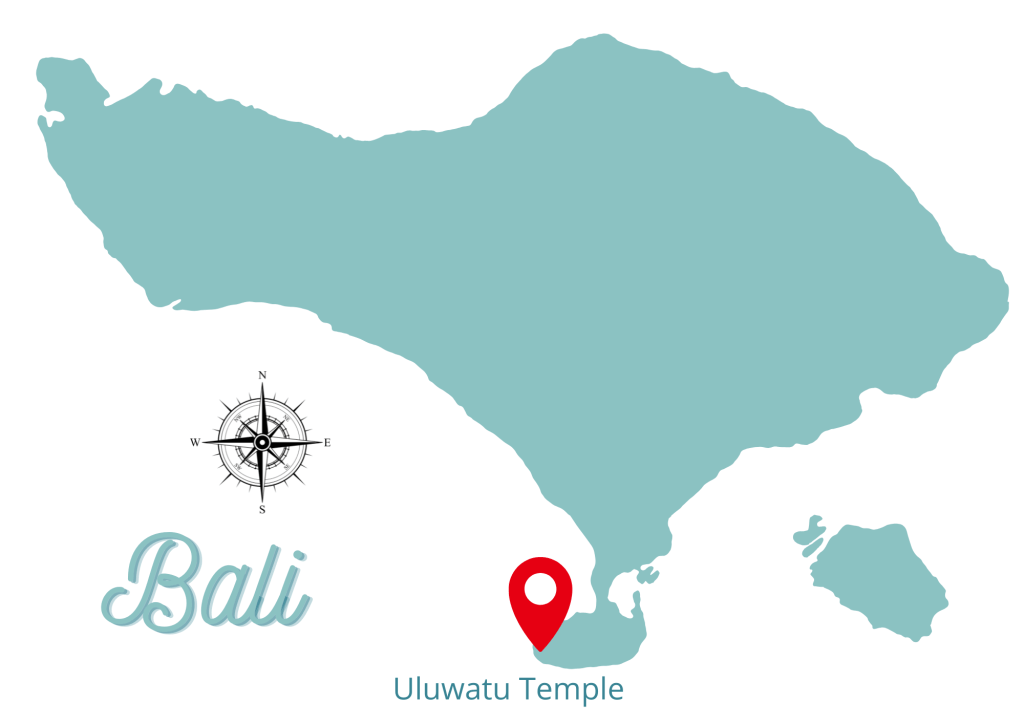
Even though the distances from Bali’s most popular tourist hubs aren’t huge, travel times can be much longer than you might expect because of the island’s famously heavy traffic. Before setting off, it’s always worth checking Google Maps for the estimated journey time – and allowing a bit of extra time for unexpected jams along the way. 🙈
Here’s the exact location of Uluwatu Temple on Google Maps.
🧐 Fun Fact: The name Uluwatu comes from two Balinese words: ulu (“edge”) and watu (“rock”). As you might guess, it’s a direct reference to the temple’s dramatic location right on the edge of a towering cliff.

How to Get to Uluwatu Temple
By Scooter or Car
Just like most attractions on Bali, the easiest way to reach Uluwatu Temple is by scooter or car. If you’re exploring the southern part of the island, we’d definitely recommend hiring a scooter. It’s hands-down the best way to bypass the stationary traffic and significantly cut down your travel time.
When riding a scooter in Bali, please be extra cautious and always wear a helmet! we saw far too many tourists who seemed to prioritise their sunglasses over their safety… 🤦♀️ In the event of an accident, a helmet can literally save your life (and we know this from our own painful experience in the Philippines!).
💡 Tip: To legally drive a scooter or car in Bali, you need an International Driving Permit (IDP). While most rental places won’t even ask to see it, you could find yourself in serious trouble during a police spot-check or if you’re involved in a collision. 👮♂️
Of course, renting a vehicle isn’t for everyone. Before you make a decision, we suggest doing a bit of research (though do take some online opinions with a pinch of salt). It really comes down to your experience and your nerves – not everyone will feel comfortable navigating the chaos of Balinese roads.
📢 Important: In Bali, just like in the rest of Indonesia, they drive on the left-hand side of the road!
The biggest perk of having your own transport is the flexibility to explore at your own pace. A scooter is also by far the most budget-friendly option. Plus, you can easily combine your trip to Uluwatu with a visit to some of the Bukit Peninsula’s paradise beaches.
📢 Important: When parking your scooter at Uluwatu Temple, make sure you don’t leave anything in the storage compartment or on the handlebars that might catch a monkey’s eye. The macaques love hopping onto the bikes and will swipe anything they fancy without a second thought. We’ve also heard of cases where the animals have actually damaged the scooters – while that’s hard to prevent, it’s definitely something to be aware of! 🐒

Hiring a Car with a Private Driver
Driving in Bali is quite a challenge, and if you’re not comfortable navigating the local chaos, hiring a private car with a driver for the day is a fantastic option. You get to decide the itinerary, and your driver often acts as an unofficial guide and photographer too!
During our last visit, we used a private transfer between the airport and Ubud. Our driver was very kind and during our conversation shared so many fascinating insights about the island, its people, and their culture.
We highly recommend this if you want to see Bali through the eyes of a local. In March 2025, a full-day tour costed around €30. You can find our driver’s details below:
Taxis, Grab, and Gojek
If you’re already nearby, you can also opt for a taxi. We particularly recommend using the Grab app (Asia’s answer to Uber). Not only is it generally cheaper than traditional taxis, but it’s also much more transparent – you can see the price upfront before you even book your ride. To avoid unnecessary conversion fees, it’s a good idea to link a multi-currency card (like Revolut or Wise) to the app.
The local alternative to Grab is Gojek. However, we found their app a bit less user-friendly, so we stuck with the tried-and-tested Grab during our time on the island.
Important: App-based drivers often have trouble picking up passengers directly from the temple after sunset due to what’s known as the “local transport mafia”. Grab and Gojek drivers are often banned from entering the pickup zones or are too intimidated to approach the main gates. This means that after the Kecak dance performance, tourists are often forced to use much more expensive local taxis.
Organised Tours
Another way to visit is by joining an organised tour. These are typically full-day trips from the main tourist hubs that include Uluwatu along with other local highlights. If you’re not a fan of group sightseeing, you can always book a private tour instead.
This is a great option if you want everything planned for you from A to Z.
You can find plenty of deals on sites like GetYourGuide or Viator. Just make sure to check if transport is included, as many of the cheaper offers are actually just entry tickets for the temple and the Kecak dance.

How Much Is the Entrance Fee for Uluwatu Temple?
Entrance fees in Bali change quite often—and sometimes by a significant amount. During our trip, almost every attraction was more expensive than we had expected after reading other blogs or Google Maps reviews. That’s why it’s always a good idea to be prepared and carry a bit of extra cash.
Currently, a ticket to Uluwatu Temple costs 60,000 IDR for an adult and 40,000 IDR for a child (ages 6-12). (Prices are current as of July 2026).
Card machines at the ticket booths often break down, so cash is definitely king here.
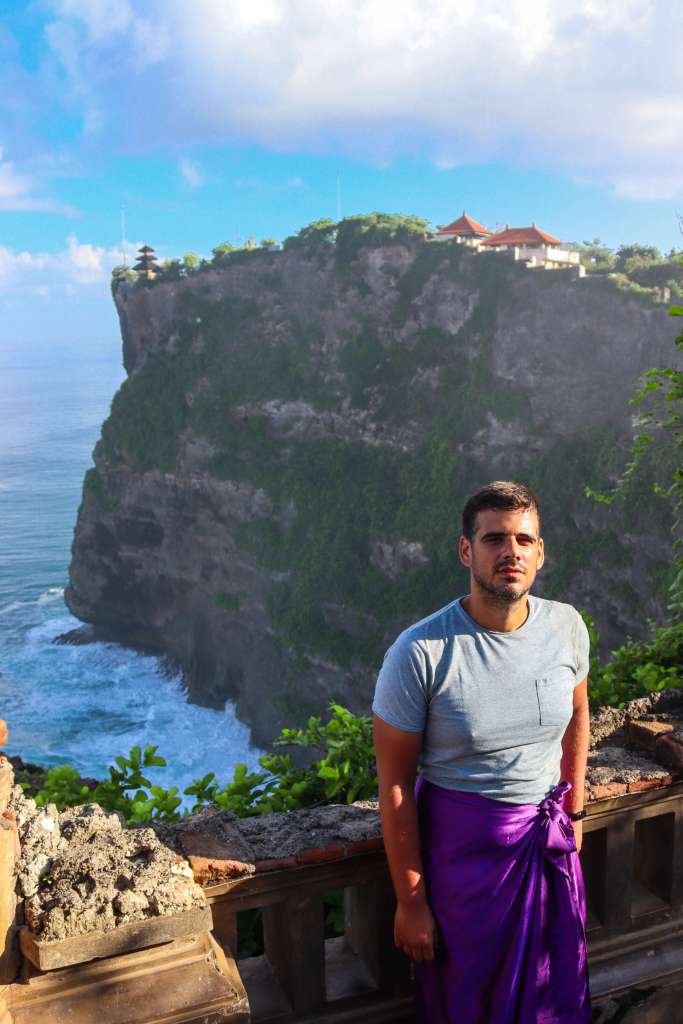
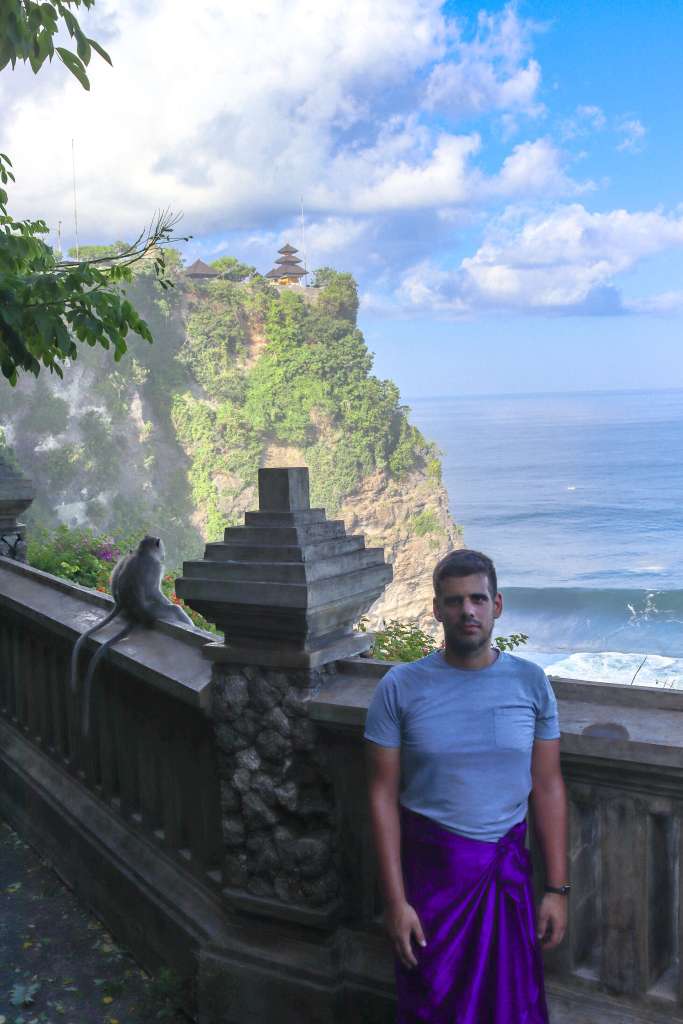
The ticket price includes the rental of a sarong or sash. These are mandatory to enter the temple grounds out of respect for local customs (even if your shoulders and legs are covered, you’ll often still be asked to wear a yellow sash around your waist). When you’re finished, just drop them off at the designated point near the exit.
Please note that the Kecak dance performance is an extra 150,000 IDR per person.
If you’re coming with your own transport, there’s also a parking fee, which is 2,000 IDR for a scooter or 5,000 IDR for a car.
Uluwatu Temple Opening Hours
Uluwatu Temple is officially open every day from 7:00 am to 7:00 pm.
Well, at least on paper! In reality, even though we arrived a few minutes after 7:00 am, the ticket office told us we’d have to wait a little longer to get in. How long? That depended on who we asked. One staff member said 15 minutes, while another – probably noticing we were looking a bit annoyed – asked for just five minutes of patience. That’s the thing about Bali: nobody is ever in a hurry! 🙄
Also, don’t be surprised if you see people coming and going outside of these official hours. Locals can enter the temple at any time to perform their daily rituals and ceremonies.
The Best Time to Visit Uluwatu Temple
The best time to visit Uluwatu is during the dry season, which in Bali runs roughly from April to October. This is your best bet for beautiful, sunny weather, when the humidity is a bit more manageable. 😅 Plus, you won’t have to worry as much about rain disrupting your sightseeing or the evening performances.
Uluwatu Temple is famous for its stunning sunsets and traditional Kecak dance shows, which take place daily at 6:00 pm (for an additional fee). Because of this, most travellers aim for a late afternoon visit.
It’s a good idea to arrive with plenty of time to spare before sunset. This way, you can explore the temple, the cliffs, and the surrounding coastal paths at your own pace without feeling rushed.
Just keep in mind that Kecak dance tickets often sell out before 5:00 pm! To be safe, we recommend getting to the ticket desk no later than 4:30 pm.
💡 Tip: During the peak tourist season, they sometimes put on an extra show at 7:00 pm, but this isn’t always guaranteed.
However, there is one major downside to an afternoon visit: the crowds. If you aren’t bothered about the dance or the sunset, we highly recommend going in the morning. You’ll have the place almost entirely to yourself!
What’s the Best Time of Day for Your Visit?
Choosing the right time to visit Pura Luhur Uluwatu is the key to a great experience. It’s the difference between a magical sunset memory and being stuck in a two-hour traffic jam. Here’s how to plan your day based on the temple’s official tips:
☀️ Early Morning (07:00 – 10:00) – Peace and Quiet
If the dance performance isn’t a priority for you, this is definitely the best time to go. The crowds are minimal, and the temperature is perfect for a pleasant stroll along the 70-metre cliff paths before the midday heat kicks in.
🔥 Midday (11:00 – 14:00) – Only for the Brave
This is the hottest part of the day. The sun beats down directly onto the limestone paths, and there is almost no shade to be found. It’s the least comfortable time to explore, as the heat can be really draining.
🌅 Golden Hour and Kecak Dance (15:00 – 19:00) – Peak Popularity
This is when Uluwatu Temple gets seriously busy. If you want to see the famous Kecak Fire Dance, you’ll need a bit of a strategy:
- Arrive between 3:00 pm and 4:30 pm: This will help you beat the worst of the traffic (which gets crazy after 5:00 pm) and give you a chance to grab your dance tickets (150,000 IDR).
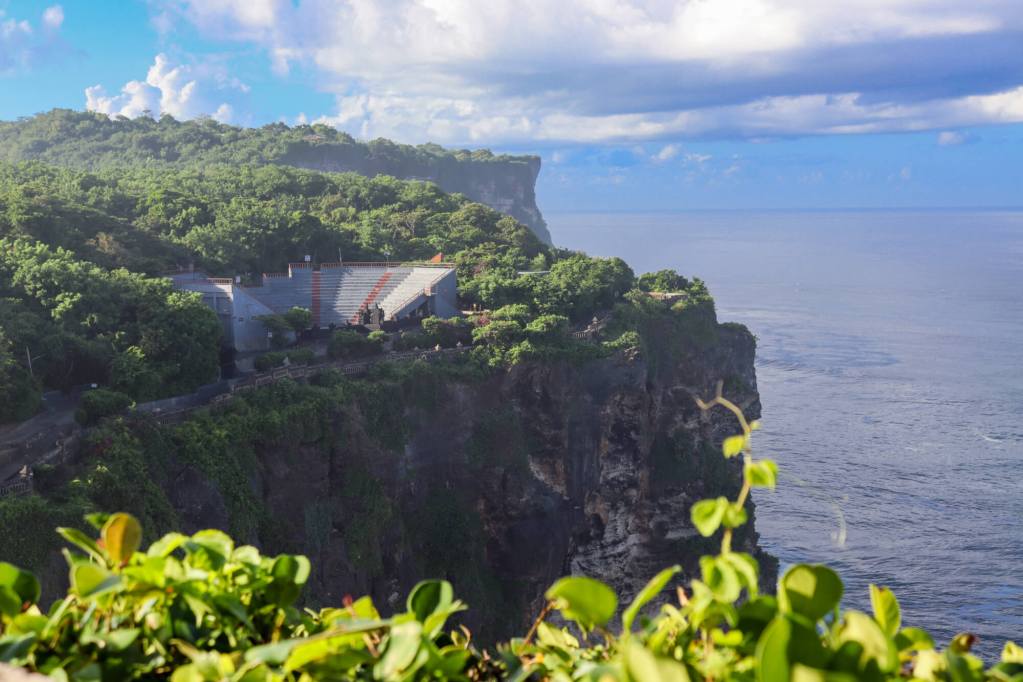
- Tickets sell out fast! The ticket booth for the show often closes by 5:00 pm simply because there are no seats left (the amphitheatre holds about 1,200 people).
⚠️ Important: The Traffic Warning!
Uluwatu’s popularity comes with a bit of a catch. Once the dance performance ends and the sun sets, over a thousand people flood out of the amphitheatre all at once. The drive back from the Bukit Peninsula to the rest of the island can take up to two hours in a massive traffic jam. Definitely factor this in when planning your dinner or the rest of your evening!
🤠 Our experience: Unfortunately, we didn’t manage to make it to Uluwatu Temple in time for sunset, so we decided to head there the following morning as soon as it opened. During our two-hour visit, we barely bumped into any other tourists. Instead, we mostly saw temple staff busy cleaning or keeping an eye on the macaques.

Monkeys at Uluwatu Temple
The Temple Macaques 🐒
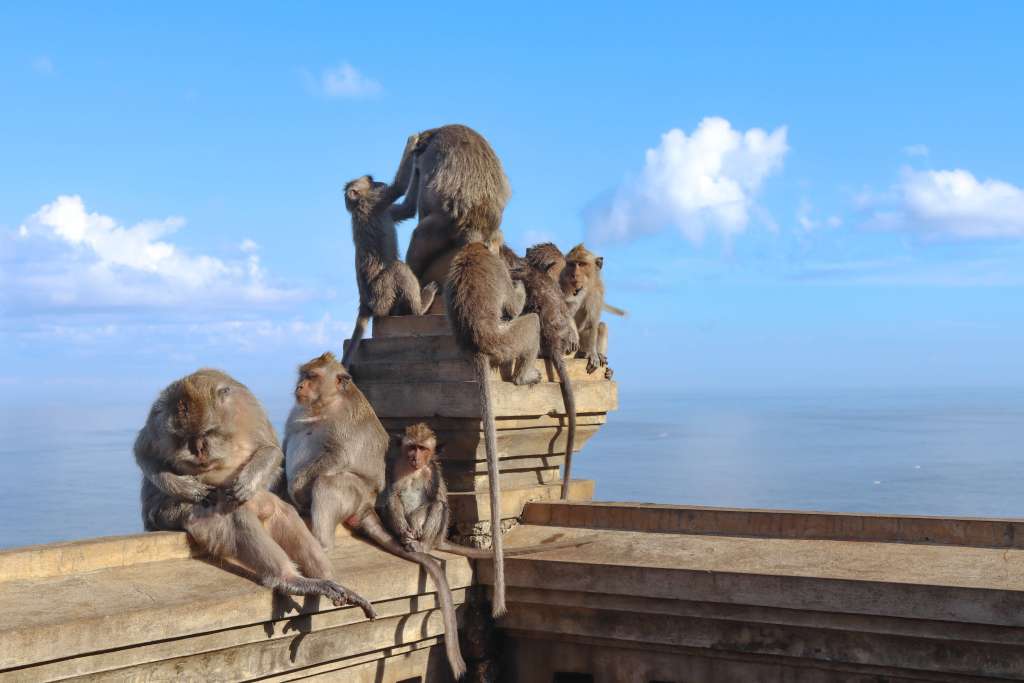
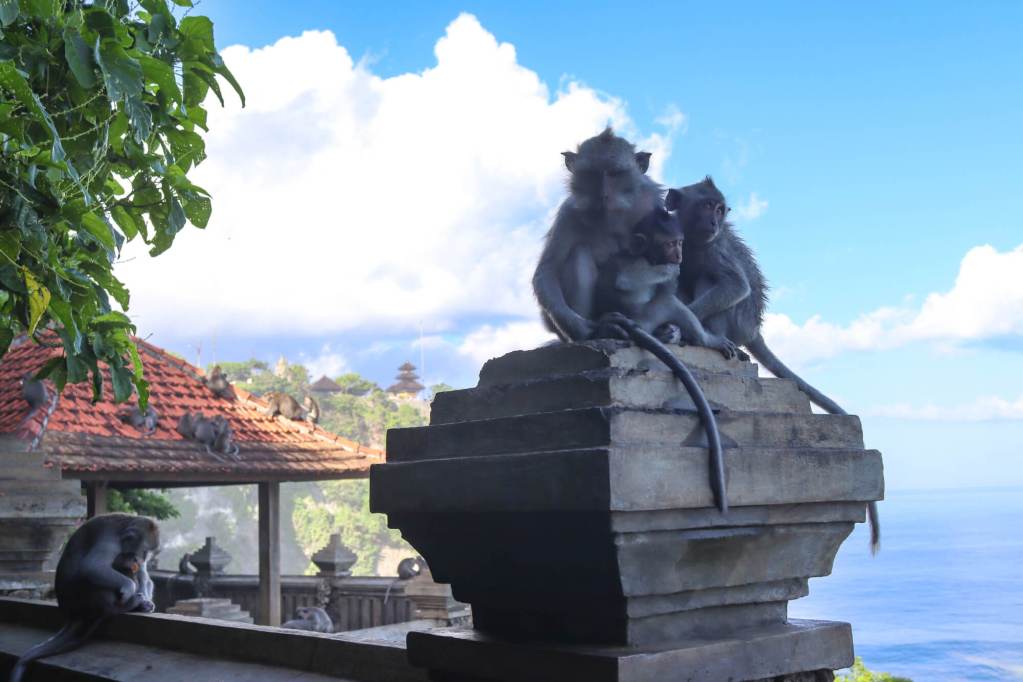
Uluwatu Temple isn’t just a place of worship for the Balinese and a top attraction for tourists—it’s also home to hundreds of long-tailed macaques. There are around 650 of them living here, divided into six different troops.
🧐 Fun Fact: Bali is mainly home to two species of monkeys: the widely seen long-tailed macaque (also known as the crab-eating macaque) and the rare East Javan langur (Javan lutung), which can be found in places like West Bali National Park (Taman Nasional Bali Barat).
Don’t let their cute faces fool you—these little guys have a bit of a reputation, to put it mildly! They are notorious for being cheeky thieves. What’s truly fascinating is that these intelligent animals don’t just realise that tourists usually carry tasty snacks; they’ve also figured out that they can trade… stolen items for food!
🧐 Fun Fact: The unusual behaviour of the Uluwatu macaques has actually been studied by scientists. Research shows that young monkeys learn this “bartering” strategy from their older relatives. What’s more, when new groups of macaques are introduced to the area, they pick up these tricks from the locals in no time! Luckily, because of the distance, they aren’t able to share this “knowledge” with the monkeys in the Ubud Monkey Forest. 🙊

🧐 Fun Fact: Watch your phones! According to temple data, between 5 and 10 smartphones are snatched by monkeys every single day. They are real tech fans, so make sure to keep a firm grip on yours! 📱🐒
The macaques usually go for accessories like sunglasses or hats, but they certainly won’t turn up their noses at a phone or a camera. Before you even head inside, it’s best to hide any loose items that might catch their eye (this includes jewellery, especially shiny earrings). Tuck away your wallets and hold your phones tight.
Otherwise, if your “negotiations” go south, your belongings might end up at the bottom of the ocean. Trust us, they won’t hesitate for a second! 🙈 There are plenty of videos online showing tourists being robbed in Uluwatu, so please take our word for it.
🧐 Fun Fact: Studies have shown that Uluwatu’s macaques can actually judge the value of an item! They know a phone is “worth” more (meaning it demands a better ransom) than something like a hair clip. This makes them even more incredible – and a little more dangerous. 🚨
Of course, not all the monkeys are aggressive. Many of them are quite friendly or will simply ignore you. However, while you’re exploring, it’s a good idea to know how to spot the grumpy ones so you can keep your distance (you can read more about this in our “monkey etiquette” section below).
🧐 Fun Fact: The temple staff usually try to help recover stolen items by bartering with treats. However, it doesn’t always end in success, so it’s much better not to tempt fate in the first place.

The truth is, the Uluwatu macaques have become quite entitled and pushy, largely due to mistakes made by tourists—especially feeding them. The animals have started to see visitors as a walking snack bar and have figured out very effective ways to get what they want.
If you’re a bit wary of close encounters with the monkeys, your best bet is to visit the temple early in the morning. During our morning visit, most of the macaques were busy eating breakfast or just chilling on the walls, showing very little interest in people. You can also hire a guide who will help keep the monkeys at bay and make sure you feel safe during your walk.
💡Tip: If you do decide to hire a guide, make sure you agree on the price upfront!
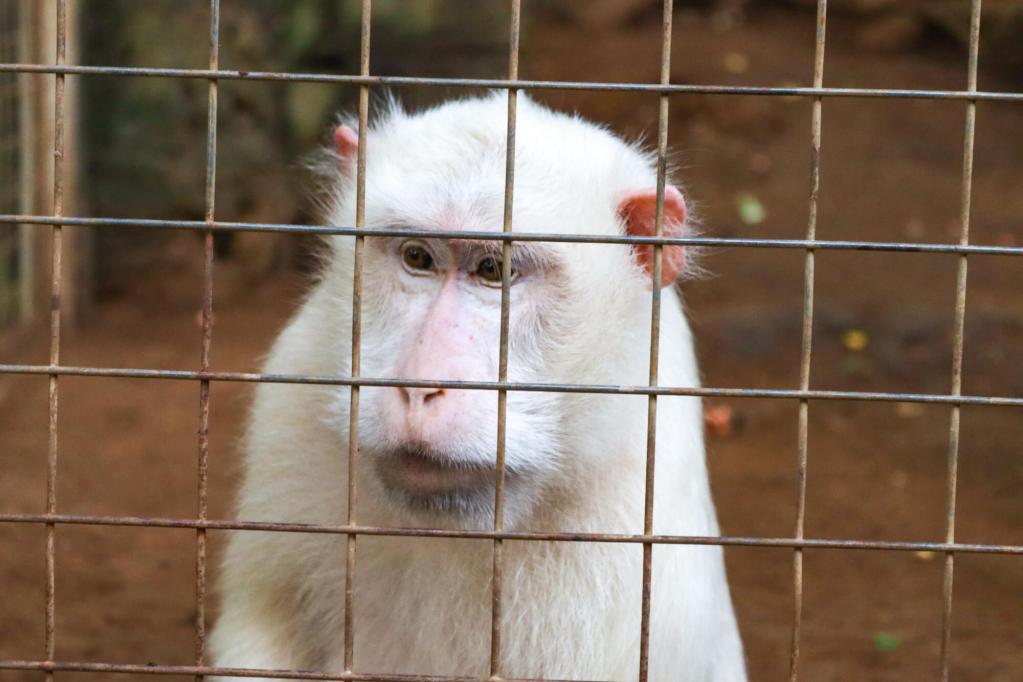
🧐 Fun Fact: Uluwatu’s macaques roam freely around the temple and the surrounding area. However, there is one exception: an albino macaque that you might see in a cage. Sadly, the poor thing was frequently and severely attacked by the rest of the troop, who refused to accept him because he looked different. For his own safety, the temple staff had to isolate him.
Monkey Etiquette: How to Stay on Their Good Side
- Rule number one is simple: whatever happens, DON’T PANIC. If you start screaming or waving your arms around, you might scare the animal, and a frightened monkey is much more likely to get aggressive or bite. Sometimes, they might even hop onto your shoulders. The easiest way to “invite” them to leave is to simply lean forward or crouch down slowly. Usually, the macaque will just hop right off.
- Avoid direct eye contact and don’t smile at them. Monkeys interpret body language very differently than we do. In “monkey language,” a wide grin that shows your teeth is actually a sign of aggression and a warning that they’re ready to attack. Similarly, if a monkey bared its teeth at you, it’s a clear signal that you should back away immediately. They feel the same way about staring – to them, it’s a challenge, so we strongly recommend looking away!
- The temple macaques are fed by the staff, and their favourite treat is sweet potato. However, it would be naive to think that’s enough for them – they are always on the lookout for a “tasty upgrade.” It’s best not to bring any food into the complex at all. Their sensitive noses can sniff out a snack hidden deep in a backpack or pocket. By leaving the snacks behind, you’re not only avoiding unwanted attention but also helping them stick to a healthy diet. 🤗
- It’s not just food that attracts them, though. Drinks are like a magnet for monkeys – brightly coloured bottles of juice or fizzy drinks will definitely catch their eye. Try to keep them out of sight!
- Never leave your belongings unattended. It only takes a split second of distraction for one of the temple residents to take an interest in your gear.
- You should be extra cautious around certain individuals. The risk of aggression goes up if a monkey is currently eating (they might think you’re trying to steal their snack! 🤨), if it’s a mother with a baby, or if the monkeys are in the middle of a fight with each other. It’s also wise to keep your distance from the older, often “balding” males—these are usually the alpha males and can be very territorial.
- Ditch the jewellery before you enter. Macaques love anything shiny. Dangling earrings or necklaces are almost a guarantee that you’ll grab their attention, which could end with a painful tug and the loss of your favourite pieces.
- Whatever you do, never be aggressive towards the monkeys. If something gets stolen, ask the temple staff for help rather than trying to take it back by force. Monkeys live in highly organised troops and are very protective of one another. If one macaque feels threatened, you might find yourself facing the whole group.
- The health of the Uluwatu macaques is monitored, and in theory, they are vaccinated against rabies every six months. While the risk of infection is low, if you are bitten or scratched, see a doctor immediately! Even if the animal is vaccinated, their saliva carries a lot of bacteria, and post-bite rabies treatment is a standard and necessary precaution. Rabies is no joke – once symptoms appear, it is always fatal. 😨
💡 Tip: In Uluwatu, it’s best to wear your backpack on your front. These monkeys are clever enough to unzip a bag while it’s still on your back! Also, don’t walk around with your scooter keys in your hand, especially if they have shiny keychains. A monkey sitting at the top of a tree with scooter keys is a scenario that happens way more often than you’d think! 🐒
The Kecak Dance at Uluwatu Temple
Beyond the spectacular sunsets, breathtaking views, and the resident monkeys, Uluwatu Temple is also world-famous for the traditional Balinese Kecak Fire Dance performed in its open-air amphitheatre.
While this isn’t the only spot on the island where you can see a Kecak performance, it is undoubtedly the most iconic and photogenic – largely thanks to the setting sun, which serves as a stunning natural backdrop for the stage.
Kecak is a traditional Balinese dance typically performed by a group of at least 50 men wearing distinctive black-and-white chequered sarongs. They form a kind of “living choir,” rhythmically chanting the word “cak” to create an almost hypnotic atmosphere. Interestingly, you won’t hear any instruments during the show – the entire soundtrack is created solely by human voices!
The dance tells a story from the Hindu epic, the Ramayana. It follows the journey of Princess Sita, who is kidnapped by the demon king Ravana, and her husband, Prince Rama, who sets out on a rescue mission with an army of monkeys led by the white monkey god, Hanuman.
During peak season, shows usually run twice a day: the first around 6:00 pm (with the sunset in the background) and a second at 7:00 pm (though the 7:00 pm show isn’t always guaranteed!). Space in the amphitheatre is limited, and the shows are incredibly popular. If you want to be sure of a seat, it’s a good idea to book your tickets online in advance (via sites like Klook or GetYourGuide). Otherwise, you’ll need to arrive very early, as tickets often sell out well before 5:00 pm!
Ticket Prices:
- Adult: 150,000 IDR
- Child (ages 2–9): 75,000 IDR
📢 Important: During the wet season (November to March), heavy downpours may cause shows to be cancelled or moved to a different, covered location.
Uluwatu Temple: Things to Know Before You Go
⛔️ Access for Visitors: Tourists are welcome to explore the temple complexes, but only from the outside. Entry to the sacred inner sanctums (known as the jeroan) is strictly reserved for Balinese Hindu worshippers. It’s good to keep this in mind so you aren’t disappointed when you find the gates to the inner courtyards closed to the public.
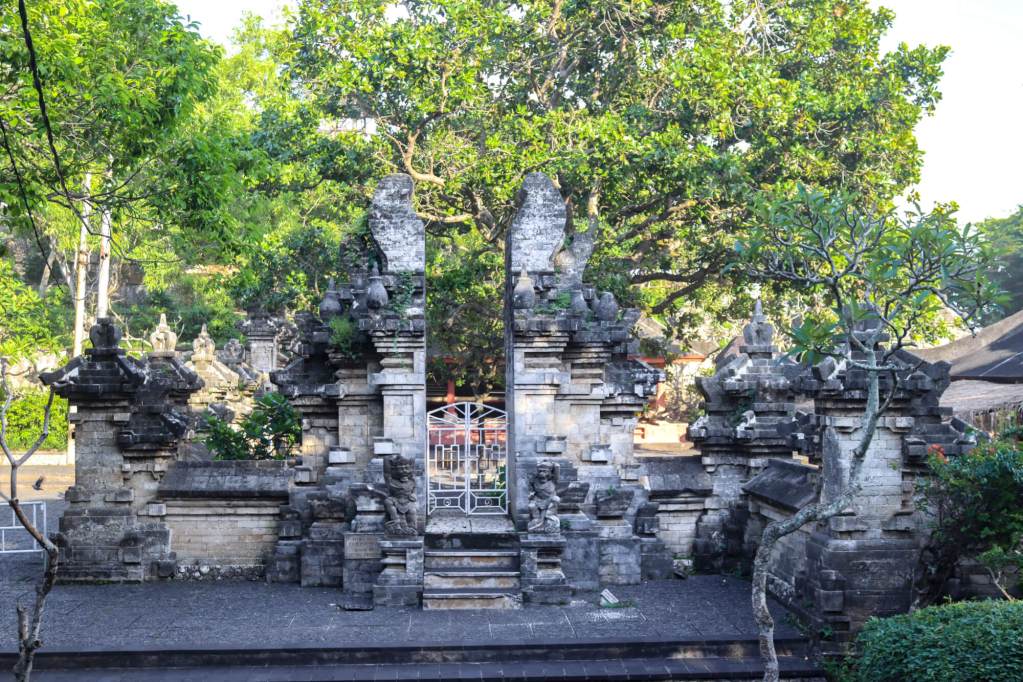
👗 Dress code: Uluwatu Temple is a holy site, so dressing respectfully is a must. Visitors need to have their shoulders and knees covered. Don’t worry if you’re not prepared—the rental of a traditional sarong and a yellow sash is included in your ticket price. The staff at the entrance will make sure you’re dressed appropriately and will even help you tie your sarong correctly.
Note: Interestingly, during our visit, no one seemed to mind exposed shoulders, and I wasn’t given anything to cover up with, but it’s always best to be prepared!
🐒 Those Cheeky Monkeys: The macaques that call the temple and the surrounding forest home are legendary for “borrowing” things from tourists. Before you enter, hide your food, drinks, sunglasses, jewellery, and any loose accessories. Keep a firm grip on your bags, cameras, and phones – these clever animals know exactly which items will fetch the best “ransom” in the form of treats! 😏
⏳ How much time do you need? Allow about 1–2 hours if you’re just exploring the grounds. If you’re planning to watch the Kecak dance, you should set aside around 3 hours in total.
💃The Kecak Dance: For an extra fee, you can watch the traditional Balinese dance performance. The shows take place at sunset (6:00 pm, and often 7:00 pm during peak season). Because it’s so popular, we highly recommend booking your tickets online in advance.
📸 No-Fly Zone for Drones: The dramatic scenery practically begs for an aerial shot, but unfortunately, there is a total ban on flying drones at Uluwatu without a special (and very expensive) permit.

📢 Important: At the entrance of most puras (including Uluwatu), you’ll see signs stating that women should not enter the temple complex during their period. In Balinese culture, it is believed that blood affects the ritual purity of the sacred site.
A Little History and Some Fascinating Facts about Uluwatu Temple
Uluwatu Temple is unique not only for its dramatic 70-metre cliffside setting but also for its profound spiritual importance to the Balinese people. Pura Luhur Uluwatu is one of the island’s six “pillar temples” (Sad Kahyangan) and one of the nine “directional temples” (Kahyangan Padma Bhuwana). These temples are strategically placed around the island to act as a spiritual shield against evil spirits. For the Balinese, these are the holiest of sites, and their breathtaking locations mean that they attract just as many tourists as they do pilgrims.
🧐 Fun Fact: In Bali, temples are generally categorised into five types: village temples (every village has at least three), vocational temples (e.g., for farmers tending to rice fields), ancestor temples (where deceased family members are honoured), directional temples (the most important ones, protecting the island) and sea temples (dedicated to the gods of the ocean).

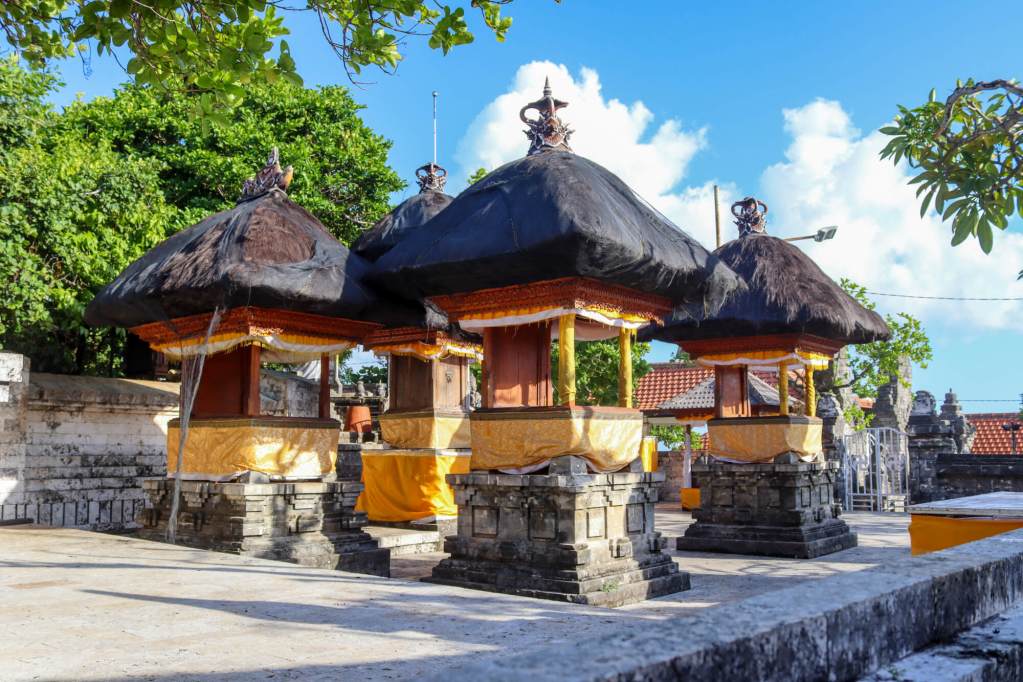
Pura Luhur Uluwatu serves as the spiritual guardian of the island’s southwest. Its origins date back to the 11th century, with the Javanese priest Mpu Kuturan credited as its founder. In the 16th century, the temple was expanded by another influential priest from Java, Dang Hyang Nirartha. According to Balinese belief, this is where he achieved enlightenment (moksha). The iconic three-tiered pagoda (known as a meru) sitting right on the edge of the cliff is dedicated to him.
🧐 Fun Fact: The Balinese word luhur means “something of divine origin” or “exalted.”
Uluwatu Temple is dedicated to Sang Hyang Widhi Wasa (the supreme god of Balinese Hinduism) in his manifestation as Rudra – the god of storms and natural forces who rules over the southwest.
What to See near Uluwatu Temple?
If you’re planning a visit to the temple, it’s well worth combining it with an exploration of the southern tip of the island. The Bukit Peninsula is home to some of Bali’s most spectacular beaches!
- Uluwatu and Suluban Beaches
These interconnected white-sand beaches feature incredible rock formations that give them a really intimate feel. You reach them through a scenic cave, which is an experience in itself. Thanks to the massive swells, this is a world-favourite spot for surfers. Make sure to visit during low tide – when the tide is high, the beach almost completely disappears!
- Bingin Beach
Surrounded by stunning cliffs, Bingin Beach attracts sunbathers and surfers looking for those laid-back “boho vibes.” At low tide, the crystal-clear water is perfect for a swim, while at high tide, it becomes a paradise for advanced wave hunters. Its trademark is a unique rock sitting in the ocean with a single, lonely tree growing on top.
- Nunggalan Beach
This is a long, wide stretch of sand that has managed to keep its quiet, pristine character. It’s the perfect escape from the crowds (especially after visiting a busy spot like Uluwatu! 😉). Getting there takes a bit of effort—the hike down and back up the cliff takes about 20–30 minutes—but it’s absolutely worth it! On the sand, you’ll find a shipwreck covered in colourful graffiti, which is one of the most photogenic spots in the area. Note: The wreck is slowly being reclaimed by rust and the waves, so there’s less of it to see every year. 🫢
- Green Bowl Beach
This tiny hidden gem is tucked away at the foot of a towering cliff. To reach it, you’ll have to tackle several hundred steps, but the white sand and turquoise water are a fair reward for the effort. You’ll also find caves here that provide some much-needed shade. Since the beach is small, aim for low tide when the sand is widest.
- Tanah Barak Cliff
One of the newer Instagram hits! Tanah Barak is a spectacular road carved directly through limestone cliffs, leading down to the ocean. Although it’s getting more popular, it’s still incredibly striking because of the contrast between the white rocks and the deep blue sky. Try to get there early in the morning to beat the crowds.
- Gunung Payung Beach
A true hidden treasure of the south coast. Known for its crystal-clear water, soft sand, and exceptionally peaceful atmosphere, it’s the ideal spot if you’re looking for some quiet time away from the hustle and bustle of the main resorts.
- Tanah Lot Temple (40–50 km from Uluwatu)
This is one of Bali’s most iconic and picturesque temples. It gained its fame thanks to its unique position on a rocky islet that gets completely cut off from the mainland during high tide. While it is absolutely breathtaking (especially at sunset), keep one thing in mind: it isn’t actually in the immediate Uluwatu area.
Is Uluwatu Temple Worth a Visit?
In our opinion, Uluwatu Temple is a non-negotiable on any Bali itinerary. It offers some of the most spectacular ocean views on the entire island, and the resident macaques certainly give the place a unique (and lively!) character.
The only downside, due to its stunning location and massive popularity, is that you do have to deal with the crowds—especially around sunset. Luckily, there’s a simple fix for that: just plan your visit for the morning (if you don’t plan to see the Kecak Dance). 😊
How about you? Have you already been to Uluwatu, or is it still on your travel bucket list? Or perhaps you’ve already had an “eventful” encounter with the local monkeys? Share your stories in the comments below! 👇
Happy Exploring! 🤠

Planning a trip to Bali? Check out our other posts:
Leave a Reply